







Question: NUMBER ONE In the context of computer-based transaction processing systems: - a. Describe their purpose; b. Describe two different examples of such systems in
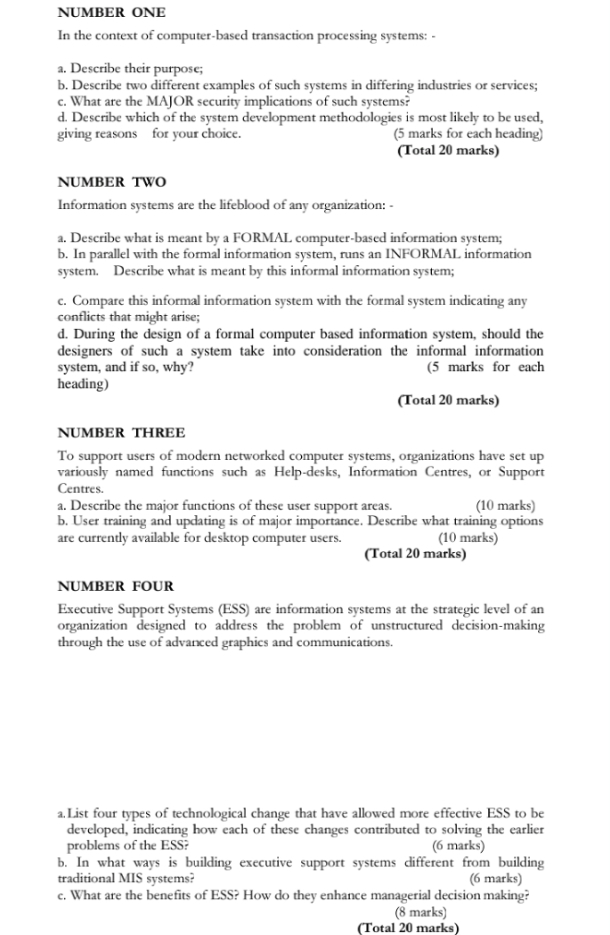
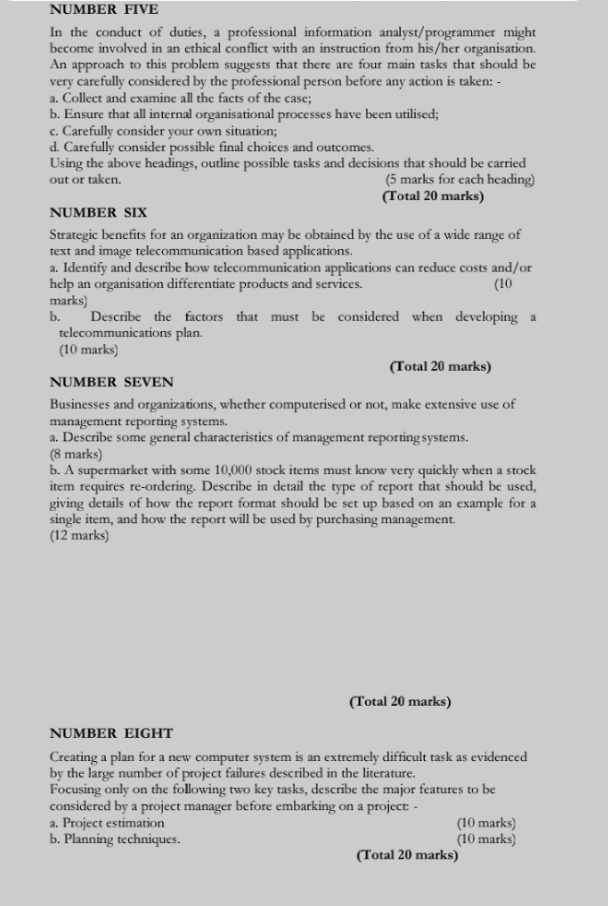
NUMBER ONE In the context of computer-based transaction processing systems: - a. Describe their purpose; b. Describe two different examples of such systems in differing industries or services; c. What are the MAJOR security implications of such systems? d. Describe which of the system development methodologies is most likely to be used, giving reasons for your choice. (5 marks for each heading) (Total 20 marks) NUMBER TWO Information systems are the lifeblood of any organization: - a. Describe what is meant by a FORMAL computer-based information system; b. In parallel with the formal information system, runs an INFORMAL information system. Describe what is meant by this informal information system; c. Compare this informal information system with the formal system indicating any conflicts that might arise; d. During the design of a formal computer based information system, should the designers of such a system take into consideration the informal information system, and if so, why? (5 marks for each heading) (Total 20 marks) NUMBER THREE To support users of modern networked computer systems, organizations have set up variously named functions such as Help-desks, Information Centres, or Support Centres. a. Describe the major functions of these user support areas. (10 marks) b. User training and updating is of major importance. Describe what training options are currently available for desktop computer users. (10 marks) (Total 20 marks) NUMBER FOUR Executive Support Systems (ESS) are information systems at the strategic level of an organization designed to address the problem of unstructured decision-making through the use of advanced graphics and communications. a. List four types of technological change that have allowed more effective ESS to be developed, indicating how each of these changes contributed to solving the earlier problems of the ESS? (6 marks) b. In what ways is building executive support systems different from building traditional MIS systems? (6 marks) c. What are the benefits of ESS? How do they enhance managerial decision making? (8 marks) (Total 20 marks) NUMBER FIVE In the conduct of duties, a professional information analyst/programmer might become involved in an ethical conflict with an instruction from his/her organisation. An approach to this problem suggests that there are four main tasks that should be very carefully considered by the professional person before any action is taken: - a. Collect and examine all the facts of the case; b. Ensure that all internal organisational processes have been utilised; c. Carefully consider your own situation; d. Carefully consider possible final choices and outcomes. Using the above headings, outline possible tasks and decisions that should be carried out or taken. (5 marks for each heading) (Total 20 marks) NUMBER SIX Strategic benefits for an organization may be obtained by the use of a wide range of text and image telecommunication based applications. a. Identify and describe how telecommunication applications can reduce costs and/or help an organisation differentiate products and services. (10 marks) b. Describe the factors that must be considered when developing a telecommunications plan. (10 marks) (Total 20 marks) NUMBER SEVEN Businesses and organizations, whether computerised or not, make extensive use of management reporting systems. a. Describe some general characteristics of management reporting systems. (8 marks) b. A supermarket with some 10,000 stock items must know very quickly when a stock item requires re-ordering. Describe in detail the type of report that should be used, giving details of how the report format should be set up based on an example for a single item, and how the report will be used by purchasing management. (12 marks) (Total 20 marks) NUMBER EIGHT Creating a plan for a new computer system is an extremely difficult task as evidenced by the large number of project failures described in the literature. Focusing only on the following two key tasks, describe the major features to be considered by a project manager before embarking on a project: - a. Project estimation b. Planning techniques. (10 marks) (10 marks) (Total 20 marks)
Step by Step Solution
There are 3 Steps involved in it

Get step-by-step solutions from verified subject matter experts
 Study Help