



Question: o' rm 321:: are as are :a an an . O . ED v gig/Ithzgglrtrcs of Food - student Versron Integrated... Q Q [E 9
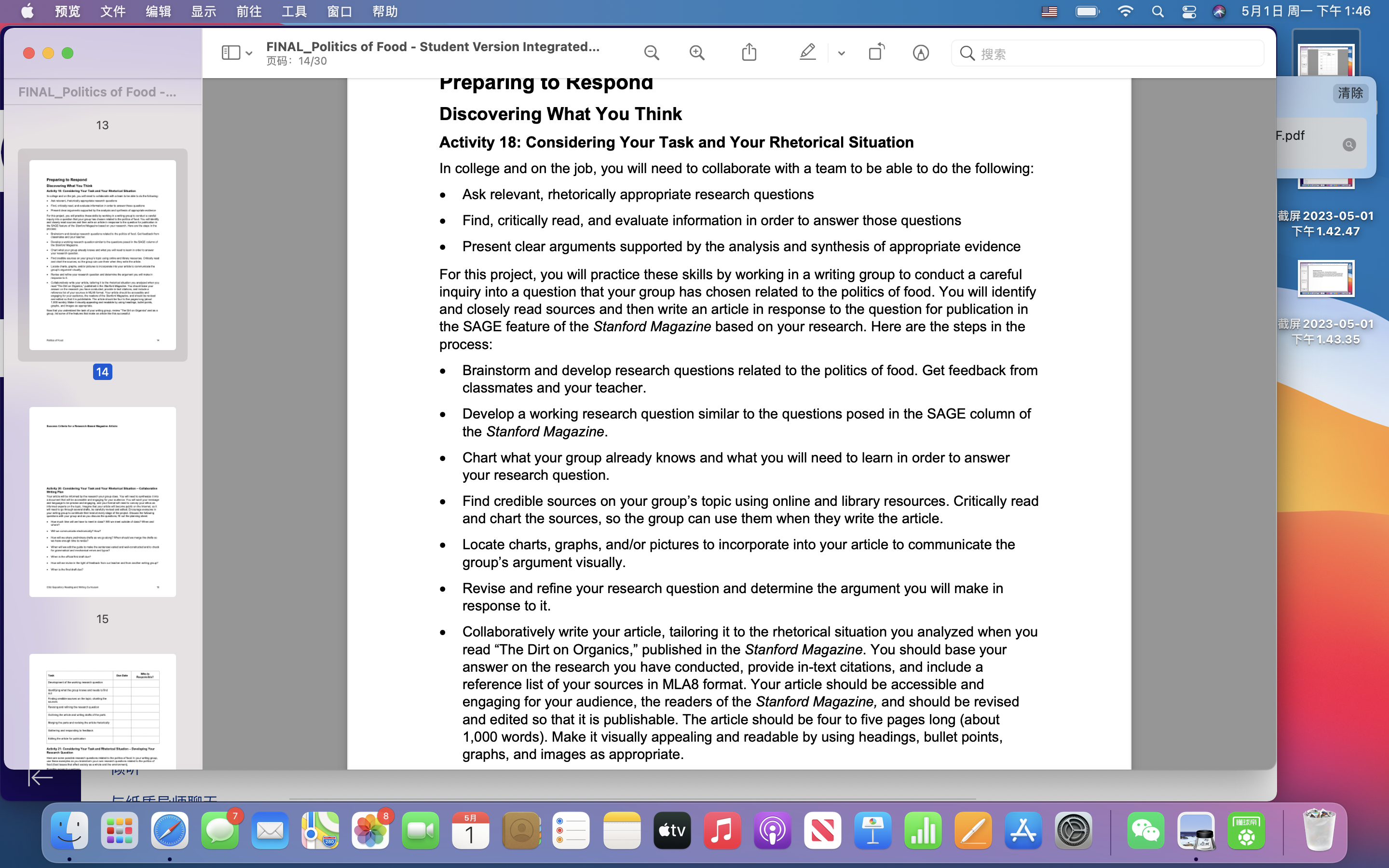
o' rm 321:: are as are :a an an . O . ED v gig/Ithzgglrtrcs of Food - student Versron Integrated... Q Q [E 9 V Ij' Q i'i Preparing to Respond Discovering What You Think FlNAL_Politics of Food -... 13 Activity 18: Considering Your Task and Your Rhetorical Situation In college and on the job, you will need to collaborate with a team to be able to do the following: - Ask relevant, rhetorically appropriate research questions it}? 2023-05-01 c Find, critically read, and evaluate information in order to answer those questions TF1.42.47 . Present clear arguments supported by the analysis and synthesis of appropriate evidence For this project, you will practice these skills by working in a writing group to conduct a careful inquiry into a question that your group has chosen related to the politics of food. You will identify and closely read sources and then write an article in response to the question for publication in the SAGE feature of the Stanford Magazine based on your research. Here are the steps in the process: a Brainstorm and develop research questions related to the politics of food. Get feedback from classmates and your teacher. 0 Develop a working research question similar to the questions posed in the SAGE column of the Stanford Magazine. - Chart what your group already knows and what you will need to leam in order to answer your research question. . Find credible sources on your group's topic using online and library resources. Critically read and chart the sources, so the group can use them when they write the article. . Locate charts, graphs, and/or pictures to incorporate into your article to communicate the group's argument visually. - Revise and rene your research question and determine the argument you will make in response to it. o Collaboratively write your article, tailoring it to the rhetorical situation you analyzed when you read 'The Dirt on Organics,\" published in the Stanford Magazine. You should base your answer on the research you have conducted, provide intext citations, and include a reference list of your sources in MLAB format. Your article should be accessible and engaging for your audience, the readers of the Stanford Magazine, and should be revised and edited so that it is publishable. The article should be four to ve pages long (about 1,000 words). Make it visually appealing and readable by using headings, bullet points, graphs, and images as appropriate
Step by Step Solution
There are 3 Steps involved in it

Get step-by-step solutions from verified subject matter experts