







Question: Objective The objective is to explore the use of data and the development of temperature conversion and linear interpolation algorithms for calculating psi from a
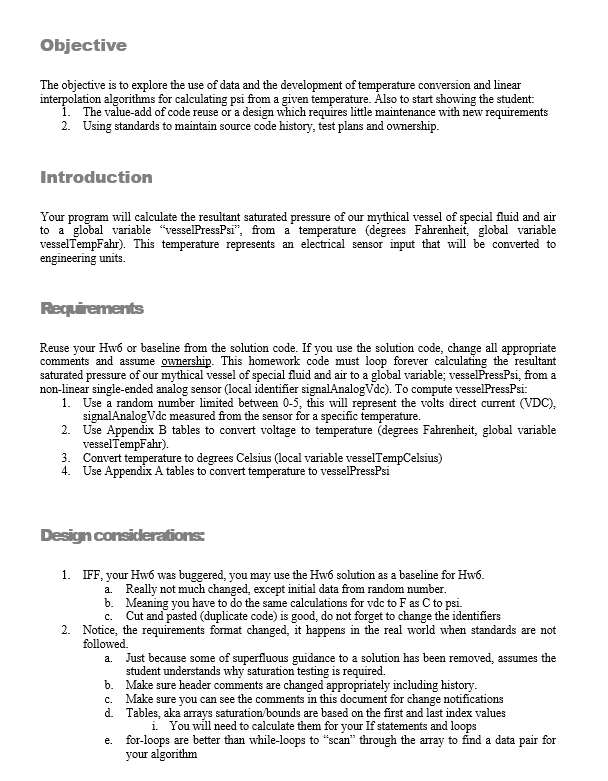
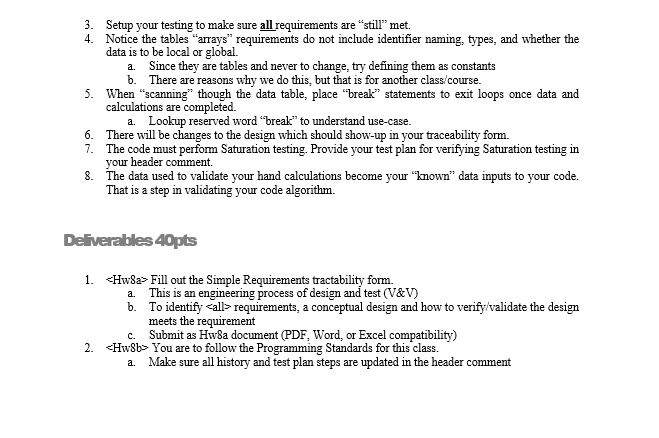
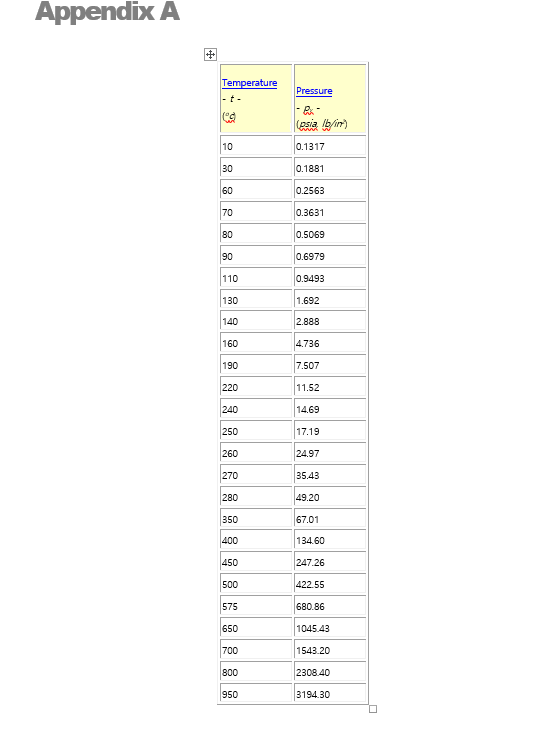
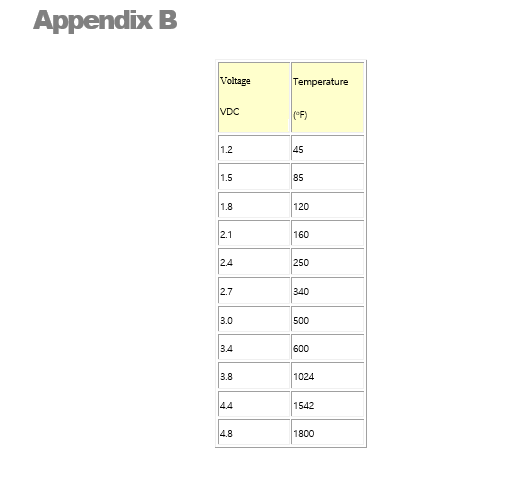
Objective The objective is to explore the use of data and the development of temperature conversion and linear interpolation algorithms for calculating psi from a given temperature. Also to start showing the student: 1. 2. The value-add of code reuse or a design which requires little maintenance with new requirements Using standards to maintain source code history, test plans and ownership Introductiorn Your program will calculate the resultant saturated pressure of our mythical vessel of special fluid and air to a global variable "vesselPressPsi", from a temperature (dgrees Fahrenheit, global variable vesselTempFahr). This temperature represents an electrical sensor input that will be converted to engineering units. Reuse your Hw or baseline from the solution code. If you use the solution code, change all appropriate comments and assume ownership. This homework code must loop forever calculating the resultant saturated pressure of our mythical vessel of special fluid and air to a global variable; vesselPressPsi, from a non-linear single-ended analog sensor (local identifier signalAnalogVdc). To compute vesselPressPsi: 1. Use a random number limited between 0-5, this will represent the volts direct current (VDC), signalAnalogVdc measured from the sensor for a specific temperature. 2. Use Appendix B tables to convert voltage to temperature (degrees Fahrenheit, global variable 3. 4. vesselTempFahr). Convert temperature to degrees Celsius (local variable vesselTempCelsius) Use Appendix A tables to convert temperature to vesselPressPsi Design considerations 1- IFF, your Hwo was buggered, you may use the Hwo solution as a baseline for Hw6 Really not much changed, except initial data from random number Meaning you have to do the same calculations for vdc to F as C to psi. Cut and pasted (duplicate code) is good, do not forget to change the identifiers a. b. c. 2. Notice, the requirements format changed, it happens in the real world when standards are not followed. Just because some of superfluous guidance to a solution has been removed, assumes the student understands why saturation testing is required. a. b. Make sure header comments are changed appropriately including history. c. Make sure you can see the comments in this document for change notifications d. Tables, aka arrays saturation/bounds are based on the first and last index values i. You will need to calculate them for your If statements and loops for-loops are better than while-loops to "scan" through the array to find a data pair for your algorithm e. Objective The objective is to explore the use of data and the development of temperature conversion and linear interpolation algorithms for calculating psi from a given temperature. Also to start showing the student: 1. 2. The value-add of code reuse or a design which requires little maintenance with new requirements Using standards to maintain source code history, test plans and ownership Introductiorn Your program will calculate the resultant saturated pressure of our mythical vessel of special fluid and air to a global variable "vesselPressPsi", from a temperature (dgrees Fahrenheit, global variable vesselTempFahr). This temperature represents an electrical sensor input that will be converted to engineering units. Reuse your Hw or baseline from the solution code. If you use the solution code, change all appropriate comments and assume ownership. This homework code must loop forever calculating the resultant saturated pressure of our mythical vessel of special fluid and air to a global variable; vesselPressPsi, from a non-linear single-ended analog sensor (local identifier signalAnalogVdc). To compute vesselPressPsi: 1. Use a random number limited between 0-5, this will represent the volts direct current (VDC), signalAnalogVdc measured from the sensor for a specific temperature. 2. Use Appendix B tables to convert voltage to temperature (degrees Fahrenheit, global variable 3. 4. vesselTempFahr). Convert temperature to degrees Celsius (local variable vesselTempCelsius) Use Appendix A tables to convert temperature to vesselPressPsi Design considerations 1- IFF, your Hwo was buggered, you may use the Hwo solution as a baseline for Hw6 Really not much changed, except initial data from random number Meaning you have to do the same calculations for vdc to F as C to psi. Cut and pasted (duplicate code) is good, do not forget to change the identifiers a. b. c. 2. Notice, the requirements format changed, it happens in the real world when standards are not followed. Just because some of superfluous guidance to a solution has been removed, assumes the student understands why saturation testing is required. a. b. Make sure header comments are changed appropriately including history. c. Make sure you can see the comments in this document for change notifications d. Tables, aka arrays saturation/bounds are based on the first and last index values i. You will need to calculate them for your If statements and loops for-loops are better than while-loops to "scan" through the array to find a data pair for your algorithm e
Step by Step Solution
There are 3 Steps involved in it

Get step-by-step solutions from verified subject matter experts
 Study Help