







Question: Old MathJax webview Old MathJax webview Everything needs to be enterado in as a formula. I am willing to post this twice because I know
Old MathJax webview
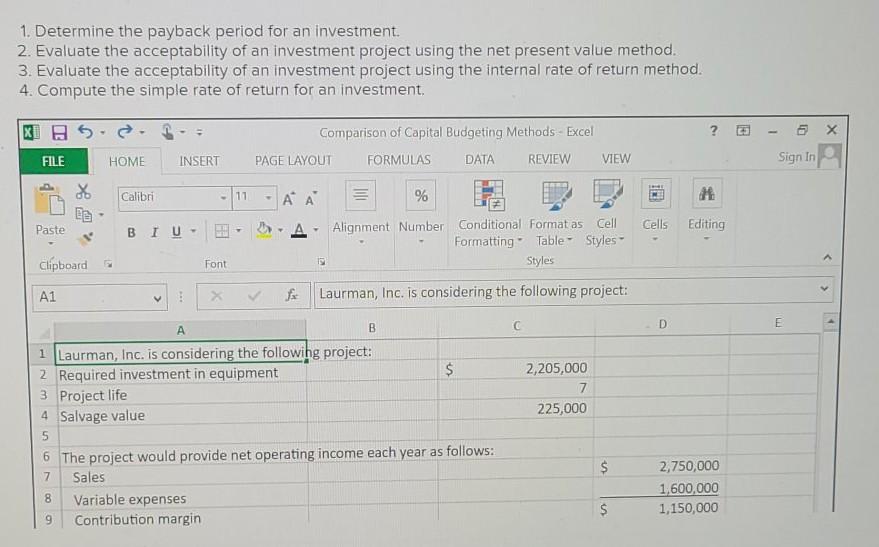
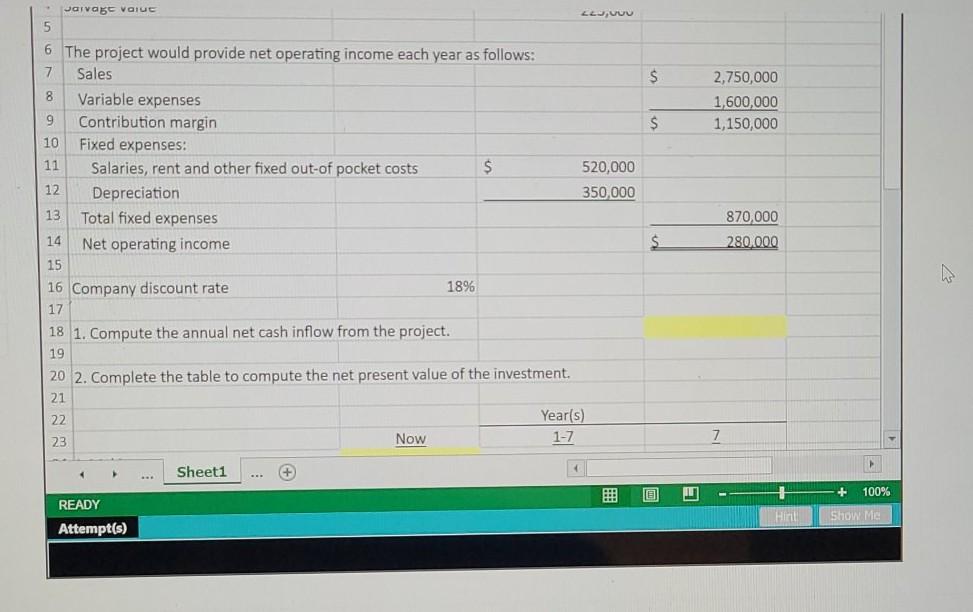
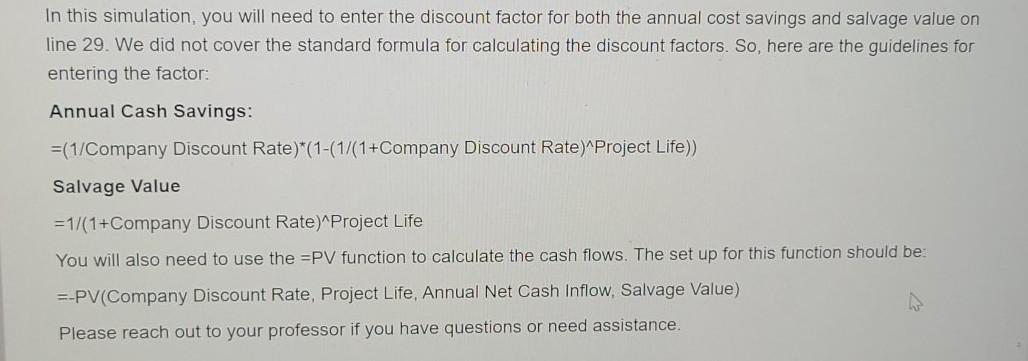
Everything needs to be enterado in as a formula. I am willing to post this twice because I know it is a lot of work.
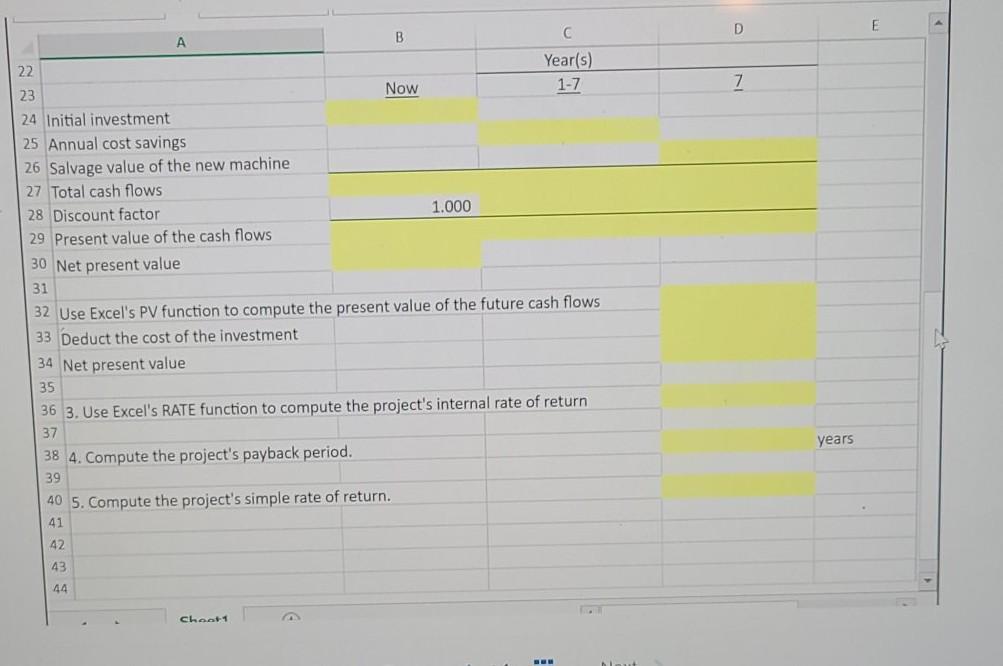
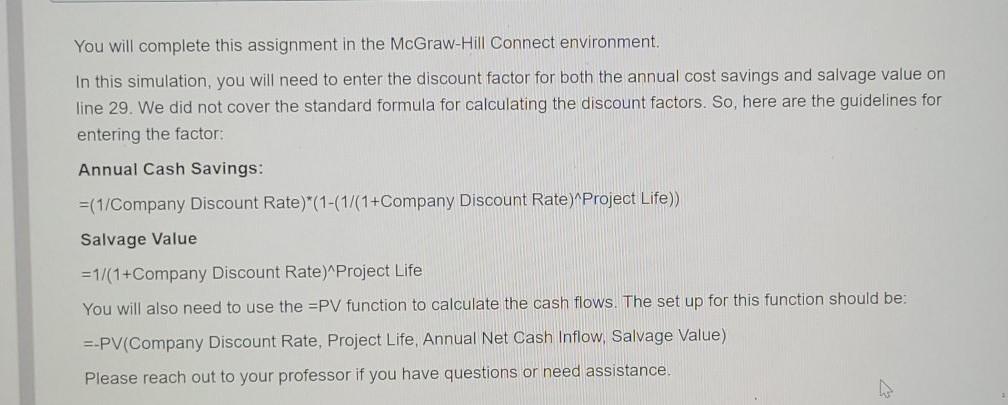
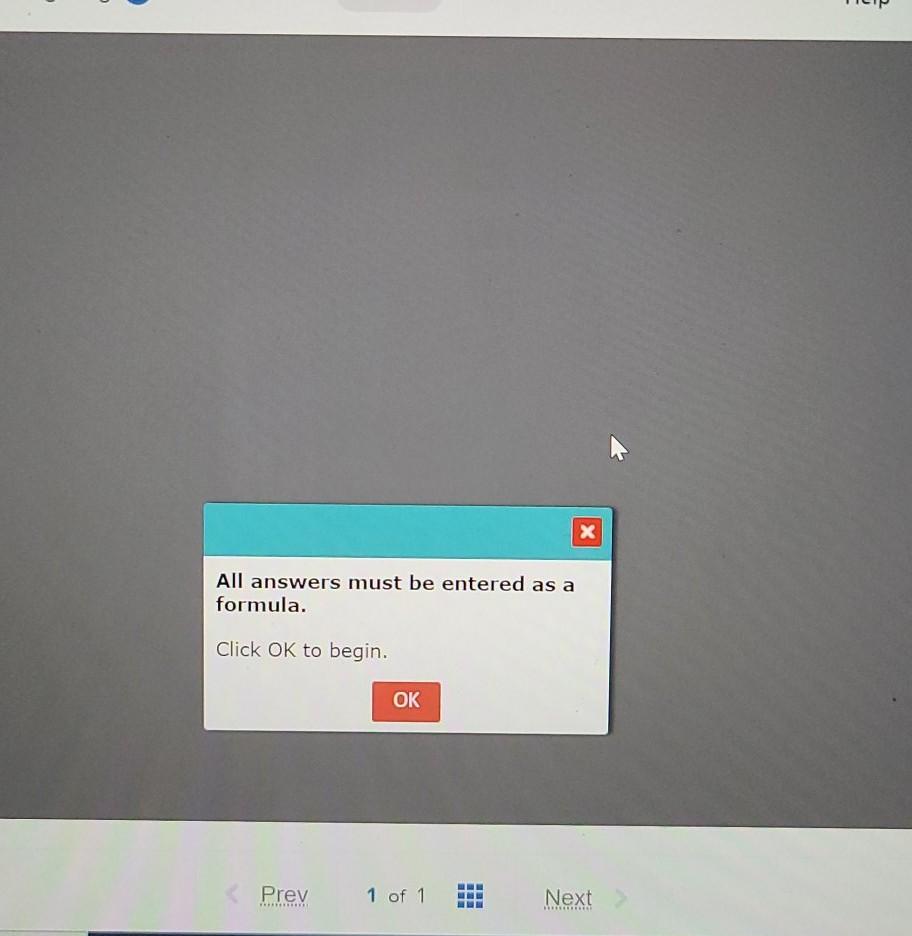
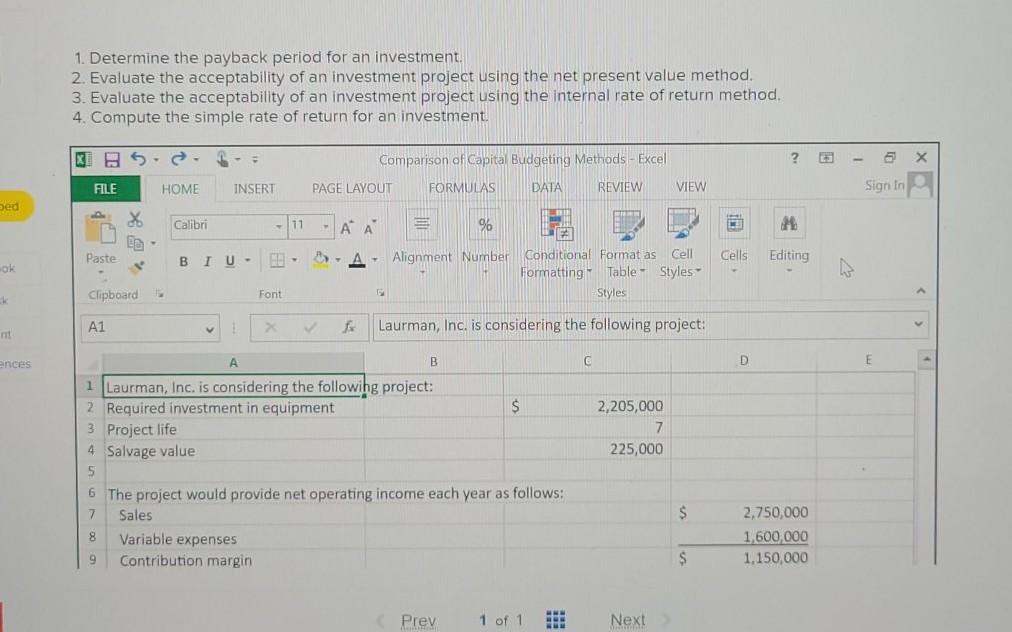
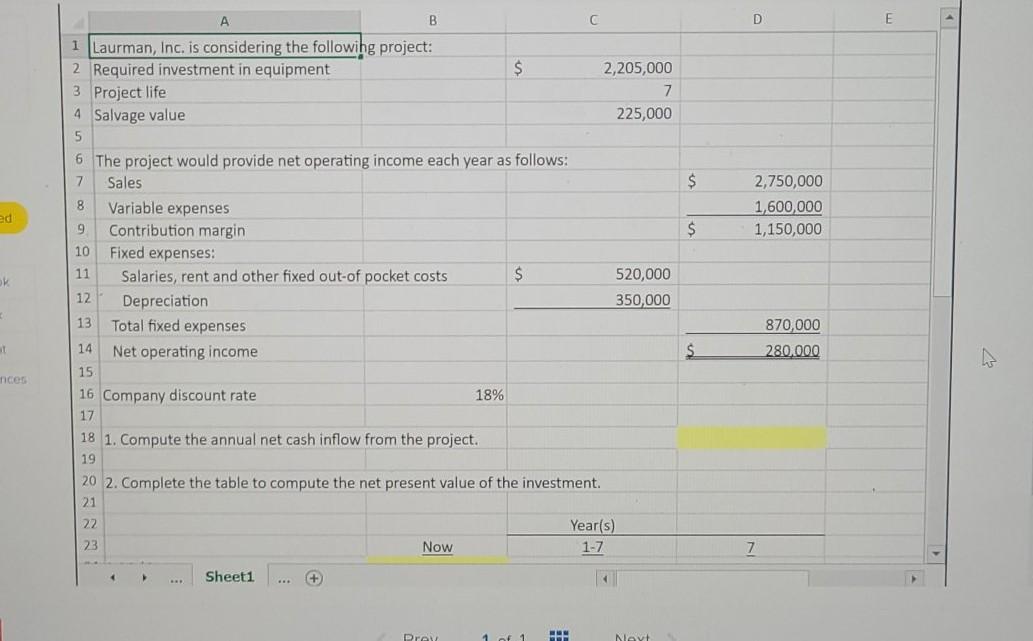
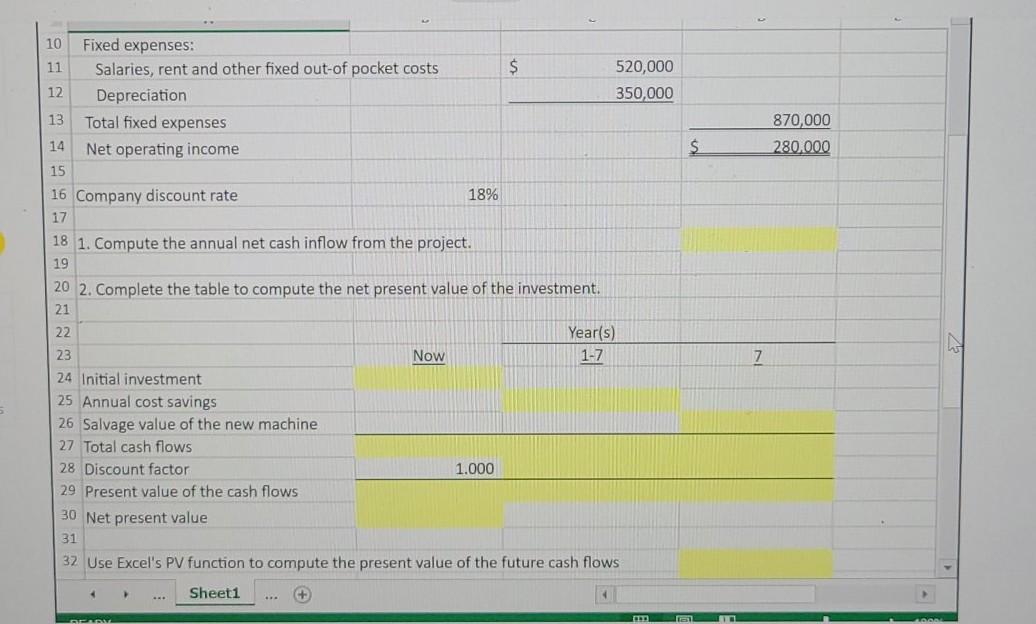
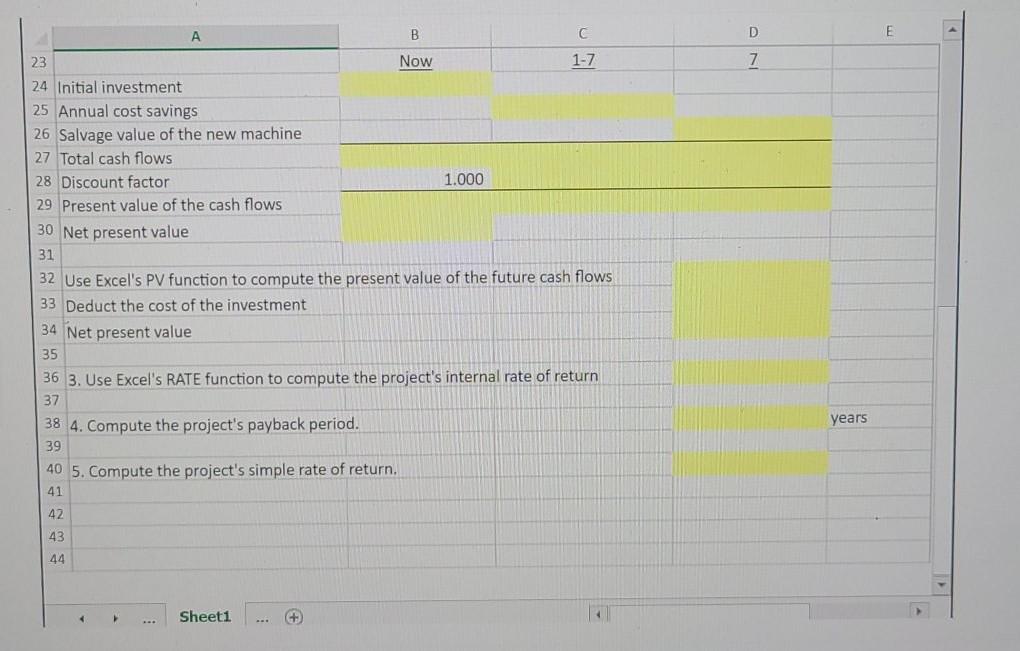
this is the entire question and it's excel. I do not understand why you cannot do it with all information provided. I need to enter in formula form.
1. Determine the payback period for an investment. 2. Evaluate the acceptability of an investment project using the net present value method. 3. Evaluate the acceptability of an investment project using the internal rate of return method. 4. Compute the simple rate of return for an investment. 6 X Comparison of Capital Budgeting Methods - Excel PAGE LAYOUT FORMULAS DATA REVIEW FILE HOME INSERT VIEW Sign In X Calibri Paste Cells - 17 - A A ' ' % Alignment Number Conditional Format as Cell Formatting Table Styles Font Styles BIU Editing A Clipboard > A1 f Laurman, Inc. is considering the following project: D B E - $ 1 Laurman, Inc. is considering the following project: 2 Required investment in equipment 3 Project life 4 Salvage value 2,205,000 7 225,000 5 $ $ 6 The project would provide net operating income each year as follows: 7 Sales 8 Variable expenses 9 Contribution margin 2,750,000 1,600,000 1,150,000 $ Jarage VIUC 5 $ 2,750,000 1,600,000 1,150,000 9 $ 6 The project would provide net operating income each year as follows: 7 Sales 8 Variable expenses Contribution margin 10 Fixed expenses: 11 Salaries, rent and other fixed out of pocket costs $ 520,000 12 Depreciation 350,000 13 Total fixed expenses 14 Net operating income 15 16 Company discount rate 18% 17 18 1. Compute the annual net cash inflow from the project. 19 20 2. Complete the table to compute the net present value of the investment 21 Year(s) 22 23 Now 1-7 870,000 280.000 $ his 7 Sheet1 + MU 100% READY Hal Show Me Attempt(s) In this simulation, you will need to enter the discount factor for both the annual cost savings and salvage value on line 29. We did not cover the standard formula for calculating the discount factors. So, here are the guidelines for entering the factor: Annual Cash Savings: =(1/Company Discount Rate)(1-(1/(1+Company Discount Rate) Project Life)) Salvage Value =1/(1+Company Discount Rate)Project Life You will also need to use the =PV function to calculate the cash flows. The set up for this function should be: =-PV(Company Discount Rate, Project Life, Annual Net Cash Inflow, Salvage Value) Please reach out to your professor if you have questions or need assistance. D E B 22 Year(s) 1-7 Now 7 23 24 Initial investment 25 Annual cost savings 26 Salvage value of the new machine 27 Total cash flows 28 Discount factor 1.000 29 Present value of the cash flows 30 Net present value 31 32 Use Excel's PV function to compute the present value of the future cash flows 33 Deduct the cost of the investment 34 Net present value 35 36 3. Use Excel's RATE function to compute the project's internal rate of return 37 38 4. Compute the project's payback period. 39 40 5. Compute the project's simple rate of return. 41 years 42 43 44 choa1 You will complete this assignment in the McGraw-Hill Connect environment. In this simulation, you will need to enter the discount factor for both the annual cost savings and salvage value on line 29. We did not cover the standard formula for calculating the discount factors. So, here are the guidelines for entering the factor Annual Cash Savings: =(1/Company Discount Rate)*(1-(1/(1+Company Discount Rate) Project Life)) Salvage Value =1/(1+Company Discount Rate) Project Life You will also need to use the =PV function to calculate the cash flows. The set up for this function should be: =-PV(Company Discount Rate, Project Life, Annual Net Cash Inflow, Salvage Value) Please reach out to your professor if you have questions or need assistance. All answers must be entered as a formula. Click OK to begin. OK Prev 1 of 1 EEL EEE EEE Next HERRER TREET 1. Determine the payback period for an investment. 2. Evaluate the acceptability of an investment project using the net present value method. 3. Evaluate the acceptability of an investment project using the internal rate of return method. 4. Compute the simple rate of return for an investment. KI 5 ? Comparison of Capital Budgeting Methods - Excel PAGE LAYOUT FORMULAS DATA REVIEW FILE HOME INSERT VIEW Sign In Ded X Calibri A A M be Paste BA- BIU- Alignment Number Cells Editing ook Conditional Format as Cell Formatting Table - Styles Styles Clipboard Font K A1 Laurman, Inc. is considering the following project: nt ences A B D $ 1 Laurman, Inc. is considering the following project: 2 Required investment in equipment 3 Project life 4 Salvage value 2,205,000 7 225,000 S 6 The project would provide net operating income each year as follows: Sales 7 $ 8 Variable expenses Contribution margin 2,750,000 1,600,000 1,150,000 9 S Prev 1 of 1 Next B C D E $ 2,750,000 1,600,000 1,150,000 ad $ ok 1 Laurman, Inc. is considering the following project: 2 Required investment in equipment $ 2,205,000 3 Project life 7 4 Salvage value 225,000 5 6 The project would provide net operating income each year as follows: 7 Sales 8 Variable expenses 9 Contribution margin 10 Fixed expenses: 11 Salaries, rent and other fixed out-of pocket costs $ 520,000 12 Depreciation 350,000 13 Total fixed expenses 14 Net operating income 15 16 Company discount rate 18% 17 18 1. Compute the annual net cash inflow from the project. 19 20 2. Complete the table to compute the net present value of the investment. 21 22 Year(s) 23 Now 1-7 870,000 280.000 1 S nces 7 Sheet1 + *** Prax HHH Net 10 11 $ Fixed expenses: Salaries, rent and other fixed out-of pocket costs Depreciation Total fixed expenses Net operating income 520,000 350,000 12 13 870,000 280.000 14 $ 15 16 Company discount rate 18% 17 18 1. Compute the annual net cash inflow from the project. 19 20 2. Complete the table to compute the net present value of the investment. 21 Z 22 Year(s) 23 Now 1-7 24 Initial investment 25 Annual cost savings 26 Salvage value of the new machine 27 Total cash flows 28 Discount factor 1.000 29 Present value of the cash flows 30 Net present value 31 32 Use Excel's PV function to compute the present value of the future cash flows Sheet1 ACAD D E 7 B 23 Now 1-7 24 Initial investment 25 Annual cost savings 26 Salvage value of the new machine 27 Total cash flows 28 Discount factor 1.000 29 Present value of the cash flows 30 Net present value 31 32 Use Excel's PV function to compute the present value of the future cash flows 33 Deduct the cost of the investment 34 Net present value 35 36 3. Use Excel's RATE function to compute the project's internal rate of return 37 38 4. Compute the project's payback period. 39 40 5. Compute the project's simple rate of return. years 41 42 43 44 Sheet1 6 1. Determine the payback period for an investment. 2. Evaluate the acceptability of an investment project using the net present value method. 3. Evaluate the acceptability of an investment project using the internal rate of return method. 4. Compute the simple rate of return for an investment. 6 X Comparison of Capital Budgeting Methods - Excel PAGE LAYOUT FORMULAS DATA REVIEW FILE HOME INSERT VIEW Sign In X Calibri Paste Cells - 17 - A A ' ' % Alignment Number Conditional Format as Cell Formatting Table Styles Font Styles BIU Editing A Clipboard > A1 f Laurman, Inc. is considering the following project: D B E - $ 1 Laurman, Inc. is considering the following project: 2 Required investment in equipment 3 Project life 4 Salvage value 2,205,000 7 225,000 5 $ $ 6 The project would provide net operating income each year as follows: 7 Sales 8 Variable expenses 9 Contribution margin 2,750,000 1,600,000 1,150,000 $ Jarage VIUC 5 $ 2,750,000 1,600,000 1,150,000 9 $ 6 The project would provide net operating income each year as follows: 7 Sales 8 Variable expenses Contribution margin 10 Fixed expenses: 11 Salaries, rent and other fixed out of pocket costs $ 520,000 12 Depreciation 350,000 13 Total fixed expenses 14 Net operating income 15 16 Company discount rate 18% 17 18 1. Compute the annual net cash inflow from the project. 19 20 2. Complete the table to compute the net present value of the investment 21 Year(s) 22 23 Now 1-7 870,000 280.000 $ his 7 Sheet1 + MU 100% READY Hal Show Me Attempt(s) In this simulation, you will need to enter the discount factor for both the annual cost savings and salvage value on line 29. We did not cover the standard formula for calculating the discount factors. So, here are the guidelines for entering the factor: Annual Cash Savings: =(1/Company Discount Rate)(1-(1/(1+Company Discount Rate) Project Life)) Salvage Value =1/(1+Company Discount Rate)Project Life You will also need to use the =PV function to calculate the cash flows. The set up for this function should be: =-PV(Company Discount Rate, Project Life, Annual Net Cash Inflow, Salvage Value) Please reach out to your professor if you have questions or need assistance. D E B 22 Year(s) 1-7 Now 7 23 24 Initial investment 25 Annual cost savings 26 Salvage value of the new machine 27 Total cash flows 28 Discount factor 1.000 29 Present value of the cash flows 30 Net present value 31 32 Use Excel's PV function to compute the present value of the future cash flows 33 Deduct the cost of the investment 34 Net present value 35 36 3. Use Excel's RATE function to compute the project's internal rate of return 37 38 4. Compute the project's payback period. 39 40 5. Compute the project's simple rate of return. 41 years 42 43 44 choa1 You will complete this assignment in the McGraw-Hill Connect environment. In this simulation, you will need to enter the discount factor for both the annual cost savings and salvage value on line 29. We did not cover the standard formula for calculating the discount factors. So, here are the guidelines for entering the factor Annual Cash Savings: =(1/Company Discount Rate)*(1-(1/(1+Company Discount Rate) Project Life)) Salvage Value =1/(1+Company Discount Rate) Project Life You will also need to use the =PV function to calculate the cash flows. The set up for this function should be: =-PV(Company Discount Rate, Project Life, Annual Net Cash Inflow, Salvage Value) Please reach out to your professor if you have questions or need assistance. All answers must be entered as a formula. Click OK to begin. OK Prev 1 of 1 EEL EEE EEE Next HERRER TREET 1. Determine the payback period for an investment. 2. Evaluate the acceptability of an investment project using the net present value method. 3. Evaluate the acceptability of an investment project using the internal rate of return method. 4. Compute the simple rate of return for an investment. KI 5 ? Comparison of Capital Budgeting Methods - Excel PAGE LAYOUT FORMULAS DATA REVIEW FILE HOME INSERT VIEW Sign In Ded X Calibri A A M be Paste BA- BIU- Alignment Number Cells Editing ook Conditional Format as Cell Formatting Table - Styles Styles Clipboard Font K A1 Laurman, Inc. is considering the following project: nt ences A B D $ 1 Laurman, Inc. is considering the following project: 2 Required investment in equipment 3 Project life 4 Salvage value 2,205,000 7 225,000 S 6 The project would provide net operating income each year as follows: Sales 7 $ 8 Variable expenses Contribution margin 2,750,000 1,600,000 1,150,000 9 S Prev 1 of 1 Next B C D E $ 2,750,000 1,600,000 1,150,000 ad $ ok 1 Laurman, Inc. is considering the following project: 2 Required investment in equipment $ 2,205,000 3 Project life 7 4 Salvage value 225,000 5 6 The project would provide net operating income each year as follows: 7 Sales 8 Variable expenses 9 Contribution margin 10 Fixed expenses: 11 Salaries, rent and other fixed out-of pocket costs $ 520,000 12 Depreciation 350,000 13 Total fixed expenses 14 Net operating income 15 16 Company discount rate 18% 17 18 1. Compute the annual net cash inflow from the project. 19 20 2. Complete the table to compute the net present value of the investment. 21 22 Year(s) 23 Now 1-7 870,000 280.000 1 S nces 7 Sheet1 + *** Prax HHH Net 10 11 $ Fixed expenses: Salaries, rent and other fixed out-of pocket costs Depreciation Total fixed expenses Net operating income 520,000 350,000 12 13 870,000 280.000 14 $ 15 16 Company discount rate 18% 17 18 1. Compute the annual net cash inflow from the project. 19 20 2. Complete the table to compute the net present value of the investment. 21 Z 22 Year(s) 23 Now 1-7 24 Initial investment 25 Annual cost savings 26 Salvage value of the new machine 27 Total cash flows 28 Discount factor 1.000 29 Present value of the cash flows 30 Net present value 31 32 Use Excel's PV function to compute the present value of the future cash flows Sheet1 ACAD D E 7 B 23 Now 1-7 24 Initial investment 25 Annual cost savings 26 Salvage value of the new machine 27 Total cash flows 28 Discount factor 1.000 29 Present value of the cash flows 30 Net present value 31 32 Use Excel's PV function to compute the present value of the future cash flows 33 Deduct the cost of the investment 34 Net present value 35 36 3. Use Excel's RATE function to compute the project's internal rate of return 37 38 4. Compute the project's payback period. 39 40 5. Compute the project's simple rate of return. years 41 42 43 44 Sheet1 6
Step by Step Solution
There are 3 Steps involved in it

Get step-by-step solutions from verified subject matter experts
 Study Help