







Question: Old MathJax webview Question 2. Find the optimal order quantity and reordering point in the previous example if the annual demand is 2000 (instead of
Old MathJax webview
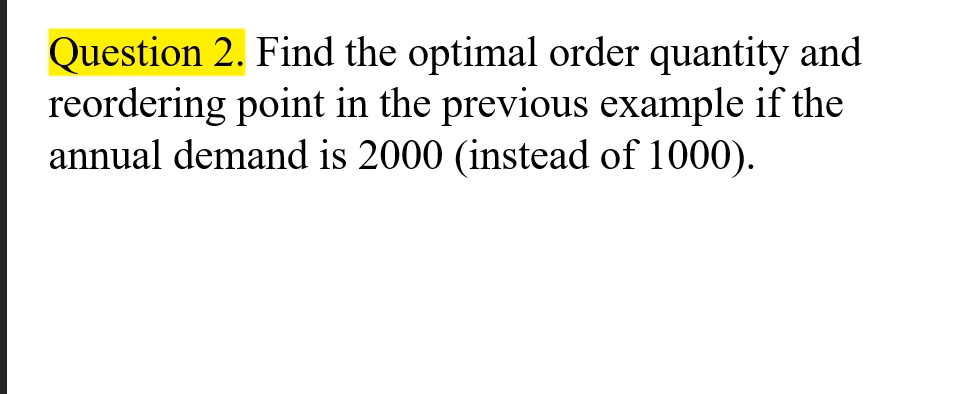
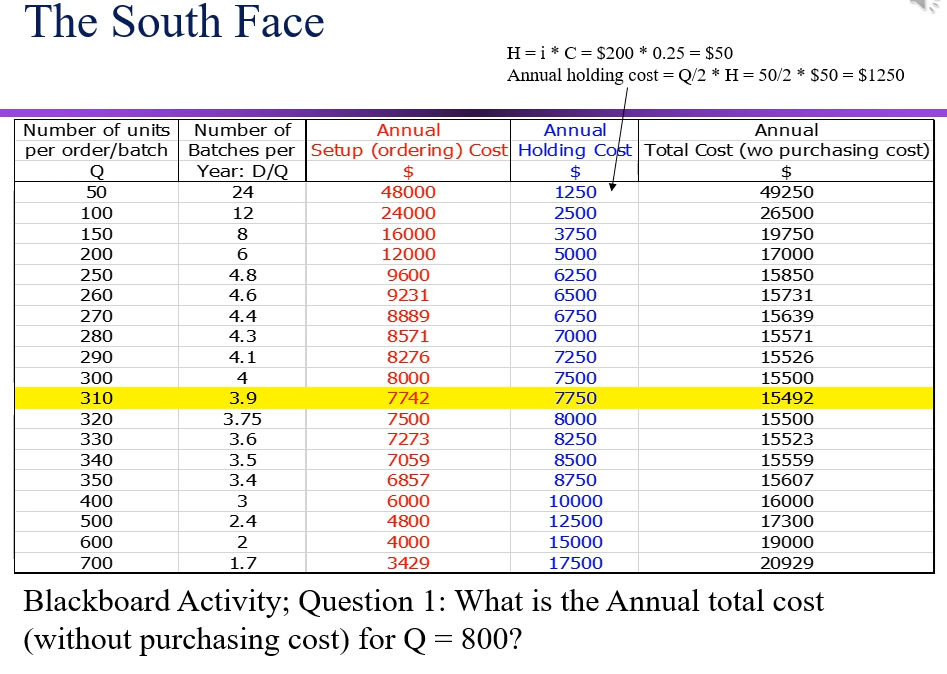
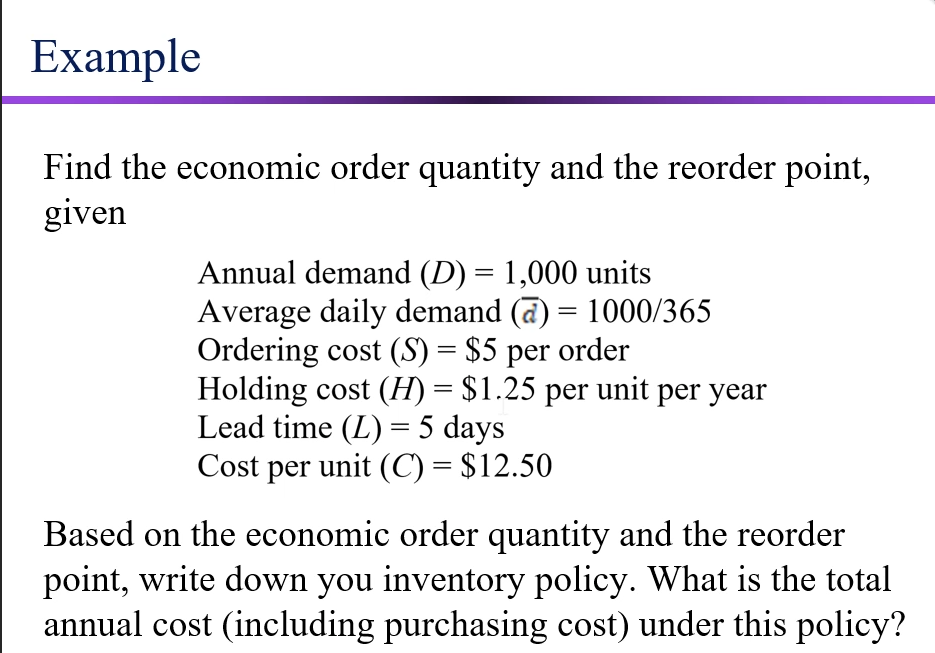
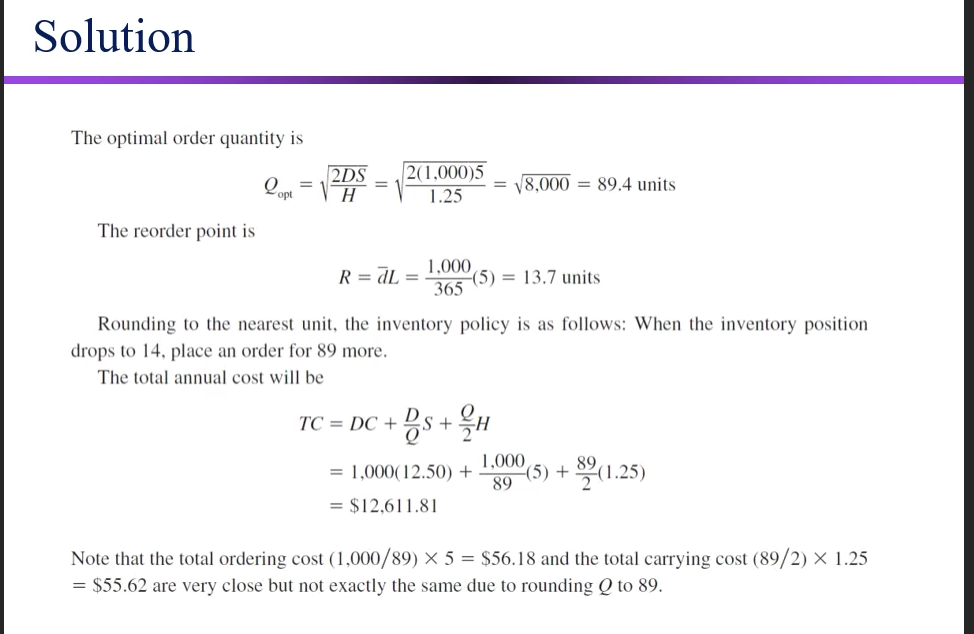
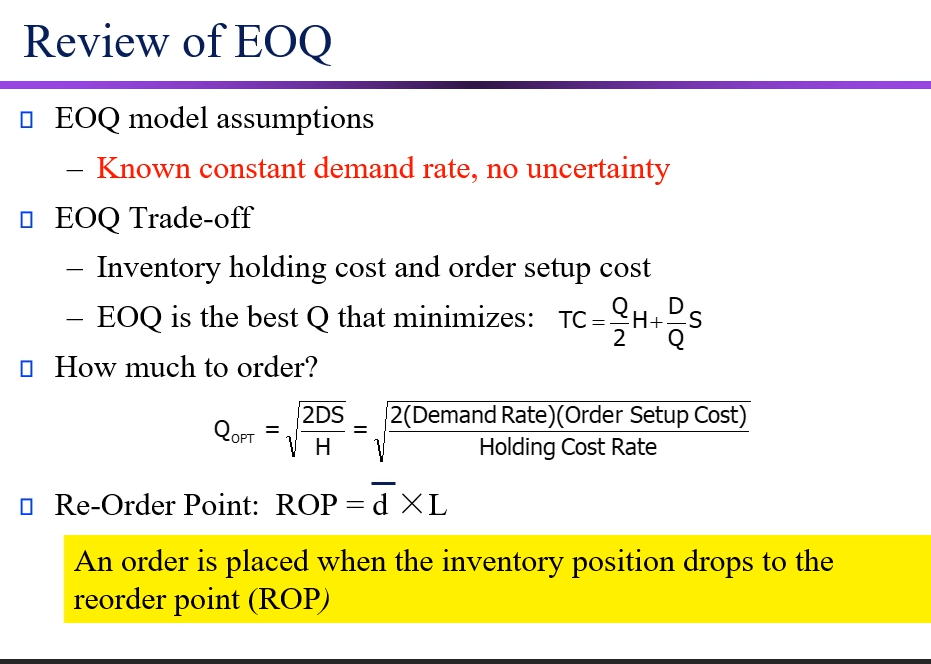
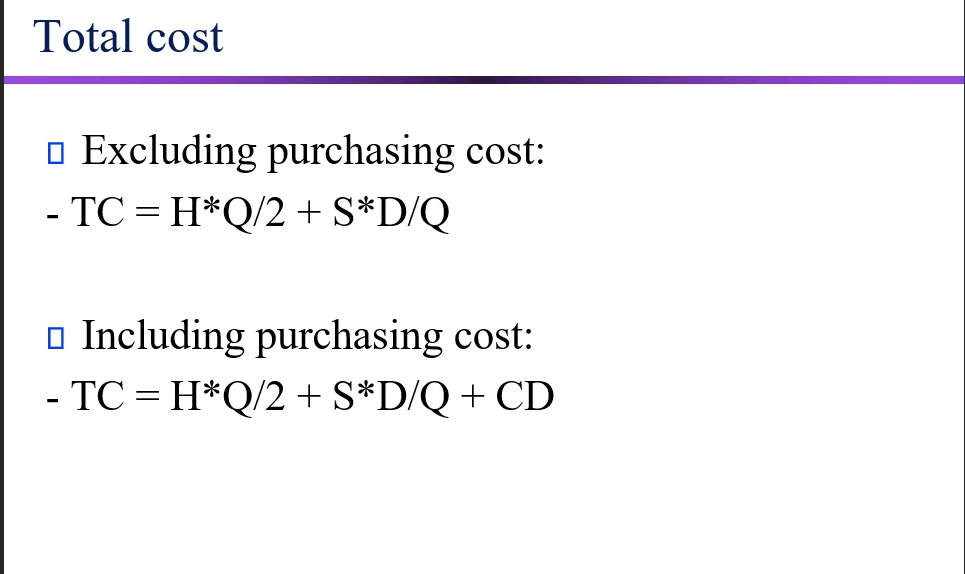
Question 2. Find the optimal order quantity and reordering point in the previous example if the annual demand is 2000 (instead of 1000). The South Face H=i* C= $200 * 0.25 = $50 Annual holding cost=0/2 * H=50/2 * $50 = $1250 Number of units Number of Annual Annual Annual per order/batch Batches per Setup (ordering) Cost Holding Cost Total Cost (wo purchasing cost) Q Year: D/Q $ $ $ 50 24 48000 1250 49250 100 12 24000 2500 26500 150 8 16000 3750 19750 200 6 12000 5000 17000 250 4.8 9600 6250 15850 260 4.6 9231 6500 15731 270 4.4 8889 6750 15639 280 4.3 8571 7000 15571 290 4.1 8276 7250 15526 300 4 8000 7500 15500 310 3.9 7742 7750 15492 320 3.75 7500 8000 15500 330 3.6 7273 8250 15523 340 3.5 7059 8500 15559 350 3.4 6857 8750 15607 400 3 6000 10000 16000 500 2.4 4800 12500 17300 600 2 4000 15000 19000 700 1.7 3429 17500 20929 Blackboard Activity; Question 1: What is the Annual total cost (without purchasing cost) for Q = 800? Example Find the economic order quantity and the reorder point, given Annual demand (D) = 1,000 units Average daily demand (a) = 1000/365 Ordering cost (S) = $5 per order Holding cost (H) = $1.25 per unit per year Lead time (L) = 5 days Cost per unit (C) = $12.50 Based on the economic order quantity and the reorder point, write down you inventory policy. What is the total annual cost (including purchasing cost) under this policy? Solution The optimal order quantity is Q 2DS VH 2(1,000)5 1.25 18,000 = 89.4 units opt The reorder point is R = dL = 1.000 -(5) = 13.7 units 365 Rounding to the nearest unit, the inventory policy is as follows: When the inventory position drops to 14, place an order for 89 more. The total annual cost will be TC = DC + s + H = 1,000(12.50) + 1,000 (5) + 89 82(1.25) = $12.611.81 Note that the total ordering cost (1,000/89) X 5 = $56.18 and the total carrying cost (89/2) X 1.25 = $55.62 are very close but not exactly the same due to rounding Q to 89. Review of EOQ 2 O EOQ model assumptions Known constant demand rate, no uncertainty O EOQ Trade-off Inventory holding cost and order setup cost - EOQ is the best Q that minimizes: TCEQH+Ds H How much to order? 2DS 2(Demand Rate) (Order Setup Cost) QOPT VH Holding Cost Rate Re-Order Point: ROP = d XL : = An order is placed when the inventory position drops to the reorder point (ROP) = = Total cost Excluding purchasing cost: - TC = H*Q/2 + S*D/Q o Including purchasing cost: - TC = H*Q/2 + S*D/Q + CD
Step by Step Solution
There are 3 Steps involved in it
1 Expert Approved Answer
Step: 1 Unlock

Question Has Been Solved by an Expert!
Get step-by-step solutions from verified subject matter experts
Step: 2 Unlock
Step: 3 Unlock
 Study Help