







Question: (On the information given, there is a typo on Variable overhead it should be Variable Overhead (0.15 hr @ $1.70) Direct Materials, Direct Labor, and
(On the information given, there is a typo on "Variable overhead" it should be Variable Overhead (0.15 hr @ $1.70)
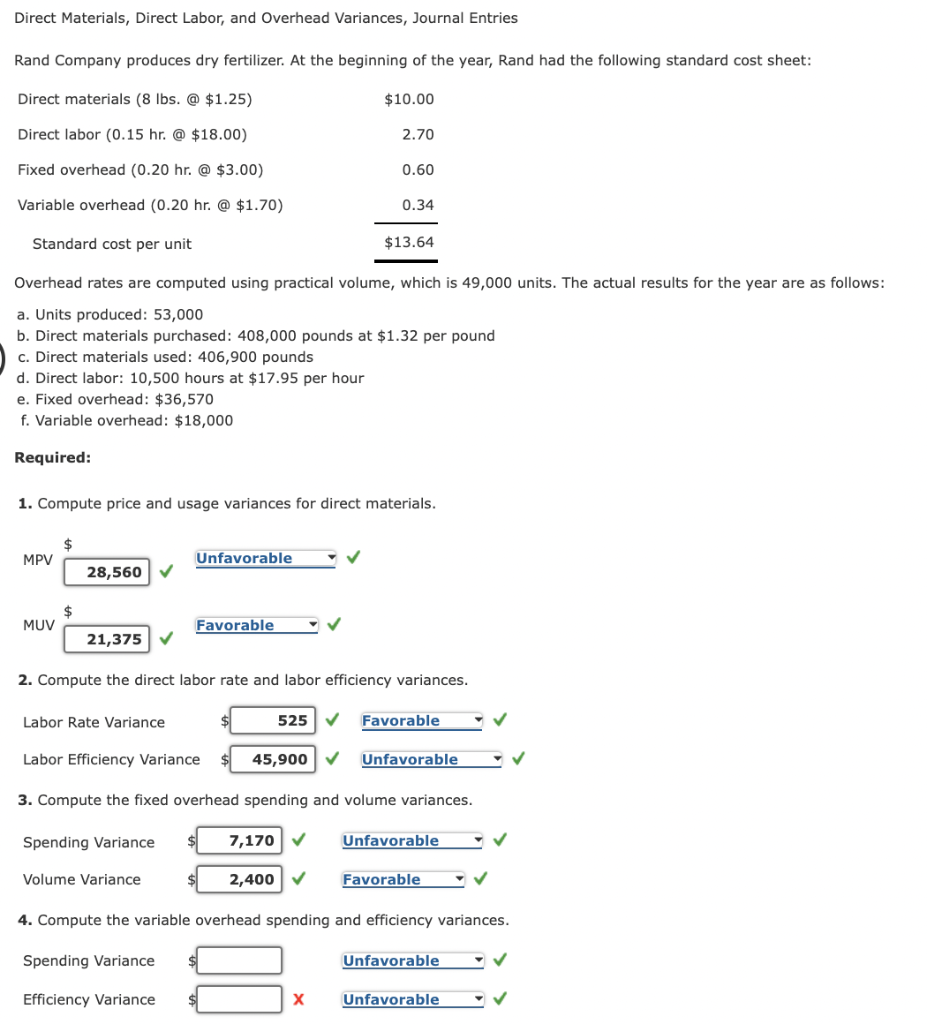
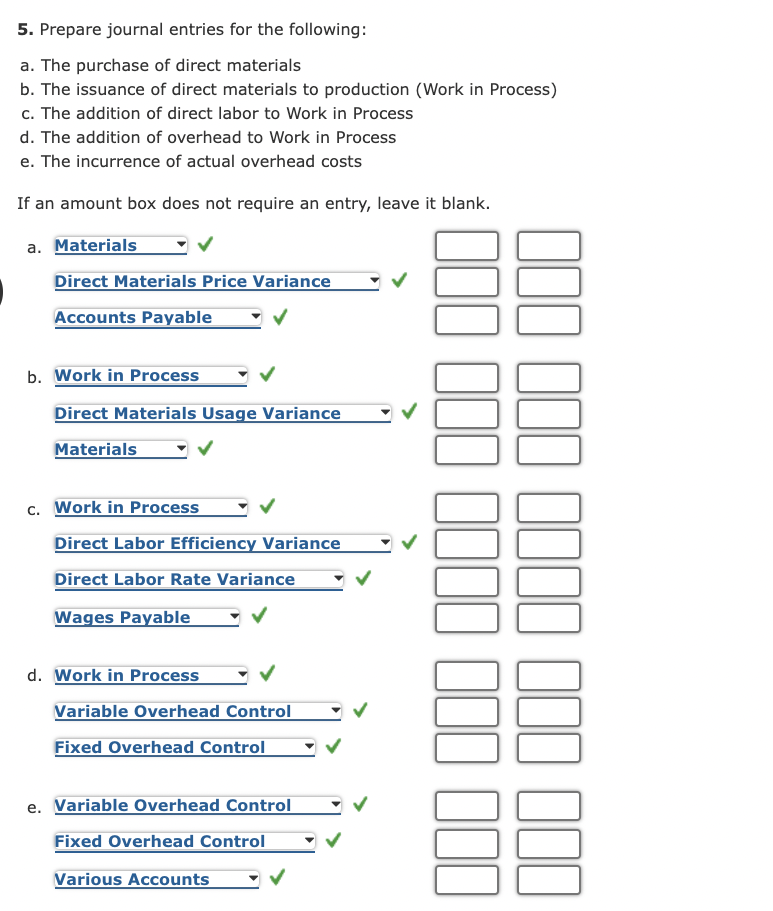
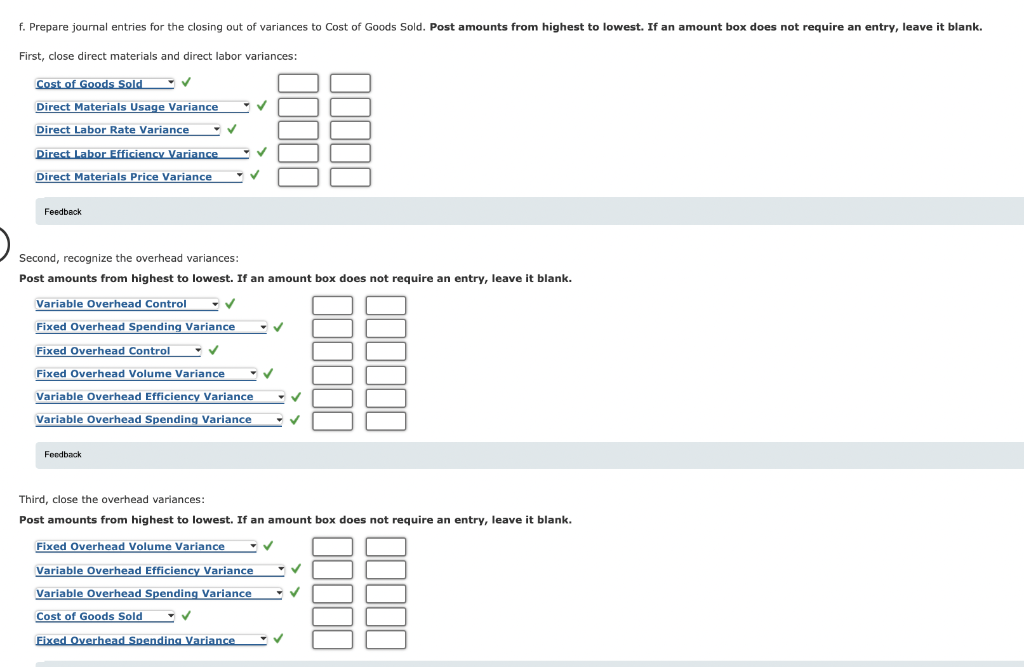
Direct Materials, Direct Labor, and Overhead Variances, Journal Entries Rand Company produces dry fertilizer. At the beginning of the year, Rand had the following standard cost sheet: Direct materials (8 lbs. @ $1.25) $10.00 Direct labor (0.15 hr. @ $18.00) 2.70 Fixed overhead (0.20 hr. @ $3.00) 0.60 Variable overhead (0.20 hr. @ $1.70) 0.34 Standard cost per unit $13.64 Overhead rates are computed using practical volume, which is 49,000 units. The actual results for the year are as follows: a. Units produced: 53,000 b. Direct materials purchased: 408,000 pounds at $1.32 per pound c. Direct materials used: 406,900 pounds d. Direct labor: 10,500 hours at $17.95 per hour e. Fixed overhead: $36,570 f. Variable overhead: $18,000 Required: 1. Compute price and usage variances for direct materials. $ MPV Unfavorable 28,560 $ MUV Favorable 21,375 2. Compute the direct labor rate and labor efficiency variances. Labor Rate Variance 525 Favorable Labor Efficiency Variance 45,900 Unfavorable 3. Compute the fixed overhead spending and volume variances. Spending Variance 7,170 Unfavorable Volume Variance 2,400 Favorable 4. Compute the variable overhead spending and efficiency variances. Spending Variance Unfavorable Efficiency Variance Unfavorable 5. Prepare journal entries for the following: a. The purchase of direct materials b. The issuance of direct materials to production (Work in Process) c. The addition of direct labor to Work in Process d. The addition of overhead to Work in Process e. The incurrence of actual overhead costs If an amount box does not require an entry, leave it blank. a. Materials Direct Materials Price Variance Accounts Payable b. Work in Process Direct Materials Usage Variance Materials C. Work in Process Direct Labor Efficiency Variance Direct Labor Rate Variance 11 110 111 1111 110 III 1101 111 Wages Payable d. Work in Process Variable Overhead Control Fixed Overhead Control e. Variable Overhead Control Fixed Overhead Control Various Accounts f. Prepare journal entries for the closing out of variances to Cost of Goods Sold. Post amounts from highest to lowest. If an amount box does not require an entry, leave it blank. First, close direct materials and direct labor variances: Cost of Goods Sold Direct Materials Usage Variance Direct Labor Rate Variance Direct Labor Efficiency Variance Direct Materials Price Variance Feedback Second, recognize the overhead variances: Post amounts from highest to lowest. If an amount box does not require an entry, leave it blank. Variable Overhead Control Fixed Overhead Spending Variance Fixed Overhead Control Fixed Overhead Volume Variance - Variable Overhead Efficiency Variance Variable Overhead Spending Variance Feedback Third, close the overhead variances: Post amounts from highest to lowest. If an amount box does not require an entry, leave it blank. Fixed Overhead Volume Variance Variable Overhead Efficiency Variance Variable Overhead Spending Variance Cost of Goods Sold Fixed Overhead Spending Variance
Step by Step Solution
There are 3 Steps involved in it

Get step-by-step solutions from verified subject matter experts
 Study Help