







Question: One is wrong Need help finding the wrong answer out of 12 Goal-setting theory argues that employees' performance is maximized when performance targets are unchallenging
One is wrong Need help finding the wrong answer out of 12
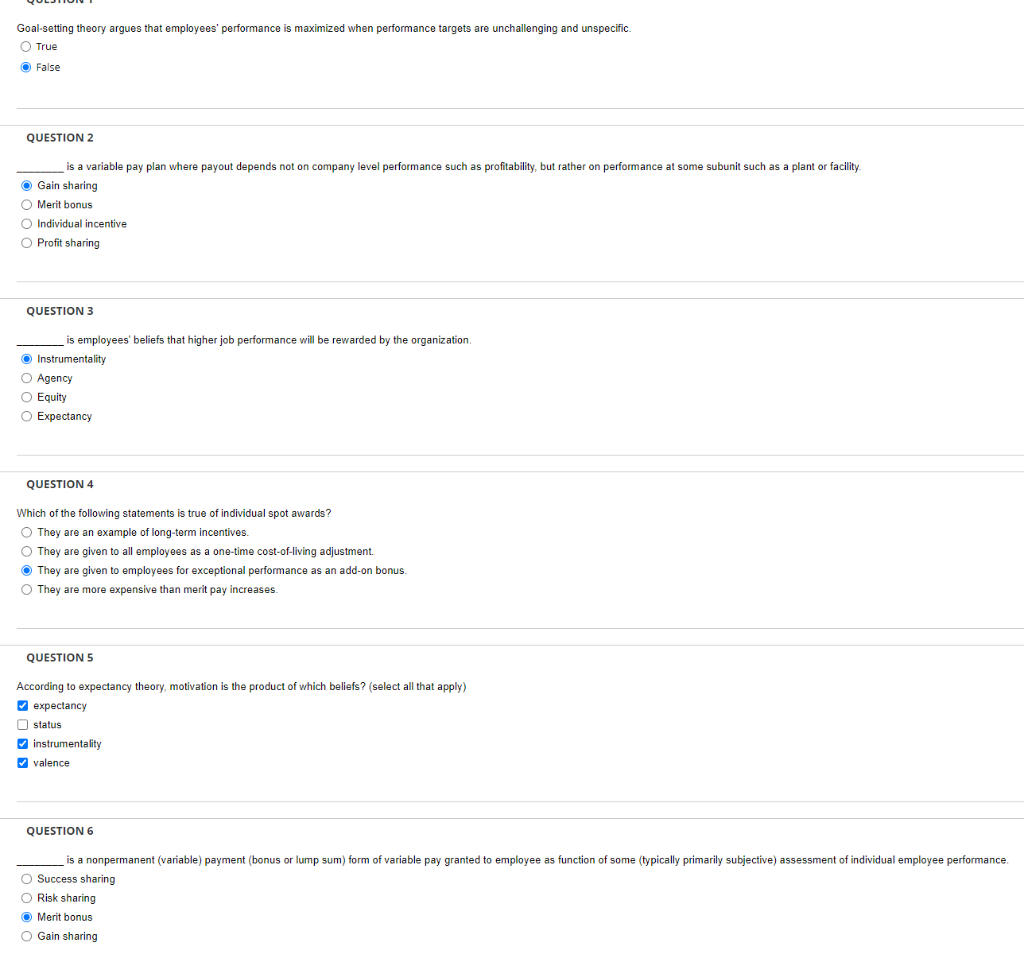
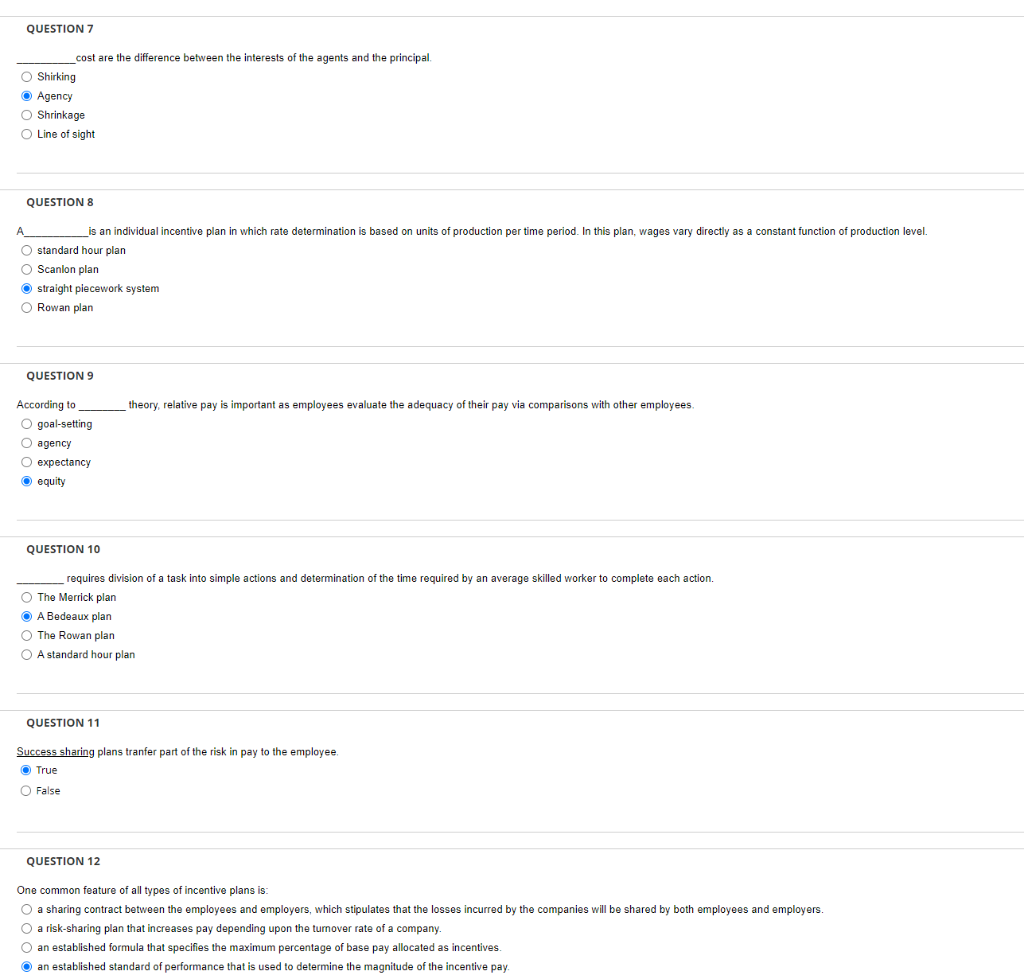
Goal-setting theory argues that employees' performance is maximized when performance targets are unchallenging and unspecific. True False QUESTION 2 is a variable pay plan where payout depends not on company level performance such as profitability, but rather on performance at some subunit such as a plant or facility. Gain sharing Merit bonus Individual incentive Profit sharing QUESTION 3 is employees' beliefs that higher job performance will be rewarded by the organization. Instrumentality Agency Equity Expectancy QUESTION 4 Which of the following statements is true of individual spot awards? They are an example of long-term incentives. They are given to all employees as a one-time cost-of-living adjustment. They are given to employees for exceptional performance as an add-on bonus. They are more expensive than merit pay increases. QUESTION 5 According to expectancy theory, motivation is the product of which beliefs? (select all that apply) expectancy status instrumentality valence QUESTION 6 Success sharing Risk sharing Merit bonus Gain sharing cost are the difference between the interests of the agents and the principal. Shirking Agency Shrinkage Line of sight QUESTION 8 standard hour plan Scanlon plan straight piecework system Rowan plan QUESTION 9 According to theory, relative pay is important as employees evaluate the adequacy of their pay via comparisons with other employees. goal-setting agency expectancy equity QUESTION 10 requires division of a task into simple actions and determination of the time required by an average skilled worker to complete each action. The Merrick plan A Bedeaux plan The Rowan plan A standard hour plan QUESTION 11 Success sharing plans tranfer part of the risk in pay to the employee. True False QUESTION 12 One common feature of all types of incentive plans is: a sharing contract between the employees and employers, which stipulates that the losses incurred by the companies will be shared by both employees and employers. a risk-sharing plan that increases pay depending upon the turnover rate of a company. an established formula that specifies the maximum percentage of base pay allocated as incentives. an established standard of performance that is used to determine the magnitude of the incentive pay
Step by Step Solution
There are 3 Steps involved in it

Get step-by-step solutions from verified subject matter experts
 Study Help