







Question: ONLY ANSWER 1 2 &3, PLEASE DO NOT PLAGIARIZE BECAUSE I HAD TO REPORT THE LAST ONE. THE QUESTIONS IS AT THE BOTTOM OF THE
ONLY ANSWER 1 2 &3, PLEASE DO NOT PLAGIARIZE BECAUSE I HAD TO REPORT THE LAST ONE. THE QUESTIONS IS AT THE BOTTOM OF THE CASE STUDY.
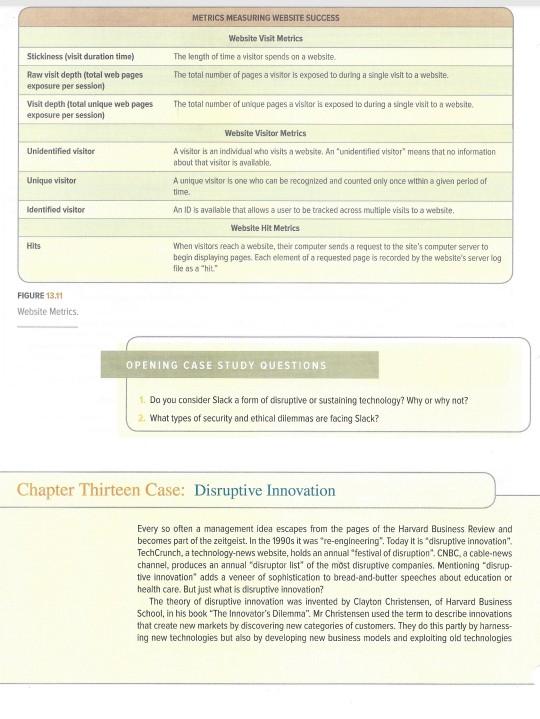
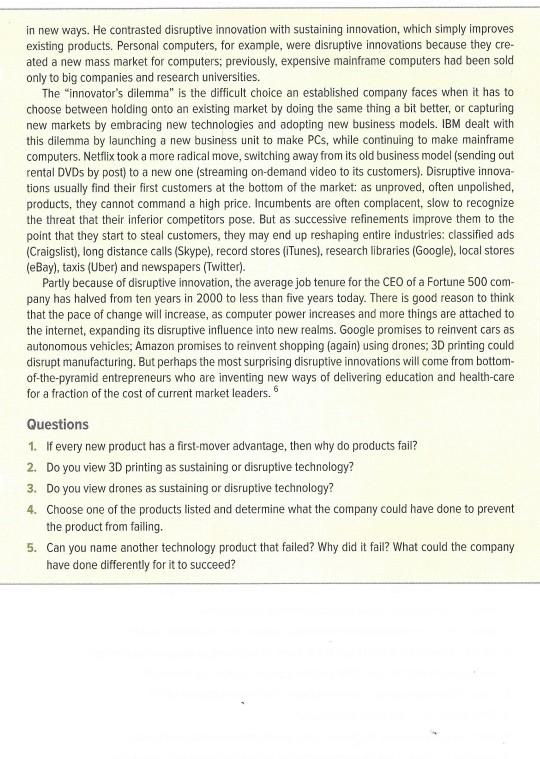
METRICS MEASURING WEBSITE SUCCESS Website Visit Metrics The length of time a visitor spends on a website The total number of pages a visitor is exposed to during a single visit to a website, Stickiness (visit duration time) Raw visit depth (total web pages exposure per session) Visit depth total unique web pages exposure per session) The total number of unique pages a viskor is exposed to during a single weit to a website, Unidentified visitor Unique visitor Website Visitor Metrics A Visitor is an individual to visits a website. An unidentified visitor" means that no information about that visitor is available A unique visitor is one who can be recognized and counted only once within a given period of time An ID is available that allows a user to be tracked across multiple visits to a website, Website Hit Metrics When visitors reach a website, their computer sends a request to the site's computer server to begin displaying pages. Each clement of a requested page is recorded by the website's server log file as a "hit. Identified visitor Hits FIGURE 13.11 Website Metrics. OPENING CASE STUDY QUESTIONS Do you consider Slack a form of disruptive or sustaining technology? Why or why not? What types of security and ethical dilemmas are facing Slack? Chapter Thirteen Case: Disruptive Innovation Every so often a management idea escapes from the pages of the Harvard Business Review and becomes part of the zeitgeist. In the 1990s it was re-engineering". Today it is disruptive innovation TechCrunch, a technology-news website, holds an annual festival of disruption". CNBC, a cable-news channel, produces an annual "disruptor list of the most disruptive companies, Mentioning "disrup- tive innovation adds a veneer of sophistication to bread-and-butter speeches about education or health care. But just what is disruptive innovation? The theory of disruptive innovation was invented by Clayton Christensen, of Harvard Business School, in his book "The Innovator's Dilemma". Mr Christensen used the term to describe innovations that create new markets by discovering new categories of customers. They do this partly by harness- ing new technologies but also by developing new business models and exploiting old technologles in new ways. He contrasted disruptive innovation with sustaining innovation, which simply improves existing products. Personal computers, for example, were disruptive innovations because they cre- ated a new mass market for computers, previously, expensive mainframe computers had been sold only to big companies and research universities. The "innovator's dilemma" is the difficult choice an established company faces when it has to choose between holding onto an existing market by doing the same thing a bit better, or capturing new markets by embracing new technologies and adopting new business models. IBM dealt with this dilemma by launching a new business unit to make PCs, while continuing to make mainframe computers. Netflix took a more radical move, switching away from its old business model (sending out rental DVDs by post) to a new one (streaming on-demand video to its customers). Disruptive innova- tions usually find their first customers at the bottom of the market: as unproved, often unpolished, products, they cannot command a high price. Incumbents are often complacent, slow to recognize the threat that their inferior competitors pose. But as successive refinements improve them to the point that they start to steal customers, they may end up reshaping entire industries: classified ads (Craigslist), long distance calls (Skype), record stores (iTunes), research libraries (Google), local stores (eBay), taxis (Uber) and newspapers (Twitter). Partly because of disruptive innovation, the average job tenure for the CEO of a Fortune 500 com- pany has halved from ten years in 2000 to less than five years today. There is good reason to think that the pace of change will increase, as computer power increases and more things are attached to the internet, expanding its disruptive influence into new realms, Google promises to reinvent cars as autonomous vehicles: Amazon promises to reinvent shopping (again) using drones; 3D printing could disrupt manufacturing. But perhaps the most surprising disruptive innovations will come from bottom- of-the-pyramid entrepreneurs who are inventing new ways of delivering education and health-care for a fraction of the cost of current market leaders. Questions 1. If every new product has a first-mover advantage, then why do products fail? 2. Do you view 3D printing as sustaining or disruptive technology? 3. Do you view drones as sustaining or disruptive technology? 4. Choose one of the products listed and determine what the company could have done to prevent the product from failing. 5. Can you name another technology product that failed? Why did it fail? What could the company have done differently for it to succeed
Step by Step Solution
There are 3 Steps involved in it
1 Expert Approved Answer
Step: 1 Unlock

Question Has Been Solved by an Expert!
Get step-by-step solutions from verified subject matter experts
Step: 2 Unlock
Step: 3 Unlock
 Study Help