







Question: ONLY NEED HELP WITH QUESTION 4. QUESTION 2 IS PROVIDED FOR INFORMATION. a. 2. A manufacturer buys cardboard boxes from a supplier. The annual demand
ONLY NEED HELP WITH QUESTION 4. QUESTION 2 IS PROVIDED FOR INFORMATION.
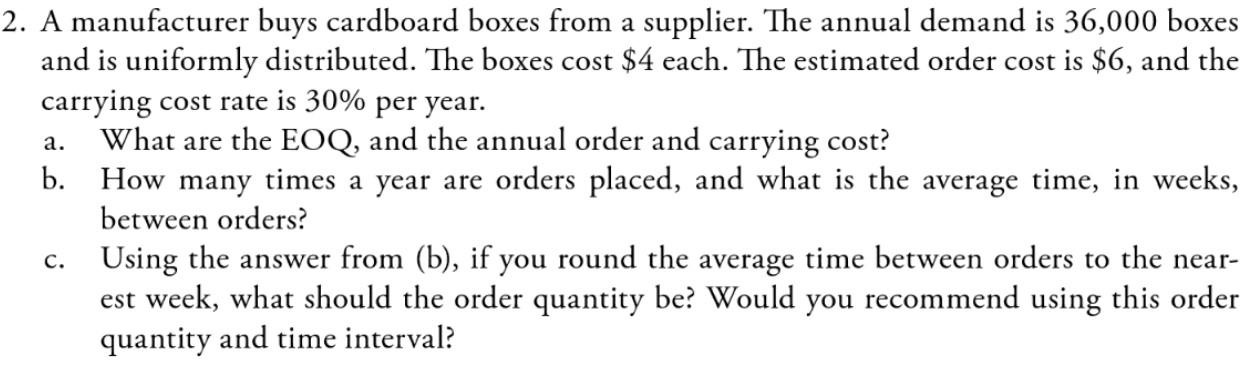
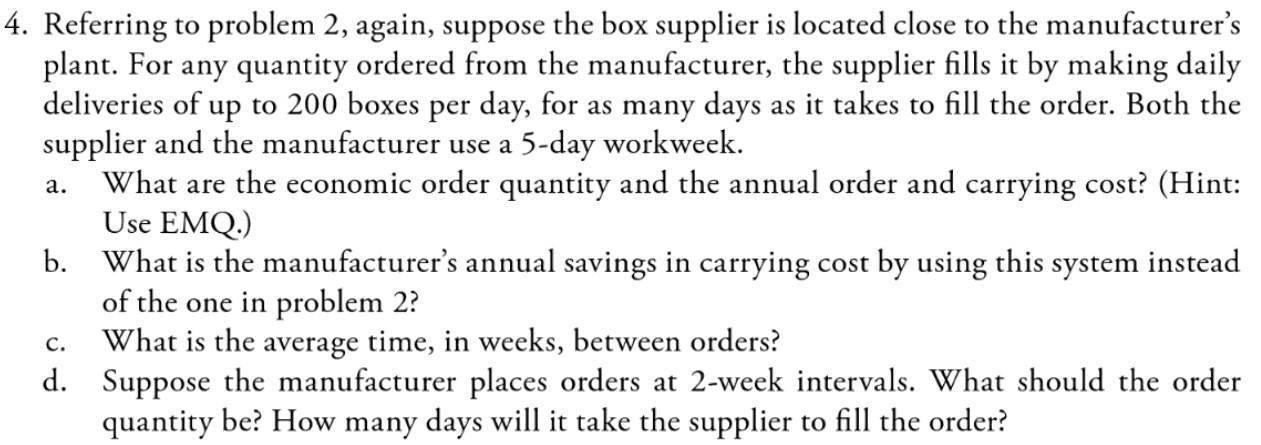
a. 2. A manufacturer buys cardboard boxes from a supplier. The annual demand is 36,000 boxes and is uniformly distributed. The boxes cost $4 each. The estimated order cost is $6, and the carrying cost rate is 30% per year. What are the EOQ, and the annual order and carrying cost? b. How many times a year are orders placed, and what is the average time, in weeks, between orders? Using the answer from (b), if you round the average time between orders to the near- est week, what should the order quantity be? Would you recommend using this order quantity and time interval? c. a. 4. Referring to problem 2, again, suppose the box supplier is located close to the manufacturer's plant. For any quantity ordered from the manufacturer, the supplier fills it by making daily deliveries of up to 200 boxes per day, for as many days as it takes to fill the order. Both the supplier and the manufacturer use a 5-day workweek. What are the economic order quantity and the annual order and carrying cost? (Hint: Use EMQ.) b. What is the manufacturer's annual savings in carrying cost by using this system instead of the one in problem 2? What is the average time, in weeks, between orders? d. Suppose the manufacturer places orders at 2-week intervals. What should the order quantity be? How many days will it take the supplier to fill the order? CStep by Step Solution
There are 3 Steps involved in it
1 Expert Approved Answer
Step: 1 Unlock

Question Has Been Solved by an Expert!
Get step-by-step solutions from verified subject matter experts
Step: 2 Unlock
Step: 3 Unlock
 Study Help