Question: Only Pseudocode!!!! No Java or other languages This questions is dealing with Arrays from chapter 6 from programming logic and design book. A rental car
Only Pseudocode!!!! No Java or other languages
This questions is dealing with Arrays from chapter 6 from programming logic and design book.
A rental car company requires a car return program that allows works as follows:
a. Assumes a maximum of 500 rentals, i.e., it is possible to have fewer than 500
rentals, just not more than that number.
b. The program must allow an employee to enter:
i. The rental ID, e.g., EL101
ii. The beginning odometer reading noted on the rental contract
iii. The ending odometer reading from the car
iv. The base rental charge that the customer has paid when renting the vehicle
c. The program must allow the user to continuously enter this input, but allow
them to stop by entering ZZ999 for the rental ID.
d. For each customer, the program must calculate and output the additional
amount owed, if any, which is determined as follows:
i. All customers are allowed 500 miles as part of the base rental charge
ii. For up to 150 miles over the allowed 500, the customer has to pay an additional $2 per mile
iii. For any excess beyond 150 miles, the customer must pay $3 per mile
iv. A tax of 6.5% is applied on the calculated amount output the amount before tax, the dollar amount of the tax itself, and the total after tax
e. When the user stops data entry, the program must determine and output:
i. The most miles driven by a customer, and output that along with the rental ID
ii. The least miles driven and output that along with the rental ID
iii. The total additional amount collected from customers
iv. The average amount collected from customers
v. The total revenue from rentals, which would include both the base rental
charges and the additional amounts collected
f. The program must also allow the user to enter a rental ID, then search for that
ID and if it is found, display all information pertaining to that rental the ID,
odometer readings, base rental charge, additional amounts before and after tax,
and the tax itself, all in the correct order as you would expect to see on a bill or
statement
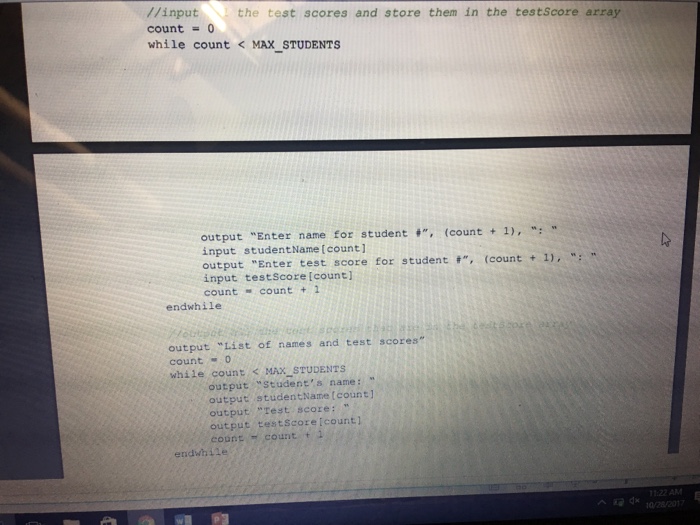
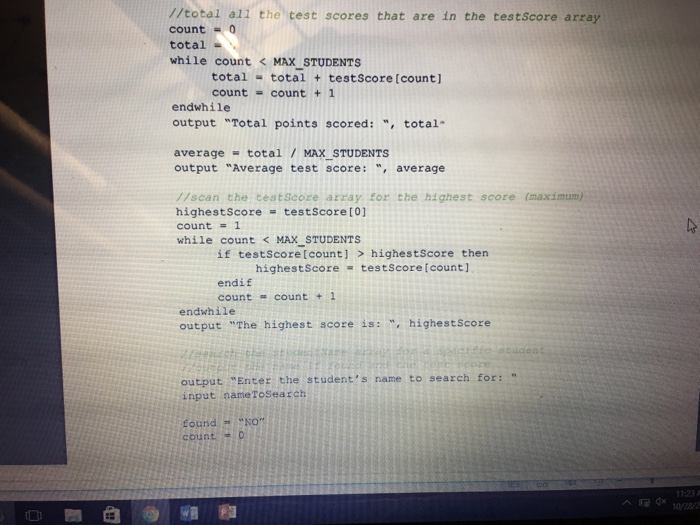
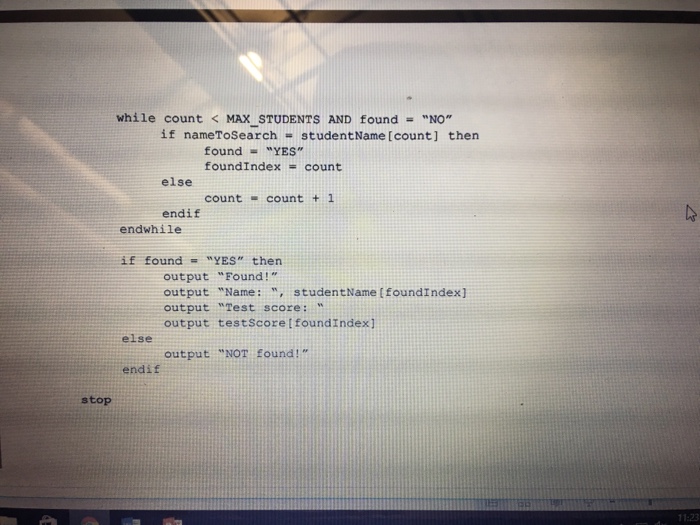
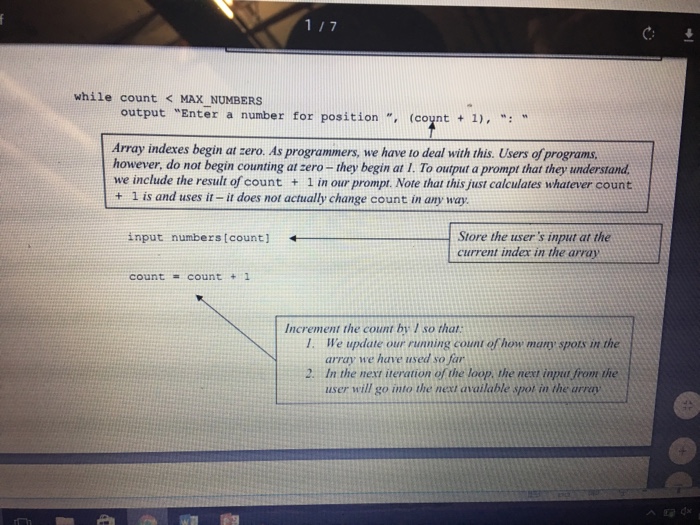
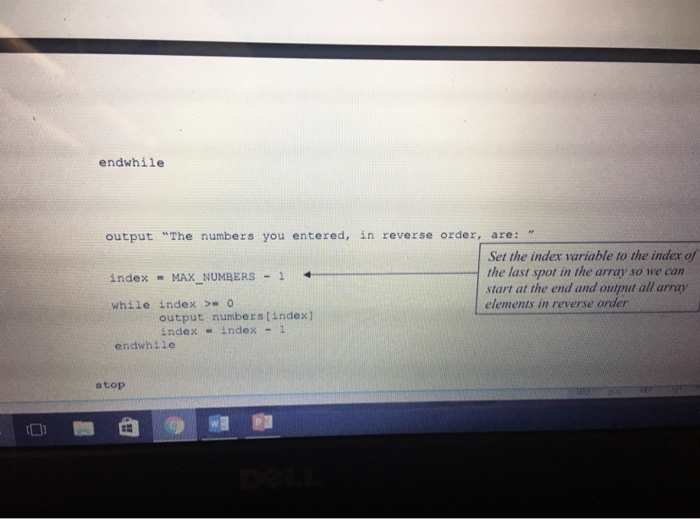
I posted some pics of examples of what the pseudocode looks like. The 1st 3 pics is same example.
 Only Pseudocode!!!! No Java or other languages This questions is dealing
with Arrays from chapter 6 from programming logic and design book. A
rental car company requires a car return program that allows works as
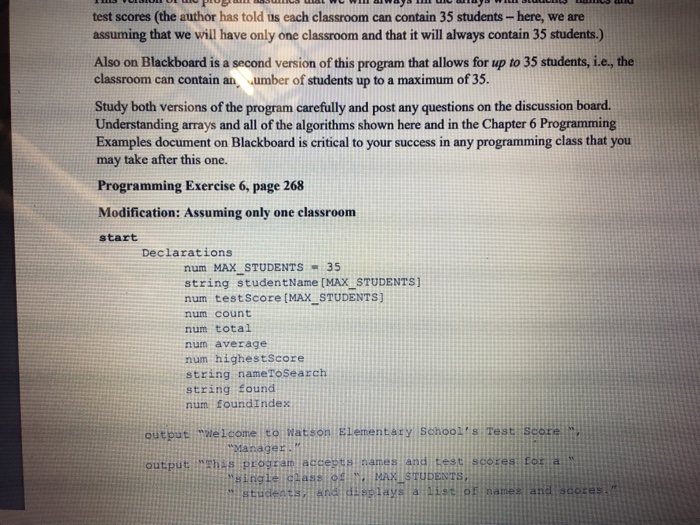
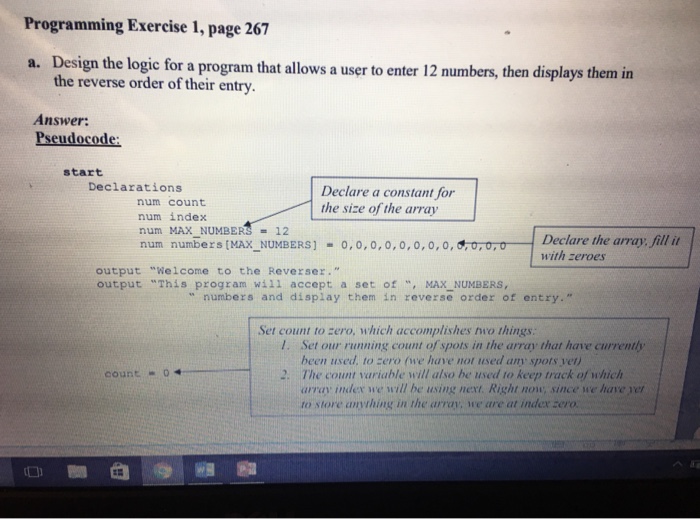
The next pics is another example
follows: a. Assumes a maximum of 500 rentals, i.e., it is possible
to have fewer than 500 rentals, just not more than that number.
b. The program must allow an employee to enter: i. The rental
ID, e.g., EL101 ii. The beginning odometer reading noted on the rental

Programming Exercise 1, page 267 a. Design the logic for a program that allows a user to enter 12 numbers, then displays them in the reverse order of their entry. Answer: Pseudocode start Declarations Declare a constant for the size of the array num count num index num MAX NUMBER = 12 num numbers(MAX NUMBERS] . 0,0,0,0,0,0,0,0, 0,0 Declare the array fill it with zeroes output "Welcome to the Reverser." output This program will accept a set of , MAX NUMBERS, " numbers and display them in reverse order of entry." Set count to zero, which accomplishes wo things Set our running count of spots in the array that have currently been used. to cero (we have not used any spots vet) The count variable will also he used to keep track of which array index we will he using next. Right now, since we have yer to store anthing in the array, we are at index zero l. count O 2. Programming Exercise 1, page 267 a. Design the logic for a program that allows a user to enter 12 numbers, then displays them in the reverse order of their entry. Answer: Pseudocode start Declarations Declare a constant for the size of the array num count num index num MAX NUMBER = 12 num numbers(MAX NUMBERS] . 0,0,0,0,0,0,0,0, 0,0 Declare the array fill it with zeroes output "Welcome to the Reverser." output This program will accept a set of , MAX NUMBERS, " numbers and display them in reverse order of entry." Set count to zero, which accomplishes wo things Set our running count of spots in the array that have currently been used. to cero (we have not used any spots vet) The count variable will also he used to keep track of which array index we will he using next. Right now, since we have yer to store anthing in the array, we are at index zero l. count O 2

Step by Step Solution

There are 3 Steps involved in it

1 Expert Approved Answer
Step: 1 Unlock blur-text-image
Question Has Been Solved by an Expert!

Get step-by-step solutions from verified subject matter experts

Step: 2 Unlock
Step: 3 Unlock

Students Have Also Explored These Related Databases Questions!