







Question: OPTIONS ARE THE SAME FOR SELECTIONS: Light , Moderate or heavy , Heavy, Moderate, Light or moderate, Light or Heavy, Indifferent. Senior management at Humber
OPTIONS ARE THE SAME FOR SELECTIONS:
Light ,
Moderate or heavy ,
Heavy,
Moderate,
Light or moderate,
Light or Heavy,
Indifferent.
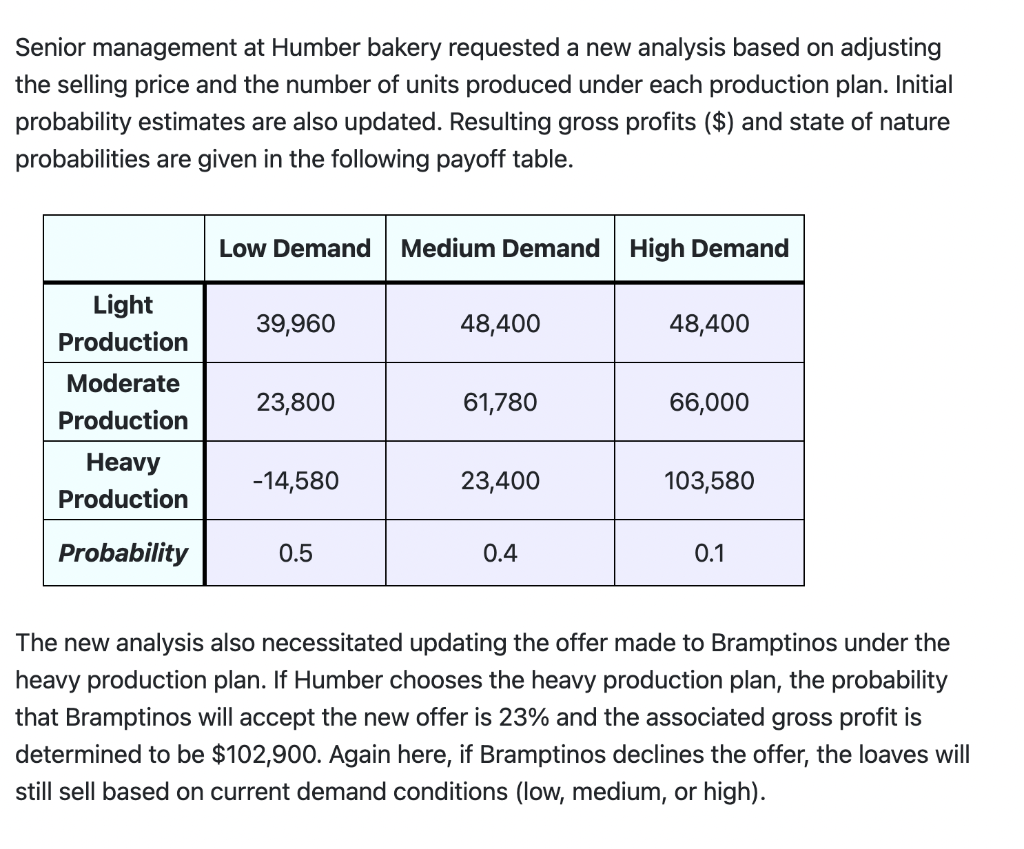
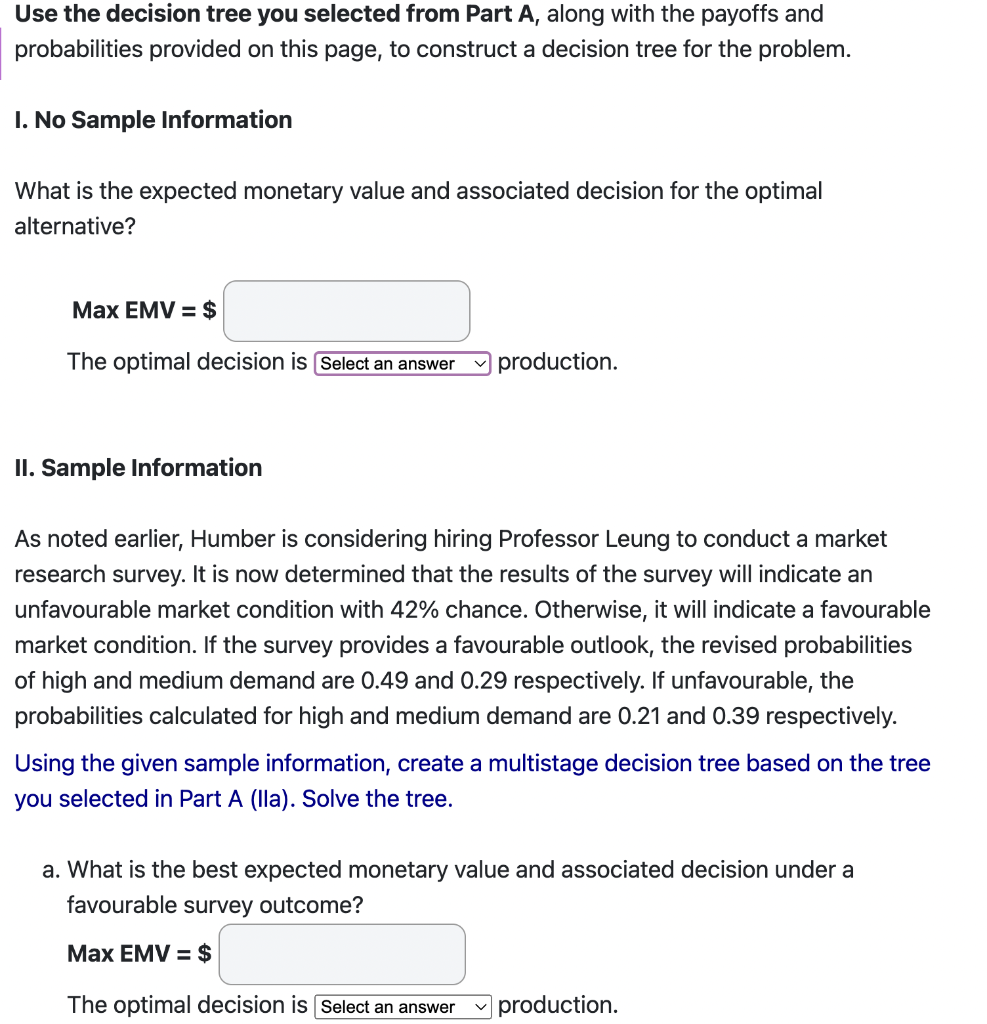
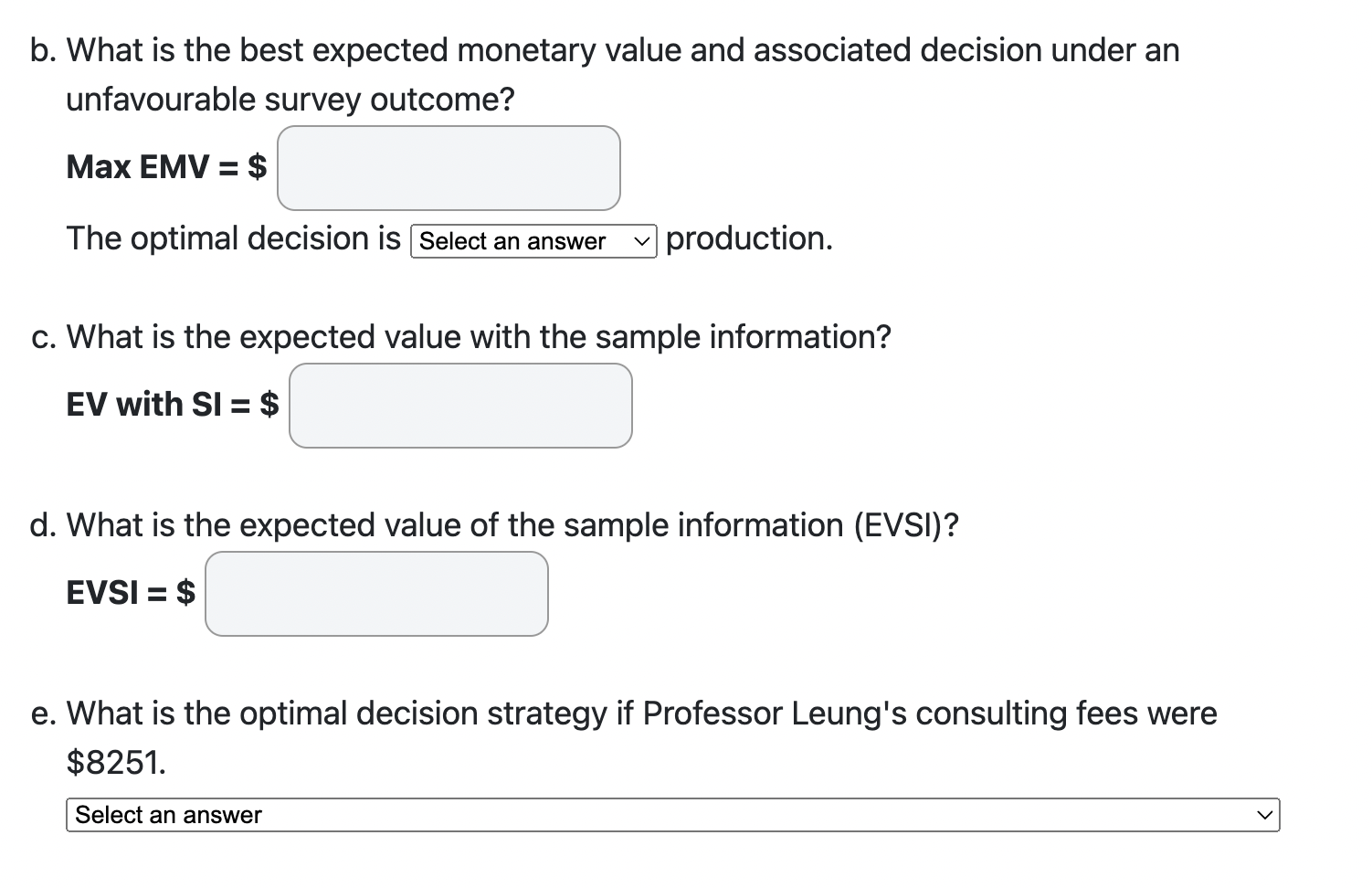
Senior management at Humber bakery requested a new analysis based on adjusting the selling price and the number of units produced under each production plan. Initial probability estimates are also updated. Resulting gross profits (\$) and state of nature probabilities are given in the following payoff table. The new analysis also necessitated updating the offer made to Bramptinos under the heavy production plan. If Humber chooses the heavy production plan, the probability that Bramptinos will accept the new offer is 23% and the associated gross profit is determined to be $102,900. Again here, if Bramptinos declines the offer, the loaves will still sell based on current demand conditions (low, medium, or high). Use the decision tree you selected from Part A, along with the payoffs and probabilities provided on this page, to construct a decision tree for the problem. I. No Sample Information What is the expected monetary value and associated decision for the optimal alternative? MaxEMV=$ The optimal decision is production. II. Sample Information As noted earlier, Humber is considering hiring Professor Leung to conduct a market research survey. It is now determined that the results of the survey will indicate an unfavourable market condition with 42% chance. Otherwise, it will indicate a favourable market condition. If the survey provides a favourable outlook, the revised probabilities of high and medium demand are 0.49 and 0.29 respectively. If unfavourable, the probabilities calculated for high and medium demand are 0.21 and 0.39 respectively. Using the given sample information, create a multistage decision tree based on the tree you selected in Part A (Ila). Solve the tree. a. What is the best expected monetary value and associated decision under a favourable survey outcome? Max EMV = \$ The optimal decision is production. b. What is the best expected monetary value and associated decision under an unfavourable survey outcome? Max EMV = \$ The optimal decision is production. c. What is the expected value with the sample information? EV with SI=$ d. What is the expected value of the sample information (EVSI)? EVSI=$ e. What is the optimal decision strategy if Professor Leung's consulting fees were $8251. Select an answer Senior management at Humber bakery requested a new analysis based on adjusting the selling price and the number of units produced under each production plan. Initial probability estimates are also updated. Resulting gross profits (\$) and state of nature probabilities are given in the following payoff table. The new analysis also necessitated updating the offer made to Bramptinos under the heavy production plan. If Humber chooses the heavy production plan, the probability that Bramptinos will accept the new offer is 23% and the associated gross profit is determined to be $102,900. Again here, if Bramptinos declines the offer, the loaves will still sell based on current demand conditions (low, medium, or high). Use the decision tree you selected from Part A, along with the payoffs and probabilities provided on this page, to construct a decision tree for the problem. I. No Sample Information What is the expected monetary value and associated decision for the optimal alternative? MaxEMV=$ The optimal decision is production. II. Sample Information As noted earlier, Humber is considering hiring Professor Leung to conduct a market research survey. It is now determined that the results of the survey will indicate an unfavourable market condition with 42% chance. Otherwise, it will indicate a favourable market condition. If the survey provides a favourable outlook, the revised probabilities of high and medium demand are 0.49 and 0.29 respectively. If unfavourable, the probabilities calculated for high and medium demand are 0.21 and 0.39 respectively. Using the given sample information, create a multistage decision tree based on the tree you selected in Part A (Ila). Solve the tree. a. What is the best expected monetary value and associated decision under a favourable survey outcome? Max EMV = \$ The optimal decision is production. b. What is the best expected monetary value and associated decision under an unfavourable survey outcome? Max EMV = \$ The optimal decision is production. c. What is the expected value with the sample information? EV with SI=$ d. What is the expected value of the sample information (EVSI)? EVSI=$ e. What is the optimal decision strategy if Professor Leung's consulting fees were $8251. Select an
Step by Step Solution
There are 3 Steps involved in it

Get step-by-step solutions from verified subject matter experts
 Study Help