







Question: Options for dropdown 1: $12, $24, $18, or $30 Options for dropdown 2 in year 1: $8.51, $7.00, $14.18 or $15.75 options for year 2:
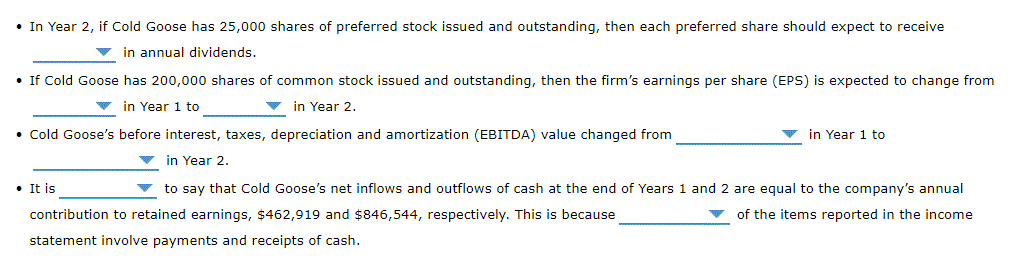
Options for dropdown 1: $12, $24, $18, or $30
Options for dropdown 2 in year 1: $8.51, $7.00, $14.18 or $15.75 options for year 2: $8.92, $10.42, $17.37, $20.44
Options for dropdown 3 in year 1: $4,284,000, $3,750,000, $14,400.000, $4,851,000 options for year 2: $19,363,125, $6,172,125, $4,687,500, or $16,147,125
Options for dropdown 4 line 1: incorrect or correct and then for the last dropdown box is: all or all but one
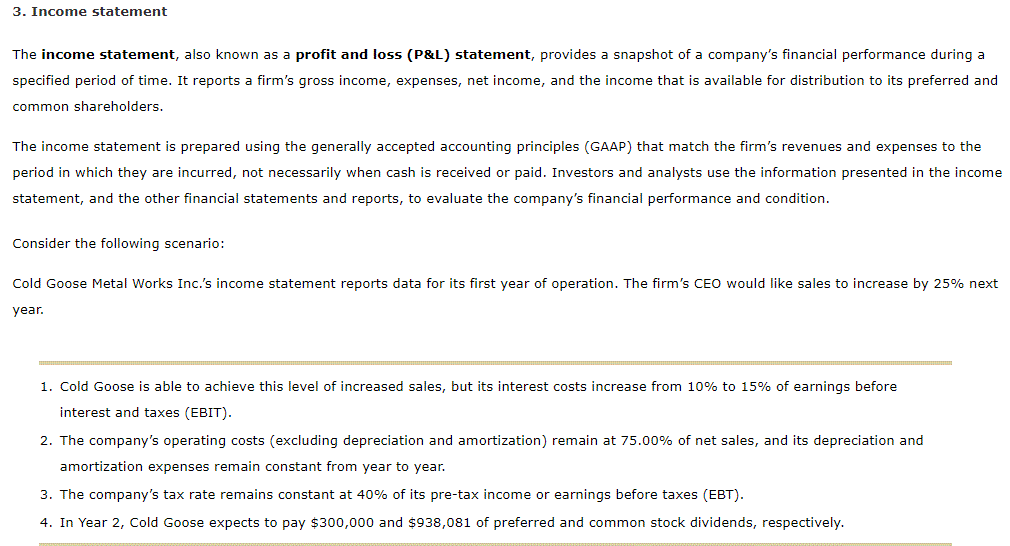
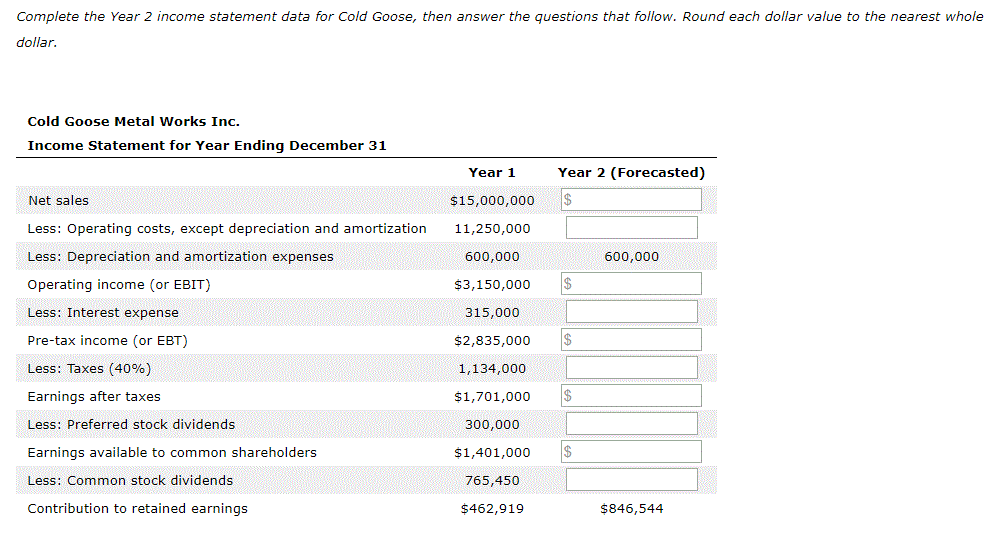
3. Income statement The income statement, also known as a profit and loss (P&L) statement, provides a snapshot of a company's financial performance during a specified period of time. It reports a firm's gross income, expenses, net income, and the income that is available for distribution to its preferred and common shareholders. The income statement is prepared using the generally accepted accounting principles (GAAP) that match the firm's revenues and expenses to the period in which they are incurred, not necessarily when cash is received or paid. Investors and analysts use the information presented in the income statement, and the other financial statements and reports, to evaluate the company's financial performance and condition. Consider the following scenario: Cold Goose Metal Works Inc.'s income statement reports data for its first year of operation. The firm's CEO would like sales to increase by 25% next year. 1. Cold Goose is able to achieve this level of increased sales, but its interest costs increase from 10% to 15% of earnings before interest and taxes (EBIT). 2. The company's operating costs (excluding depreciation and amortization) remain at 75.00% of net sales, and its depreciation and amortization expenses remain constant from year to year. 3. The company's tax rate remains constant at 40% of its pre-tax income or earnings before taxes (EBT). 4. In Year 2, Cold Goose expects to pay $300,000 and $938,081 of preferred and common stock dividends, respectively. Complete the Year 2 income statement data for Cold Goose, then answer the questions that follow. Round each dollar value to the nearest whole dollar. Cold Goose Metal Works Inc. Income Statement for Year Ending December 31 Year 2 (Forecasted) 600,000 $ Net sales Less: Operating costs, except depreciation and amortization Less: Depreciation and amortization expenses Operating income (or EBIT) Less: Interest expense Pre-tax income (or EBT) Less: Taxes (40%) Earnings after taxes Less: Preferred stock dividends Year 1 $15,000,000 11,250,000 600,000 $3,150,000 315,000 $2,835,000 1,134,000 $1,701,000 300,000 $1,401,000 765,450 $ $ Earnings available to common shareholders $ Less: Common stock dividends Contribution to retained earnings $462,919 $846,544 In Year 2, if Cold Goose has 25,000 shares of preferred stock issued and outstanding, then each preferred share should expect to receive in annual dividends. If Cold Goose has 200,000 shares of common stock issued and outstanding, then the firm's earnings per share (EPS) is expected to change from in Year 1 to _ in Year 2. Cold Goose's before interest, taxes, depreciation and amortization (EBITDA) value changed from in Year 1 to in Year 2. It is to say that Cold Goose's net inflows and outflows of cash at the end of Years 1 and 2 are equal to the company's annual contribution to retained earnings, $462,919 and $846,544, respectively. This is because of the items reported in the income statement involve payments and receipts of cash
Step by Step Solution
There are 3 Steps involved in it

Get step-by-step solutions from verified subject matter experts
 Study Help