



Question: Options: Match each definition with its related term by selecting the appropriate term in the dropdown provided. Note: Select None of these are correct if
Options:


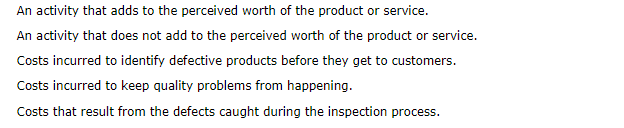

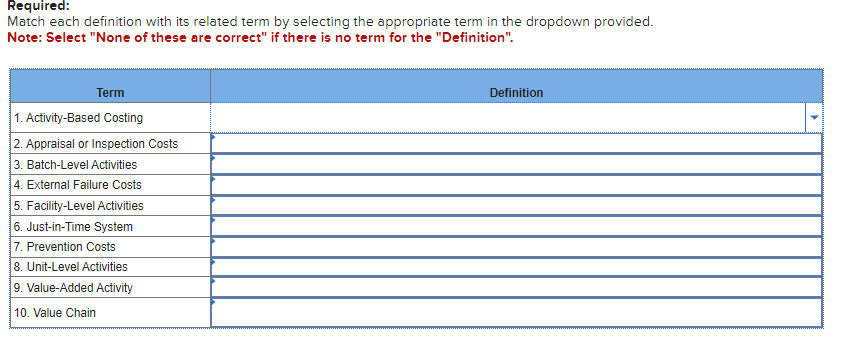
Match each definition with its related term by selecting the appropriate term in the dropdown provided. Note: Select "None of these are correct" if there is no term for the "Definition". A demand-pull system. A demand-push system. A linked set of activities required to design, develop, produce, market, deliver the product to customers, and provide aftermarket service. A method that identifies the major activities that place demands on a company's resources and then assigns indirect costs to the products/services that create those demands. A process that involves analyzing the feasibility of a product to meet a projected life cycle cost. A report that provides details about internal failure costs. Activities that are independent of the number of units but are performed for a group all at once. Activities that are performed to benefit the organization as a whole. Activities that vary in direct proportion to the number of units produced or customers served. An activity that adds to the perceived worth of the product or service. An activity that does not add to the perceived worth of the product or service. Costs incurred to identify defective products before they get to customers. Costs incurred to keep quality problems from happening. Costs that result from the defects caught during the inspection process. None of these are correct Warranty costs, recalls, and product replacement costs
Step by Step Solution
There are 3 Steps involved in it

Get step-by-step solutions from verified subject matter experts