







Question: OS {4 points) A rm is originally operating as a singleprice monopolist that faces a market demand curve P (Q) = 193 %Q and total
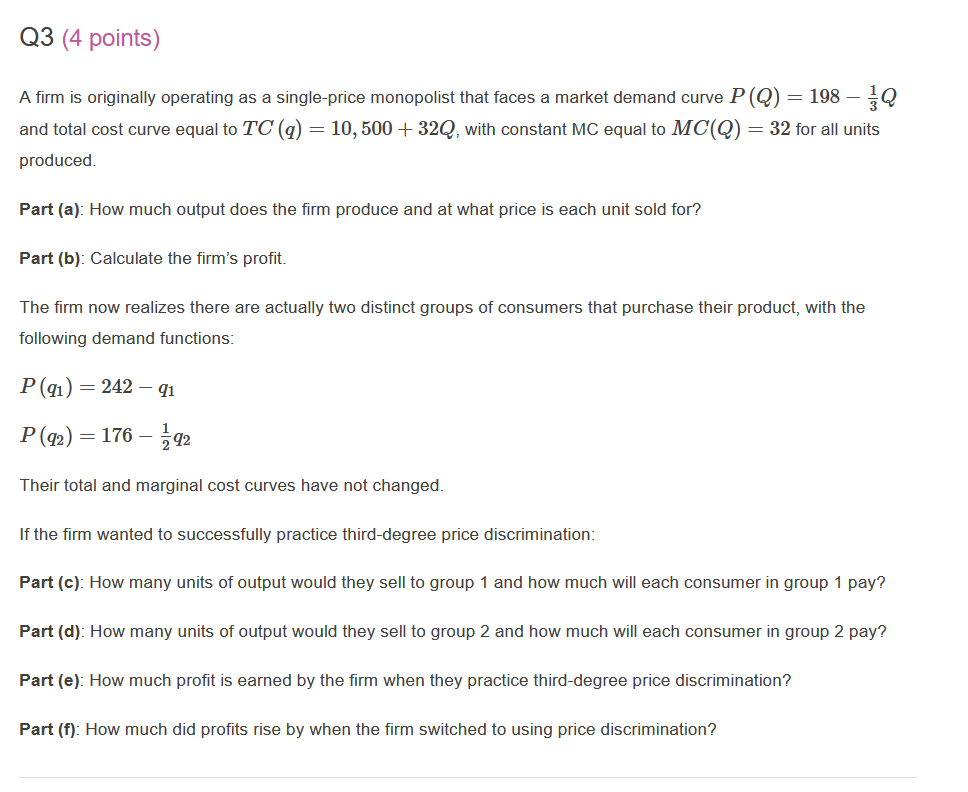
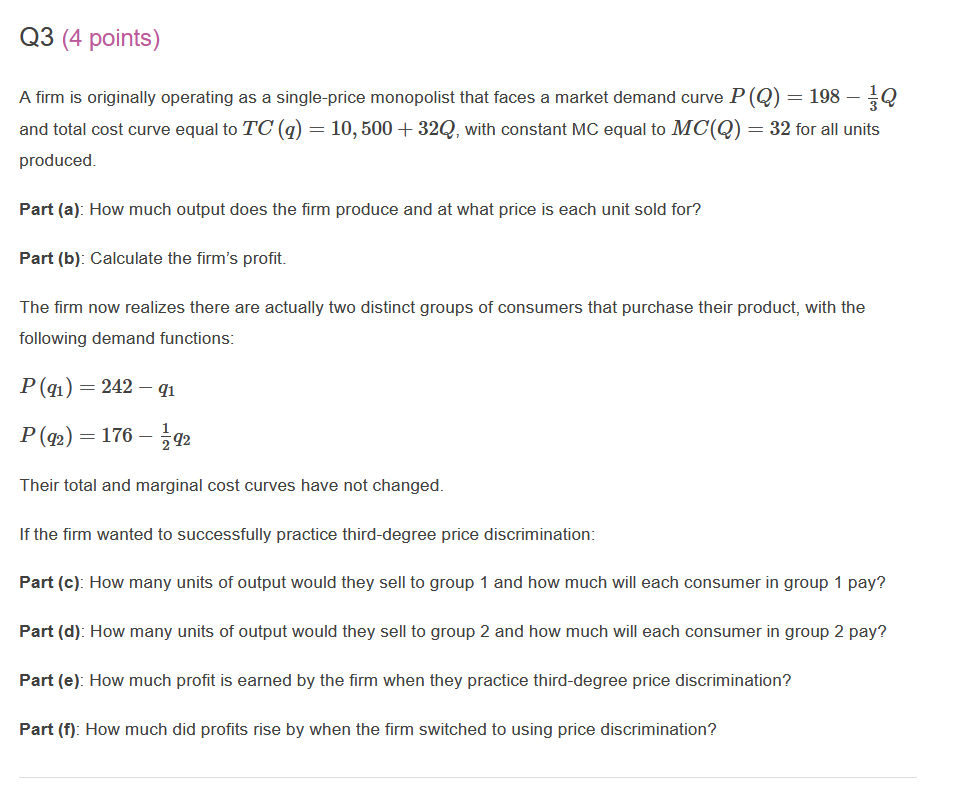
OS {4 points) A rm is originally operating as a singleprice monopolist that faces a market demand curve P (Q) = 193 %Q and total cost curve equal to T0 (q) = 10, 500 l 32C), with constant MC equal to MC(Q) = 32 for all units produced. Part [a]: How much output does the rm produce and at what price is each unit sold for? Part {b}: Calculate the rm's prot. The rm now realizes there are actually two distinct groups of consumers that purchase their product, with the following demand functions: P (a) = 242 :11 13012) = 176 its Their total and marginal cost curves have not changed. If the rm wanted to successfully practice thirddegree price discrimination: Part {c}: How many units of output would they sell to group 1 and how much will each consumer in group 1 pay? Part {:1}: How many units of output would they sell to group 2 and how much will each consumer in group 2 pay? Part (at: How much prot is earned by the rm when they practice thirddegree price discrimination? Part [f]: How much did prots rise by when the rm switched to using pn'ce discrimination
Step by Step Solution
There are 3 Steps involved in it

Get step-by-step solutions from verified subject matter experts
 Study Help