







Question: OSA_Jul22_MBAN_HRD801_Final_20230404140104.pdf - Adobe Reader File Edit View Document Tools Window Help businesses better and may adopt a combination of HR operating models. Transitioning to a
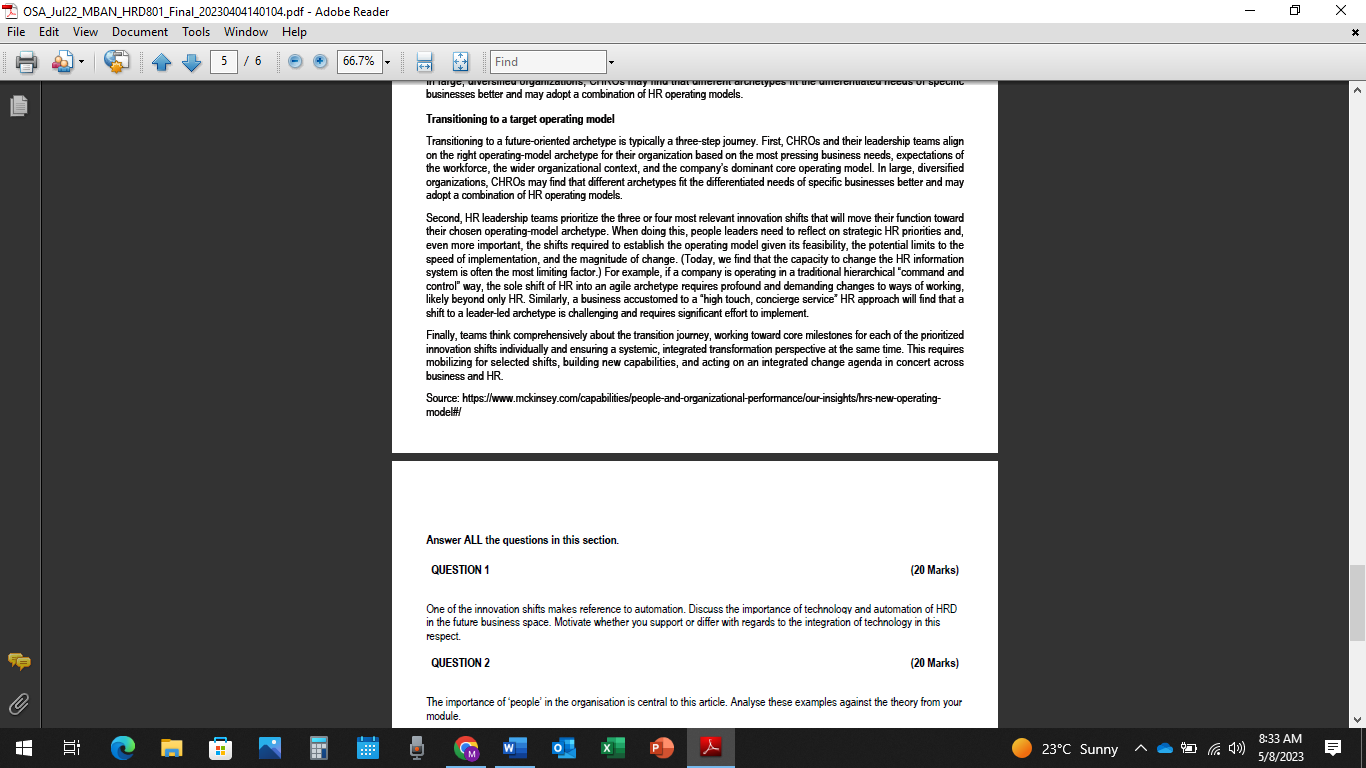
OSA_Jul22_MBAN_HRD801_Final_20230404140104.pdf - Adobe Reader File Edit View Document Tools Window Help businesses better and may adopt a combination of HR operating models. Transitioning to a target operating model Transitioning to a future-oriented archetype is typically a three-step joumey. First, CHROs and their leadership teams align on the right operating-model archetype for their organization based on the most pressing business needs, expectations of the workforce, the wider organizational context, and the company's dominant core operating model. In large, diversified organizations, CHROs may find that different archetypes fit the differentiated needs of speciic businesses better and may adopt a combination of HR operating models. Second, HR leadership teams prioritize the three or four most relevant innovation shifts that will move their function toward their chosen operating-model archetype. When doing this, people leaders need to reflect on strategic HR priorities and, even more important, the shifts required to establish the operating model given its feasibility, the potential limits to the speed of implementation, and the magnitude of change. (Today, we find that the capacity to change the HR information system is often the most limiting factor.) For example, if a company is operating in a traditional hierarchical "command and control" way, the sole shift of HR into an agile archetype requires profound and demanding changes to ways of working, likely beyond only HR. Similarly, a business accustomed to a "high touch, concierge service" HR approach will find that a shift to a leader-led archetype is challenging and requires significant effort to implement. Finally, teams think comprehensively about the transition journey, working toward core milestones for each of the prioritized innovation shifts individually and ensuring a systemic, integrated transformation perspective at the same time. This requires mobilizing for selected shifts, building new capabilities, and acting on an integrated change agenda in concert across business and HR. Source: https://www.mckinsey.com/capabilities/people-and-organizational-performancelour-insights/hrs-new-operatingmodelHl Answer ALL the questions in this section. QUESTION 1 (20 Marks) One of the innovation shifts makes reference to automation. Discuss the importance of technoloqv and automation of HRD in the future business space. Motivate whether you support or differ with regards to the integration of technology in this respect. QUESTION 2 (20 Marks) The importance of 'people' in the organisation is central to this article. Analyse these examples against the theory from your module
Step by Step Solution
There are 3 Steps involved in it

Get step-by-step solutions from verified subject matter experts
 Study Help