





Question: OVERLOAD CO makes gear module which includes two components: Component Lambda and Component Kappa. These components are produced in a Production resource and then assembled
OVERLOAD CO makes gear module which includes twoOVERLOAD CO makes gear module which includes twoOVERLOAD CO makes gear module which includes twoOVERLOAD CO makes gear module which includes two

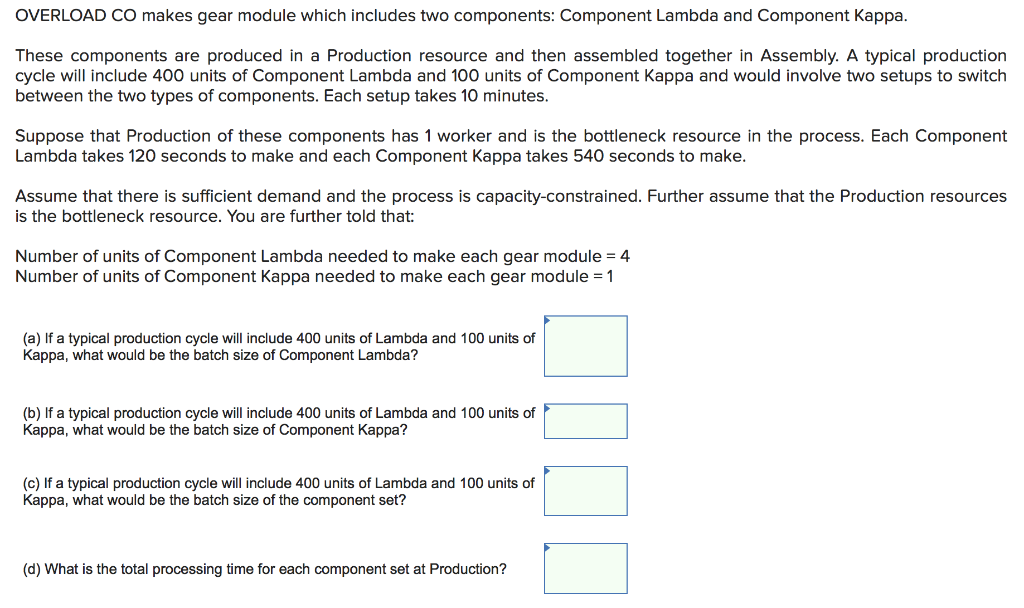
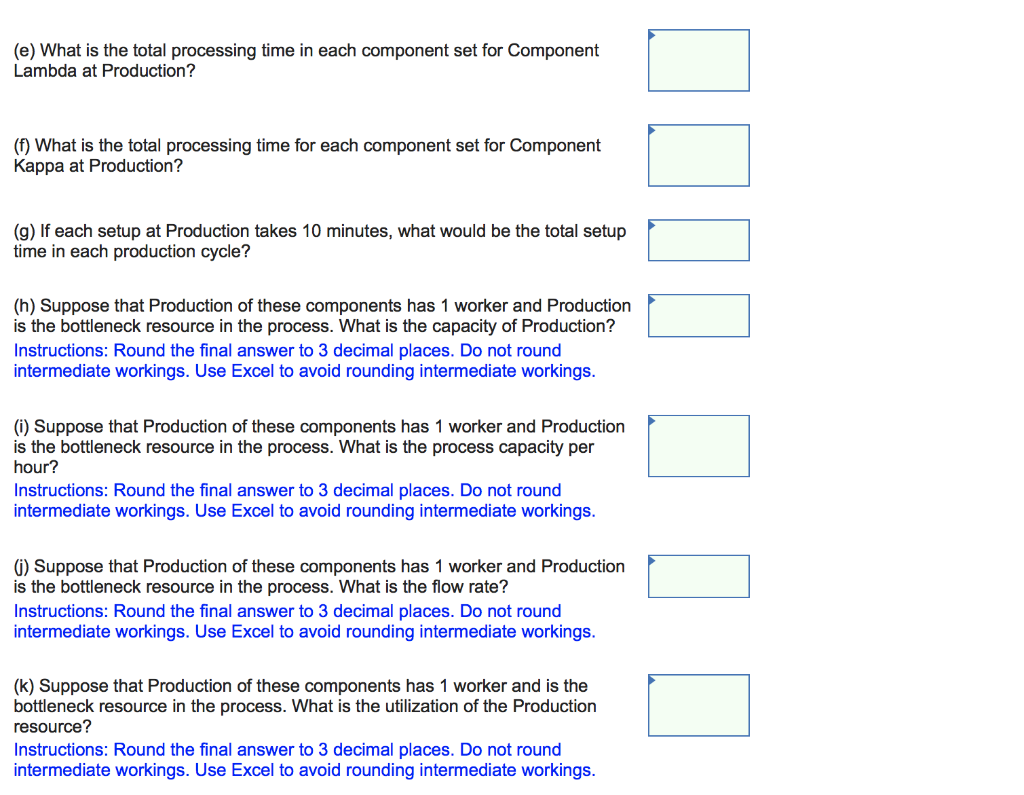
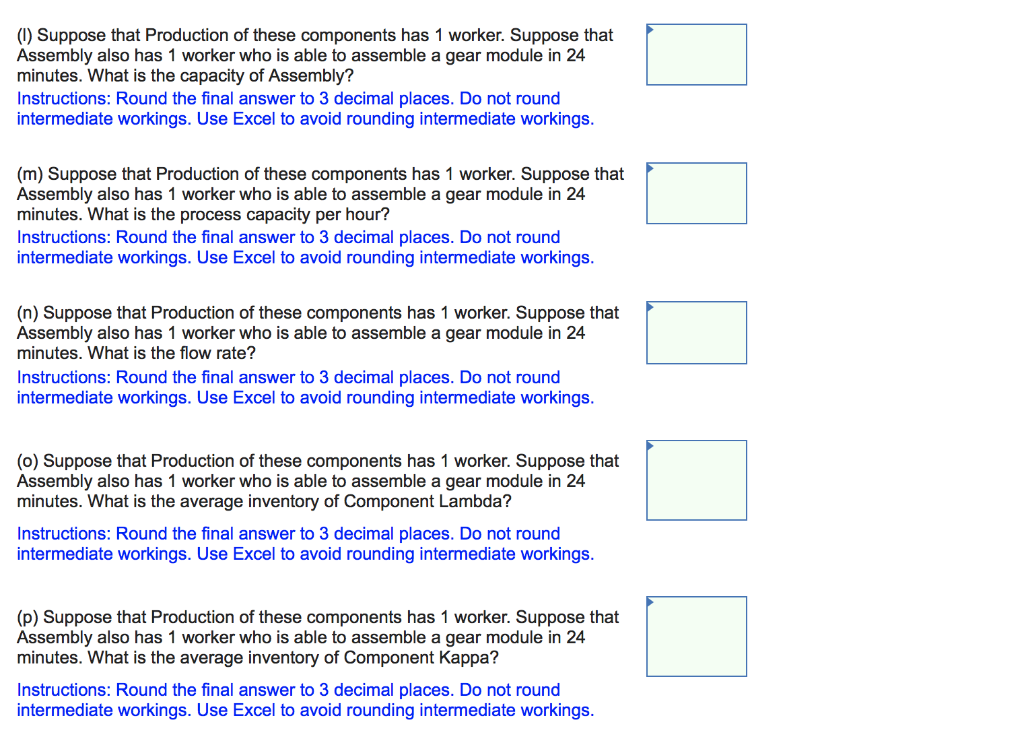
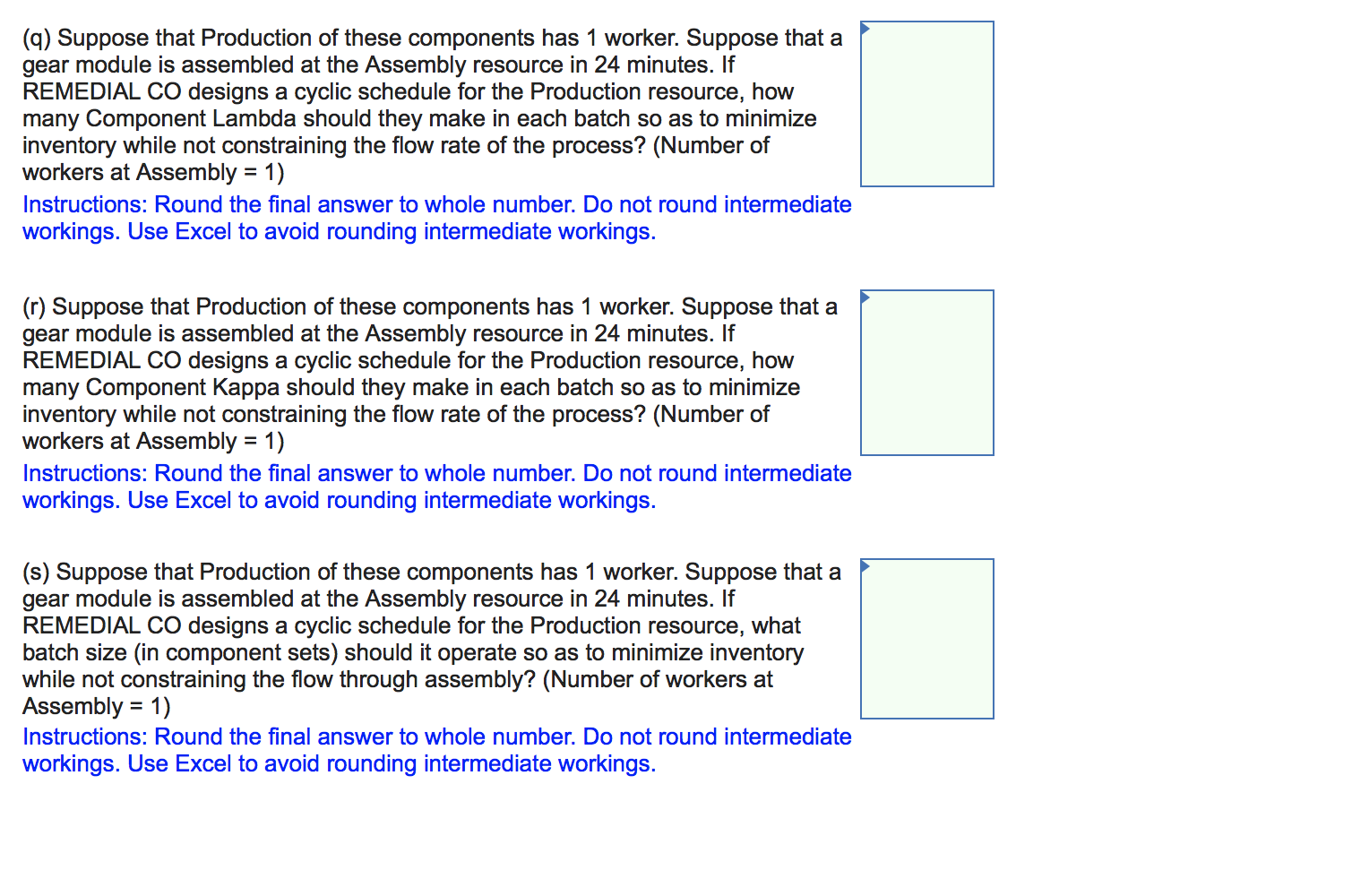
OVERLOAD CO makes gear module which includes two components: Component Lambda and Component Kappa. These components are produced in a Production resource and then assembled together in Assembly. A typical production cycle will include 400 units of Component Lambda and 100 units of Component Kappa and would involve two setups to switch between the two types of components. Each setup takes 10 minutes. Suppose that Production of these components has 1 worker and is the bottleneck resource in the process. Each Component Lambda takes 120 seconds to make and each component Kappa takes 540 seconds to make. Assume that there is sufficient demand and the process is capacity-constrained. Further assume that the Production resources is the bottleneck resource. You are further told that: Number of units of Component Lambda needed to make each gear module = 4 Number of units of Component Kappa needed to make each gear module = 1 (a) If a typical production cycle will include 400 units of Lambda and 100 units of Kappa, what would be the batch size of Component Lambda? (b) If a typical production cycle will include 400 units of Lambda and 100 units of Kappa, what would be the batch size of Component Kappa? (c) If a typical production cycle will include 400 units of Lambda and 100 units of Kappa, what would be the batch size of the component set? (d) What is the total processing time for each component set at Production? (e) What is the total processing time in each component set for Component Lambda at Production? (f) What is the total processing time for each component set for Component Kappa at Production? (g) If each setup at Production takes 10 minutes, what would be the total setup time in each production cycle? (h) Suppose that Production of these components has 1 worker and Production is the bottleneck resource in the process. What is the capacity of Production? Instructions: Round the final answer to 3 decimal places. Do not round intermediate workings. Use Excel to avoid rounding intermediate workings (i) Suppose that Production of these components has 1 worker and Production is the bottleneck resource in the process. What is the process capacity per hour? Instructions: Round the final answer to 3 decimal places. Do not round intermediate workings. Use Excel to avoid rounding intermediate workings. (i) Suppose that Production of these components has 1 worker and Production is the bottleneck resource in the process. What is the flow rate? Instructions: Round the final answer to 3 decimal places. Do not round intermediate workings. Use Excel to avoid rounding intermediate workings. (k) Suppose that Production of these components has 1 worker and is the bottleneck resource in the process. What is the utilization of the Production resource? Instructions: Round the final answer to 3 decimal places. Do not round intermediate workings. Use Excel to avoid rounding intermediate workings. (1) Suppose that Production of these components has 1 worker. Suppose that Assembly also has 1 worker who is able to assemble a gear module in 24 minutes. What is the capacity of Assembly? Instructions: Round the final answer to 3 decimal places. Do not round intermediate workings. Use Excel to avoid rounding intermediate workings. (m) Suppose that Production of these components has 1 worker. Suppose that Assembly also has 1 worker who is able to assemble a gear module in 24 minutes. What is the process capacity per hour? Instructions: Round the final answer to 3 decimal places. Do not round intermediate workings. Use Excel to avoid rounding intermediate workings. (n) Suppose that Production of these components has 1 worker. Suppose that Assembly also has 1 worker who is able to assemble a gear module in 24 minutes. What is the flow rate? Instructions: Round the final answer to 3 decimal places. Do not round intermediate workings. Use Excel to avoid rounding intermediate workings. (0) Suppose that Production of these components has 1 worker. Suppose that Assembly also has 1 worker who is able to assemble a gear module in 24 minutes. What is the average inventory of Component Lambda? Instructions: Round the final answer to 3 decimal places. Do not round intermediate workings. Use Excel to avoid rounding intermediate workings. (p) Suppose that Production of these components has 1 worker. Suppose that Assembly also has 1 worker who is able to assemble a gear module in 24 minutes. What is the average inventory of Component Kappa? Instructions: Round the final answer to 3 decimal places. Do not round intermediate workings. Use Excel to avoid rounding intermediate workings. (9) Suppose that Production of these components has 1 worker. Suppose that a gear module is assembled at the Assembly resource in 24 minutes. If REMEDIAL CO designs a cyclic schedule for the Production resource, how many Component Lambda should they make in each batch so as to minimize inventory while not constraining the flow rate of the process? (Number of workers at Assembly = 1) Instructions: Round the final answer to whole number. Do not round intermediate workings. Use Excel to avoid rounding intermediate workings. () Suppose that Production of these components has 1 worker. Suppose that a gear module is assembled at the Assembly resource in 24 minutes. If REMEDIAL CO designs a cyclic schedule for the Production resource, how many Component Kappa should they make in each batch so as to minimize inventory while not constraining the flow rate of the process? (Number of workers at Assembly = 1) Instructions: Round the final answer to whole number. Do not round intermediate workings. Use Excel to avoid rounding intermediate workings. (s) Suppose that Production of these components has 1 worker. Suppose that a gear module is assembled at the Assembly resource in 24 minutes. If REMEDIAL CO designs a cyclic schedule for the Production resource, what batch size (in component sets) should it operate so as to minimize inventory while not constraining the flow through assembly? (Number of workers at Assembly = 1) Instructions: Round the final answer to whole number. Do not round intermediate workings. Use Excel to avoid rounding intermediate workings. OVERLOAD CO makes gear module which includes two components: Component Lambda and Component Kappa. These components are produced in a Production resource and then assembled together in Assembly. A typical production cycle will include 400 units of Component Lambda and 100 units of Component Kappa and would involve two setups to switch between the two types of components. Each setup takes 10 minutes. Suppose that Production of these components has 1 worker and is the bottleneck resource in the process. Each Component Lambda takes 120 seconds to make and each component Kappa takes 540 seconds to make. Assume that there is sufficient demand and the process is capacity-constrained. Further assume that the Production resources is the bottleneck resource. You are further told that: Number of units of Component Lambda needed to make each gear module = 4 Number of units of Component Kappa needed to make each gear module = 1 (a) If a typical production cycle will include 400 units of Lambda and 100 units of Kappa, what would be the batch size of Component Lambda? (b) If a typical production cycle will include 400 units of Lambda and 100 units of Kappa, what would be the batch size of Component Kappa? (c) If a typical production cycle will include 400 units of Lambda and 100 units of Kappa, what would be the batch size of the component set? (d) What is the total processing time for each component set at Production? (e) What is the total processing time in each component set for Component Lambda at Production? (f) What is the total processing time for each component set for Component Kappa at Production? (g) If each setup at Production takes 10 minutes, what would be the total setup time in each production cycle? (h) Suppose that Production of these components has 1 worker and Production is the bottleneck resource in the process. What is the capacity of Production? Instructions: Round the final answer to 3 decimal places. Do not round intermediate workings. Use Excel to avoid rounding intermediate workings (i) Suppose that Production of these components has 1 worker and Production is the bottleneck resource in the process. What is the process capacity per hour? Instructions: Round the final answer to 3 decimal places. Do not round intermediate workings. Use Excel to avoid rounding intermediate workings. (i) Suppose that Production of these components has 1 worker and Production is the bottleneck resource in the process. What is the flow rate? Instructions: Round the final answer to 3 decimal places. Do not round intermediate workings. Use Excel to avoid rounding intermediate workings. (k) Suppose that Production of these components has 1 worker and is the bottleneck resource in the process. What is the utilization of the Production resource? Instructions: Round the final answer to 3 decimal places. Do not round intermediate workings. Use Excel to avoid rounding intermediate workings. (1) Suppose that Production of these components has 1 worker. Suppose that Assembly also has 1 worker who is able to assemble a gear module in 24 minutes. What is the capacity of Assembly? Instructions: Round the final answer to 3 decimal places. Do not round intermediate workings. Use Excel to avoid rounding intermediate workings. (m) Suppose that Production of these components has 1 worker. Suppose that Assembly also has 1 worker who is able to assemble a gear module in 24 minutes. What is the process capacity per hour? Instructions: Round the final answer to 3 decimal places. Do not round intermediate workings. Use Excel to avoid rounding intermediate workings. (n) Suppose that Production of these components has 1 worker. Suppose that Assembly also has 1 worker who is able to assemble a gear module in 24 minutes. What is the flow rate? Instructions: Round the final answer to 3 decimal places. Do not round intermediate workings. Use Excel to avoid rounding intermediate workings. (0) Suppose that Production of these components has 1 worker. Suppose that Assembly also has 1 worker who is able to assemble a gear module in 24 minutes. What is the average inventory of Component Lambda? Instructions: Round the final answer to 3 decimal places. Do not round intermediate workings. Use Excel to avoid rounding intermediate workings. (p) Suppose that Production of these components has 1 worker. Suppose that Assembly also has 1 worker who is able to assemble a gear module in 24 minutes. What is the average inventory of Component Kappa? Instructions: Round the final answer to 3 decimal places. Do not round intermediate workings. Use Excel to avoid rounding intermediate workings. (9) Suppose that Production of these components has 1 worker. Suppose that a gear module is assembled at the Assembly resource in 24 minutes. If REMEDIAL CO designs a cyclic schedule for the Production resource, how many Component Lambda should they make in each batch so as to minimize inventory while not constraining the flow rate of the process? (Number of workers at Assembly = 1) Instructions: Round the final answer to whole number. Do not round intermediate workings. Use Excel to avoid rounding intermediate workings. () Suppose that Production of these components has 1 worker. Suppose that a gear module is assembled at the Assembly resource in 24 minutes. If REMEDIAL CO designs a cyclic schedule for the Production resource, how many Component Kappa should they make in each batch so as to minimize inventory while not constraining the flow rate of the process? (Number of workers at Assembly = 1) Instructions: Round the final answer to whole number. Do not round intermediate workings. Use Excel to avoid rounding intermediate workings. (s) Suppose that Production of these components has 1 worker. Suppose that a gear module is assembled at the Assembly resource in 24 minutes. If REMEDIAL CO designs a cyclic schedule for the Production resource, what batch size (in component sets) should it operate so as to minimize inventory while not constraining the flow through assembly? (Number of workers at Assembly = 1) Instructions: Round the final answer to whole number. Do not round intermediate workings. Use Excel to avoid rounding intermediate workings
Step by Step Solution

There are 3 Steps involved in it

1 Expert Approved Answer
Step: 1 Unlock blur-text-image

Question Has Been Solved by an Expert!

Get step-by-step solutions from verified subject matter experts

Step: 2 Unlock
Step: 3 Unlock

Students Have Also Explored These Related General Management Questions!