







Question: : Overview of GAP Levels Level 1 : Basic Governance . Governance processes are ad hoc or reactive Policies are minimally documented, with little .
: Overview of GAP Levels
Level : Basic Governance
Governance processes are ad hoc or reactive Policies are minimally documented, with little alignment to regulatory requirements Risk management practices are limited or inconsistent
Level : Foundational Governance
Governance processes are defined and documented but not fully integrated
The organization demonstrates basic compliance with regulatory standards
Risk management and internal controls are in place but require further refinement
Level : Managed Governance
Governance practices are consistent and integrated across the organization There is active monitoring of compliance and performance metrics
Risk management frameworks are robust and proactively managed
Level : Advanced Governance
Governance processes are optimized and aligned with international best practices eg ISO PDPL GDPR
The organization demonstrates proactive risk management, continuous improvement, and stakeholder engagement
Advanced technologies are utilized to enhance governance, such as automated monitoring and reporting tools
Level : Optimized Governance
Governance practices are industryleading, driving innovation and influencing regulatory policies
Realtime governance and risk analytics are
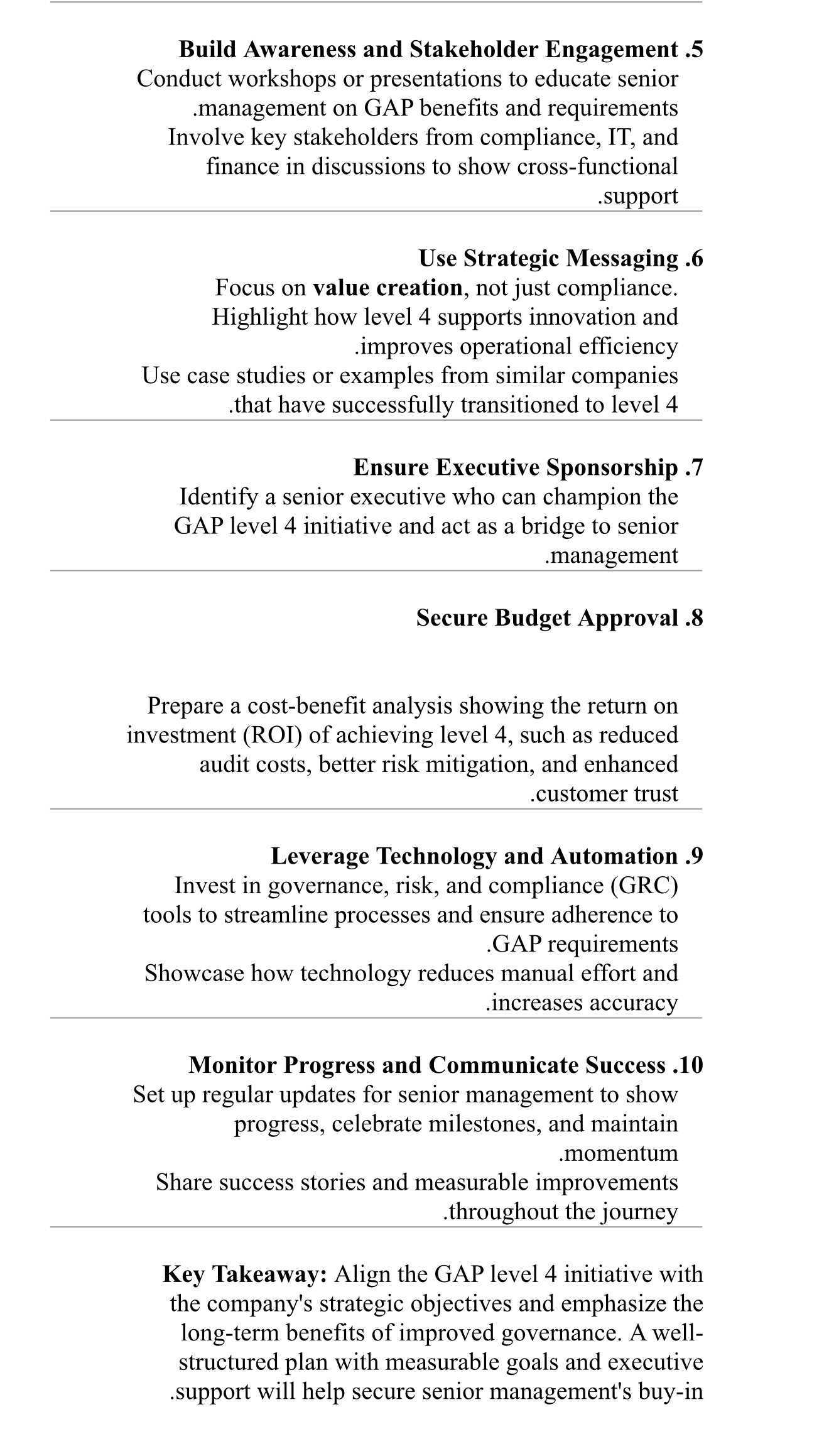
Build Awareness and Stakeholder Engagement
Conduct workshops or presentations to educate senior management on GAP benefits and requirements Involve key stakeholders from compliance, IT and finance in discussions to show crossfunctional
support
Use Strategic Messaging
Focus on value creation, not just compliance. Highlight how level supports innovation and improves operational efficiency Use case studies or examples from similar companies that have successfully transitioned to level
Ensure Executive Sponsorship
Identify a senior executive who can champion the GAP level initiative and act as a bridge to senior management
Secure Budget Approval
Prepare a costbenefit analysis showing the return on investment ROI of achieving level such as reduced audit costs, better risk mitigation, and enhanced customer trust
Leverage Technology and Automation
Invest in governance, risk, and compliance GRC tools to streamline processes and ensure adherence to GAP requirements Showcase how technology reduces manual effort and increases accuracy
Monitor Progress and Communicate Success
Set up regular updates for senior management to show progress, celebrate milestones, and maintain momentum
Sha used to support strategic decisionmaking Governance is fully embedded into the organization's culture
:GAP for Financial Companies
Financial companies often operate in highly regulated environments and must maintain stringent governance levels to manage risks like fraud, cybersecurity breaches, and compliance violations. Achieving a higher GAP :level such as level demonstrates
A proactive approach to compliance with financial regulations eg Basel III, AMLCFT GDPR PDPL
Enhanced risk management capabilities, reducing the
likelihood of operational or financial crises A commitment to transparency and accountability, improving trust among customers, investors, and regulators
Present a Strong Business Case
Risk Management: Highlight the potential risks of remaining at GAP level such as regulatory noncompliance, reputational damage, and financial penalties
Competitive Advantage: Emphasize how achieving GAP level demonstrates maturity in governance, enhancing customer trust and attracting more investors
Regulatory Landscape: Showcase the alignment with local and international standards, improving compliance with financial regulations like SAMA, PDPL or ISO
Cost of Inaction: Calculate the financial and operational impacts of staying at level including risk exposure and missed opportunities
Align Goals with Organizational Objectives
Tie the GAP level benefits to the company's strategic goals, such as increasing market share, enhancing resilience, and supporting digital transformation
Demonstrate how advanced governance supports efficient decisionmaking and operational excellence
Leverage Metrics and Benchmarks
Present industry benchmarks showing peers at GAP level and the benefits they've realized Use metrics to illustrate gaps in current governance processes and how level will address them
Outline a Clear Roadmap to Level
a Gap Analysis
Conduct a detailed assessment of current governance practices against GAP level requirements Identify specific areas for improvement, such as risk management, data protection, and compliance processes
b Define Key Milestones
Establish clear and achievable milestones, such as implementing advanced risk management tools or conducting internal audits
c Resource Allocation
Identify the resources budget personnel, and technology required to achieve level
d Implementation Plan
Develop a detailed implementation plan with timelines and accountability measures
Step by Step Solution
There are 3 Steps involved in it
1 Expert Approved Answer
Step: 1 Unlock

Question Has Been Solved by an Expert!
Get step-by-step solutions from verified subject matter experts
Step: 2 Unlock
Step: 3 Unlock
 Study Help