Question: Overview Thinking in systems allows you to view problems as parts of a whole and gives you a tool set to address those problems. In
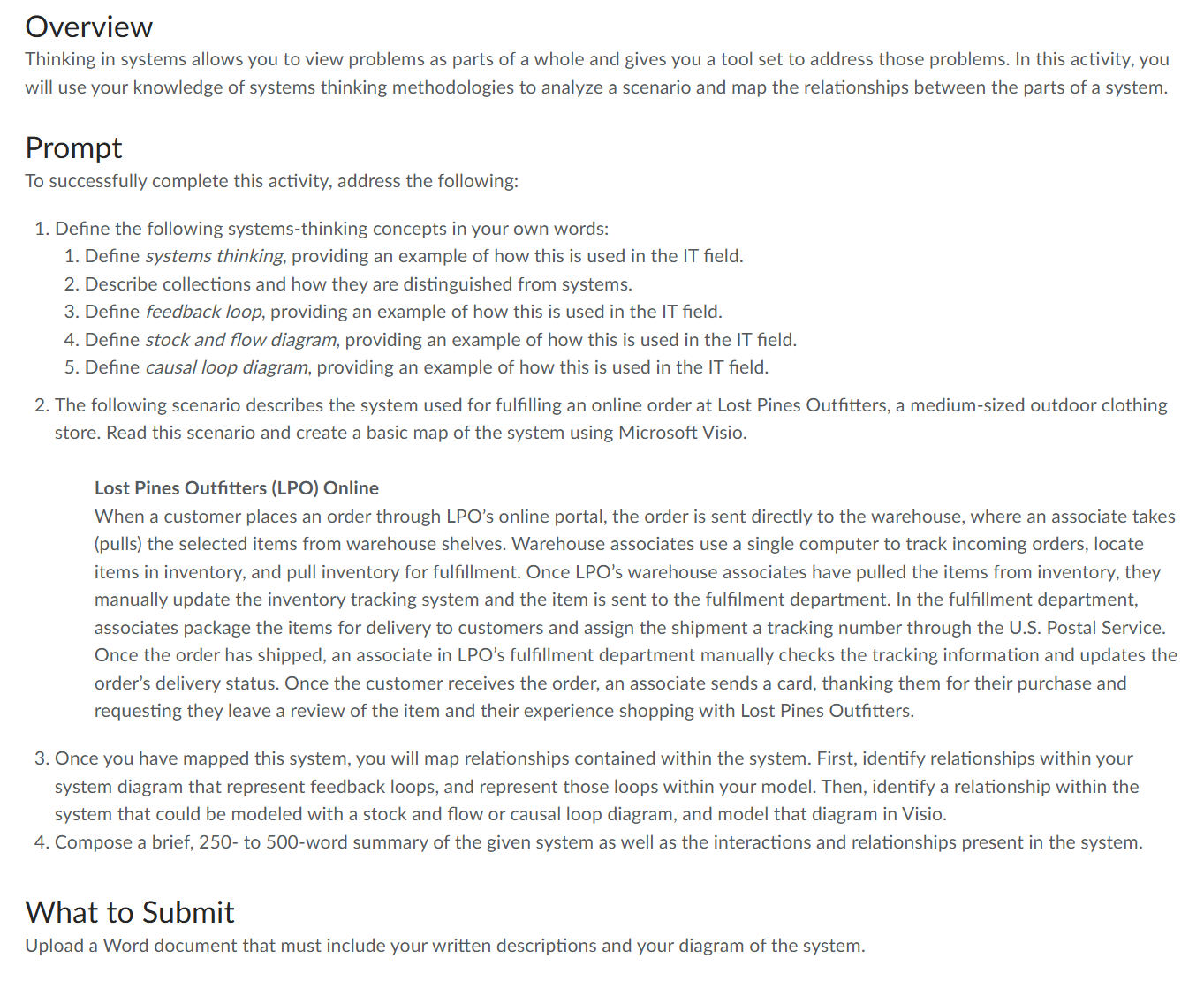
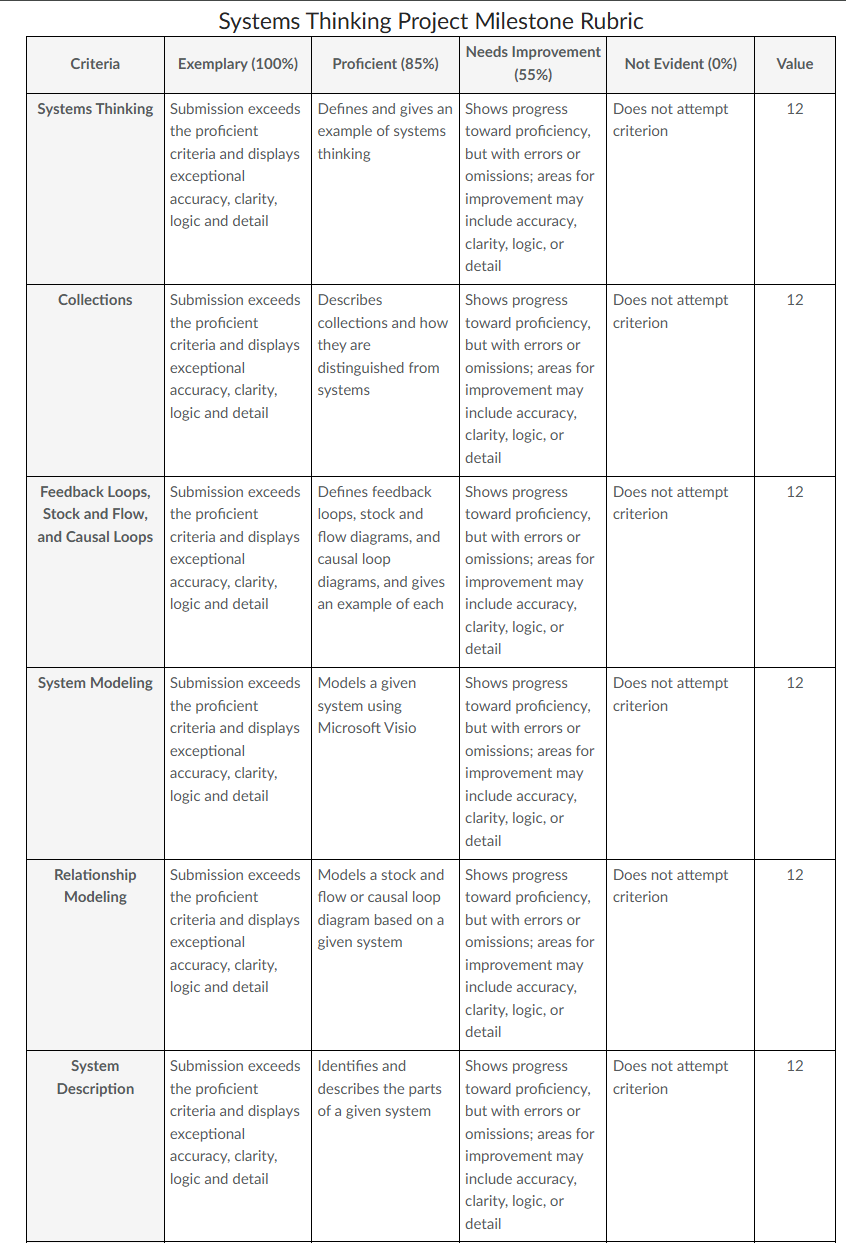
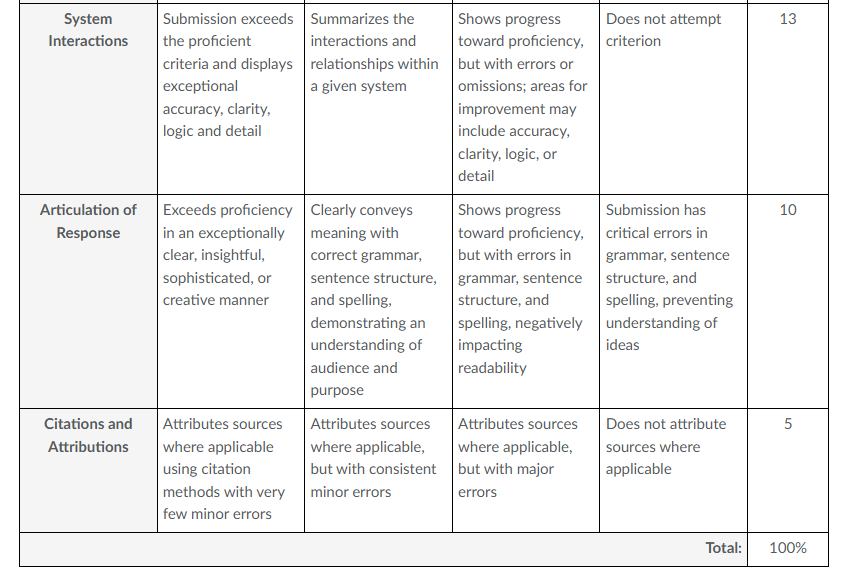
Overview Thinking in systems allows you to view problems as parts of a whole and gives you a tool set to address those problems. In this activity, you will use your knowledge of systems thinking methodologies to analyze a scenario and map the relationships between the parts of a system. Prompt To successfully complete this activity, address the following: 1. Define the following systems-thinking concepts in your own words: 1. Define systems thinking, providing an example of how this is used in the IT field. 2. Describe collections and how they are distinguished from systems. 3. Define feedback loop, providing an example of how this is used in the IT field. 4. Define stock and flow diagram, providing an example of how this is used in the IT field. 5. Define causal loop diagram, providing an example of how this is used in the IT field. 2. The following scenario describes the system used for fulfilling an online order at Lost Pines Outfitters, a medium-sized outdoor clothing store. Read this scenario and create a basic map of the system using Microsoft Visio. Lost Pines Outfitters (LPO) Online When a customer places an order through LPO's online portal, the order is sent directly to the warehouse, where an associate takes (pulls) the selected items from warehouse shelves. Warehouse associates use a single computer to track incoming orders, locate items in inventory, and pull inventory for fulfillment. Once LPO's warehouse associates have pulled the items from inventory, they manually update the inventory tracking system and the item is sent to the fulfilment department. In the fulfillment department, associates package the items for delivery to customers and assign the shipment a tracking number through the U.S. Postal Service. Once the order has shipped, an associate in LPO's fulfillment department manually checks the tracking information and updates the order's delivery status. Once the customer receives the order, an associate sends a card, thanking them for their purchase and requesting they leave a review of the item and their experience shopping with Lost Pines Outfitters. 3. Once you have mapped this system, you will map relationships contained within the system. First, identify relationships within your system diagram that represent feedback loops, and represent those loops within your model. Then, identify a relationship within the system that could be modeled with a stock and flow or causal loop diagram, and model that diagram in Visio. 4. Compose a brief, 250- to 500-word summary of the given system as well as the interactions and relationships present in the system. What to Submit Upload a Word document that must include your written descriptions and your diagram of the system. Systems Thinking Project Milestone Rubric Needs Improvement Criteria Exemplary (100%) Proficient (85%) (55%) Not Evident (0%) Value Systems Thinking | Submission exceeds | Defines and gives an | Shows progress Does not attempt 12 the proficient example of systems | toward proficiency, | criterion criteria and displays | thinking but with errors or exceptional omissions; areas for accuracy, clarity, improvement may logic and detail include accuracy, clarity, logic, or detail Collections Submission exceeds | Describes Shows progress Does not attempt 12 the proficient collections and how | toward proficiency, | criterion criteria and displays | they are but with errors or exceptional distinguished from | ornissions; areas for accuracy, clarity, systems improvement may logic and detail include accuracy, clarity, logic, or detail Feedback Loops, | Submission exceeds | Defines feedback Shows progress Does not attempt 12 Stock and Flow, | the proficient loops, stock and toward proficiency, | criterion and Causal Loops | criteria and displays | flow diagrams, and but with errors or exceptional causal loop omissions; areas for accuracy, clarity, diagrams, and gives | improvement may logic and detail an example of each | include accuracy, clarity, logic, or detail System Modeling | Submission exceeds | Models a given Show's progress Does not attempt 12 the proficient system using toward proficiency, | criterion criteria and displays | Microsoft Visio but with errors or exceptional omissions; areas for accuracy, clarity, improvement may logic and detail include accuracy, clarity, logic, or detail Relationship Submission exceeds | Models a stock and | Shows progress Does not attempt 12 Modeling the proficient flaw or causal loop toward proficiency, | criterion criteria and displays | diagram based ona_ | but with errors or exceptional given system omissions; areas for accuracy, clarity, improvement may logic and detail include accuracy, clarity, logic, or detail System Submission exceeds | Identifies and Shows progress Does not attempt 12 Description the proficient describes the parts | toward proficiency, | criterion criteria and displays exceptional accuracy, clarity, logic and detail of a given system but with errors or omissions; areas for improvement may include accuracy, clarity, logic, or detail System Submission exceeds | Summarizes the Shows progress Does not attempt 13 Interactions the proficient interactions and toward proficiency, | criterion criteria and displays | relationships within | but with errors or exceptional a given system omissions; areas for accuracy, clarity, improvement may logic and detail include accuracy, clarity, logic, or detail Articulation of | Exceeds proficiency | Clearly conveys Shows progress Submission has 10 Response in an exceptionally | meaning with toward proficiency, | critical errors in clear, insightful, correct grammar, but with errors in grammar, sentence sophisticated, or sentence structure, | grammar,sentence | structure, and creative manner and spelling, structure, and spelling, preventing demonstrating an spelling, negatively | understanding of understanding of impacting ideas audience and readability purpose Citations and Attributes sources Attributes sources Attributes sources Does not attribute 5 Attributions where applicable where applicable, where applicable, sources where using citation but with consistent | but with major applicable methods with very minor errors errors few minor errors Total: 100%
Step by Step Solution
There are 3 Steps involved in it
1 Expert Approved Answer
Step: 1 Unlock
Question Has Been Solved by an Expert!
Get step-by-step solutions from verified subject matter experts
Step: 2 Unlock
Step: 3 Unlock
Students Have Also Explored These Related Accounting Questions!









 Study Help