







Question: P Product material What will be moved ? S supporting services Whth which support will the movements be made? R Route process sequences Where will
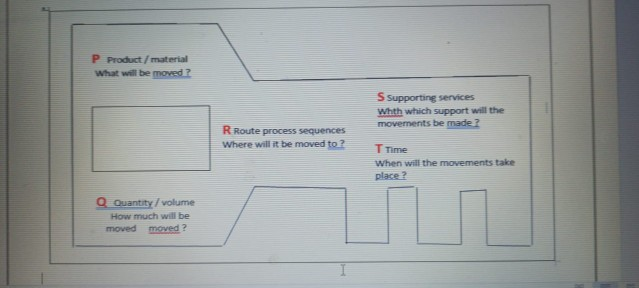
P Product material What will be moved ? S supporting services Whth which support will the movements be made? R Route process sequences Where will at be moved to ? T Time When will the movements take place? Quantity/volume How much will be moved moved ? CASE STUDY ON CORE LIFE SKILLS (Leadership) A non-profit agency that provided essential services to its community was considering expanding its outreach program. To do so, it needed a larger facility. The organization's CEO received permission from the board to develop the expansion concept further. The CEO and his management staff spent considerable time researching all possible pros and cons of the expansion and received many hours of pro bono work from attorneys, real estate agents, architects, accountants, and other professionals. A thorough expansion plan was developed that included the site of the proposed facility, a service map of the projected expanded service area, the reallocation plan of existing staff, an implementation timeline, and a cost-benefit analysis. Everything seemed to be going well during the presentation to the board. However, one board member asked the CEO if he considered vacant buildings in the board member's neighborhood. The CEO replied that the management staff with the assistance of several volunteer professionals considered several buildings and the one being recommended was the best choice. Despite all evidence to the contrary, the board member objected. He insisted on knowing in more detail why the buildings in his neighborhood were rejected. During a board meeting, he said the new facility should be placed in his neighborhood. Showing weak leadership and no skills at negotiation or mediation, the leader and the remaining members of the board invested $15,000 more in another feasibility study, even though the previous study showed that no buildings in that area of the community would fit the needs and intentions of the non-profit. The follow-up feasibility study results were the same. So, because of one self-serving board member, the non-profit wasted thousands of dollars. P Product material What will be moved ? S supporting services Whth which support will the movements be made? R Route process sequences Where will at be moved to ? T Time When will the movements take place? Quantity/volume How much will be moved moved ? CASE STUDY ON CORE LIFE SKILLS (Leadership) A non-profit agency that provided essential services to its community was considering expanding its outreach program. To do so, it needed a larger facility. The organization's CEO received permission from the board to develop the expansion concept further. The CEO and his management staff spent considerable time researching all possible pros and cons of the expansion and received many hours of pro bono work from attorneys, real estate agents, architects, accountants, and other professionals. A thorough expansion plan was developed that included the site of the proposed facility, a service map of the projected expanded service area, the reallocation plan of existing staff, an implementation timeline, and a cost-benefit analysis. Everything seemed to be going well during the presentation to the board. However, one board member asked the CEO if he considered vacant buildings in the board member's neighborhood. The CEO replied that the management staff with the assistance of several volunteer professionals considered several buildings and the one being recommended was the best choice. Despite all evidence to the contrary, the board member objected. He insisted on knowing in more detail why the buildings in his neighborhood were rejected. During a board meeting, he said the new facility should be placed in his neighborhood. Showing weak leadership and no skills at negotiation or mediation, the leader and the remaining members of the board invested $15,000 more in another feasibility study, even though the previous study showed that no buildings in that area of the community would fit the needs and intentions of the non-profit. The follow-up feasibility study results were the same. So, because of one self-serving board member, the non-profit wasted thousands of dollars
Step by Step Solution
There are 3 Steps involved in it
1 Expert Approved Answer
Step: 1 Unlock

Question Has Been Solved by an Expert!
Get step-by-step solutions from verified subject matter experts
Step: 2 Unlock
Step: 3 Unlock
 Study Help