



Question: Page 1 - Regulation Page 2 - Banking System Can u explain this two page separately in a way of presenting it Infront of people
Page 1 - Regulation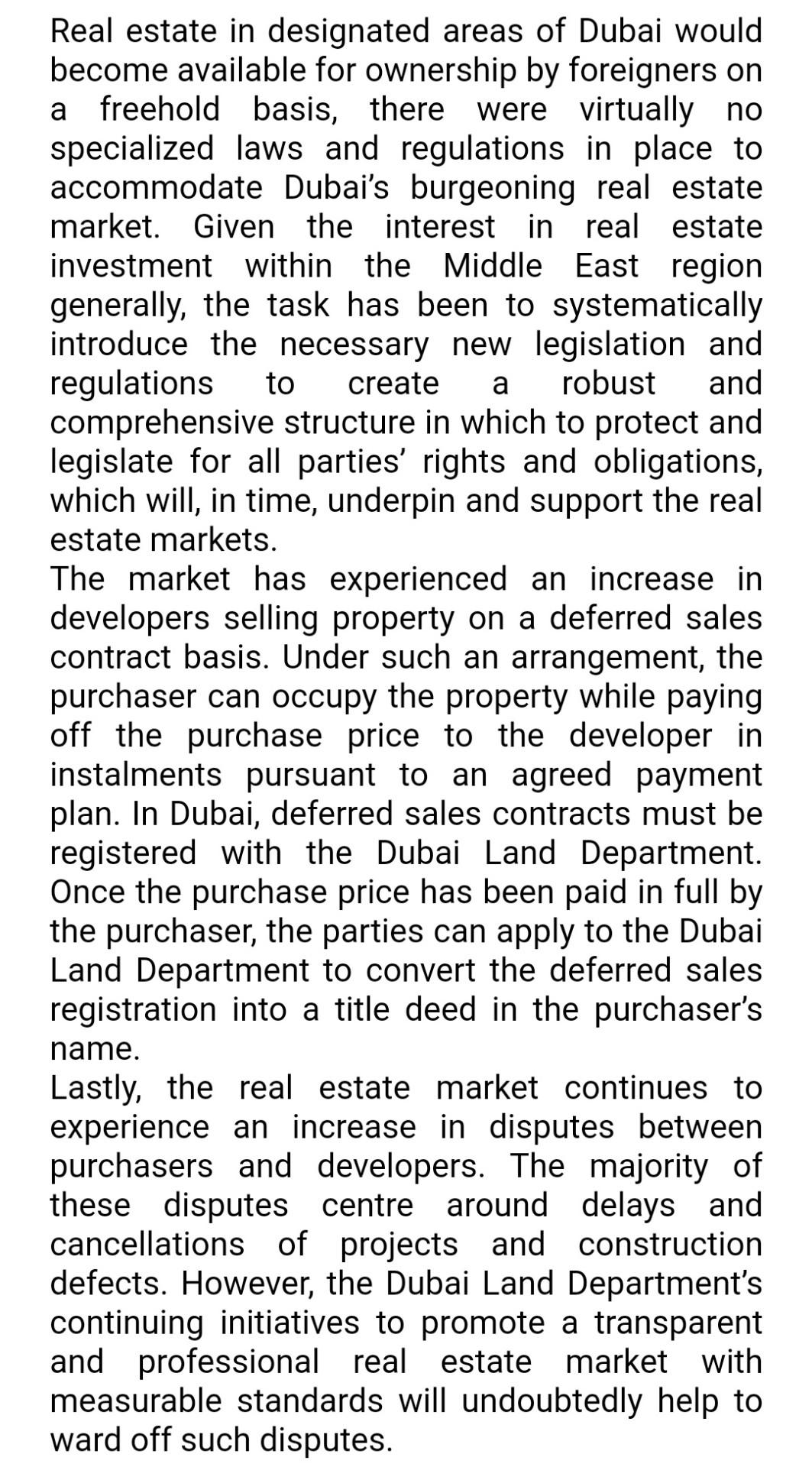
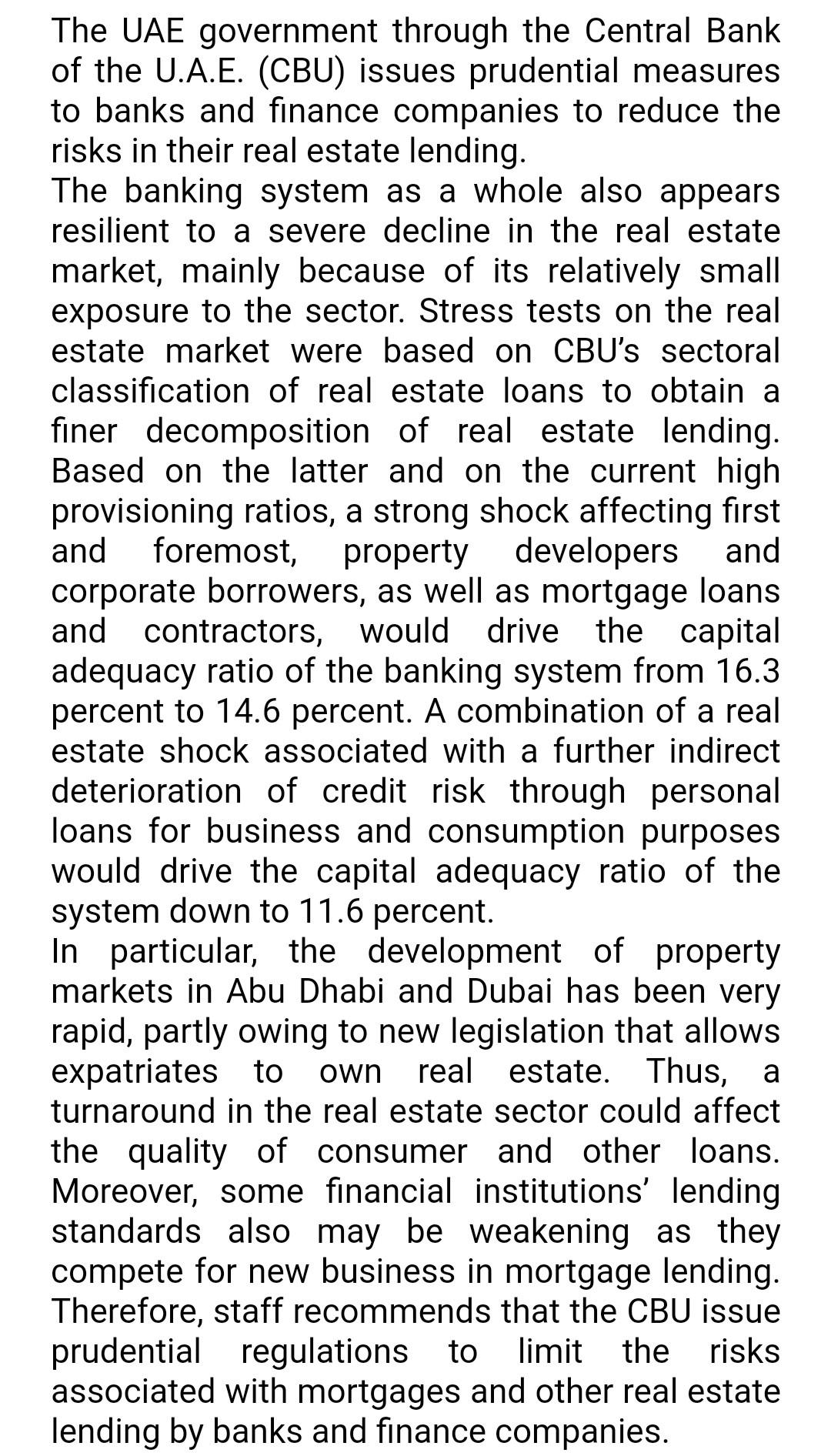
Page 2 - Banking System
Can u explain this two page separately in a way of presenting it Infront of people make it short for almost 3min talk
a Real estate in designated areas of Dubai would become available for ownership by foreigners on a freehold basis, there were virtually no specialized laws and regulations in place to accommodate Dubai's burgeoning real estate market. Given the interest in real estate investment within the Middle East region generally, the task has been to systematically introduce the necessary new legislation and regulations to create robust and comprehensive structure in which to protect and legislate for all parties' rights and obligations, which will, in time, underpin and support the real estate markets. The market has experienced an increase in developers selling property on a deferred sales contract basis. Under such an arrangement, the purchaser can occupy the property while paying off the purchase price to the developer in instalments pursuant to an agreed payment plan. In Dubai, deferred sales contracts must be registered with the Dubai Land Department. Once the purchase price has been paid in full by the purchaser, the parties can apply to the Dubai Land Department to convert the deferred sales registration into a title deed in the purchaser's name. Lastly, the real estate market continues to experience an increase in disputes between purchasers and developers. The majority of these disputes centre around delays and cancellations of projects and construction defects. However, the Dubai Land Department's continuing initiatives to promote a transparent and professional real estate estate market with measurable standards will undoubtedly help to ward off such disputes. The UAE government through the Central Bank of the U.A.E. (CBU) issues prudential measures to banks and finance companies to reduce the risks in their real estate lending. The banking system as a whole also appears resilient to a severe decline in the real estate market, mainly because of its relatively small exposure to the sector. Stress tests on the real estate market were based on CBU's sectoral classification of real estate loans to obtain a finer decomposition of real estate lending. Based on the latter and on the current high provisioning ratios, a strong shock affecting first and foremost, property developers and corporate borrowers, as well as mortgage loans and contractors, would drive the capital adequacy ratio of the banking system from 16.3 percent to 14.6 percent. A combination of a real estate shock associated with a further indirect deterioration of credit risk through personal loans for business and consumption purposes would drive the capital adequacy ratio of the system down to 11.6 percent. In particular, the development of property markets in Abu Dhabi and Dubai has been very rapid, partly owing to new legislation that allows expatriates to own real estate. Thus, a turnaround in the real estate sector could affect the quality of consumer and other loans. Moreover, some financial institutions' lending standards also may be weakening as they compete for new business in mortgage lending. Therefore, staff recommends that the CBU issue prudential regulations to limit the risks associated with mortgages and other real estate lending by banks and finance companies. a Real estate in designated areas of Dubai would become available for ownership by foreigners on a freehold basis, there were virtually no specialized laws and regulations in place to accommodate Dubai's burgeoning real estate market. Given the interest in real estate investment within the Middle East region generally, the task has been to systematically introduce the necessary new legislation and regulations to create robust and comprehensive structure in which to protect and legislate for all parties' rights and obligations, which will, in time, underpin and support the real estate markets. The market has experienced an increase in developers selling property on a deferred sales contract basis. Under such an arrangement, the purchaser can occupy the property while paying off the purchase price to the developer in instalments pursuant to an agreed payment plan. In Dubai, deferred sales contracts must be registered with the Dubai Land Department. Once the purchase price has been paid in full by the purchaser, the parties can apply to the Dubai Land Department to convert the deferred sales registration into a title deed in the purchaser's name. Lastly, the real estate market continues to experience an increase in disputes between purchasers and developers. The majority of these disputes centre around delays and cancellations of projects and construction defects. However, the Dubai Land Department's continuing initiatives to promote a transparent and professional real estate estate market with measurable standards will undoubtedly help to ward off such disputes. The UAE government through the Central Bank of the U.A.E. (CBU) issues prudential measures to banks and finance companies to reduce the risks in their real estate lending. The banking system as a whole also appears resilient to a severe decline in the real estate market, mainly because of its relatively small exposure to the sector. Stress tests on the real estate market were based on CBU's sectoral classification of real estate loans to obtain a finer decomposition of real estate lending. Based on the latter and on the current high provisioning ratios, a strong shock affecting first and foremost, property developers and corporate borrowers, as well as mortgage loans and contractors, would drive the capital adequacy ratio of the banking system from 16.3 percent to 14.6 percent. A combination of a real estate shock associated with a further indirect deterioration of credit risk through personal loans for business and consumption purposes would drive the capital adequacy ratio of the system down to 11.6 percent. In particular, the development of property markets in Abu Dhabi and Dubai has been very rapid, partly owing to new legislation that allows expatriates to own real estate. Thus, a turnaround in the real estate sector could affect the quality of consumer and other loans. Moreover, some financial institutions' lending standards also may be weakening as they compete for new business in mortgage lending. Therefore, staff recommends that the CBU issue prudential regulations to limit the risks associated with mortgages and other real estate lending by banks and finance companies
Step by Step Solution
There are 3 Steps involved in it

Get step-by-step solutions from verified subject matter experts