Question: Pane Name: ANTH 4352 Archaeological Sampling Exercise You are the leader of an experienced team of archaeologists working in the mountains of the Chavin region
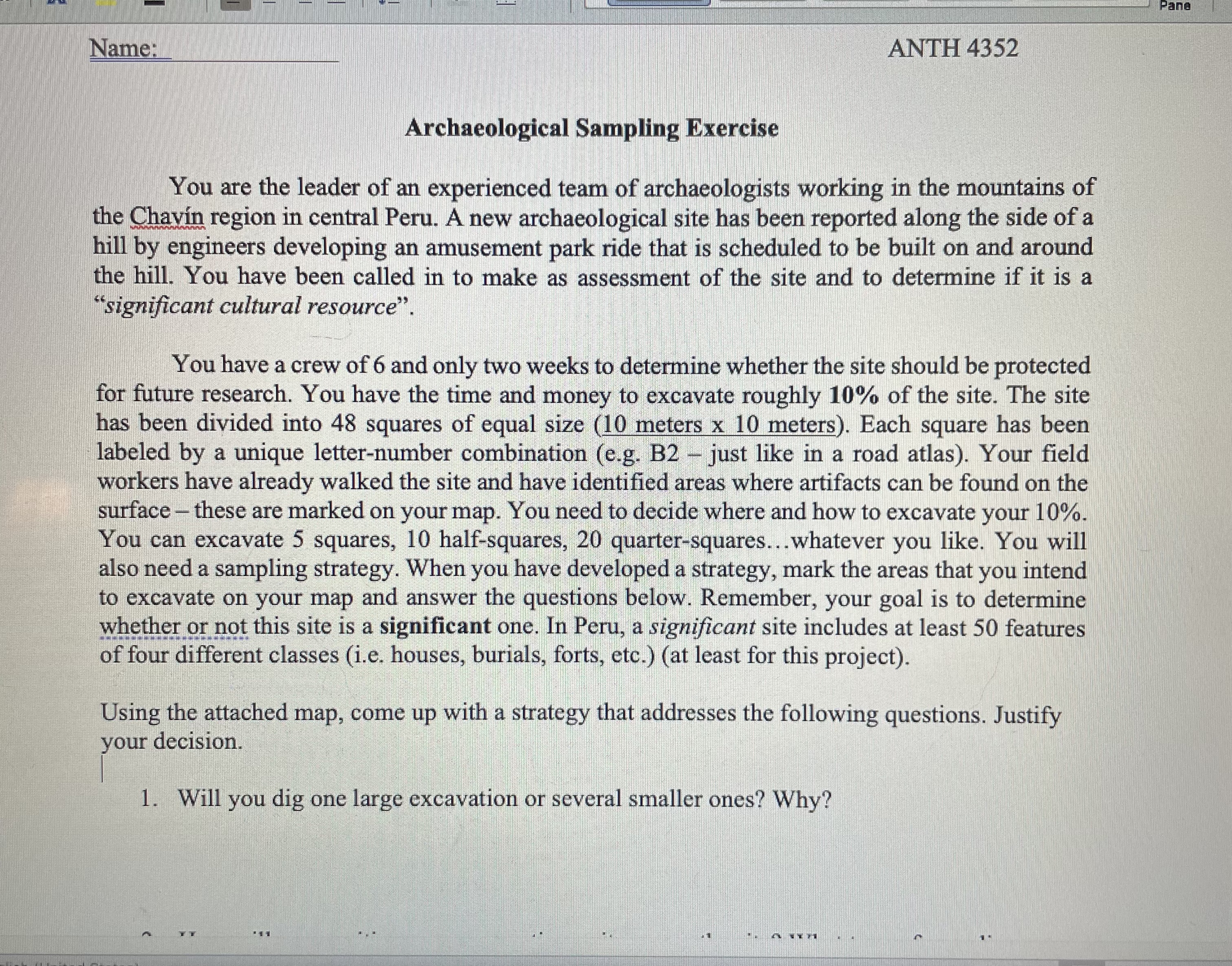
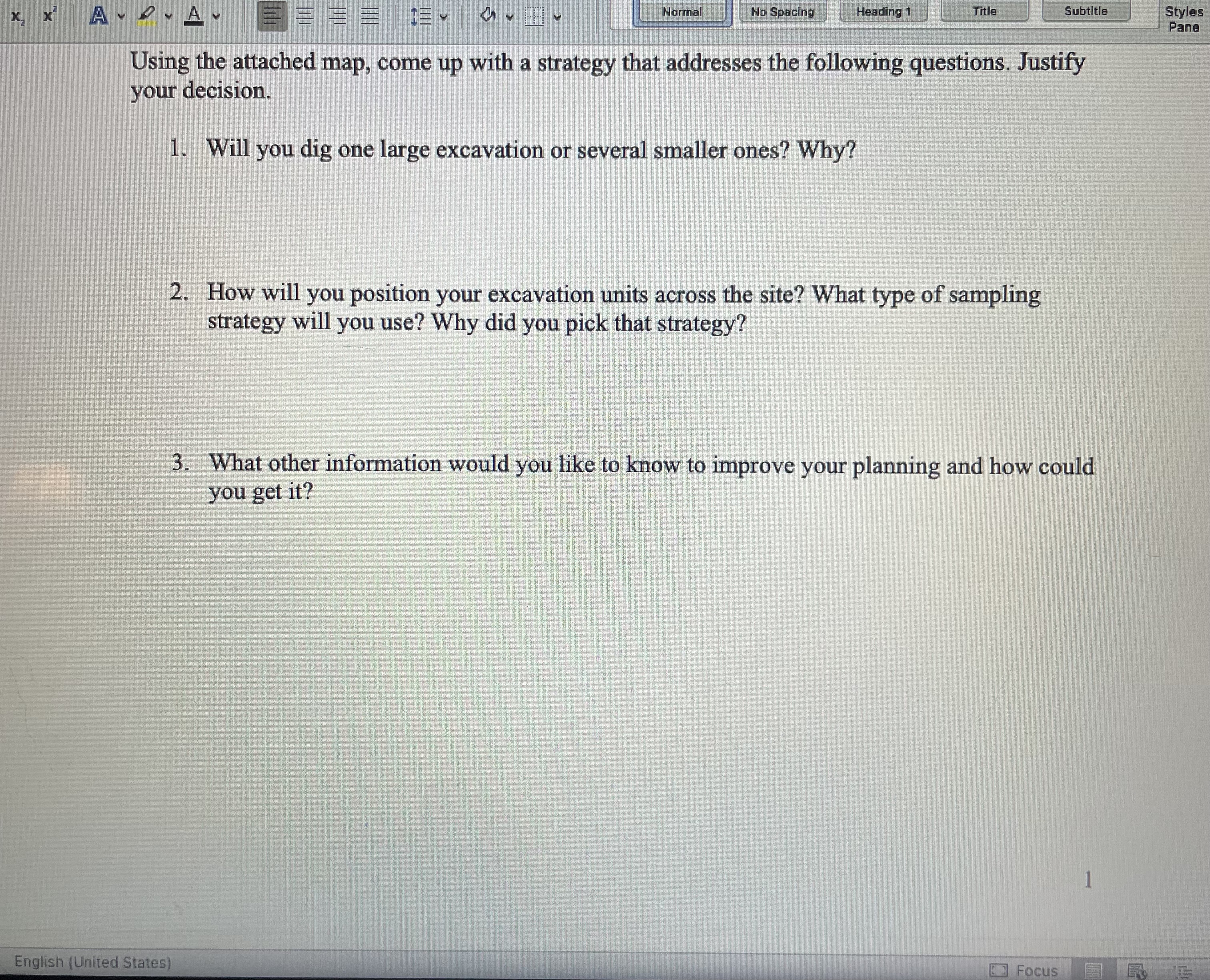
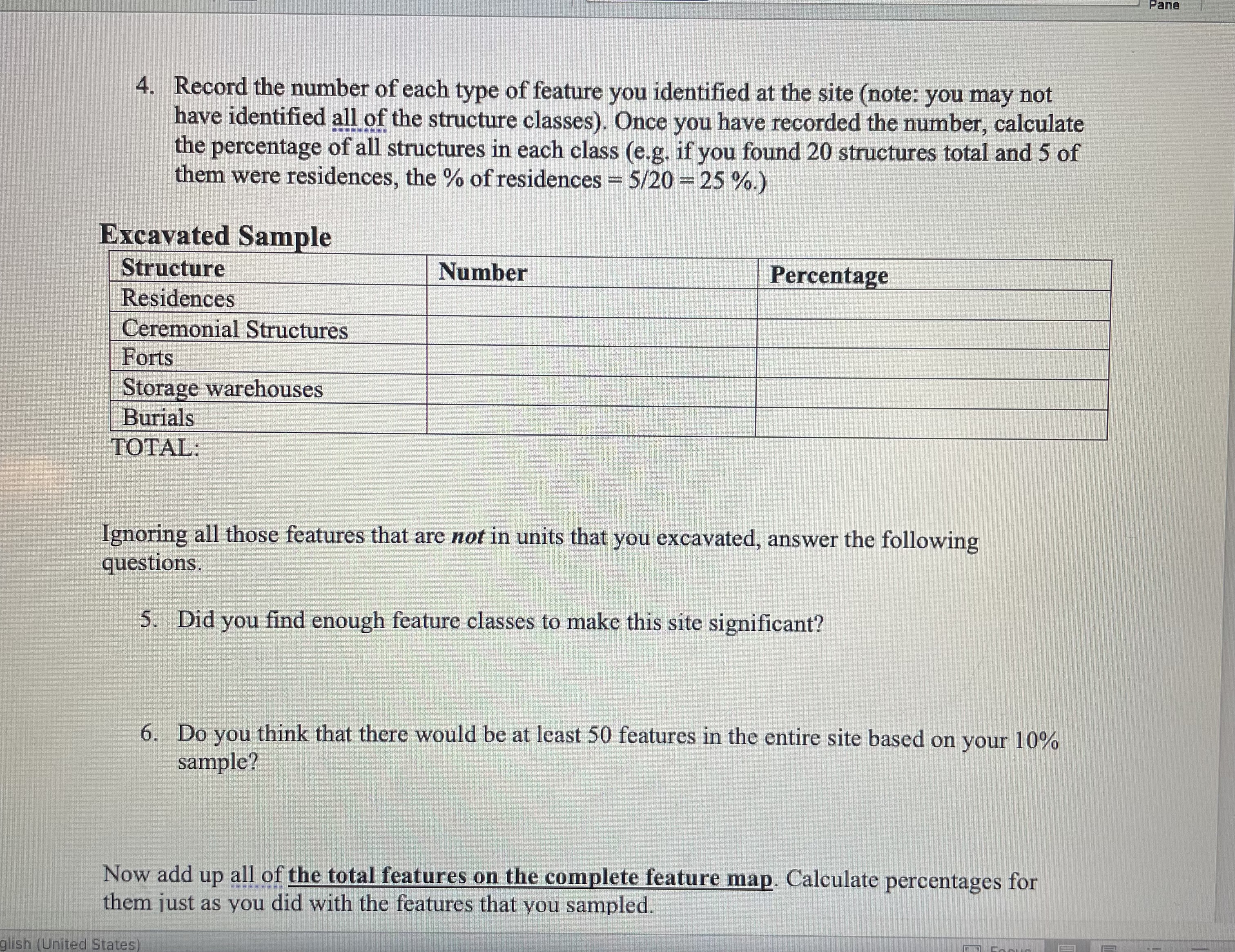
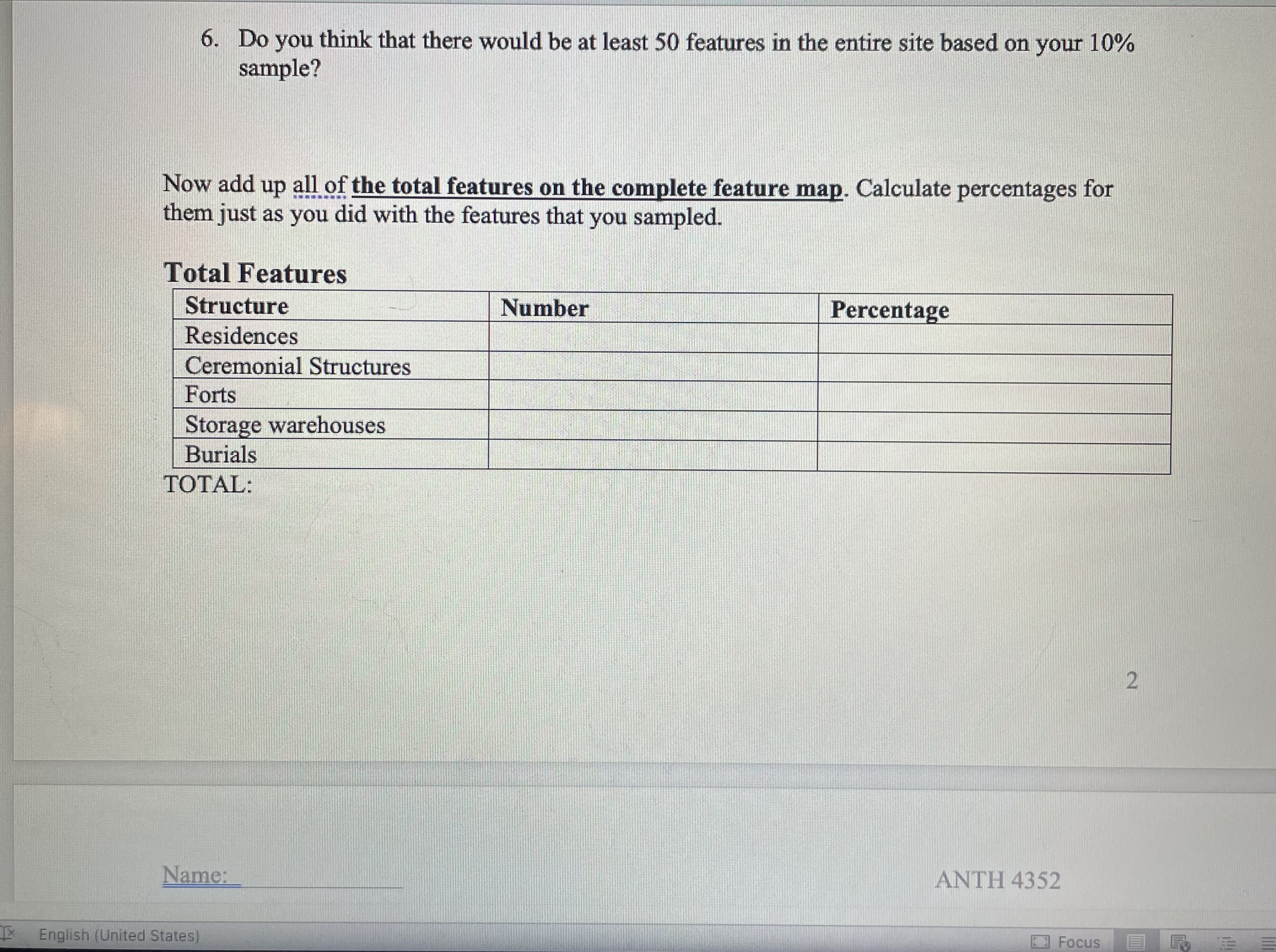
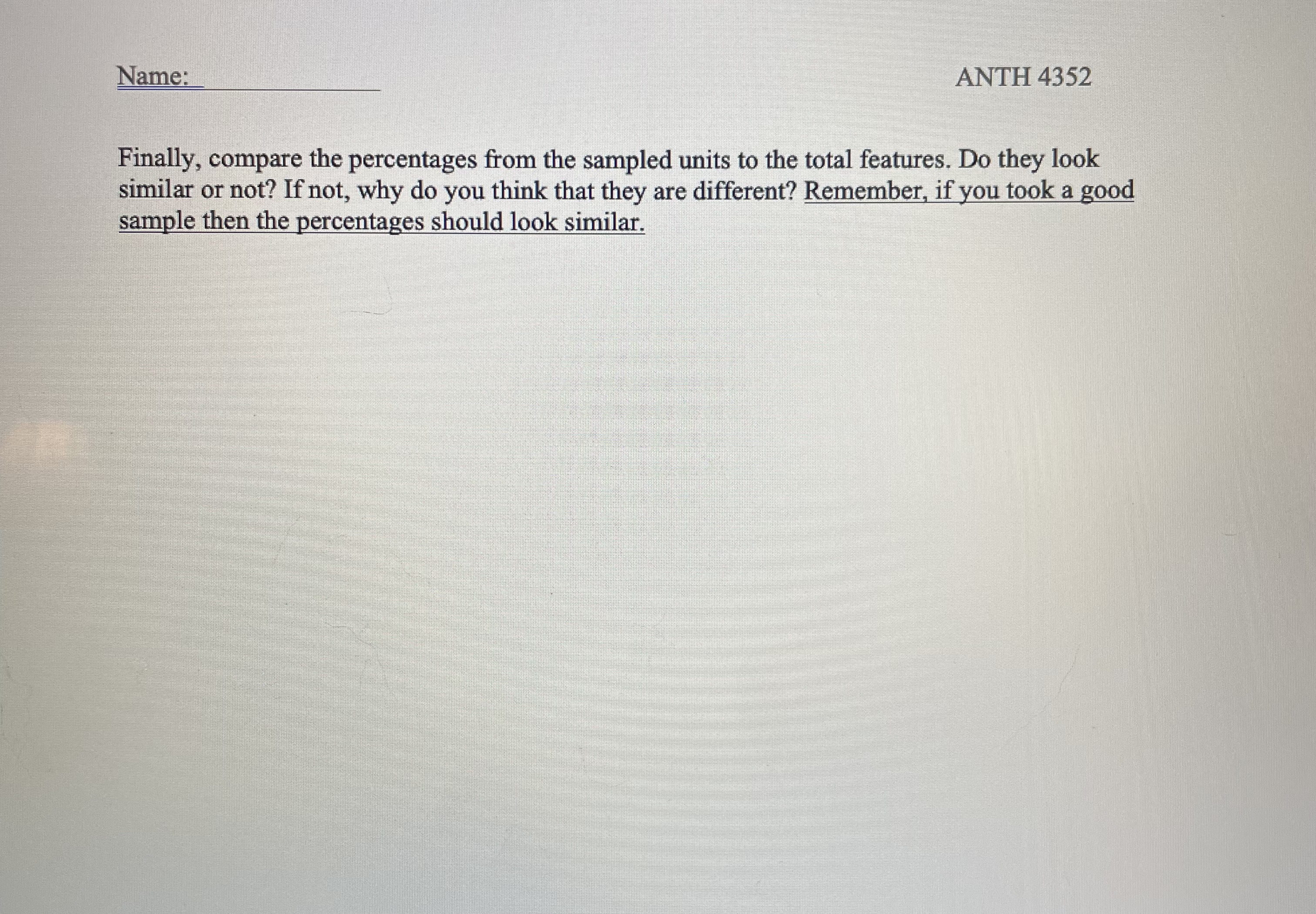
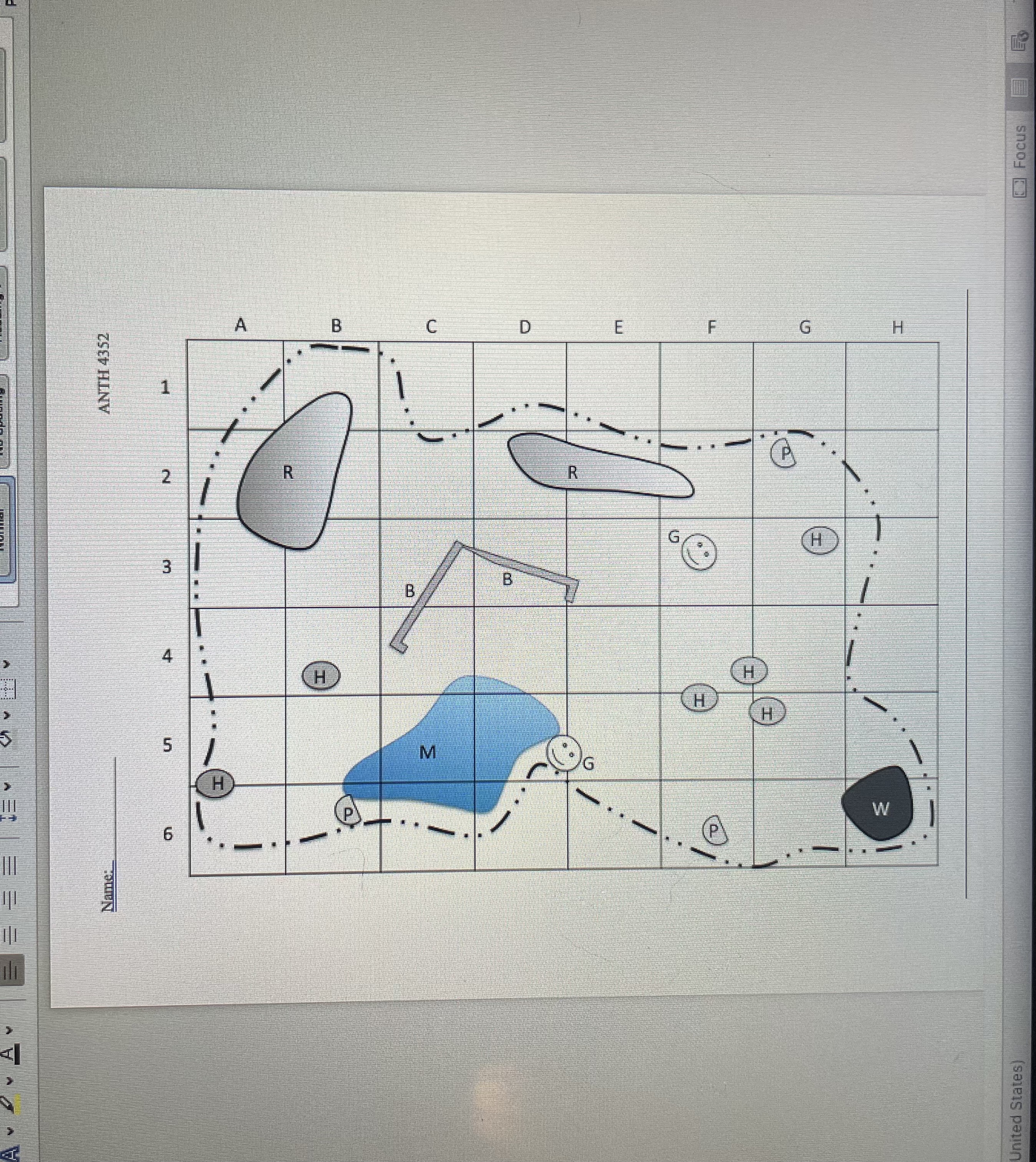
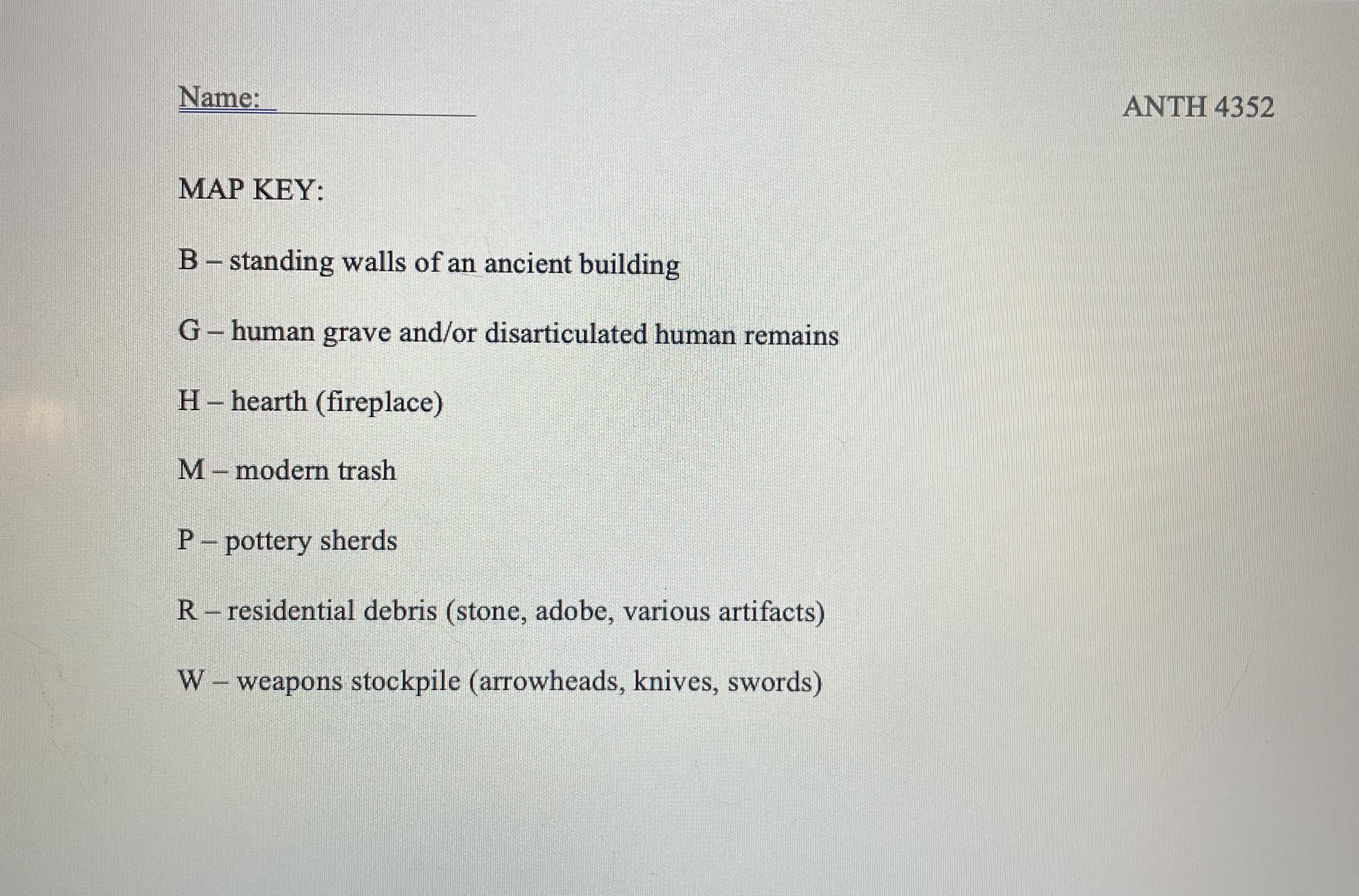
Pane Name: ANTH 4352 Archaeological Sampling Exercise You are the leader of an experienced team of archaeologists working in the mountains of the Chavin region in central Peru. A new archaeological site has been reported along the side of a hill by engineers developing an amusement park ride that is scheduled to be built on and around the hill. You have been called in to make as assessment of the site and to determine if it is a "significant cultural resource". You have a crew of 6 and only two weeks to determine whether the site should be protected for future research. You have the time and money to excavate roughly 10% of the site. The site has been divided into 48 squares of equal size (10 meters x 10 meters). Each square has been labeled by a unique letter-number combination (e.g. B2 - just like in a road atlas). Your field workers have already walked the site and have identified areas where artifacts can be found on the surface - these are marked on your map. You need to decide where and how to excavate your 10%. You can excavate 5 squares, 10 half-squares, 20 quarter-squares... whatever you like. You will also need a sampling strategy. When you have developed a strategy, mark the areas that you intend to excavate on your map and answer the questions below. Remember, your goal is to determine whether or not this site is a significant one. In Peru, a significant site includes at least 50 features of four different classes (i.e. houses, burials, forts, etc.) (at least for this project). Using the attached map, come up with a strategy that addresses the following questions. Justify your decision. 1. Will you dig one large excavation or several smaller ones? Why?A- D A- Normal No Spacing Heading 1 Title Subtitle Styles Pane Using the attached map, come up with a strategy that addresses the following questions. Justify your decision. 1. Will you dig one large excavation or several smaller ones? Why? 2. How will you position your excavation units across the site? What type of sampling strategy will you use? Why did you pick that strategy? 3. What other information would you like to know to improve your planning and how could you get it? English (United States) FocusPane 4. Record the number of each type of feature you identified at the site (note: you may not have identified all of the structure classes). Once you have recorded the number, calculate the percentage of all structures in each class (e.g. if you found 20 structures total and 5 of them were residences, the % of residences - 5/20 = 25 %.) Excavated Sample Structure Number Percentage Residences Ceremonial Structures Forts Storage warehouses Burials TOTAL: Ignoring all those features that are not in units that you excavated, answer the following questions. 5. Did you find enough feature classes to make this site significant? 6. Do you think that there would be at least 50 features in the entire site based on your 10% sample? Now add up all of the total features on the complete feature map. Calculate percentages for them just as you did with the features that you sampled. lish (United States)6. Do you think that there would be at least 50 features in the entire site based on your 10% sample? Now add up all of the total features on the complete feature map. Calculate percentages for them just as you did with the features that you sampled. Total Features Structure Number Percentage Residences Ceremonial Structures Forts Storage warehouses Burials TOTAL: Name: ANTH 4352 English (United States) FocusName: ANTH 4352 Finally, compare the percentages from the sampled units to the total features. Do they look similar or not? If not, why do you think that they are different? Remember, if you took a good sample then the percentages should look similar.\fName: ANTH 4352 MAP KEY: B - standing walls of an ancient building G - human grave and/or disarticulated human remains H - hearth (fireplace) M - modern trash P - pottery sherds R - residential debris (stone, adobe, various artifacts) W - weapons stockpile ( arrowheads, knives, swords)
Step by Step Solution
There are 3 Steps involved in it
1 Expert Approved Answer
Step: 1 Unlock
Question Has Been Solved by an Expert!
Get step-by-step solutions from verified subject matter experts
Step: 2 Unlock
Step: 3 Unlock
Students Have Also Explored These Related Law Questions!









 Study Help