







Question: Part 1 A) Part B) Part C) Part D) Quantitative Problem: Barton Industries expects next year's annual dividend, D1, to be $1.80 and it expects
Part 1 A)
Part B)
Part C)
Part D)

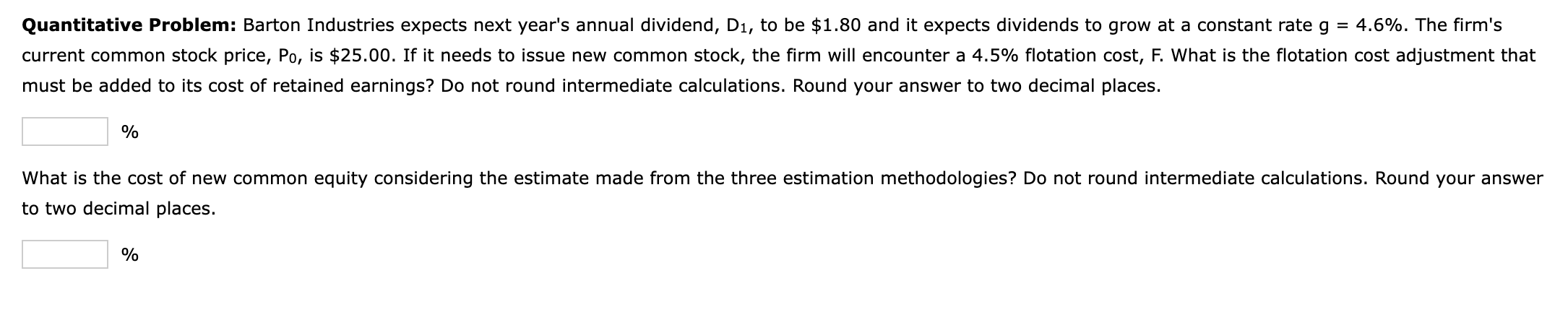
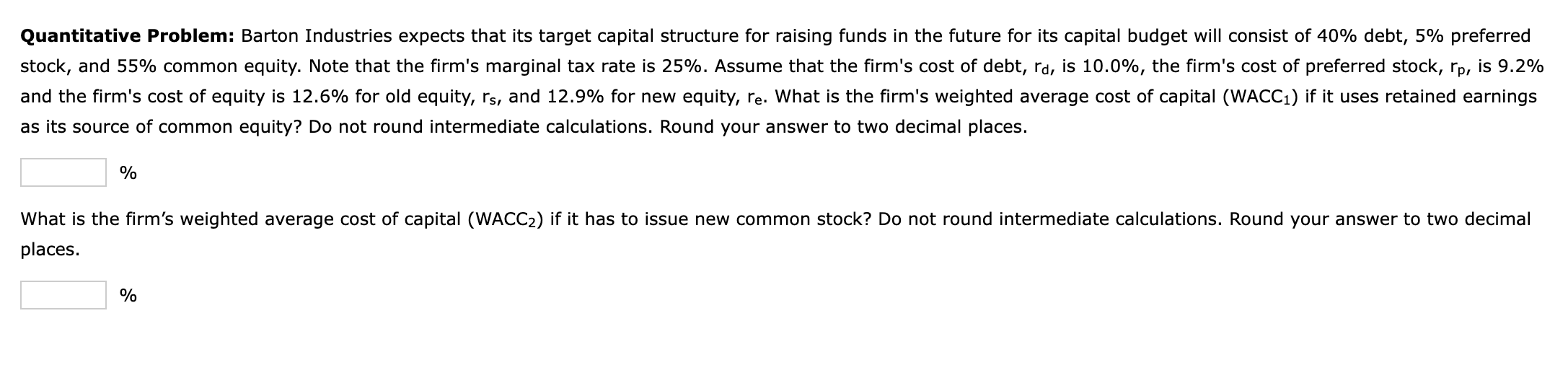
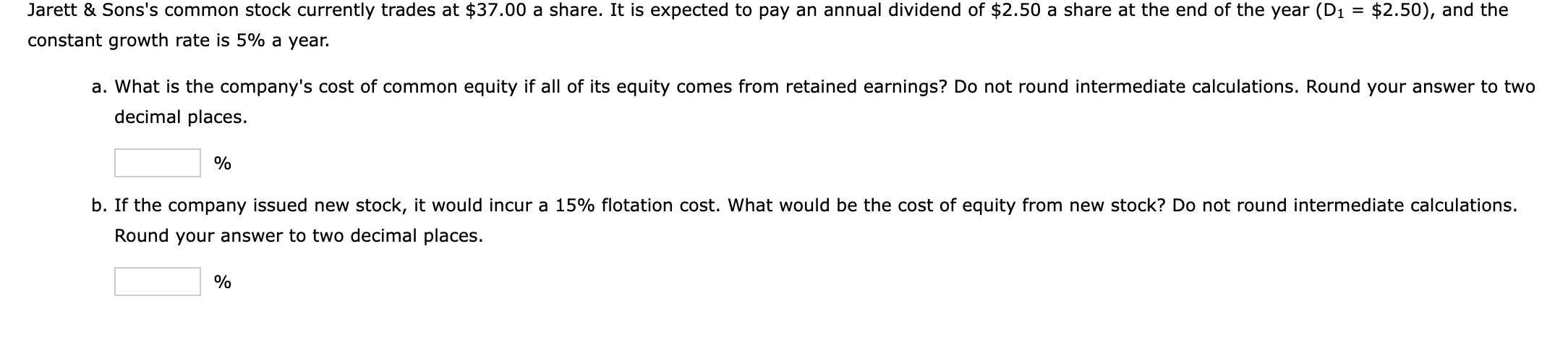
Quantitative Problem: Barton Industries expects next year's annual dividend, D1, to be $1.80 and it expects dividends to grow at a constant rate g=4.6%. The firm's current common stock price, P0, is $25.00. If it needs to issue new common stock, the firm will encounter a 4.5% flotation cost, F. What is the flotation cost adjustment that must be added to its cost of retained earnings? Do not round intermediate calculations. Round your answer to two decimal places. % What is the cost of new common equity considering the estimate made from the three estimation methodologies? Do not round intermediate calculations. Round your answer to two decimal places. % Quantitative Problem: Barton Industries expects that its target capital structure for raising funds in the future for its capital budget will consist of 40% debt, 5% preferred stock, and 55% common equity. Note that the firm's marginal tax rate is 25%. Assume that the firm's cost of debt, rd, is 10.0%, the firm's cost of preferred stock, rp, is 9.2% and the firm's cost of equity is 12.6% for old equity, rs, and 12.9% for new equity, re. What is the firm's weighted average cost of capital (WACC 1 ) if it uses retained earnings as its source of common equity? Do not round intermediate calculations. Round your answer to two decimal places. % What is the firm's weighted average cost of capital (WACC2) if it has to issue new common stock? Do not round intermediate calculations. Round your answer to two decimal places. % Jarett \& Sons's common stock currently trades at $37.00 a share. It is expected to pay an annual dividend of $2.50 a share at the end of the year (D1=$2.50), and the constant growth rate is 5% a year. a. What is the company's cost of common equity if all of its equity comes from retained earnings? Do not round intermediate calculations. Round your answer to two decimal places. % b. If the company issued new stock, it would incur a 15% flotation cost. What would be the cost of equity from new stock? Do not round intermediate calculations. Round your answer to two decimal places. % Quantitative Problem: Barton Industries can issue perpetual preferred stock at a price of $52 per share. The stock would pay a constant annual dividend of $3.95 per share. If the firm's marginal tax rate is 25%, what is the company's cost of preferred stock? Round your answer to two decimal places. %
Step by Step Solution
There are 3 Steps involved in it

Get step-by-step solutions from verified subject matter experts
 Study Help