







Question: Part 1. Create a database schema for each scenario. There are two scenarios. Make sure that you read the tables carefully. Your schema should reflect
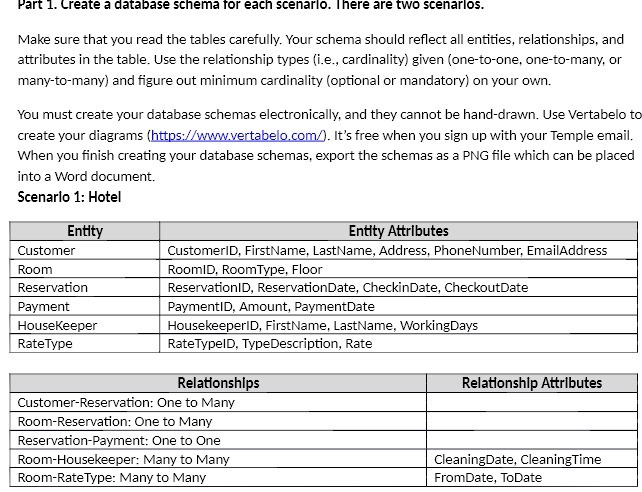
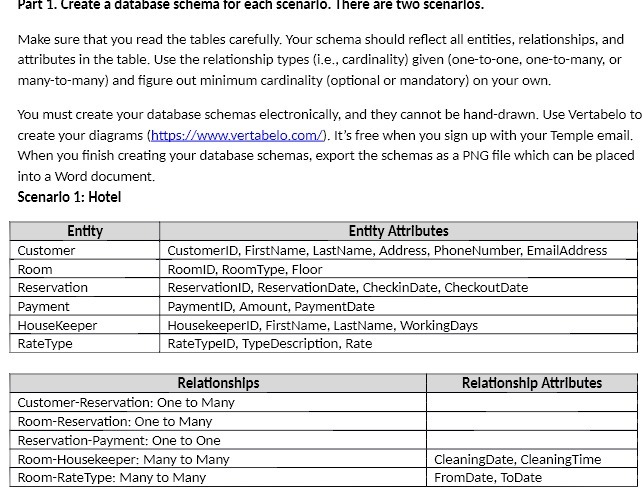
Part 1. Create a database schema for each scenario. There are two scenarios. Make sure that you read the tables carefully. Your schema should reflect all entities, relationships, and attributes in the table. Use the relationship types (i.e., cardinality) given (one-to-one, one-to-many, or many-to-many) and figure out minimum cardinality (optional or mandatory) on your own. You must create your database schemas electronically, and they cannot be hand-drawn. Use Vertabelo to create your diagrams (https://www.vertabelo.com/). It's free when you sign up with your Temple email. When you finish creating your database schemas, export the schemas as a PNG file which can be placed into a Word document. Scenario 1: Hotel Entity Entity Attributes Customer CustomerID, FirstName, LastName, Address, PhoneNumber, EmailAddress Room RoomID, RoomType, Floor Reservation ReservationID, ReservationDate, CheckinDate, CheckoutDate Payment PaymentID, Amount, PaymentDate Housekeeper HousekeeperID, FirstName, LastName, WorkingDays RateType RateTypelD, TypeDescription, Rate Relationships Relationship Attributes Customer-Reservation: One to Many Room-Reservation: One to Many Reservation-Payment: One to One Room-Housekeeper: Many to Many CleaningDate, Cleaning Time Room-RateType: Many to Many FromDate, ToDate
Step by Step Solution
There are 3 Steps involved in it

Get step-by-step solutions from verified subject matter experts
 Study Help