



Question: Part 1 Directions: Using a spinner, conduct an experiment to compare experimental probability with theoretical probability. Using a spinner you construct or a digital spinner,
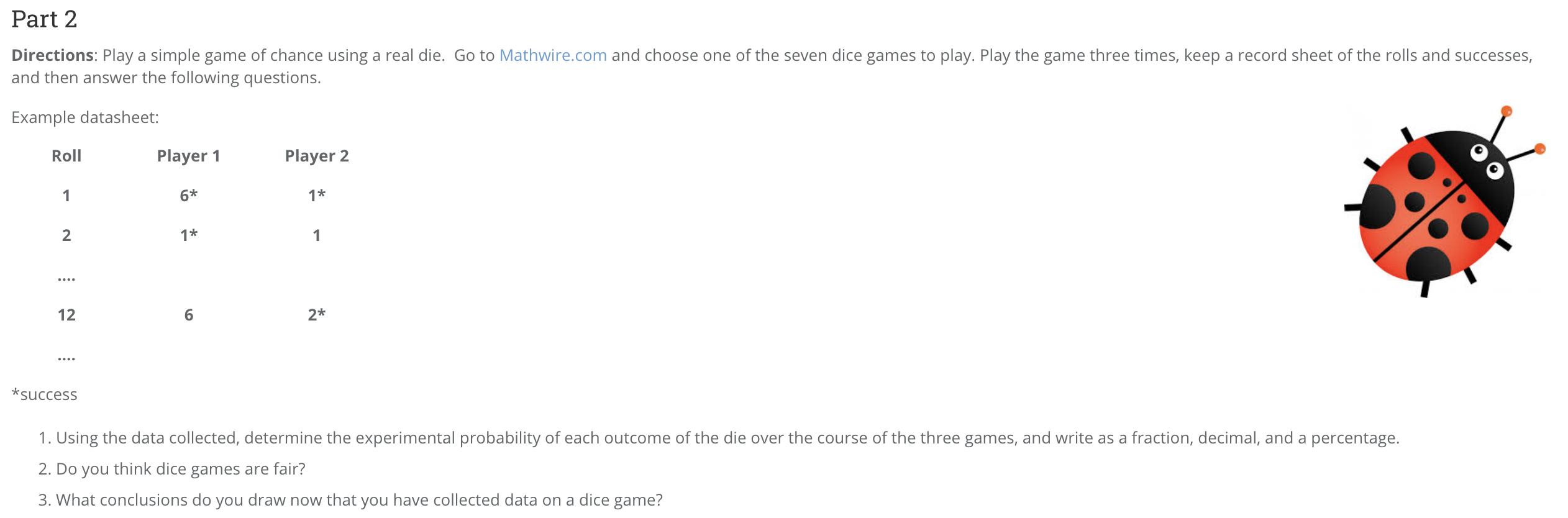

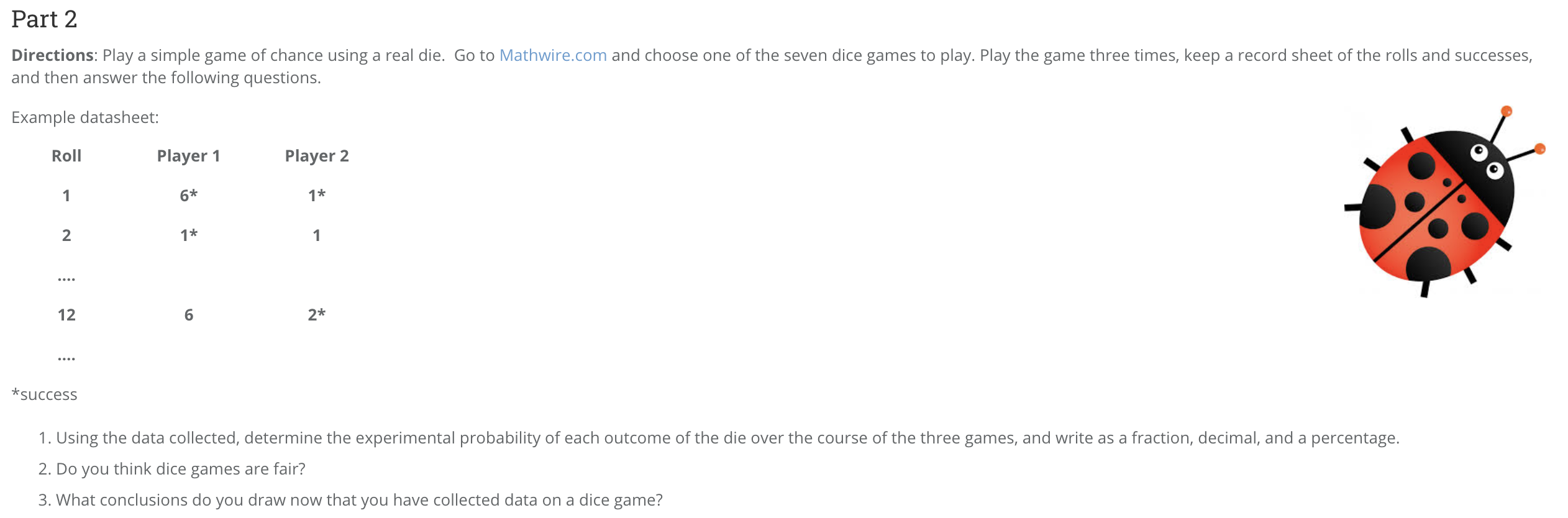
Part 1 Directions: Using a spinner, conduct an experiment to compare experimental probability with theoretical probability. Using a spinner you construct or a digital spinner, complete the following steps; write the probabilities as a fraction and a percentage 1. What is the theoretical probability of spinning yellow? 2. What is the theoretical probability of spinning red or yellow? 3. Spin the spinner 20 times, create a table to display the results. What is the experimental probability of spinning yellow? 4. Perform another 20 spins, and record them. What is the new experimental probability of spinning yellow? 5. What is the experimental probability of spinning red or yellow? Part 2 Directions: Play a simple game of chance using a real die. Go to Mathwire.com and choose one of the seven dice games to play. Play the game three times, keep a record sheet of the rolls and successes, and then answer the following questions. Example datasheet: Roll Player 1 Player 2 6* 1* 2 7* .... 12 6 2* . . .. *success 1. Using the data collected, determine the experimental probability of each outcome of the die over the course of the three games, and write as a fraction, decimal, and a percentage. 2. Do you think dice games are fair? 3. What conclusions do you draw now that you have collected data on a dice game
Step by Step Solution
There are 3 Steps involved in it

Get step-by-step solutions from verified subject matter experts