Question: Part 1. Write two well developed paragraphs about the material. Restate the material in a summary, an outline, or simply take careful notes. Part 2.
Part 1. Write two well developed paragraphs about the material. Restate the material in a summary, an outline, or simply take careful notes.
Part 2. Yourown personal reflections on or reactions to the article. Analyze it, illustrate through your own experience, refute it, get mad at it, question it, believe it, doubt it, go beyond it.
a. Triangle Waist Factory Firehttps://www.youtube.com/watch?v=4ulaG9x4GpE
b. Read - Women in the Workforce Hit an All Time High https://www.marketwatch.com/story/women-just-broke-a-job-market-record-that-may-be-a-warning-sign-ed7f888b
c. Women in the Workforce Laterhttps://www.youtube.com/watch?v=hBVAlBimoNo
d. Review and comment Women's Earnings https://www.bls.gov/opub/reports/womens-earnings/2022/home.htm
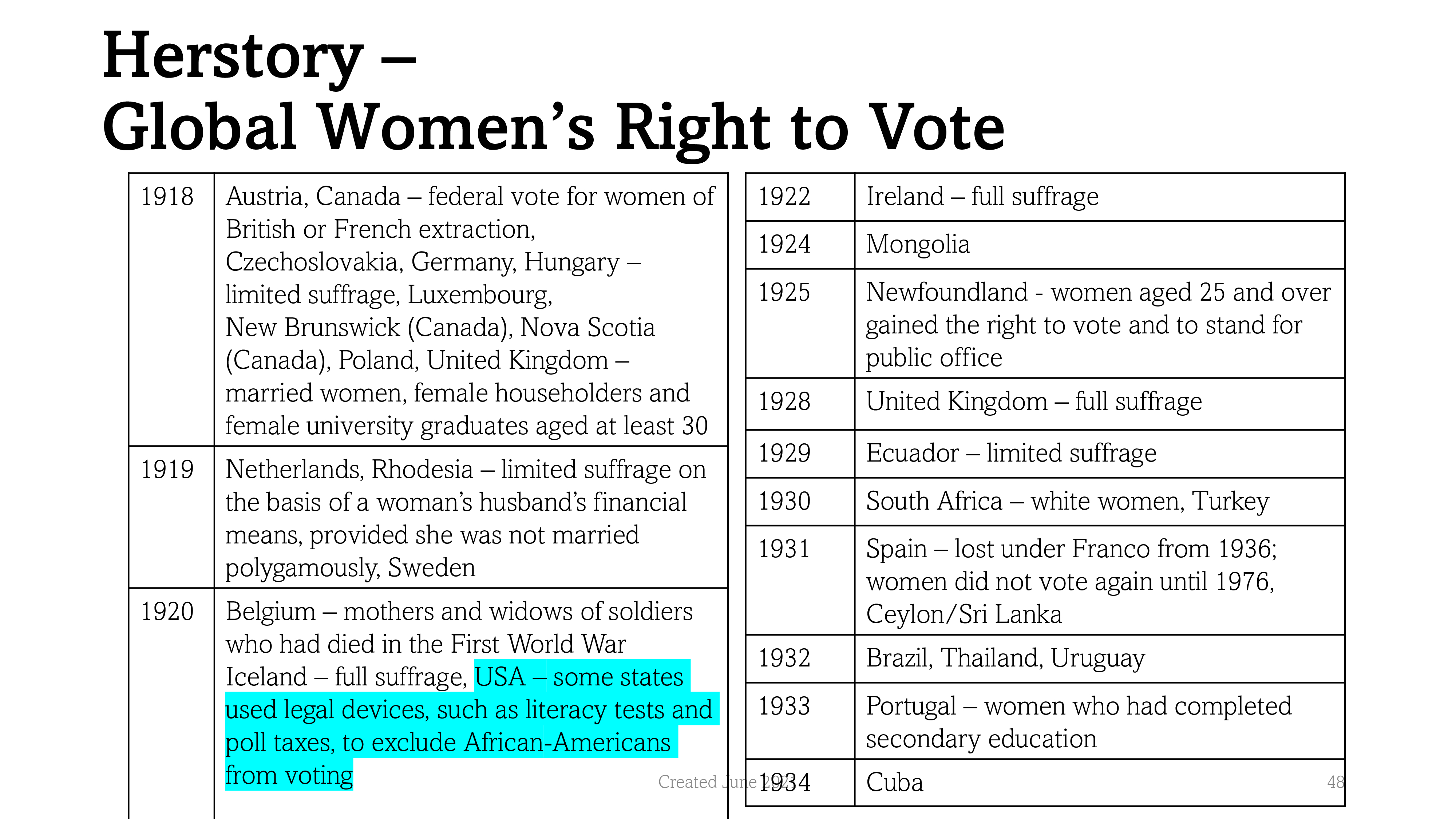
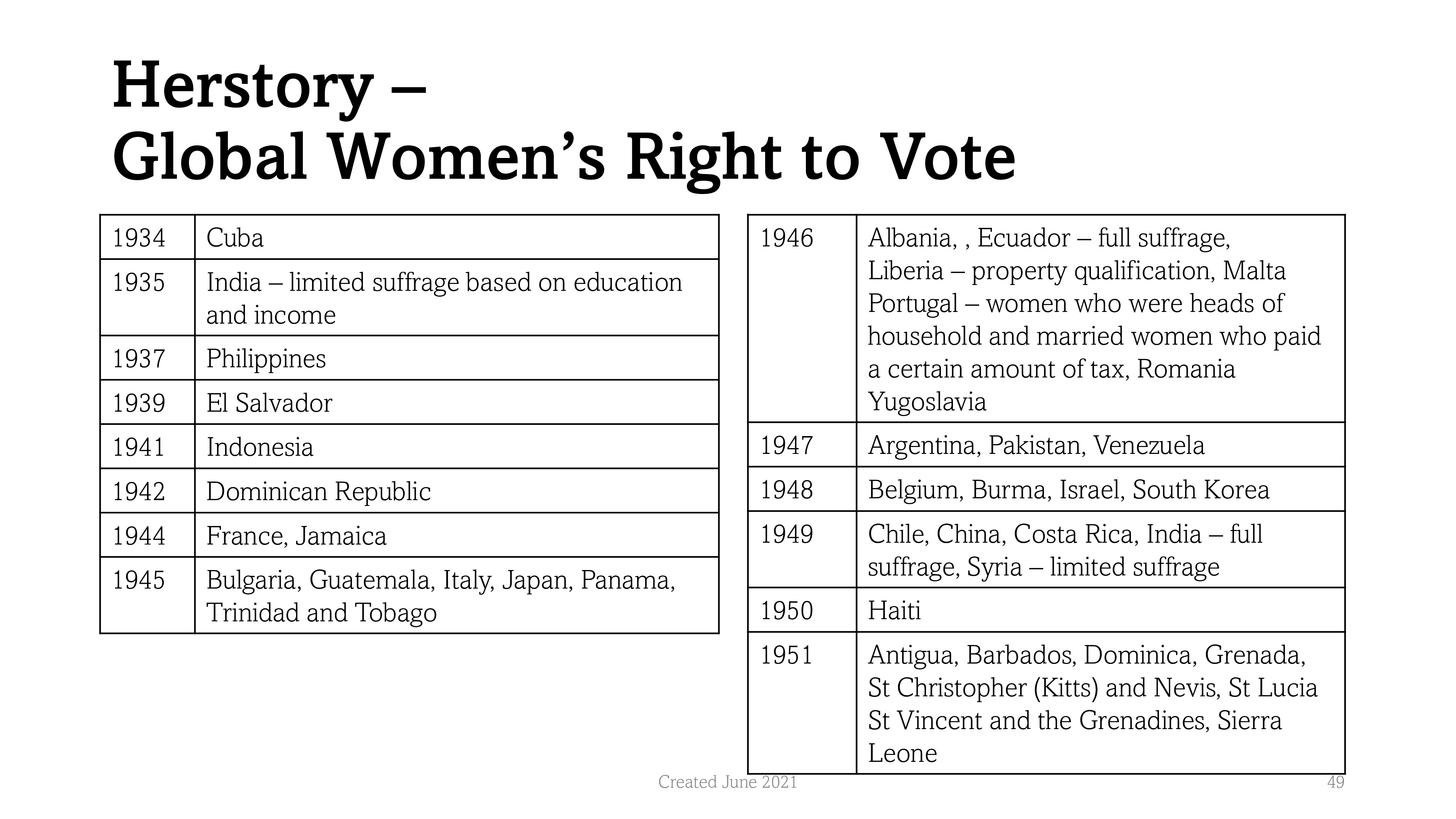
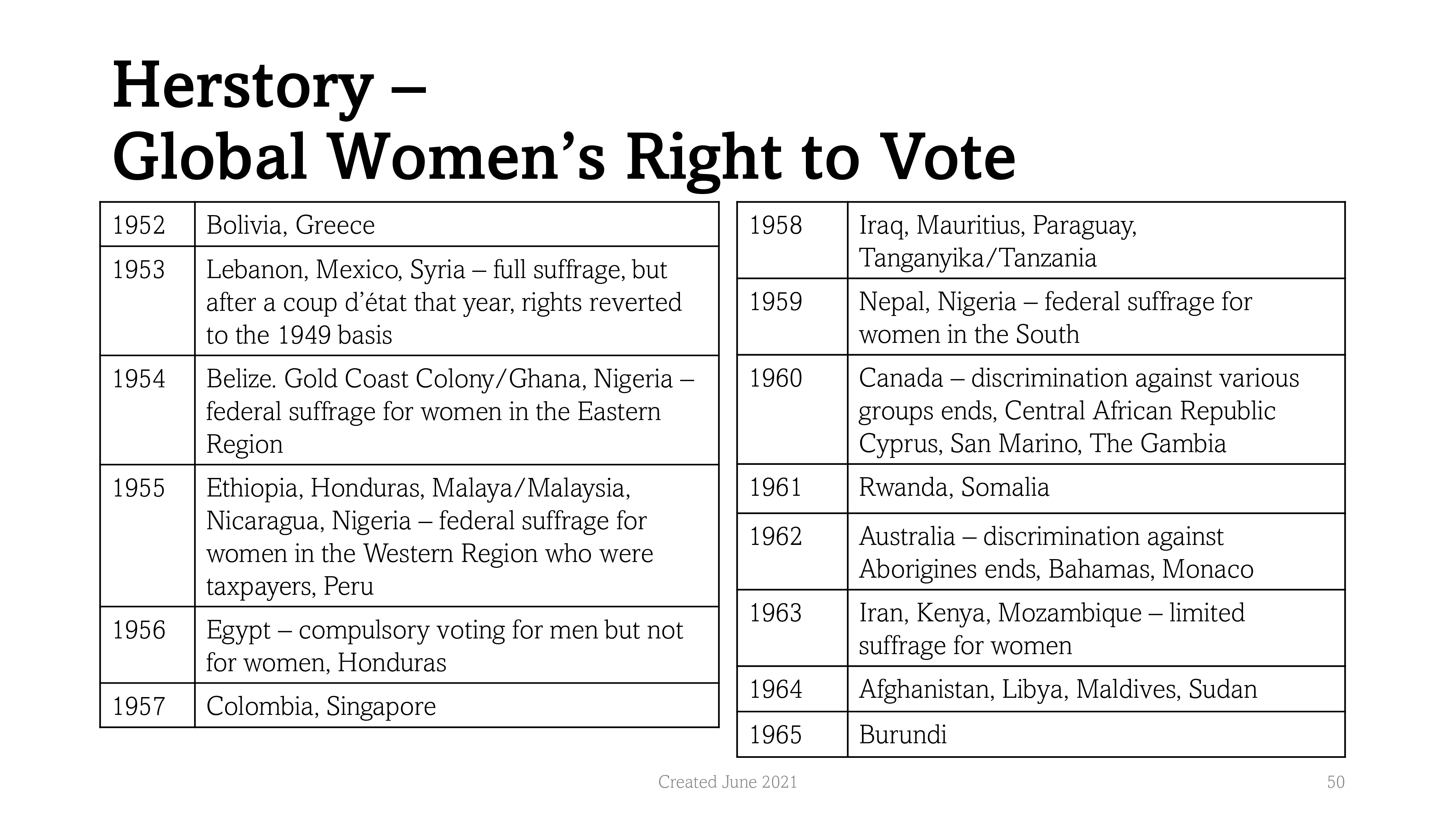
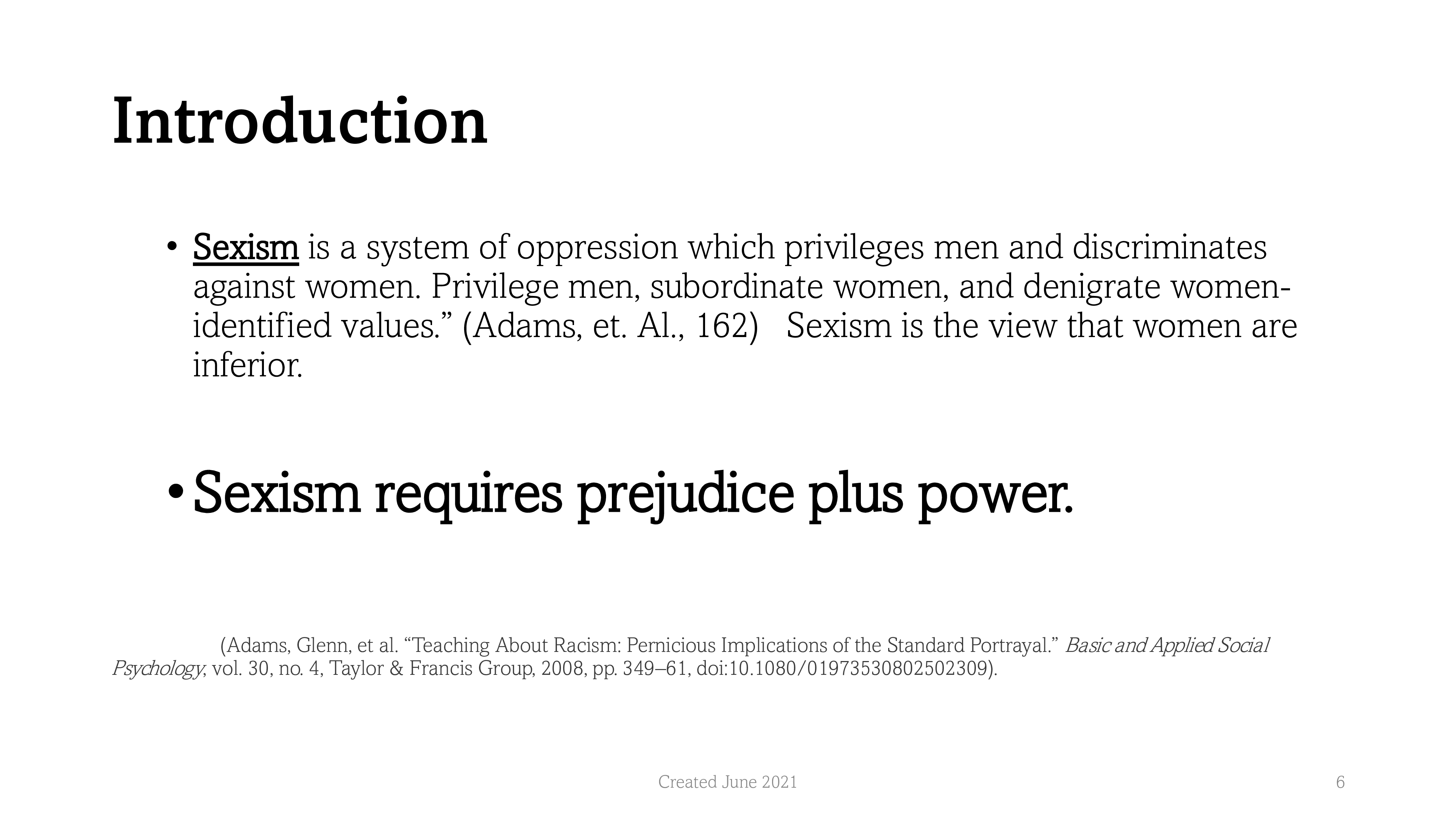
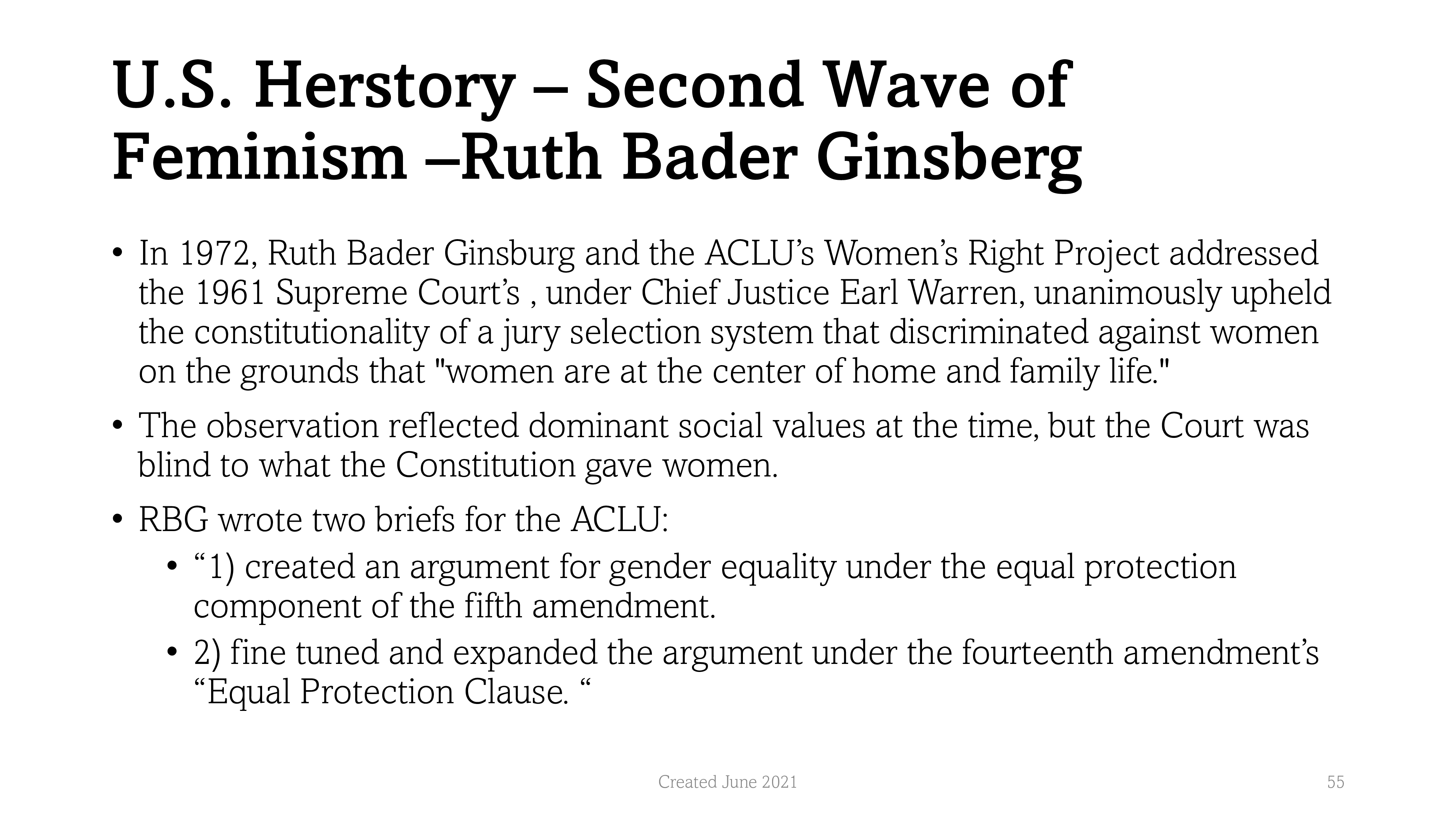
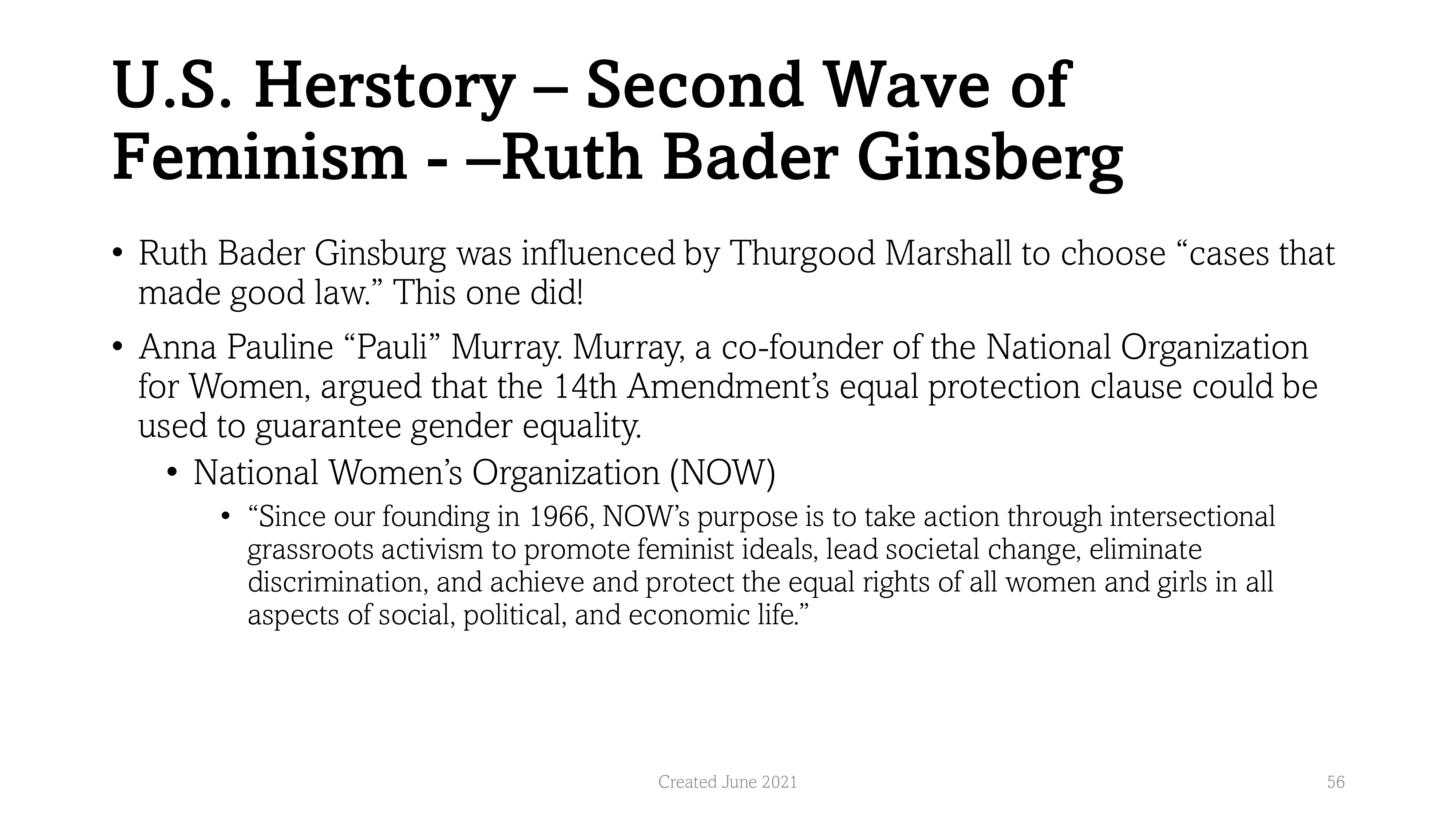
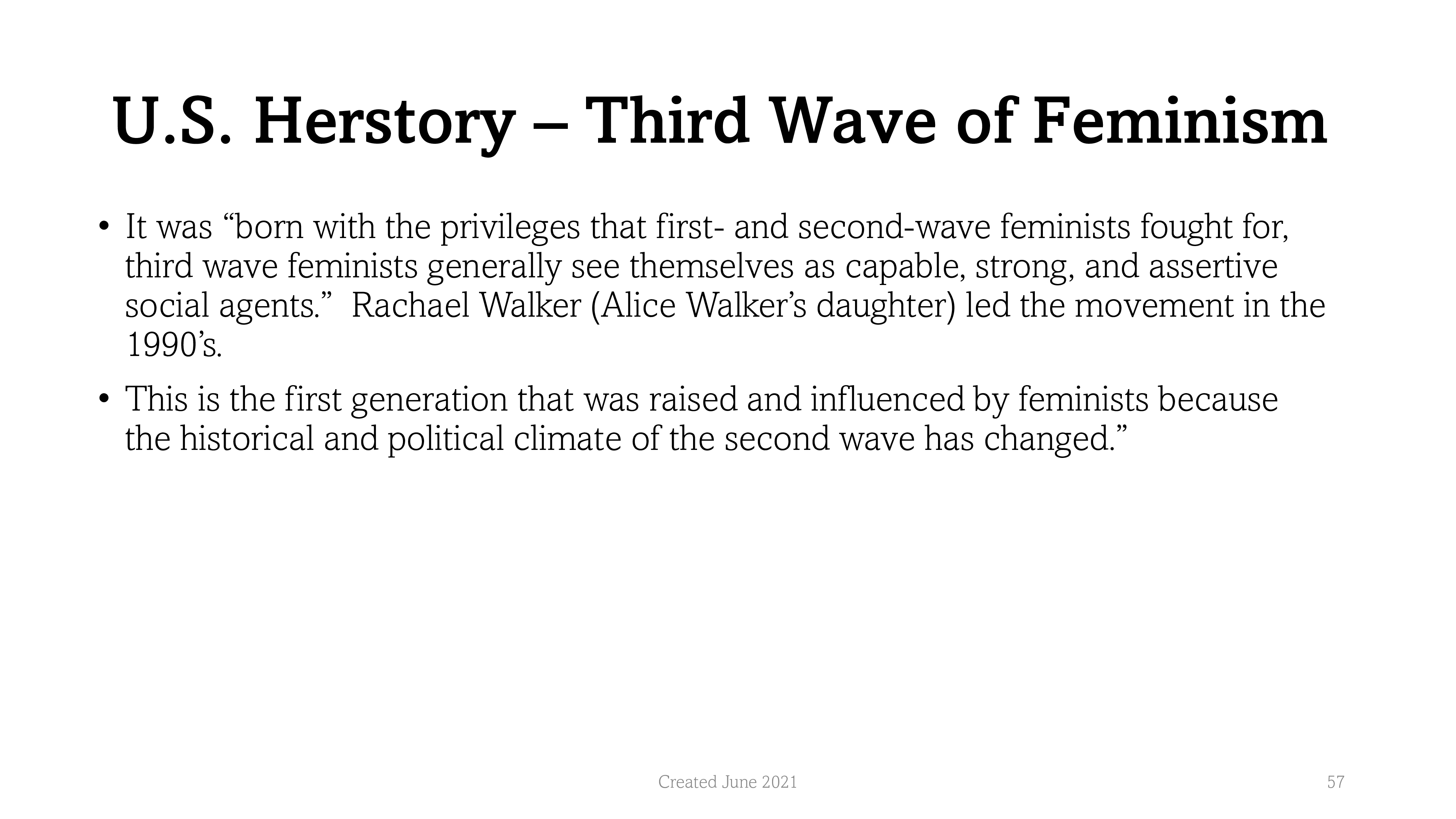
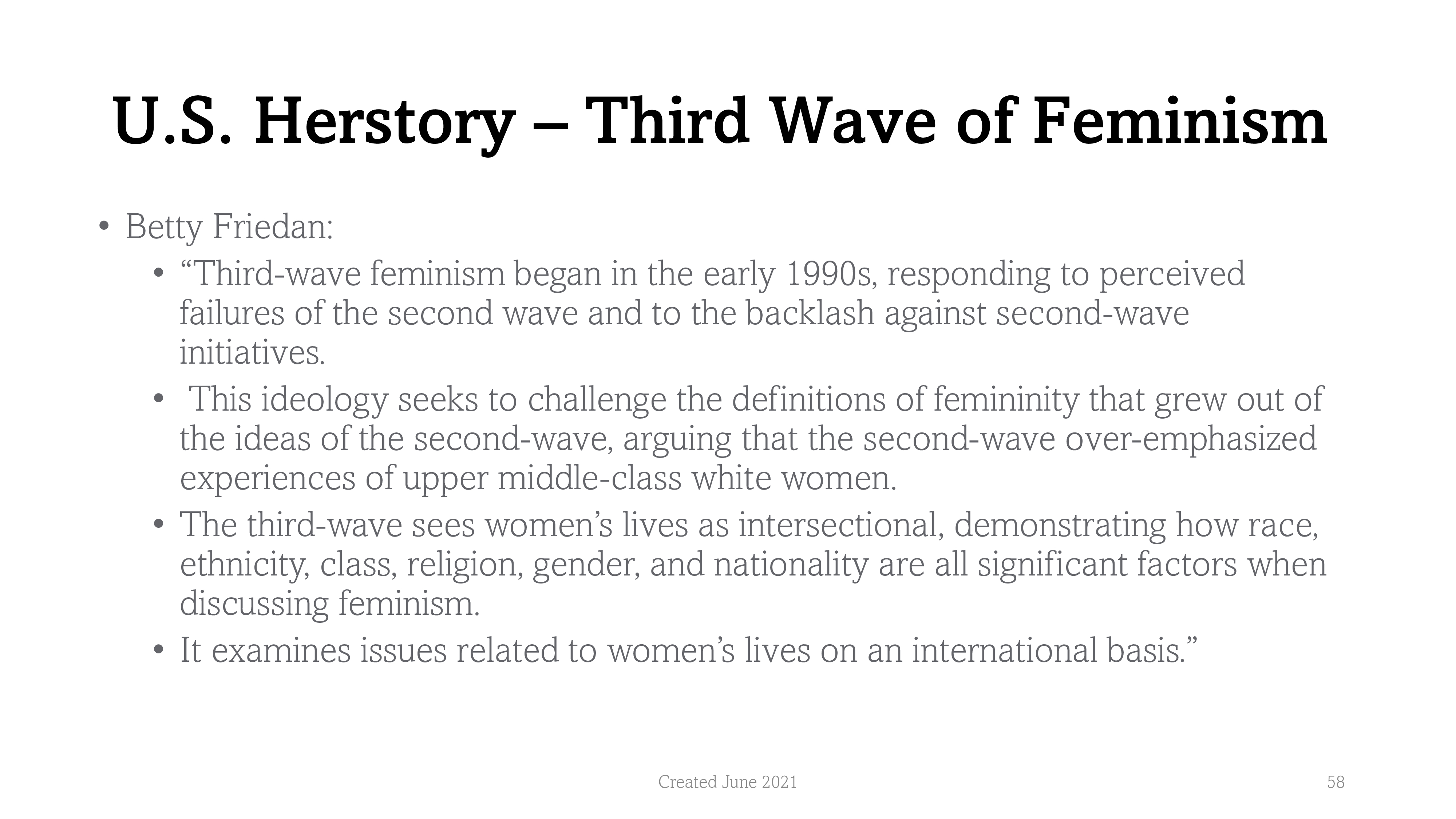
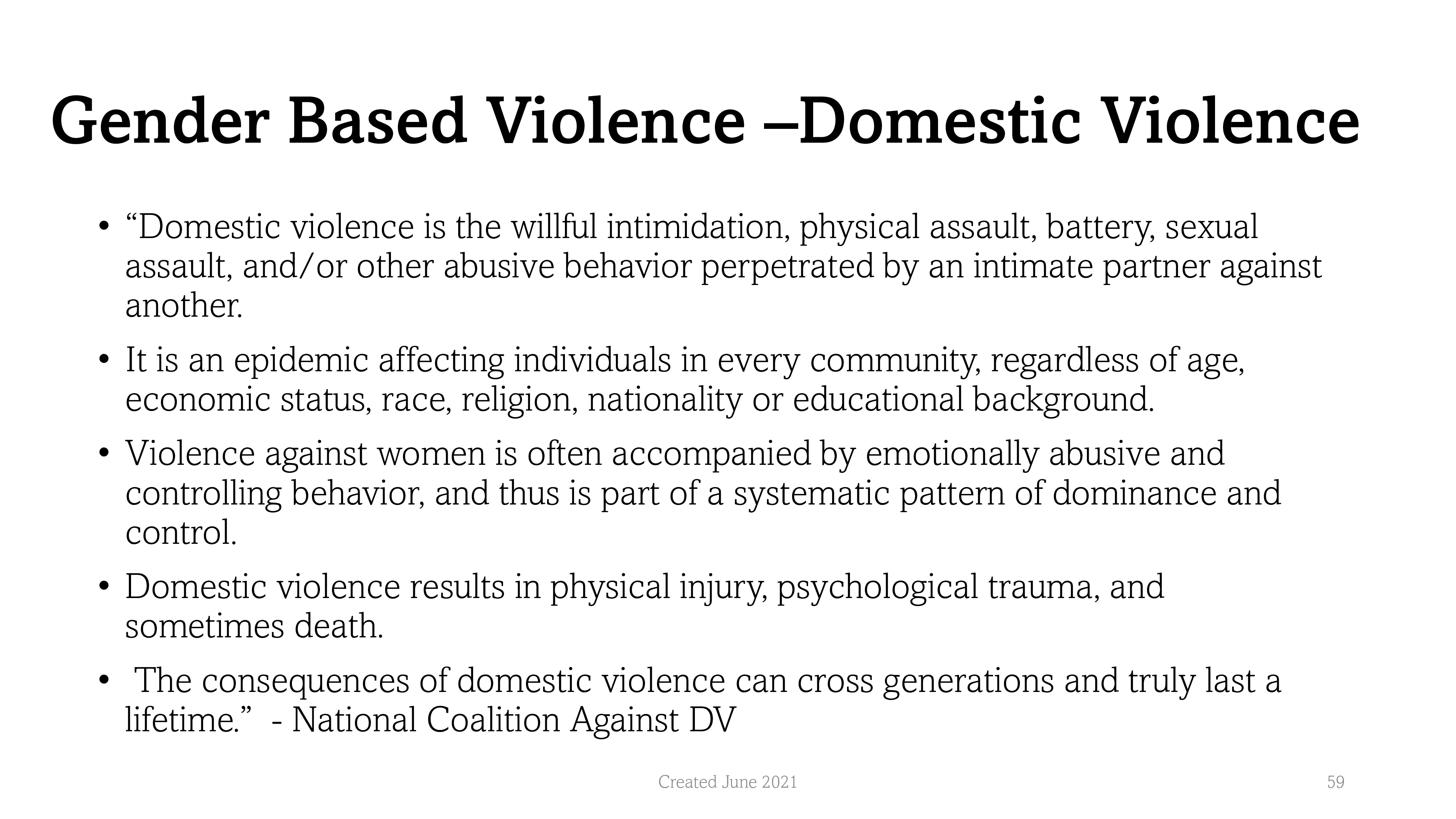
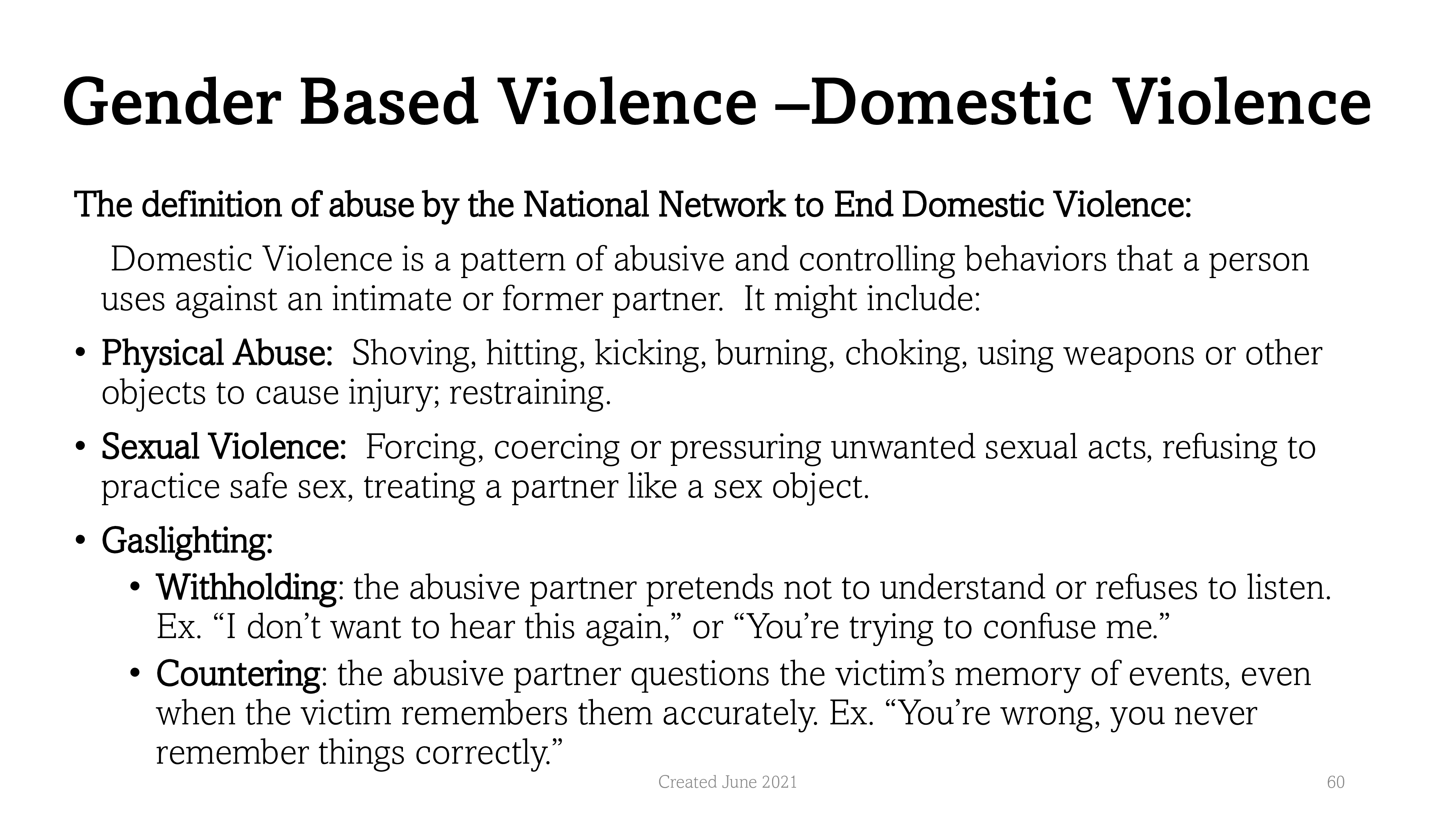
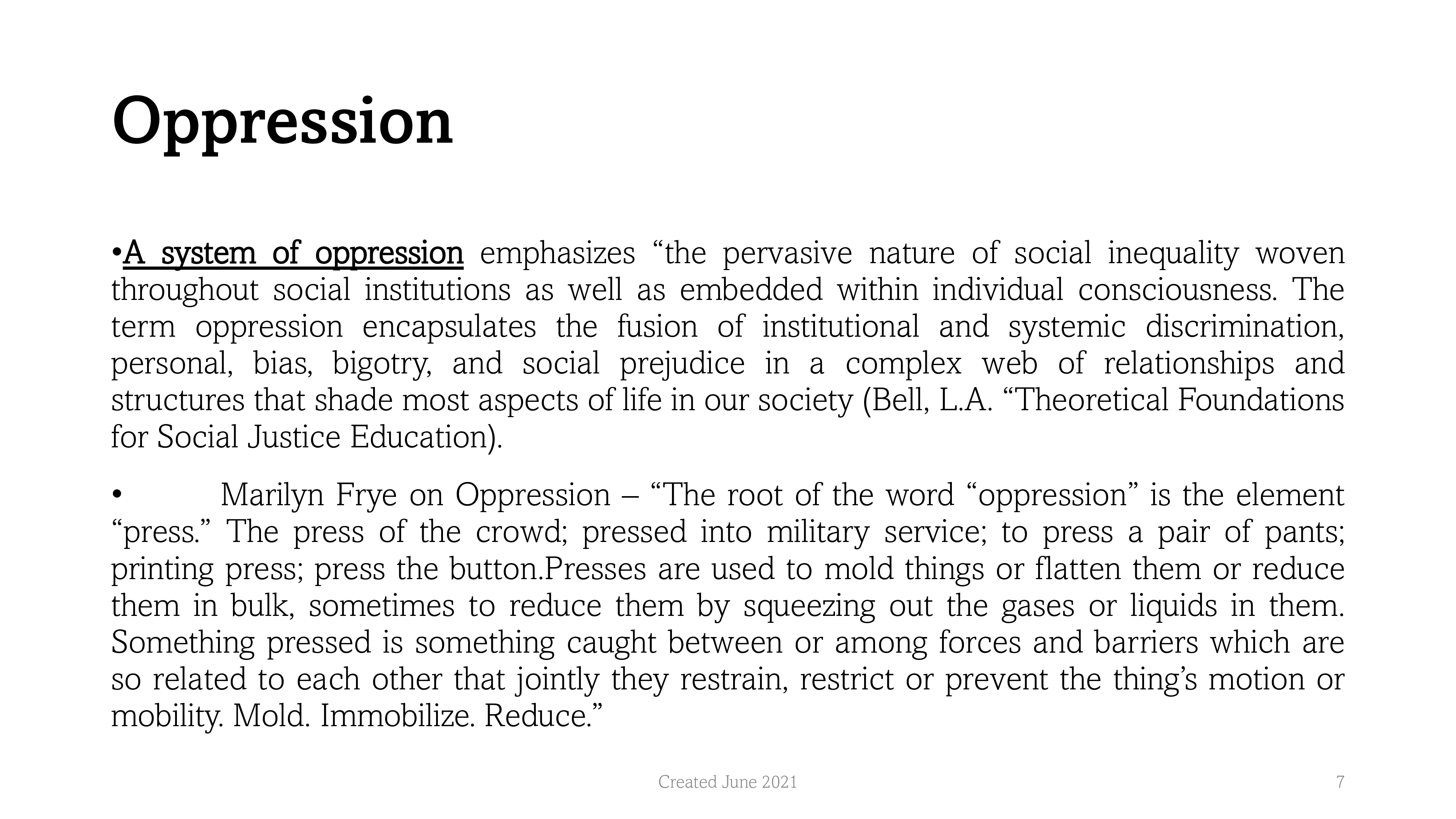
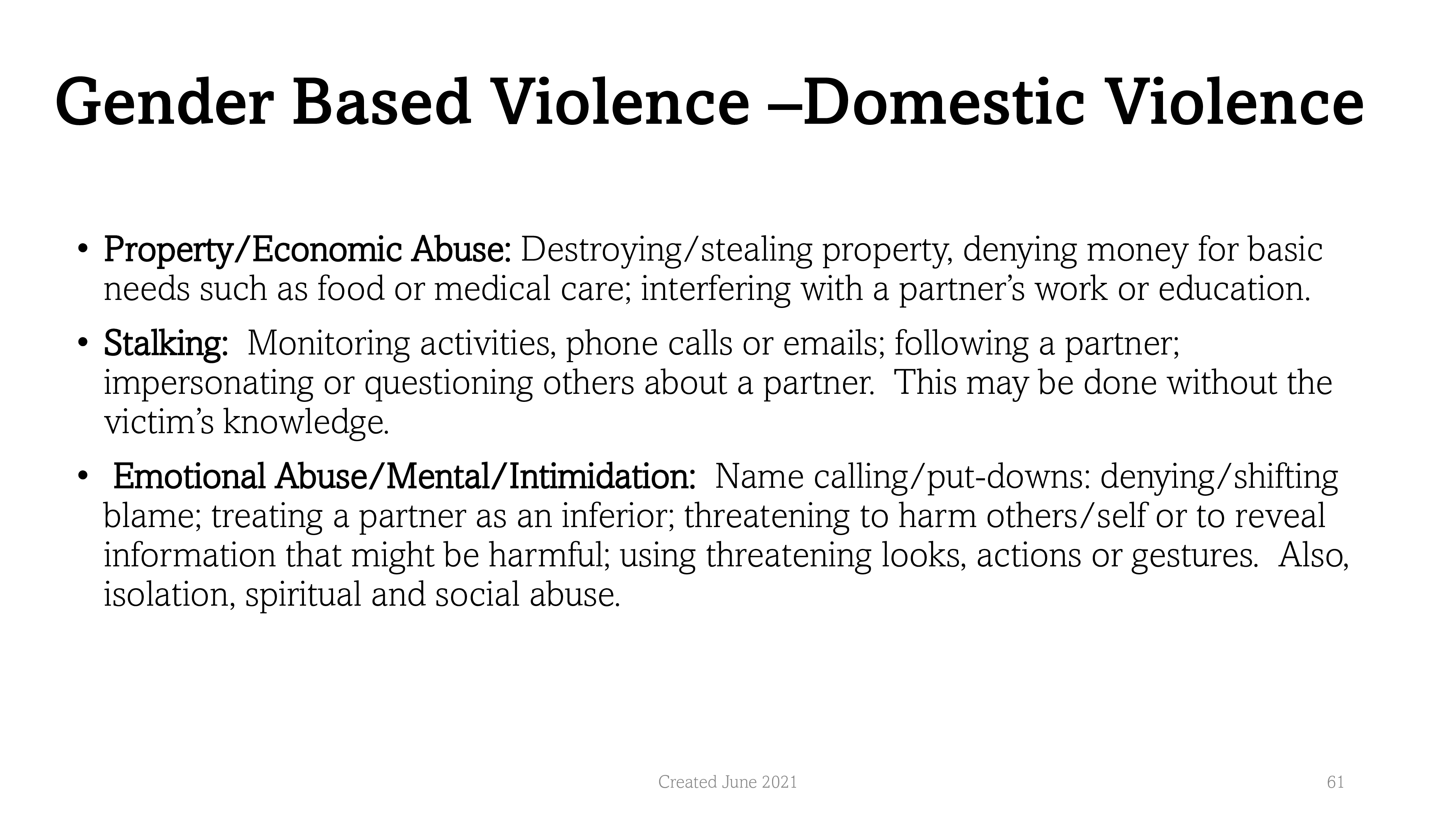
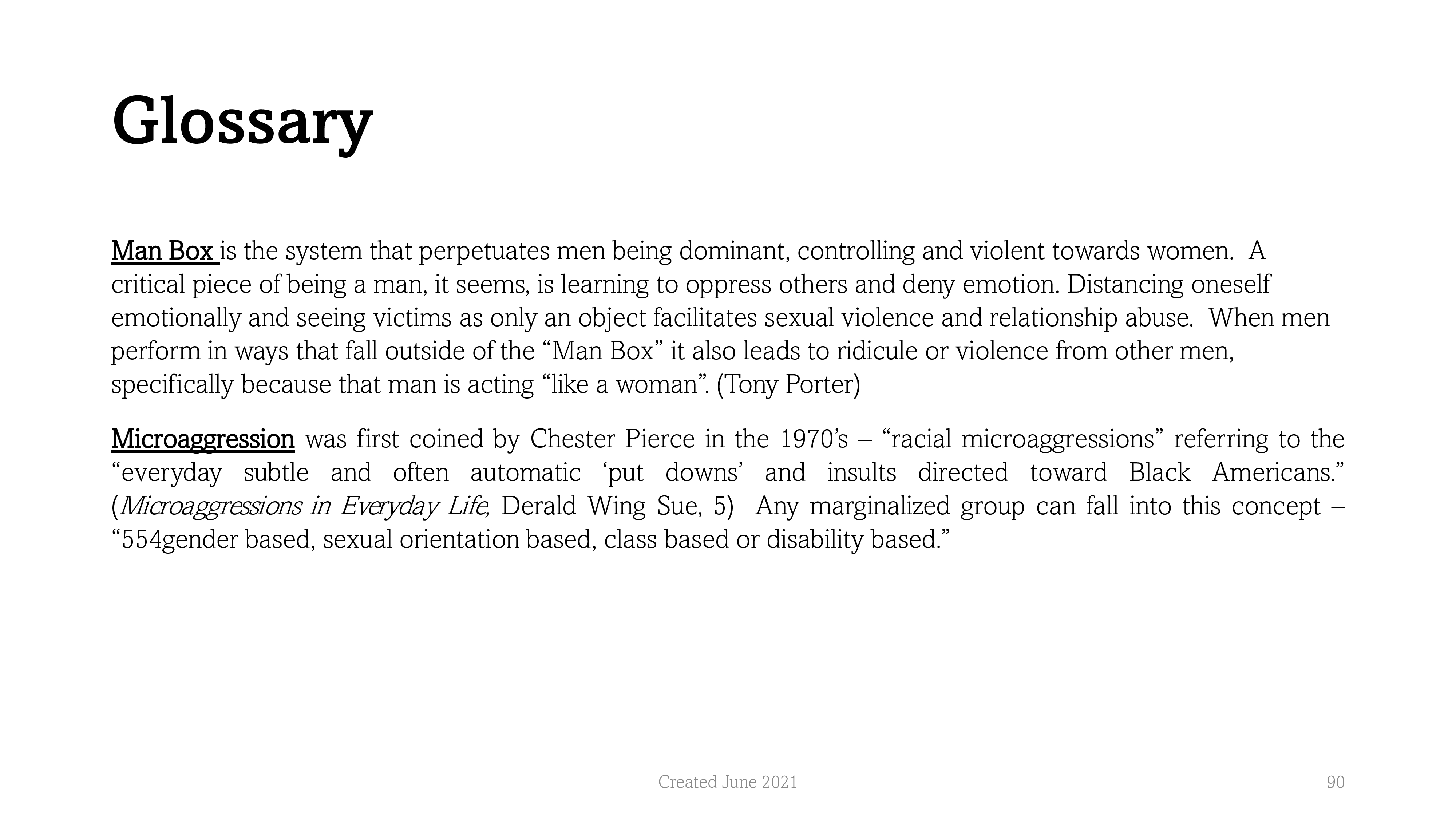
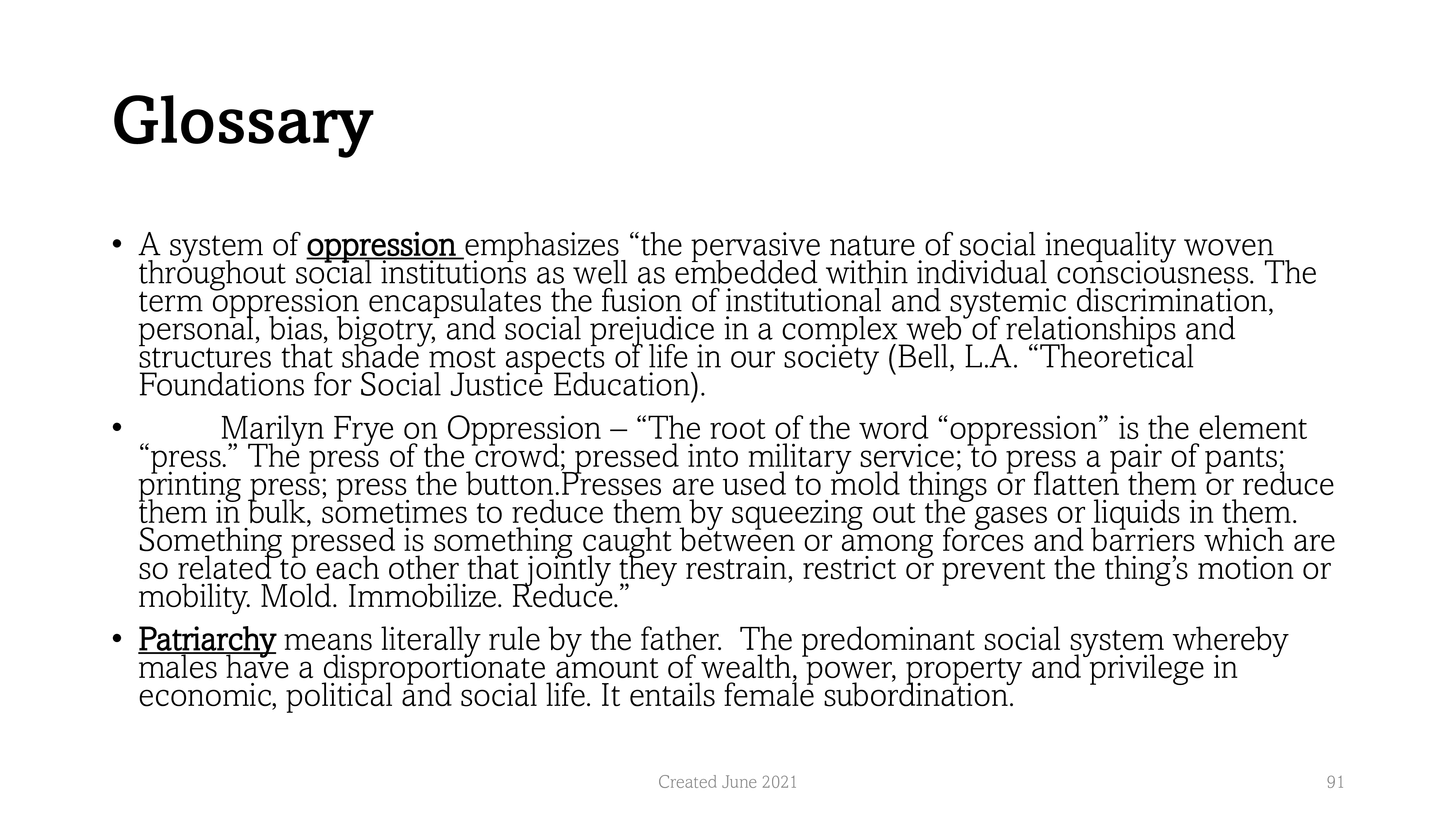
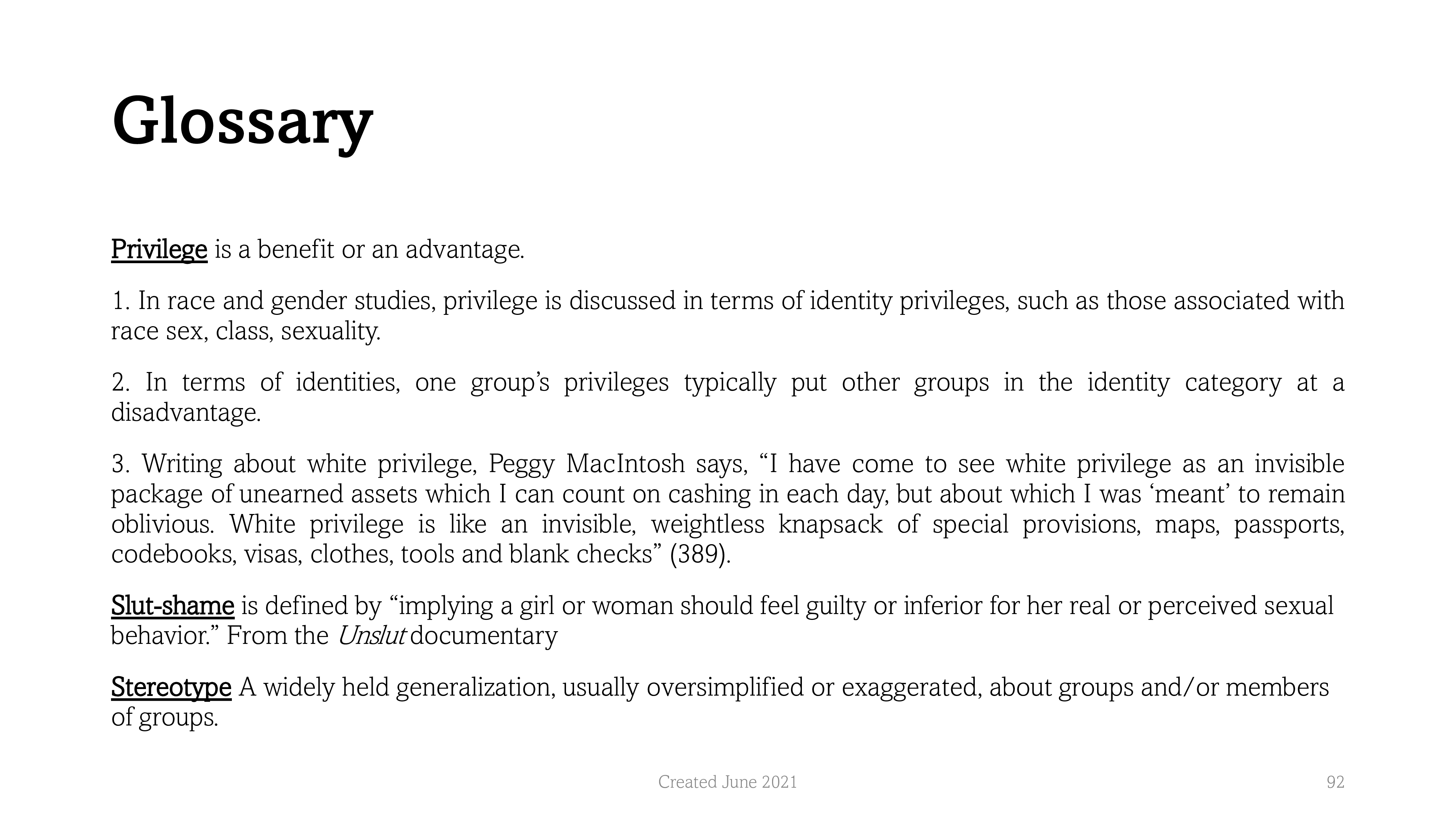
e. Sexism and Feminism powerpoint
f. The Problem That Has No Name
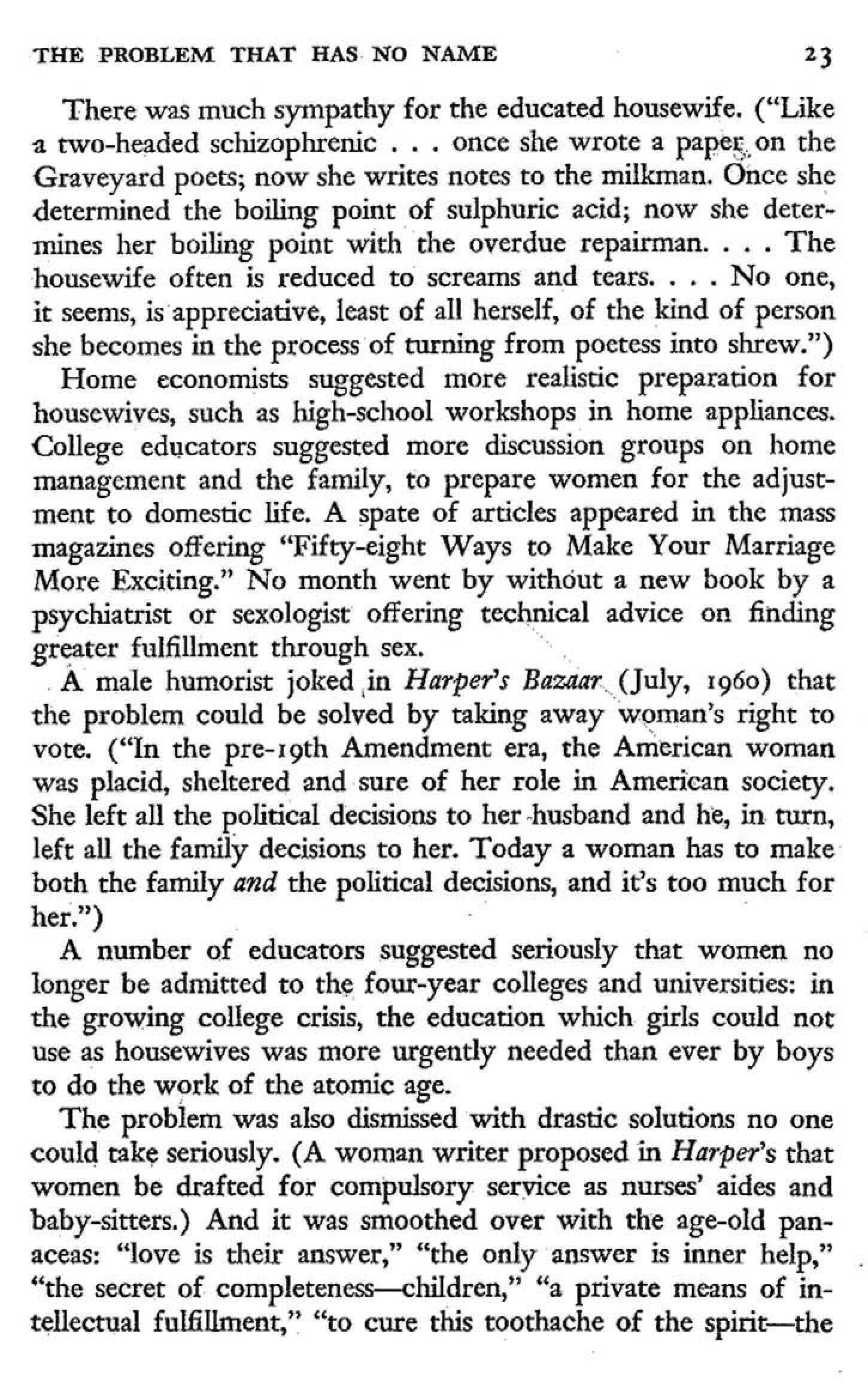
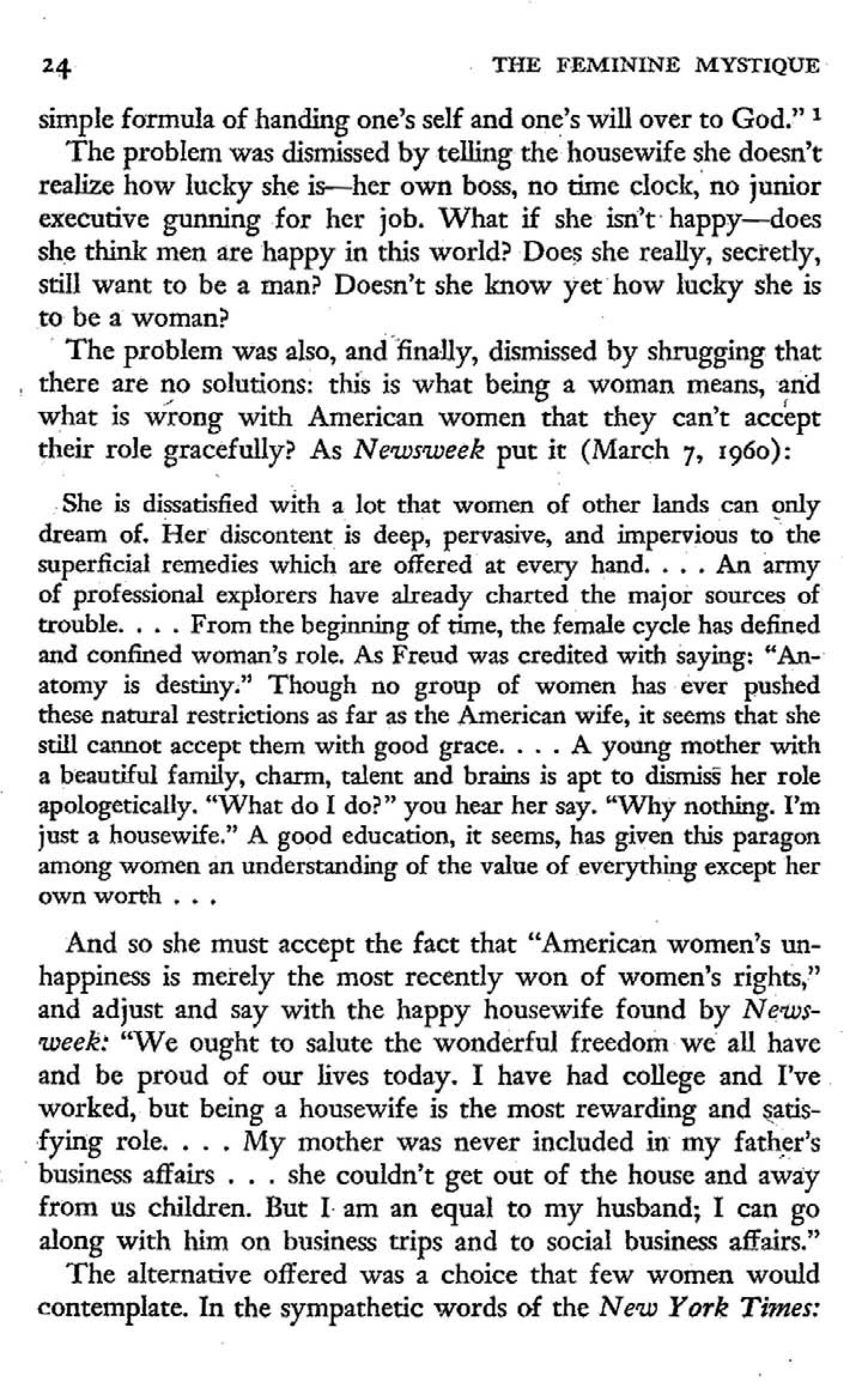
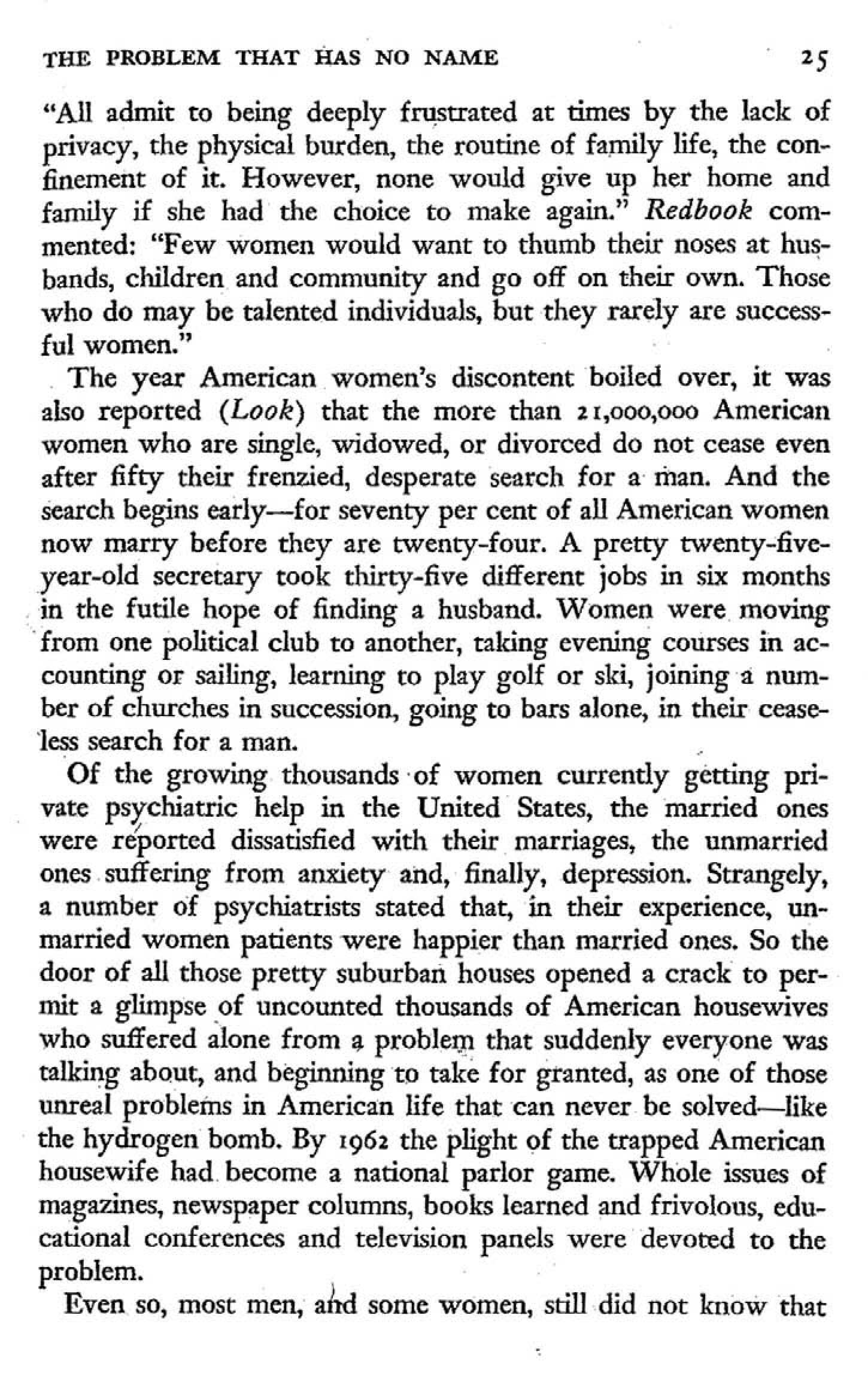
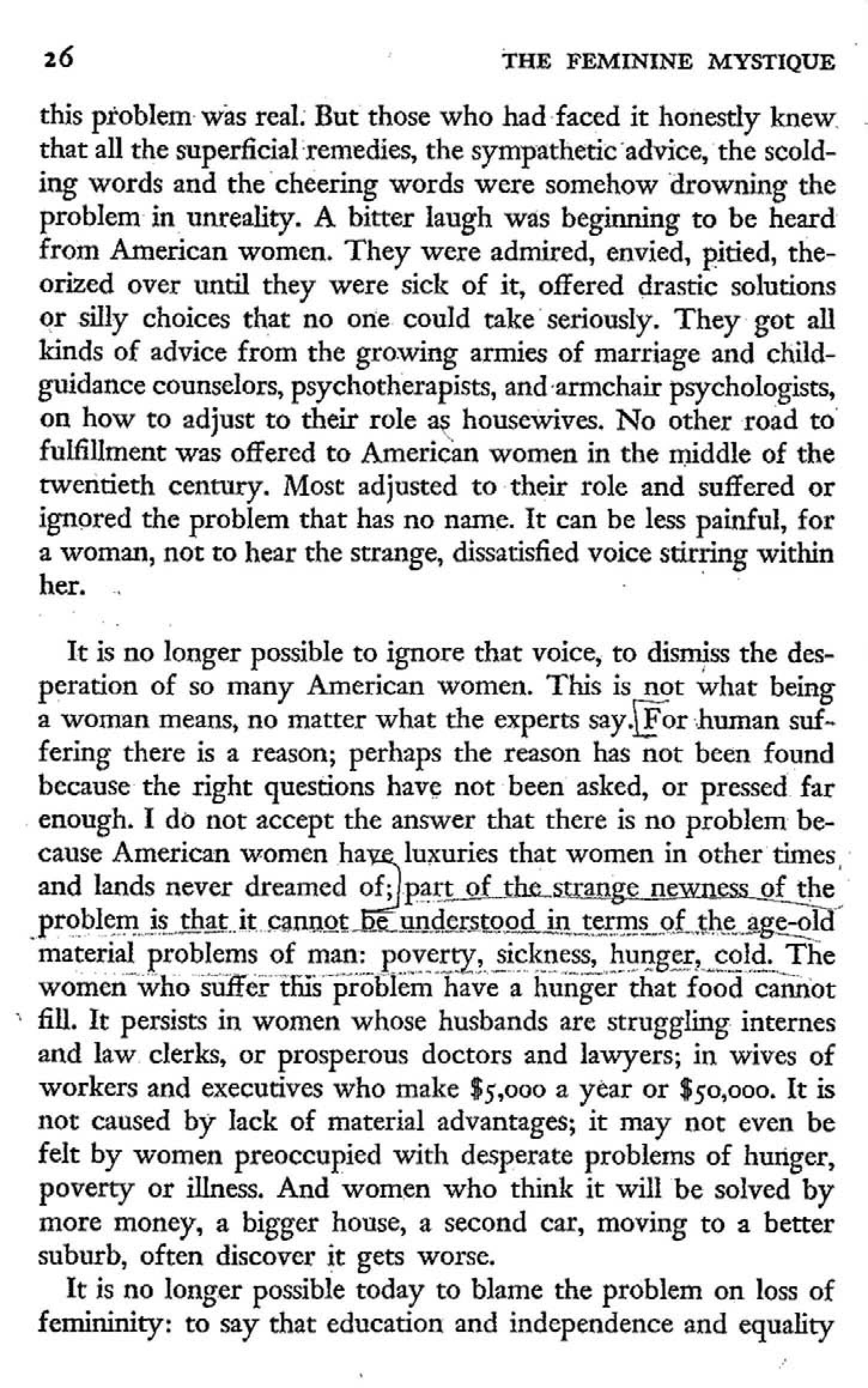
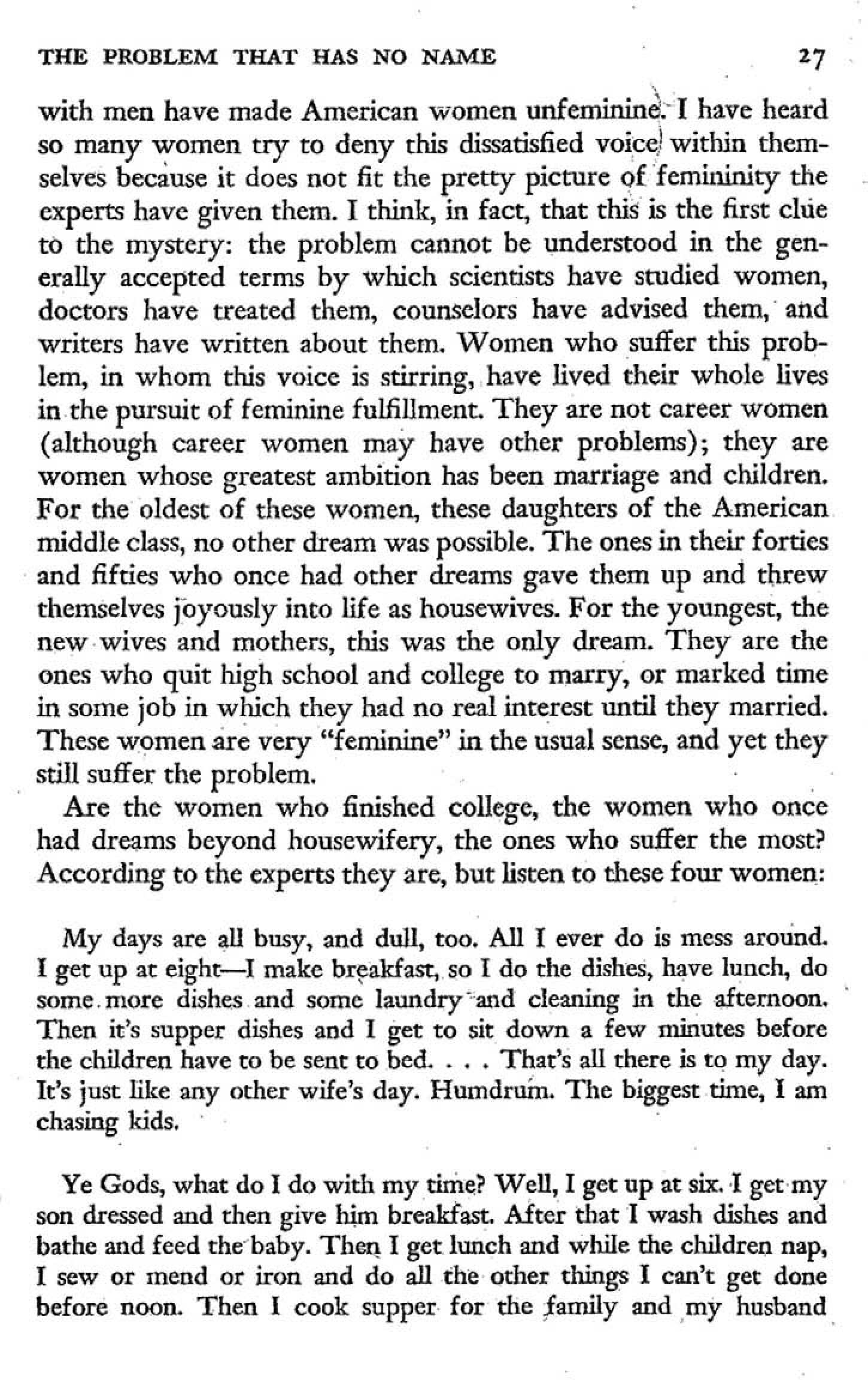
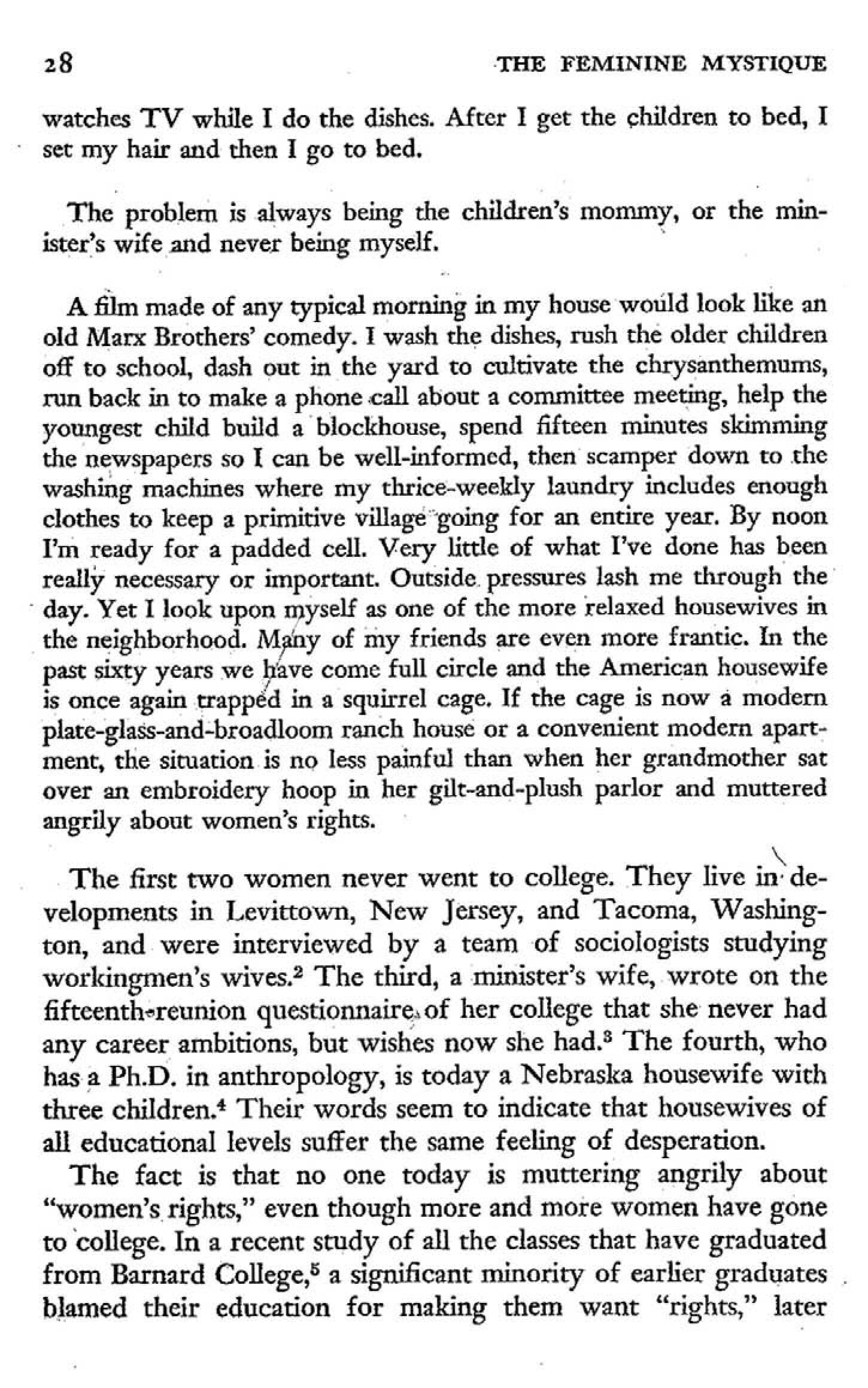
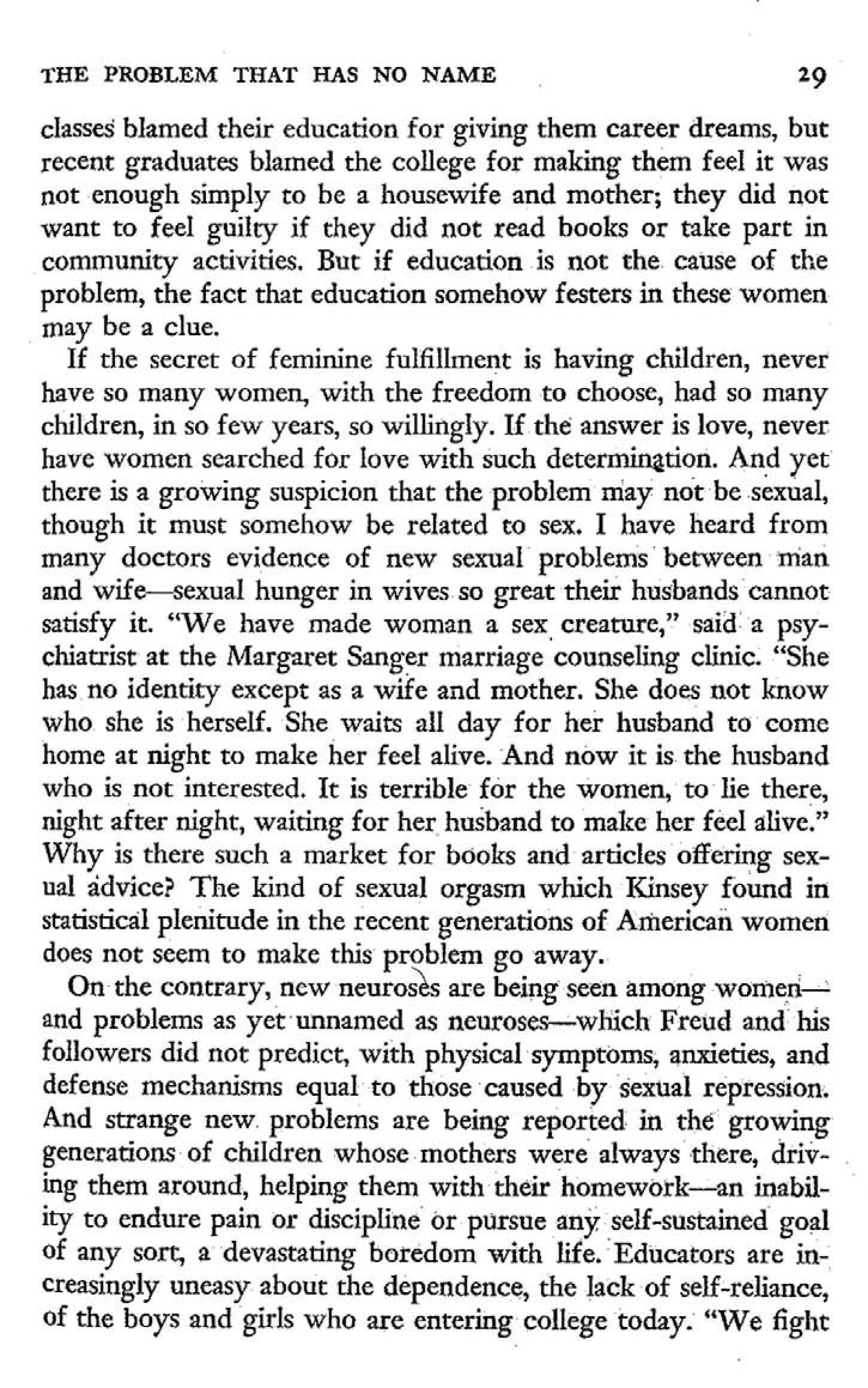
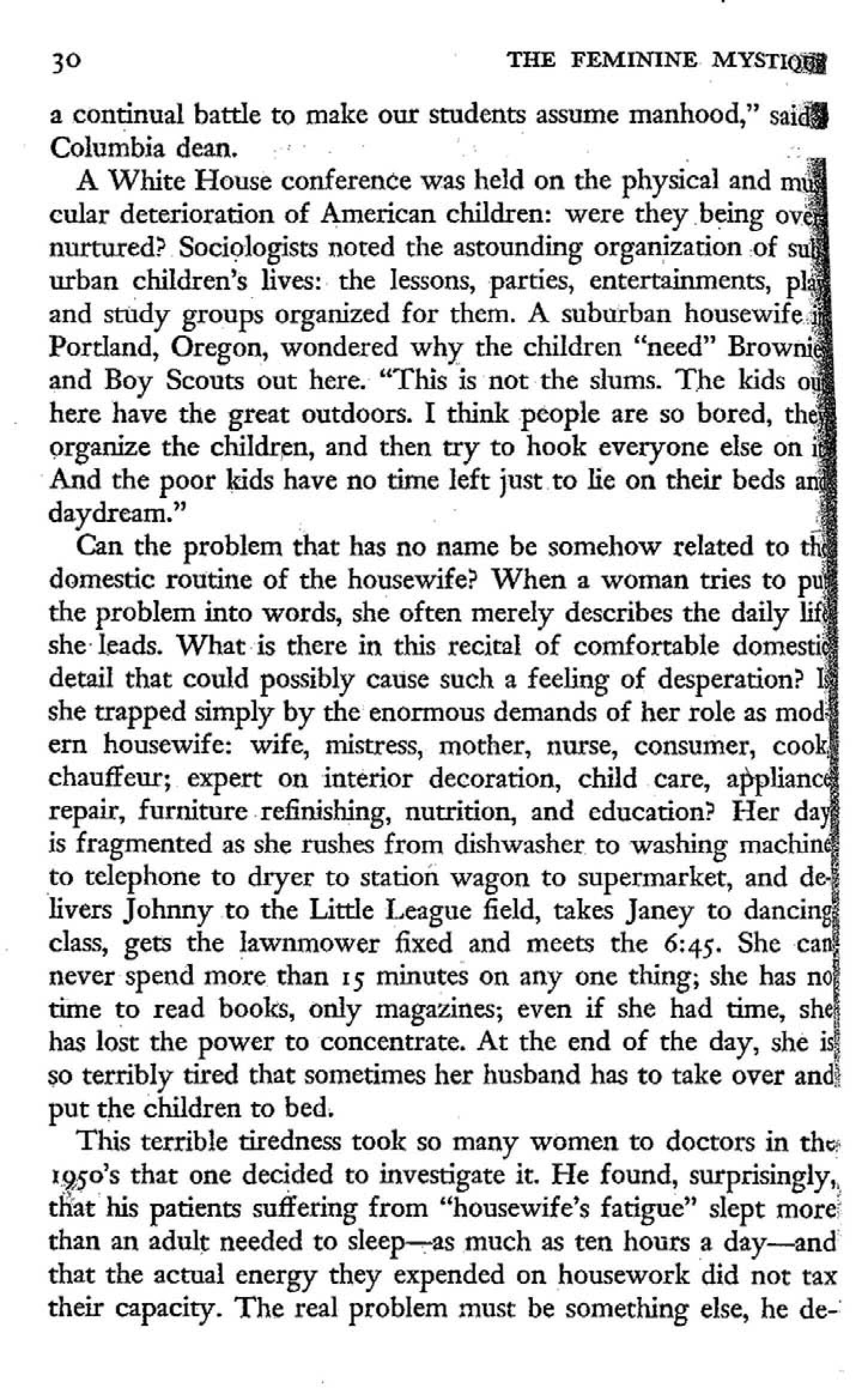
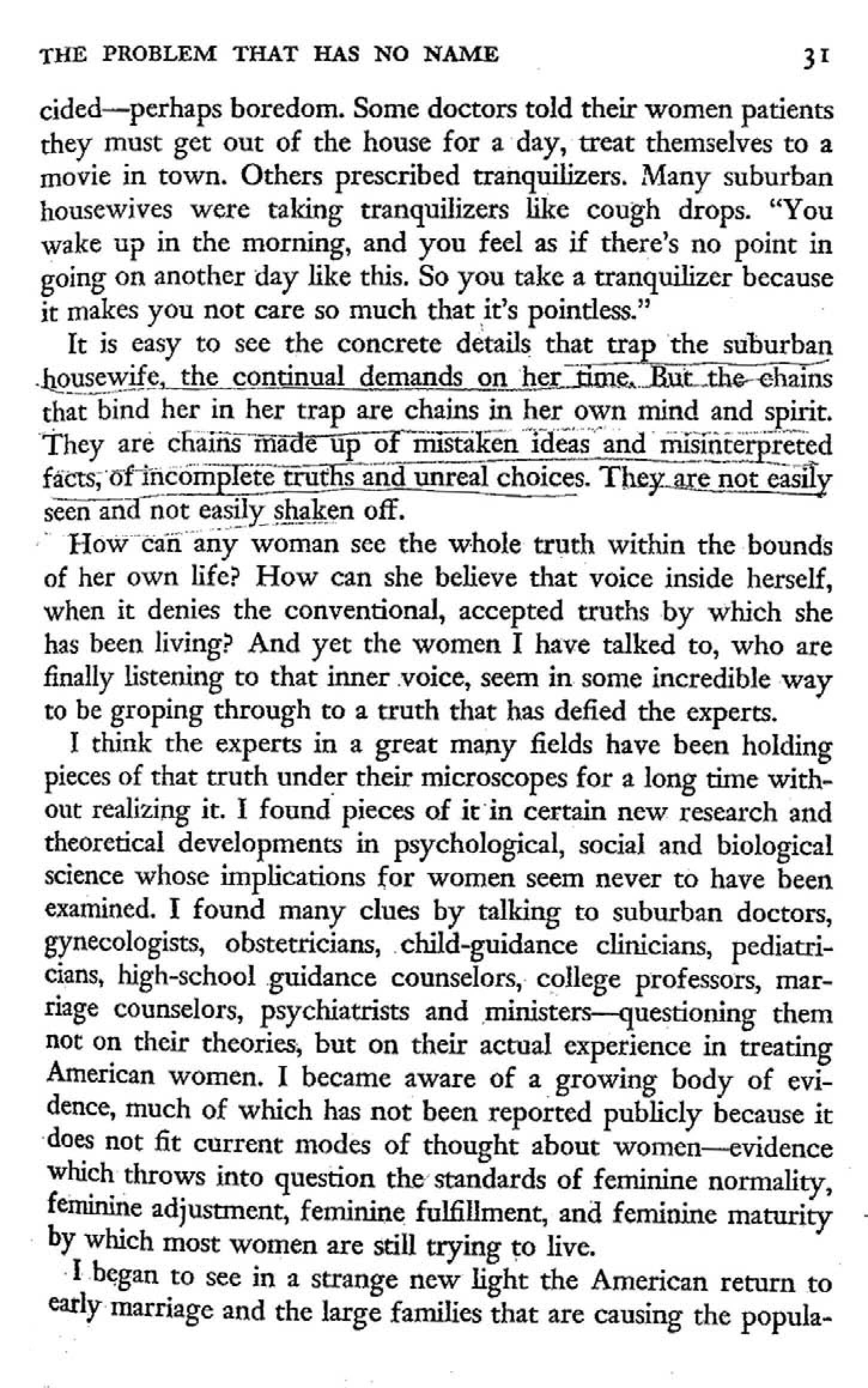
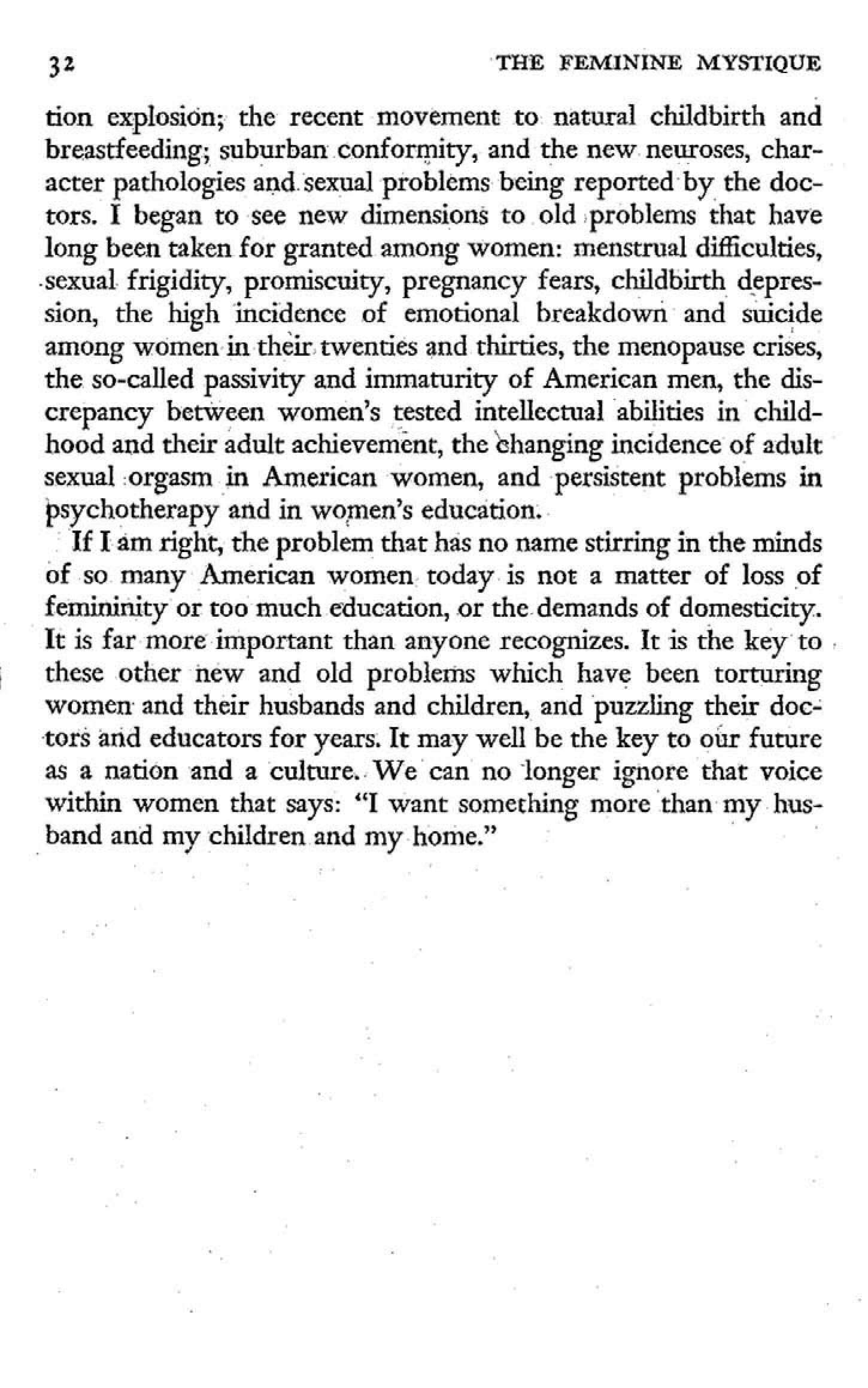
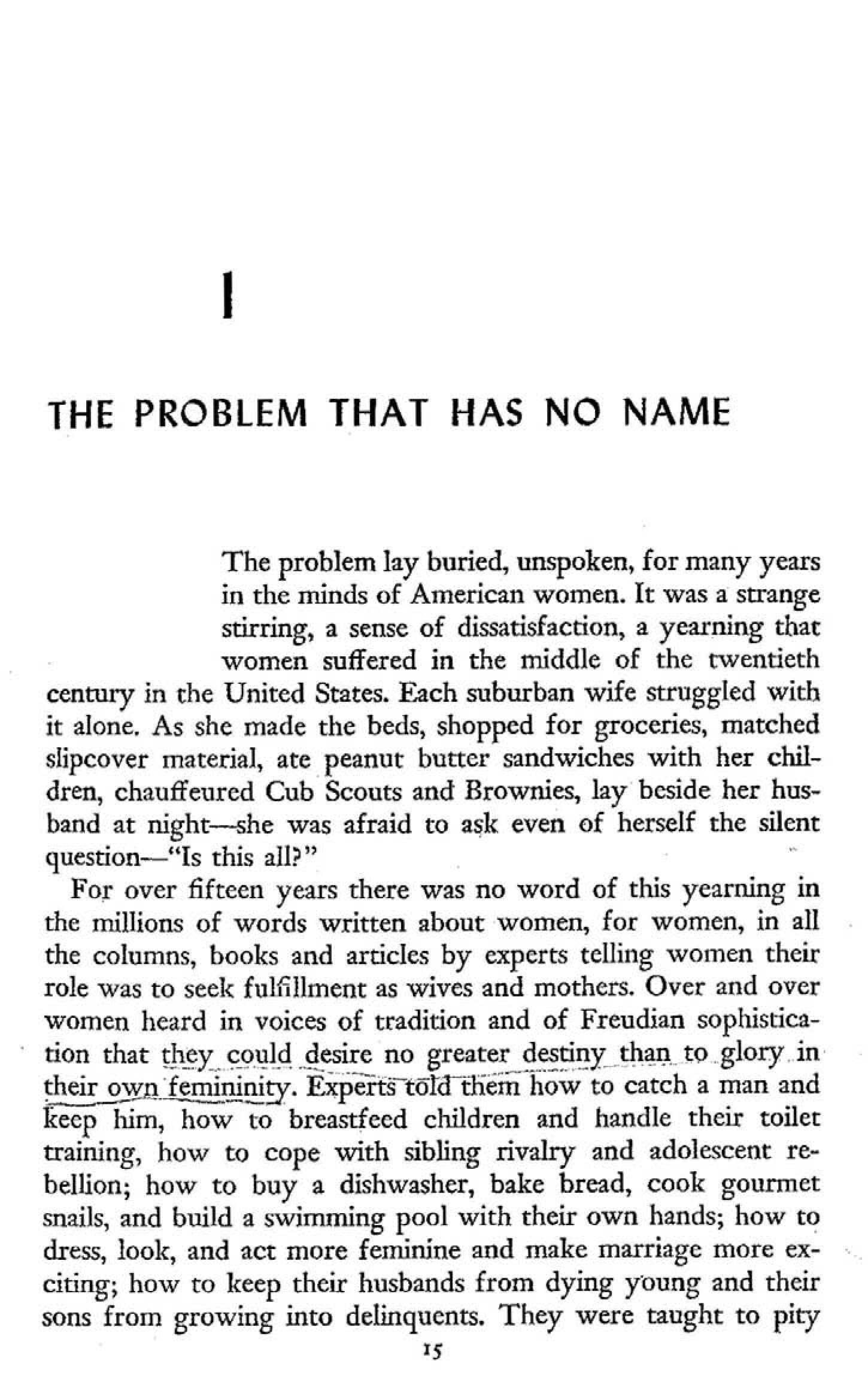
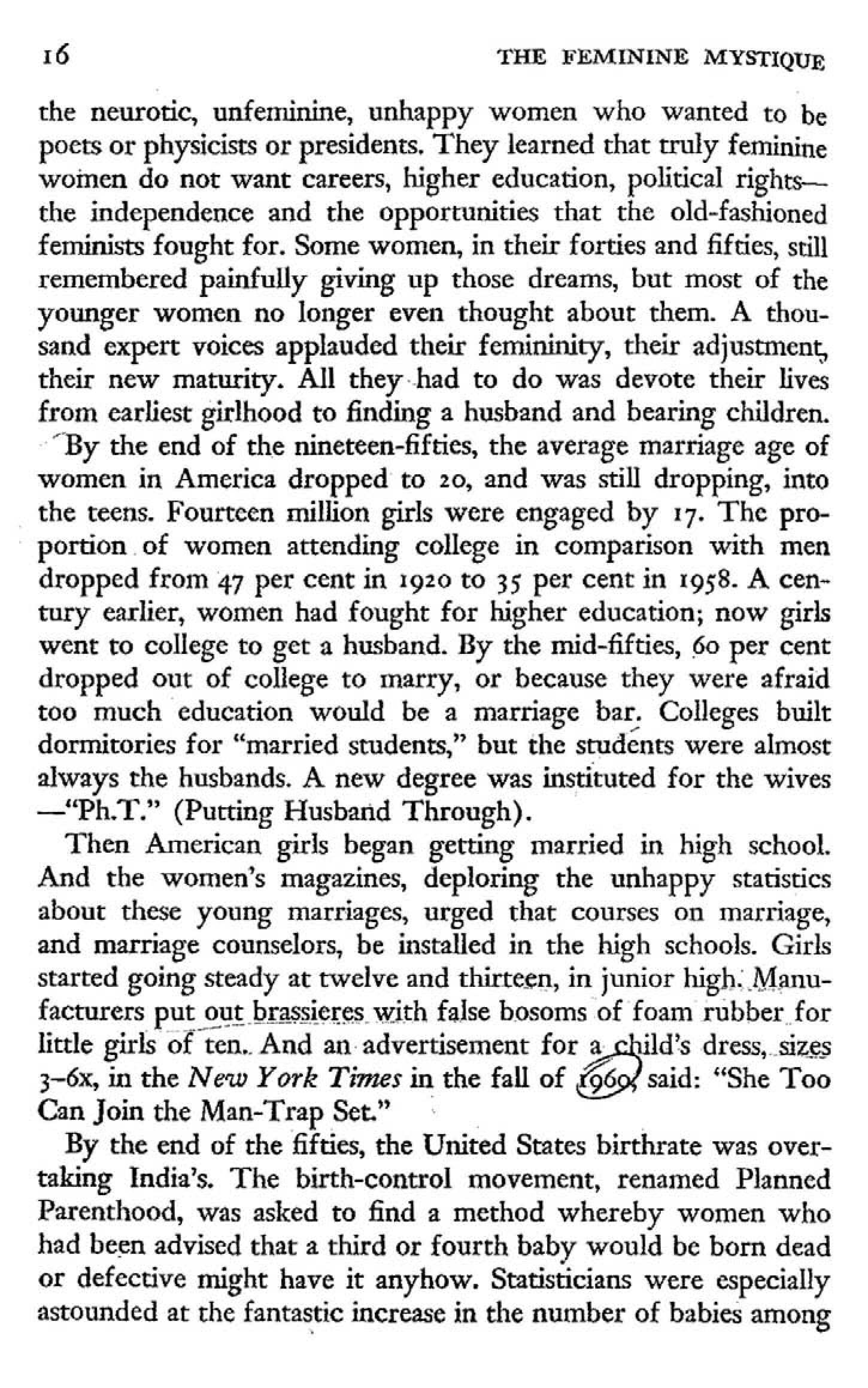
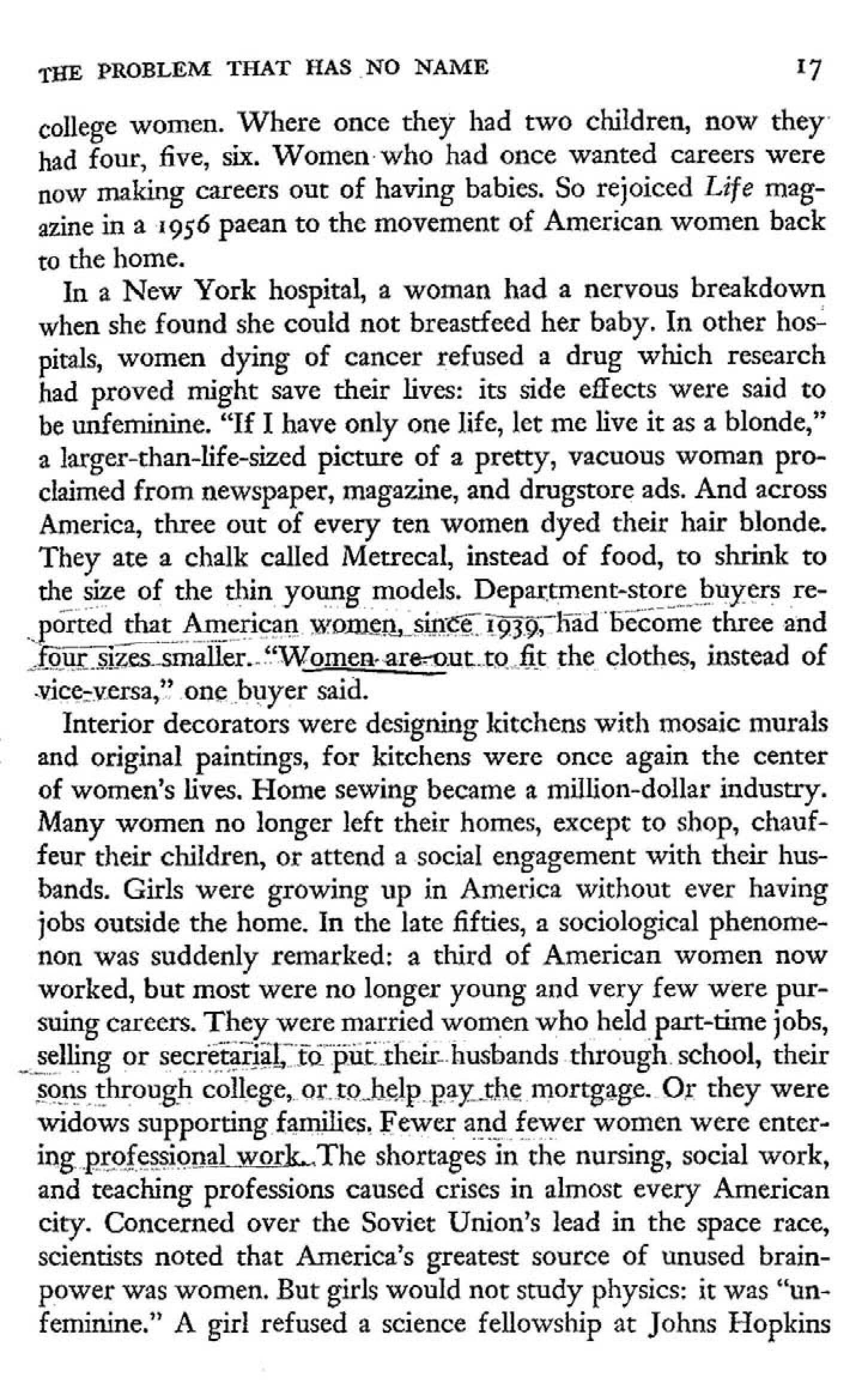
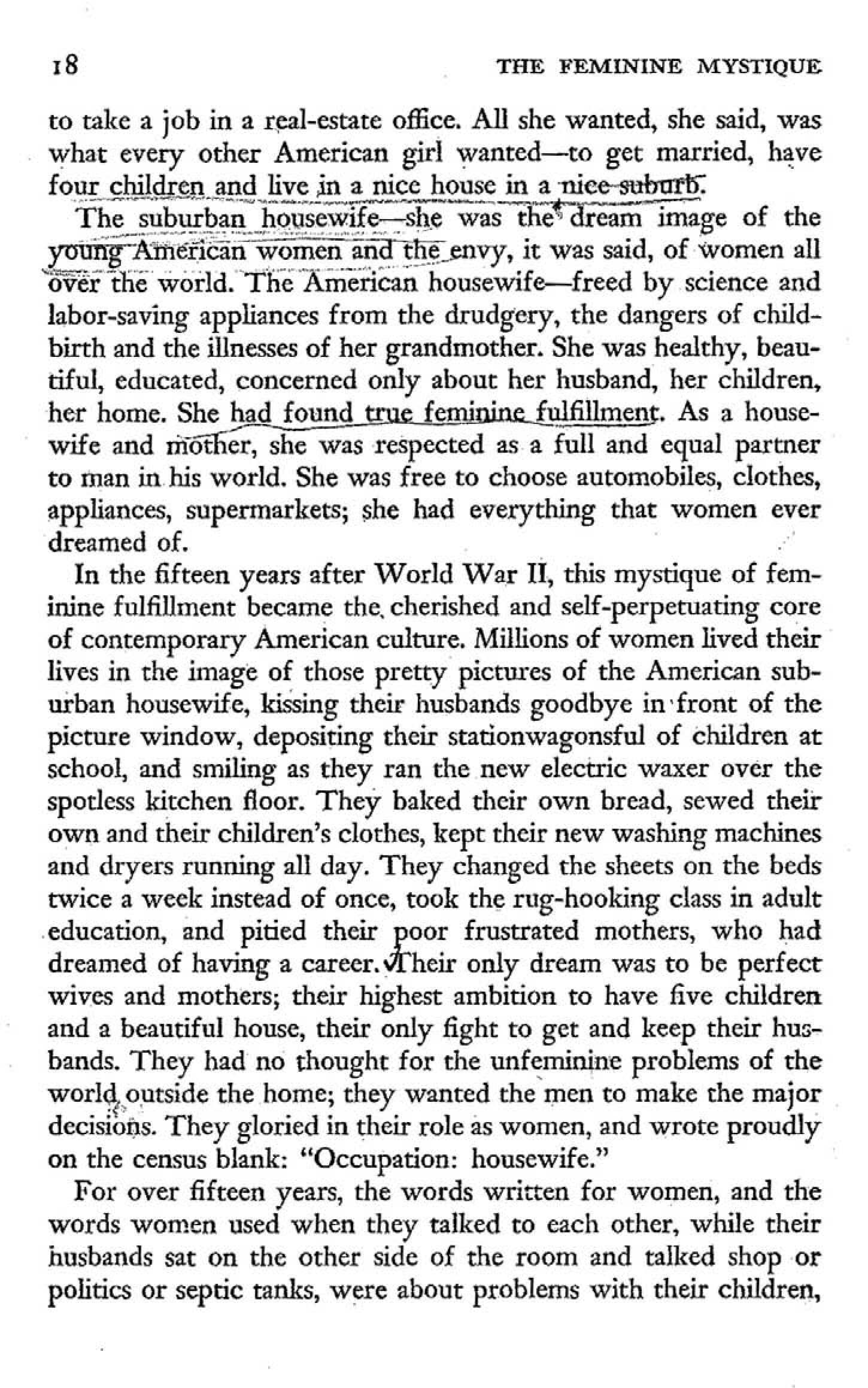
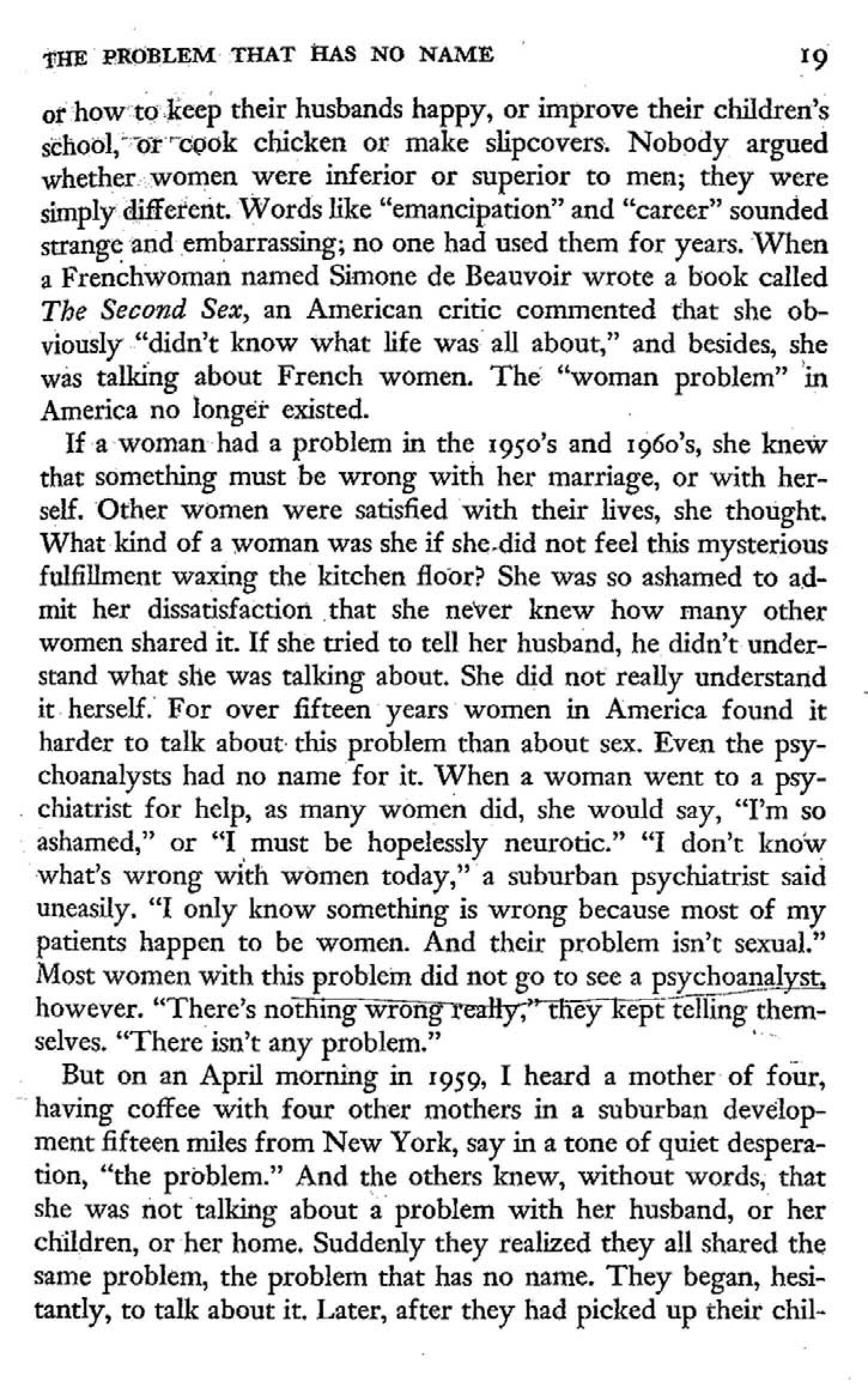
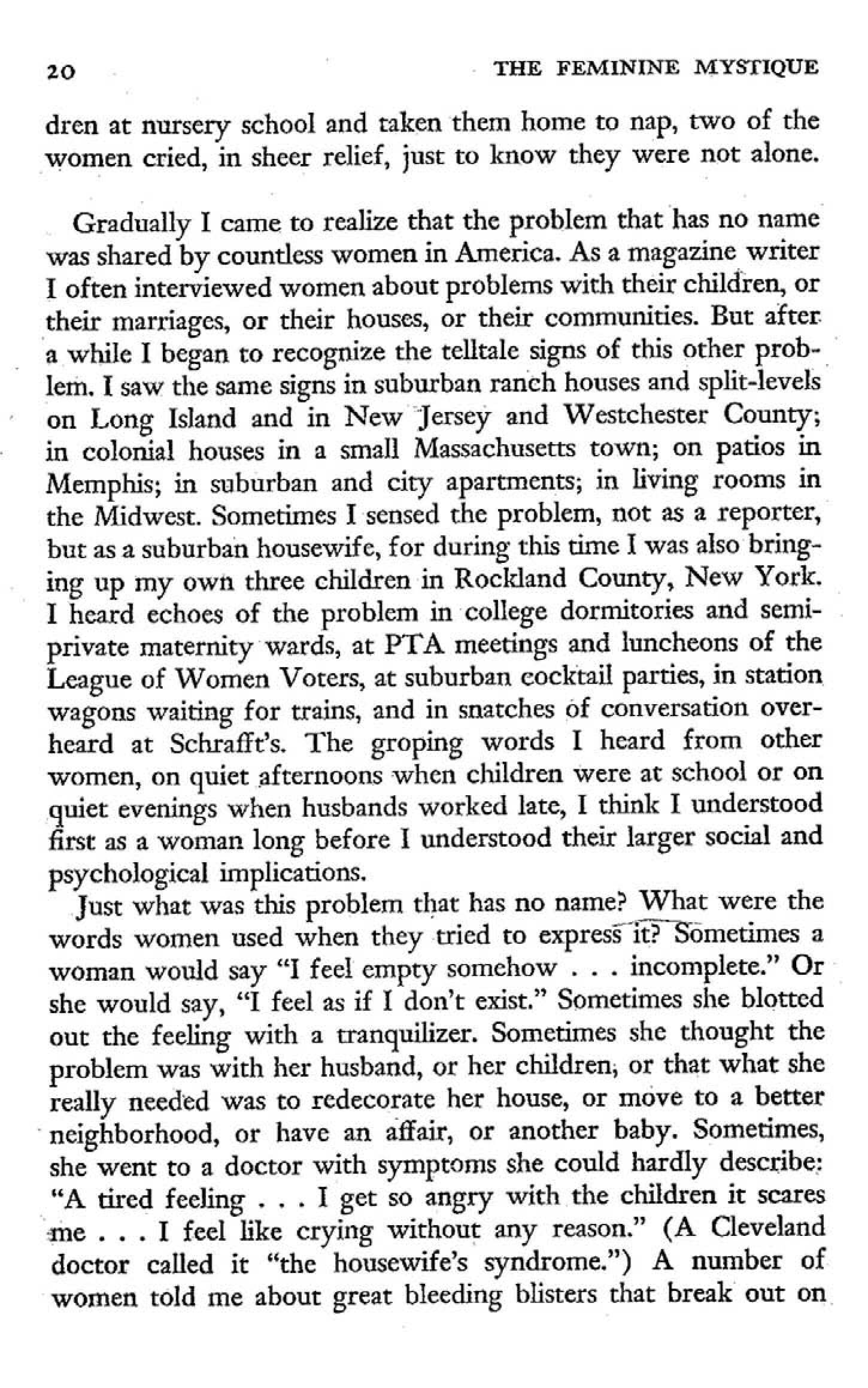
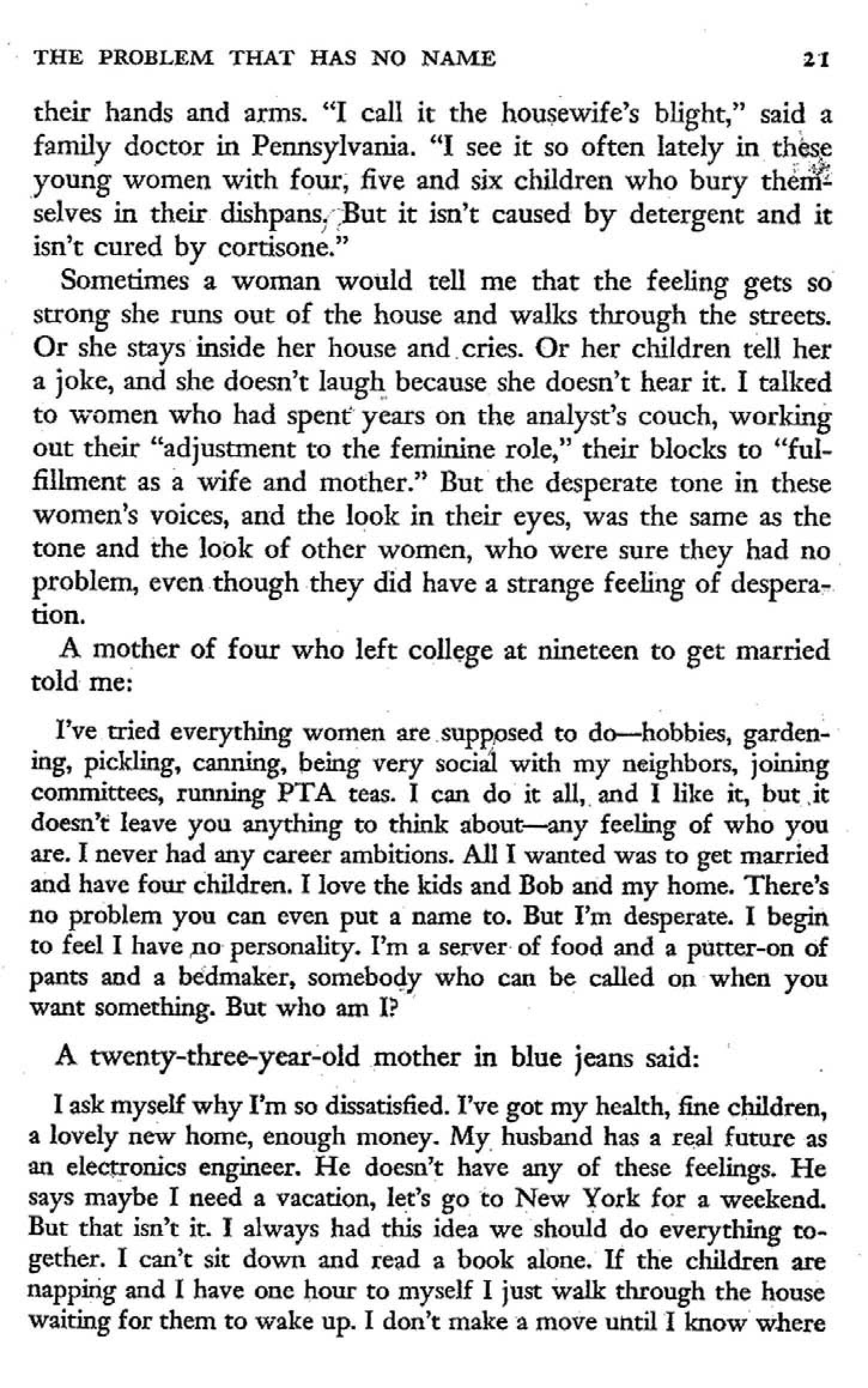
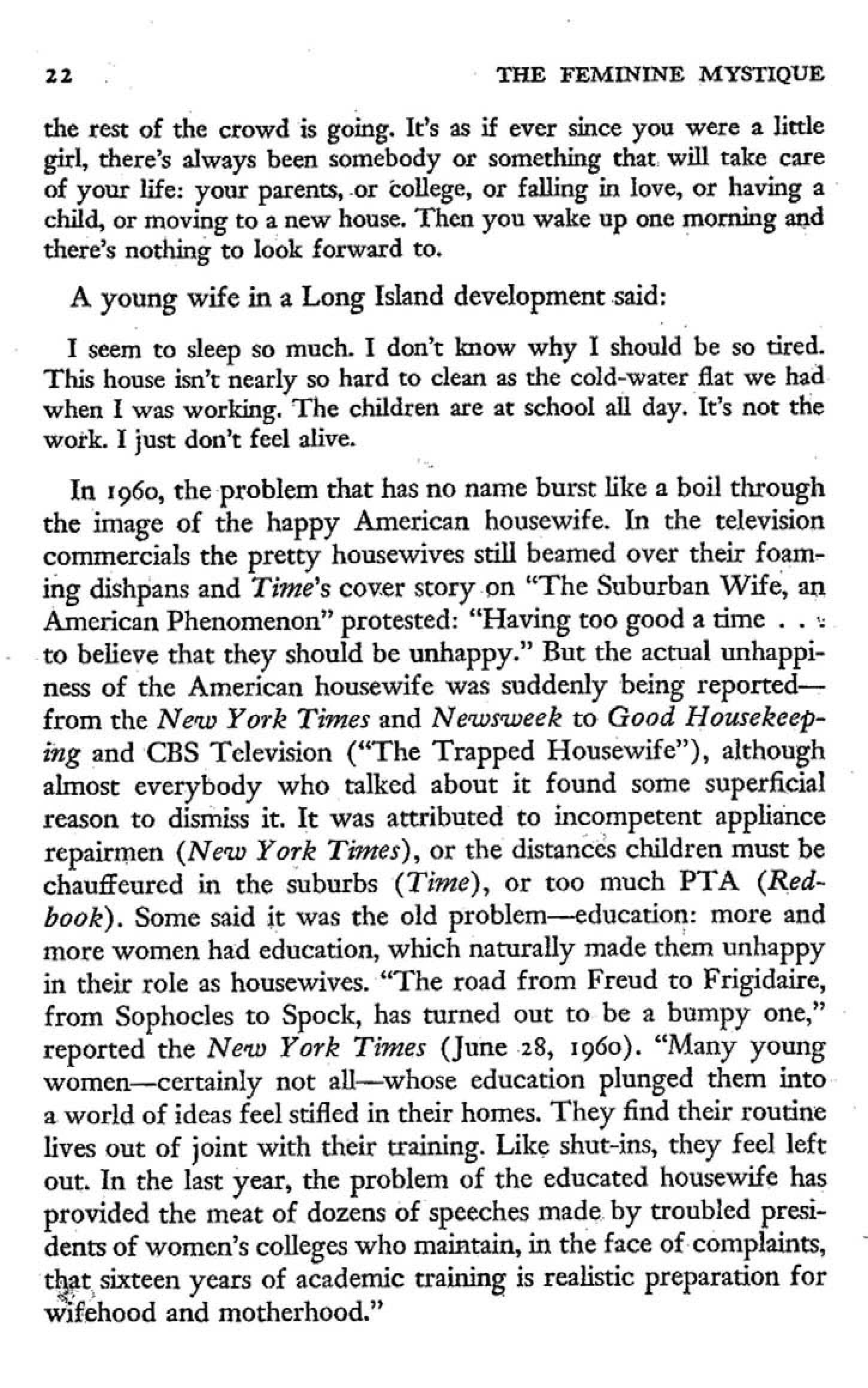
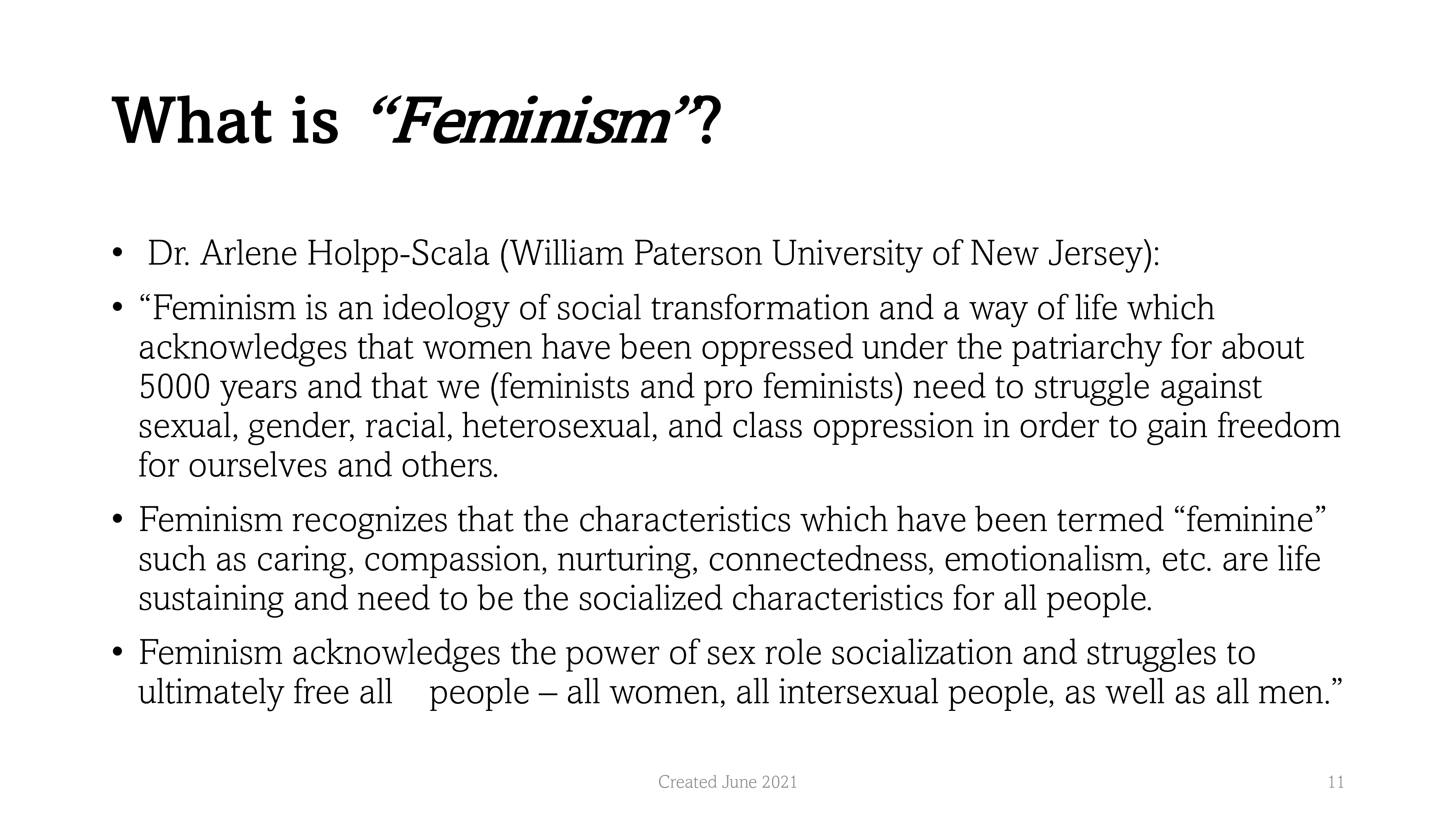
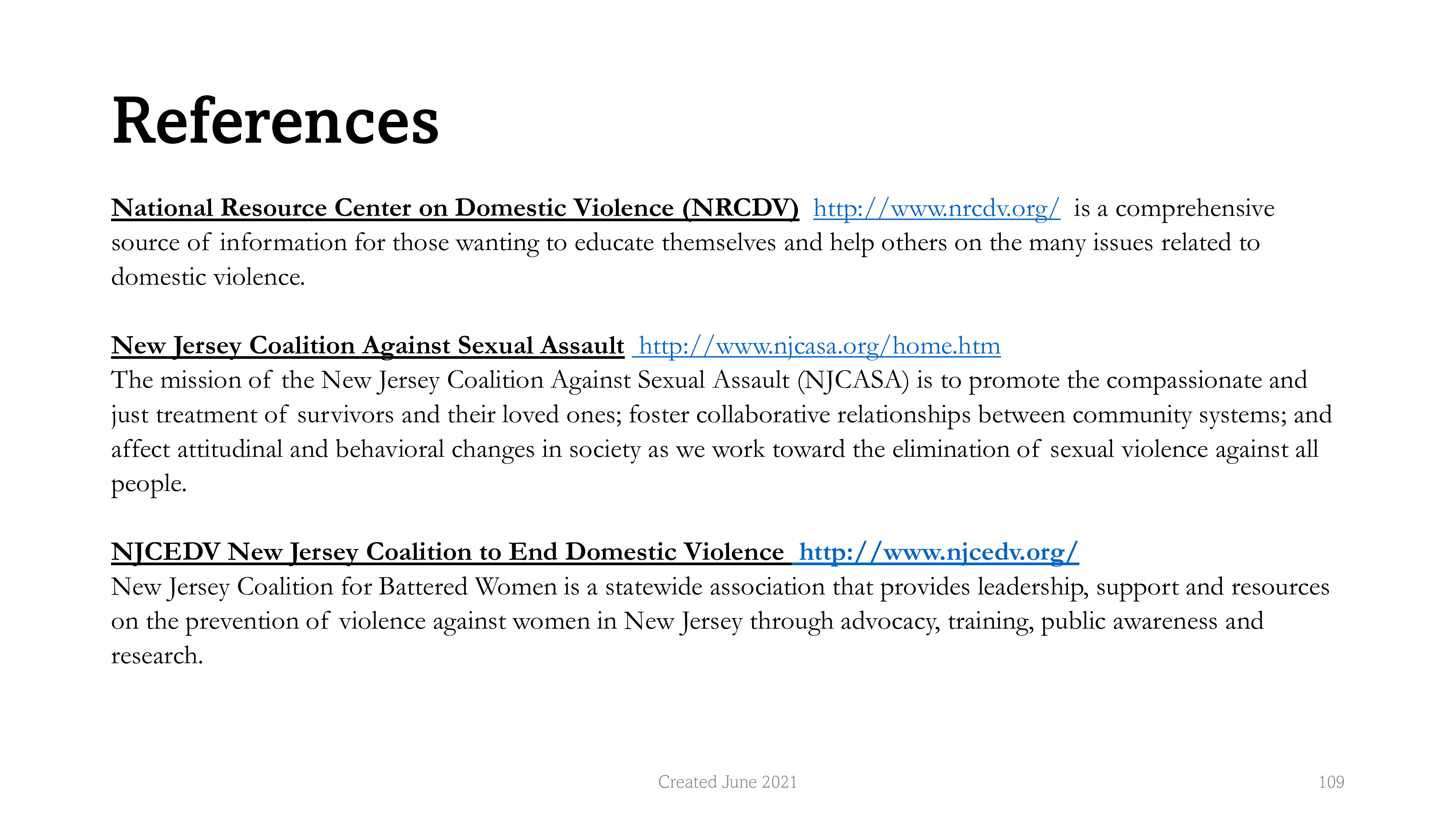
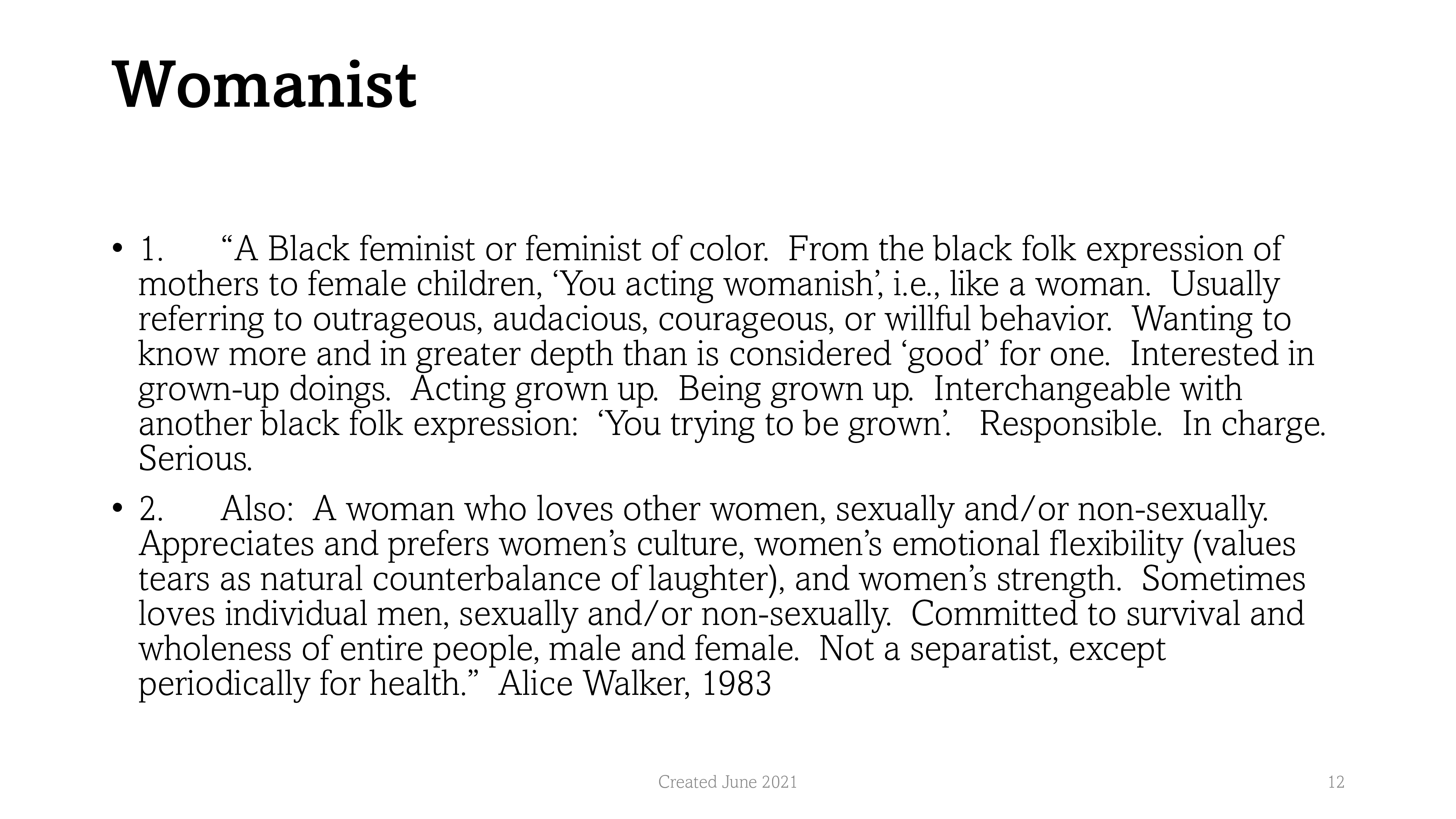
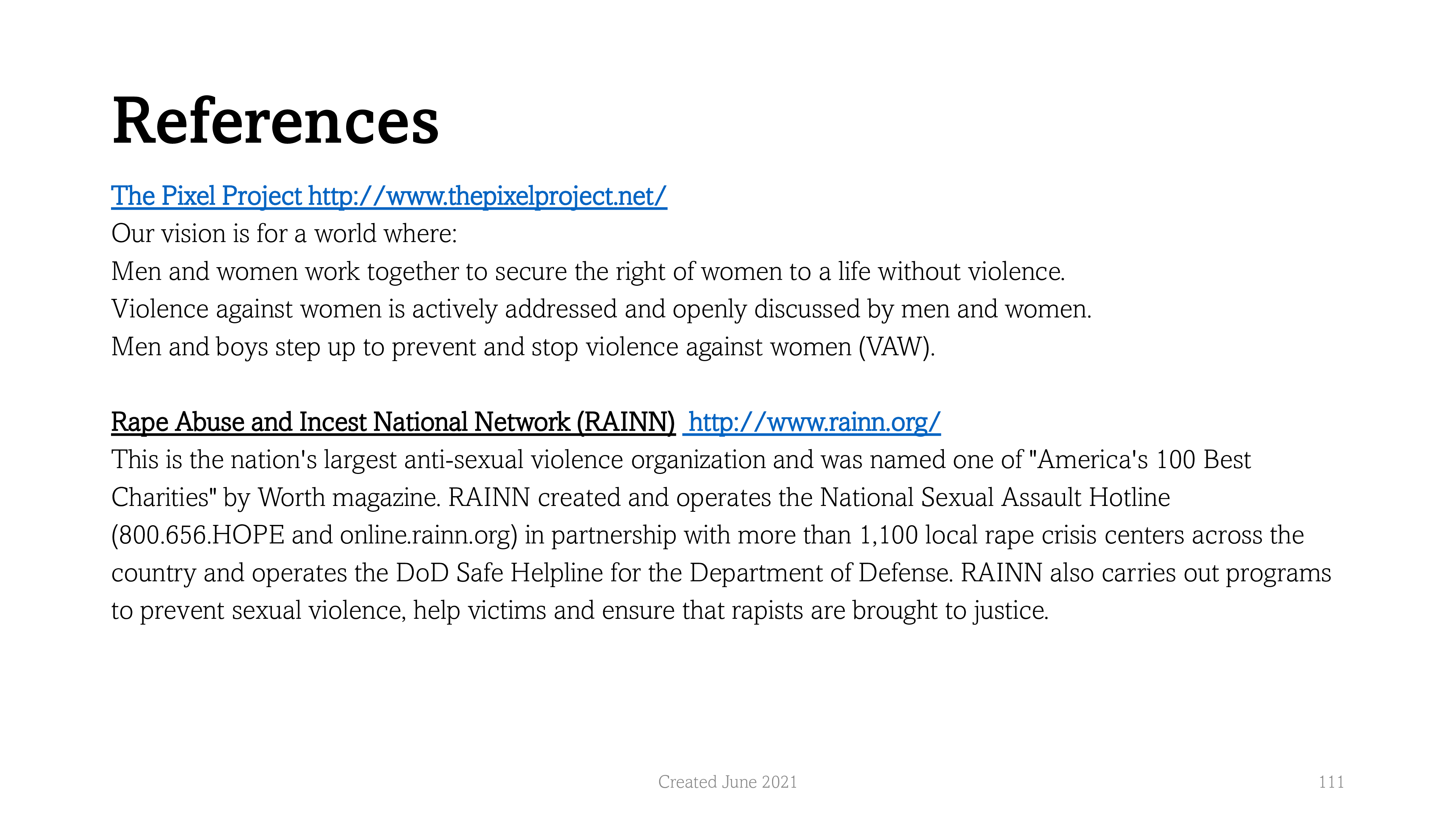
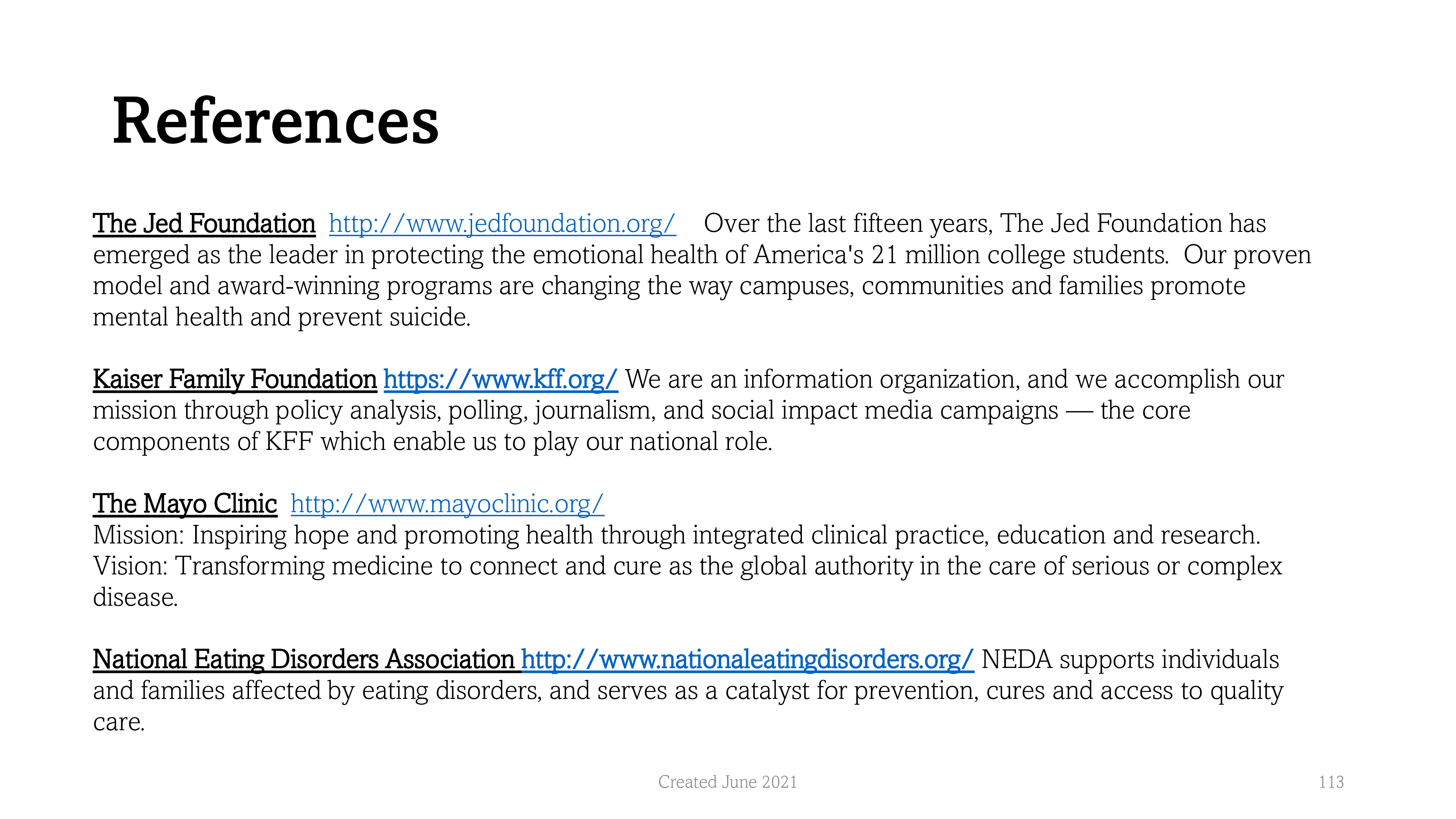
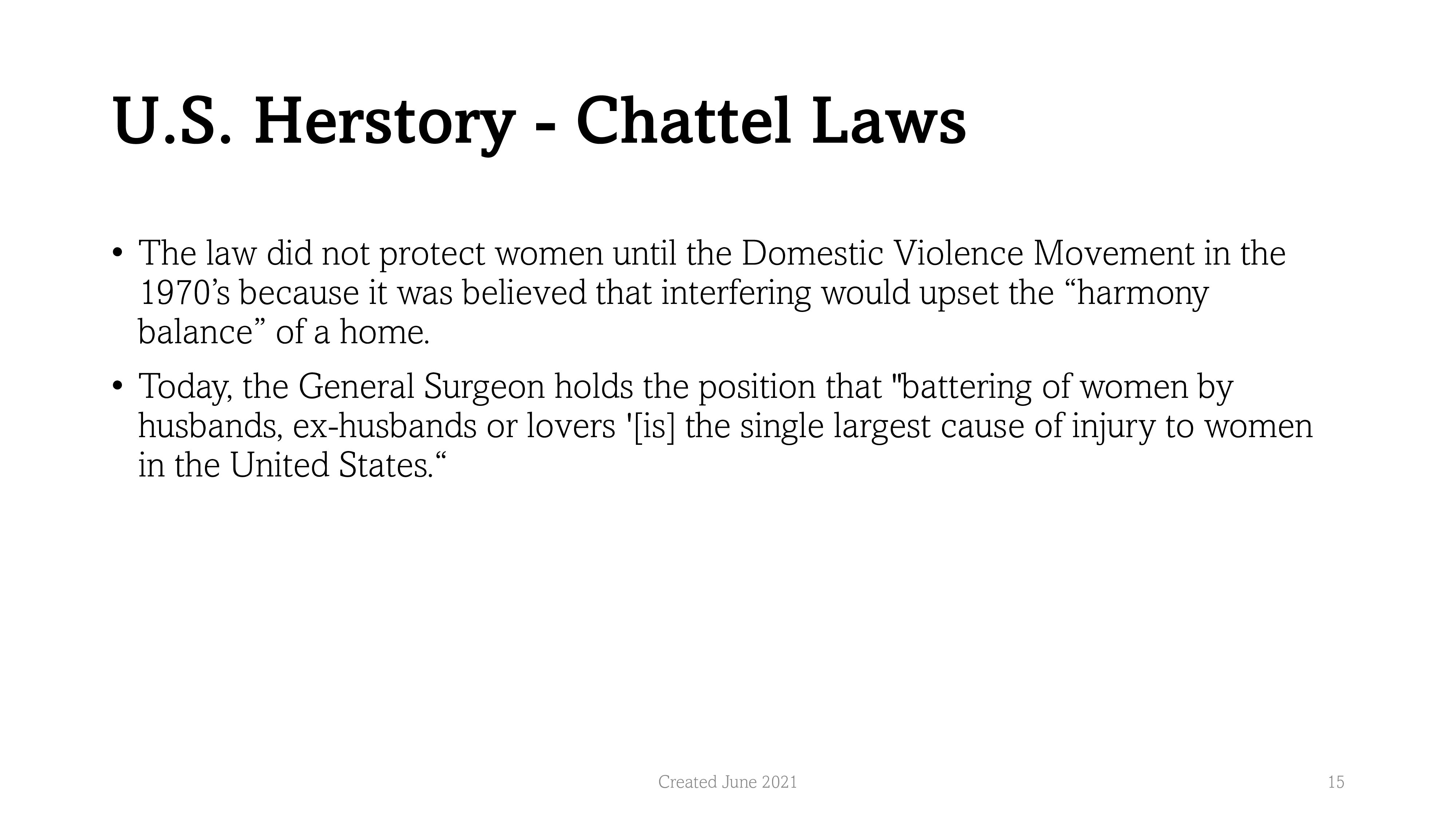
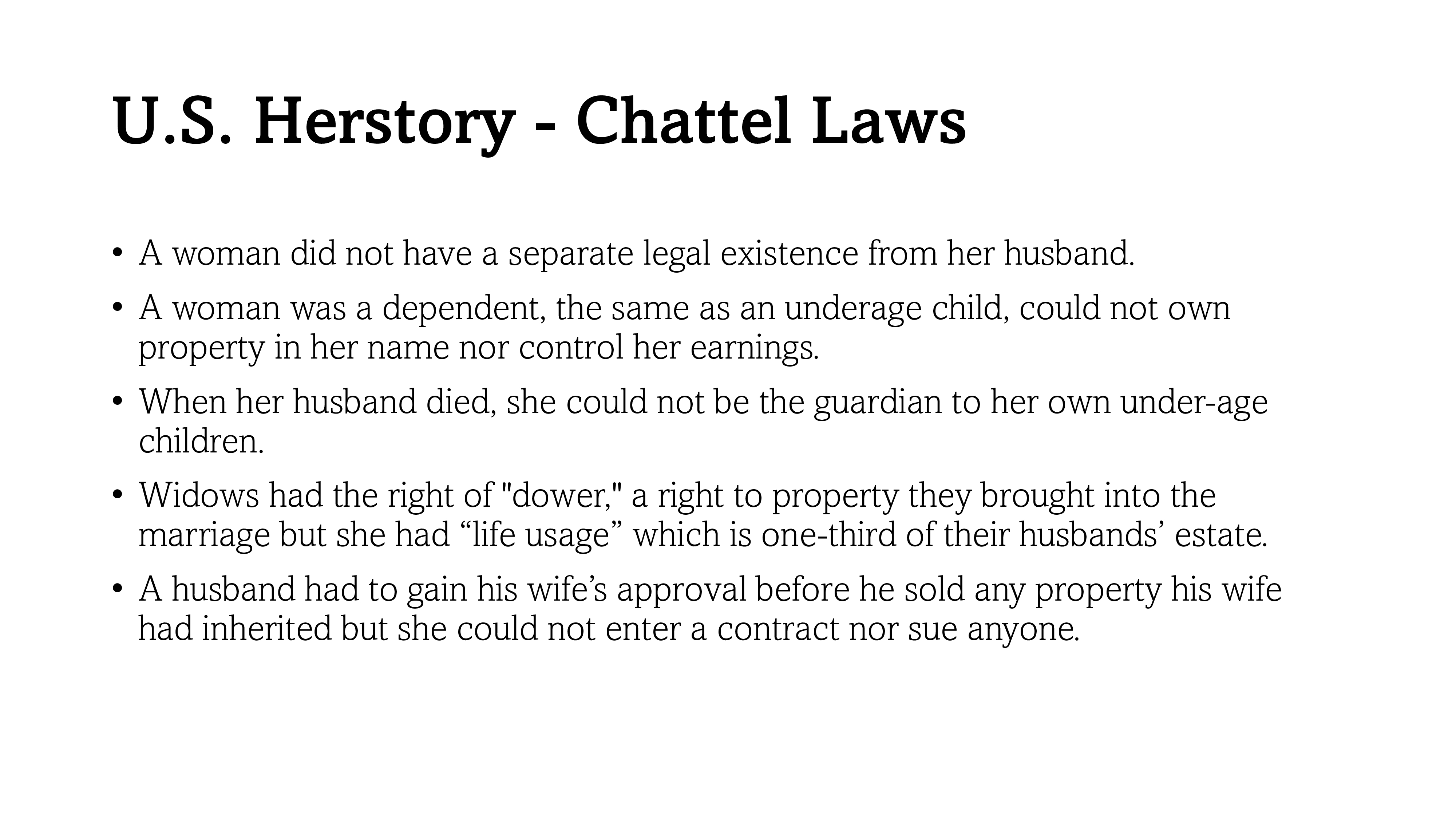
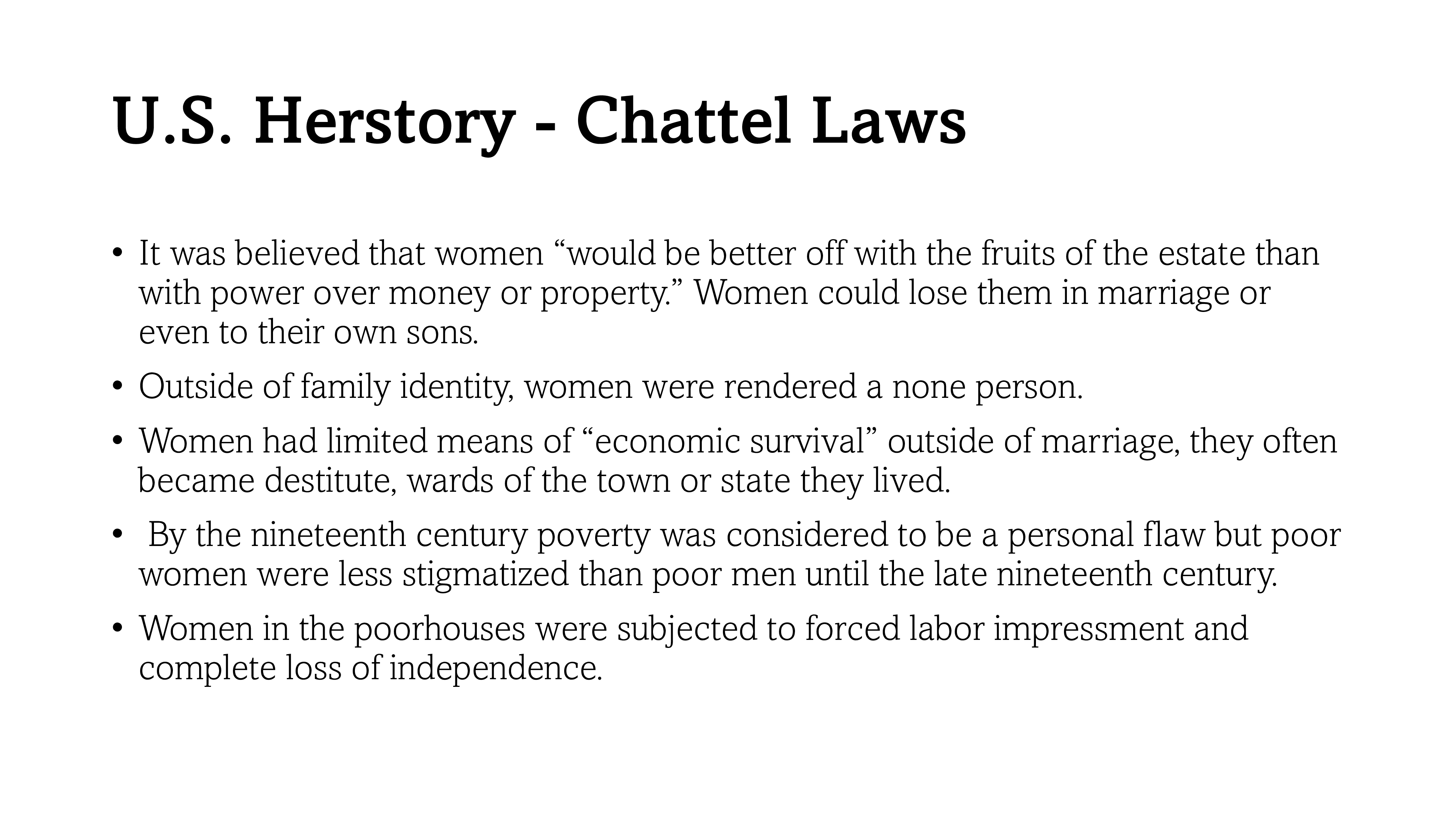
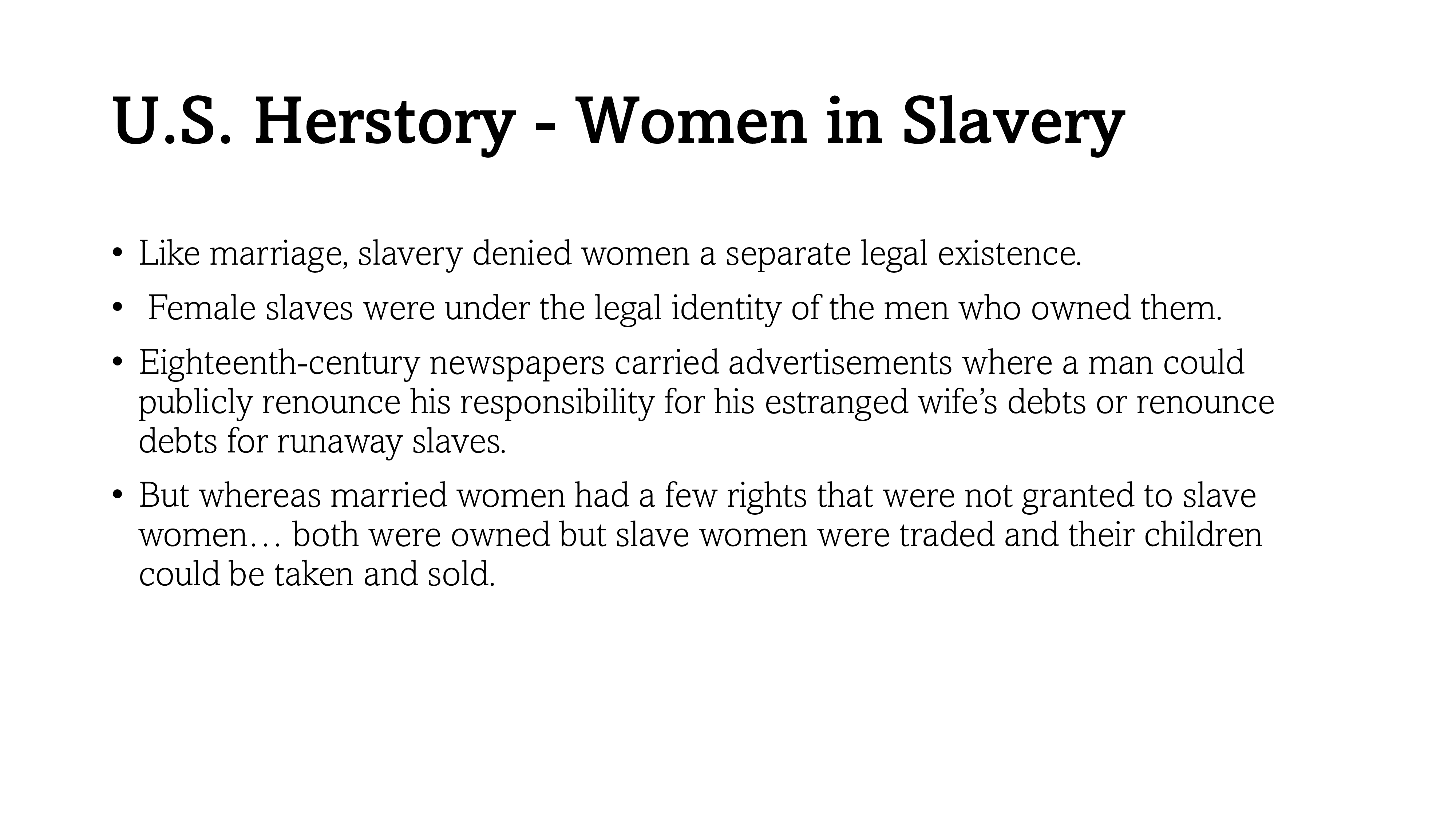
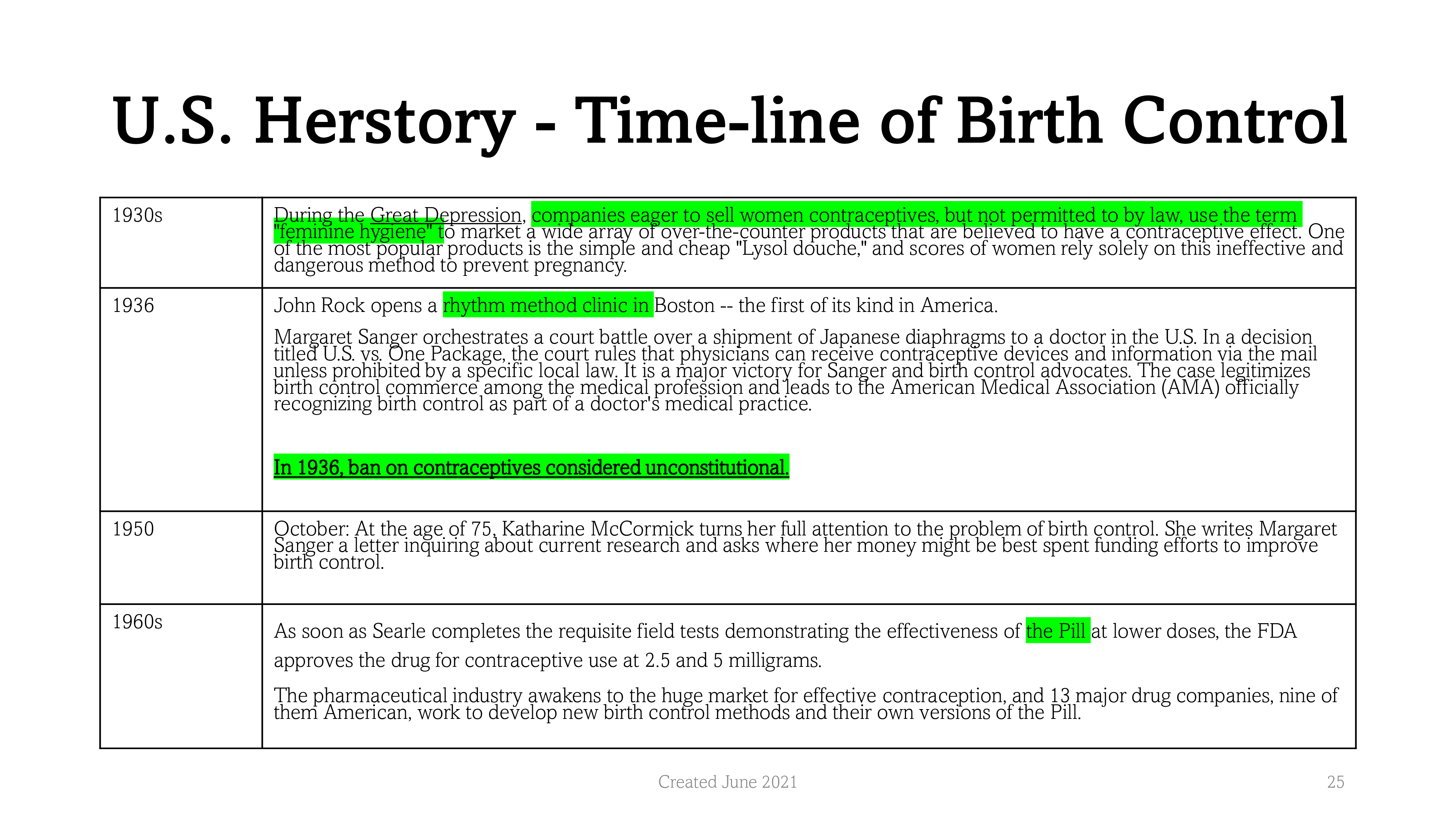
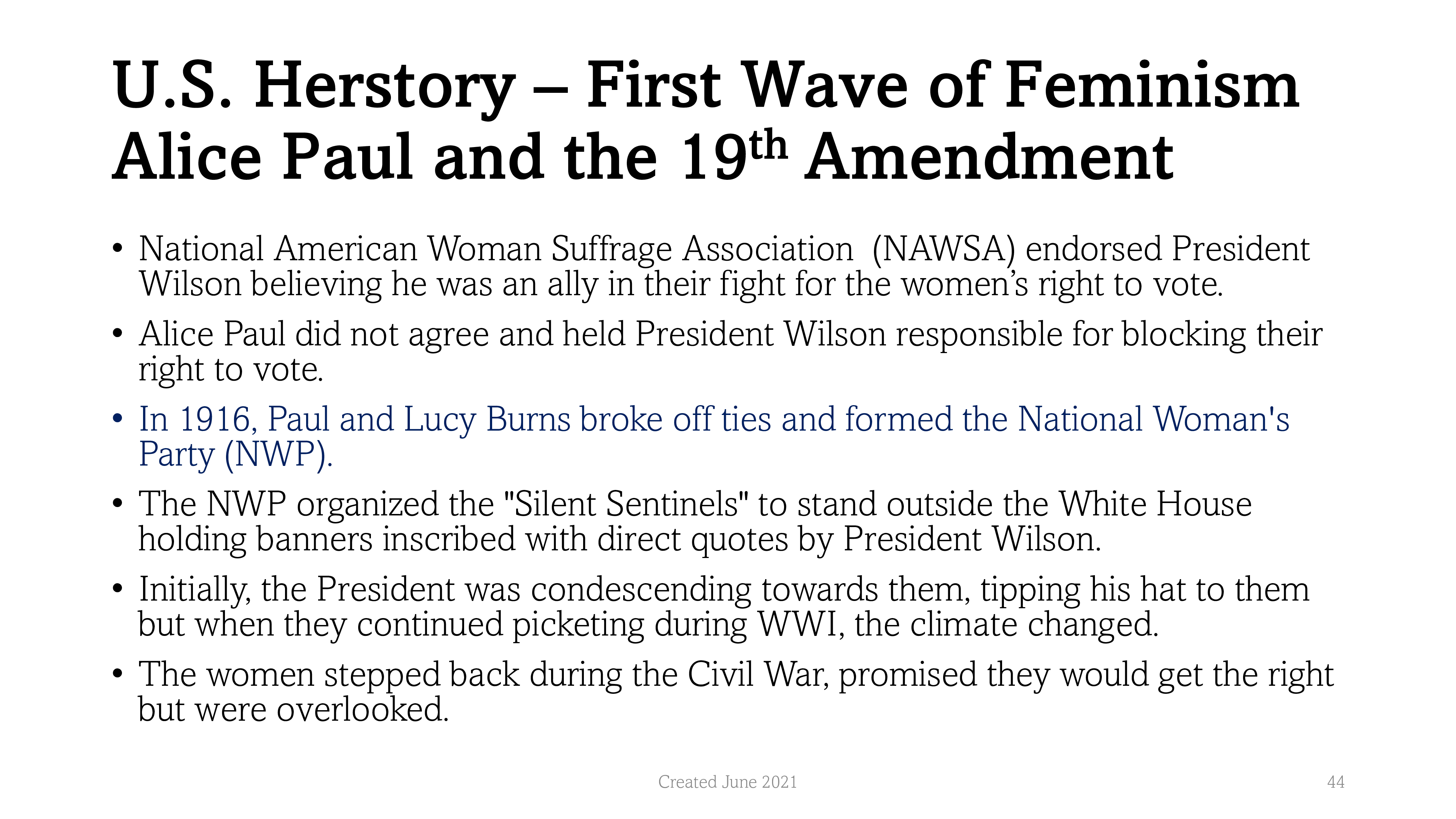
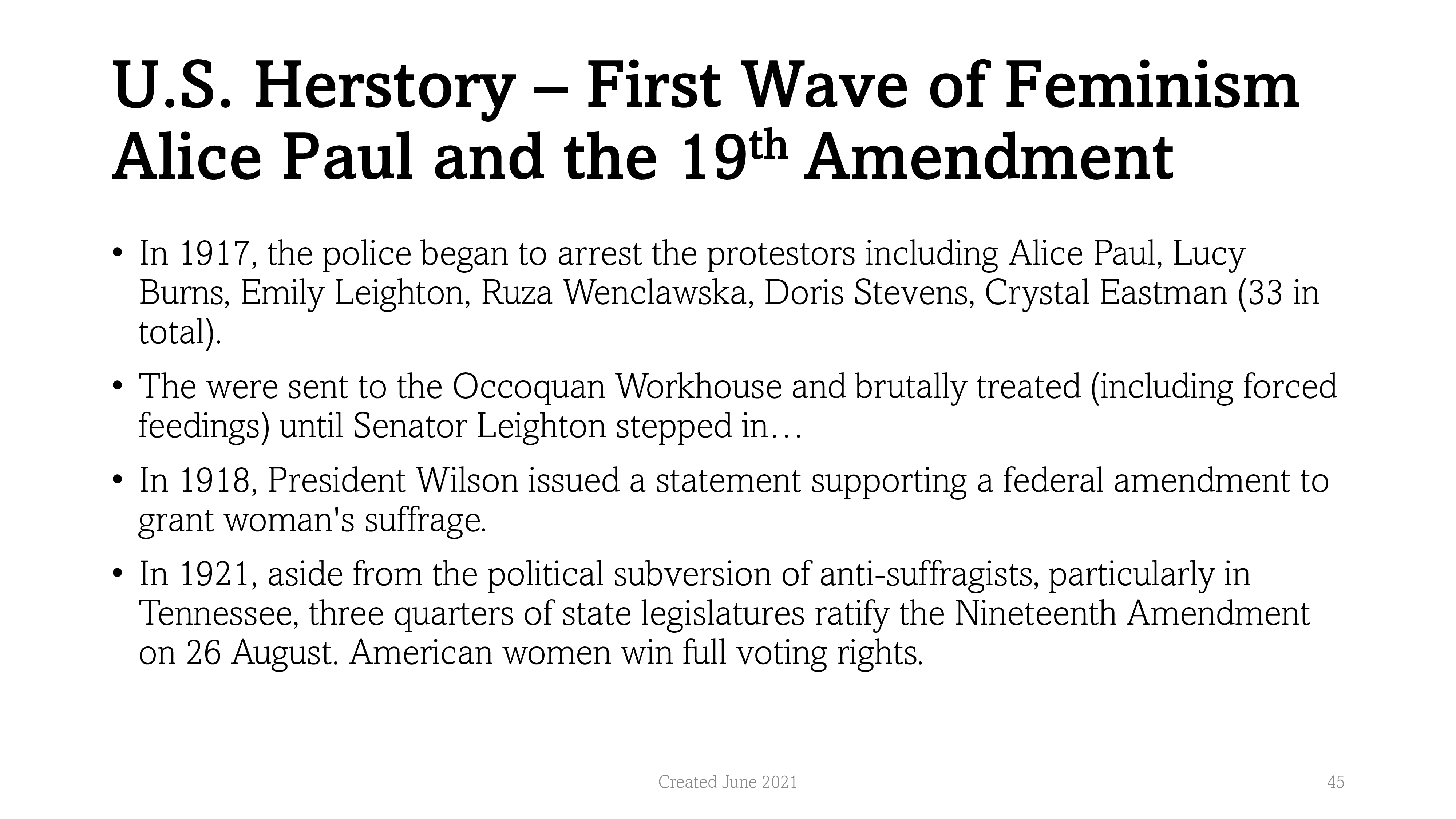
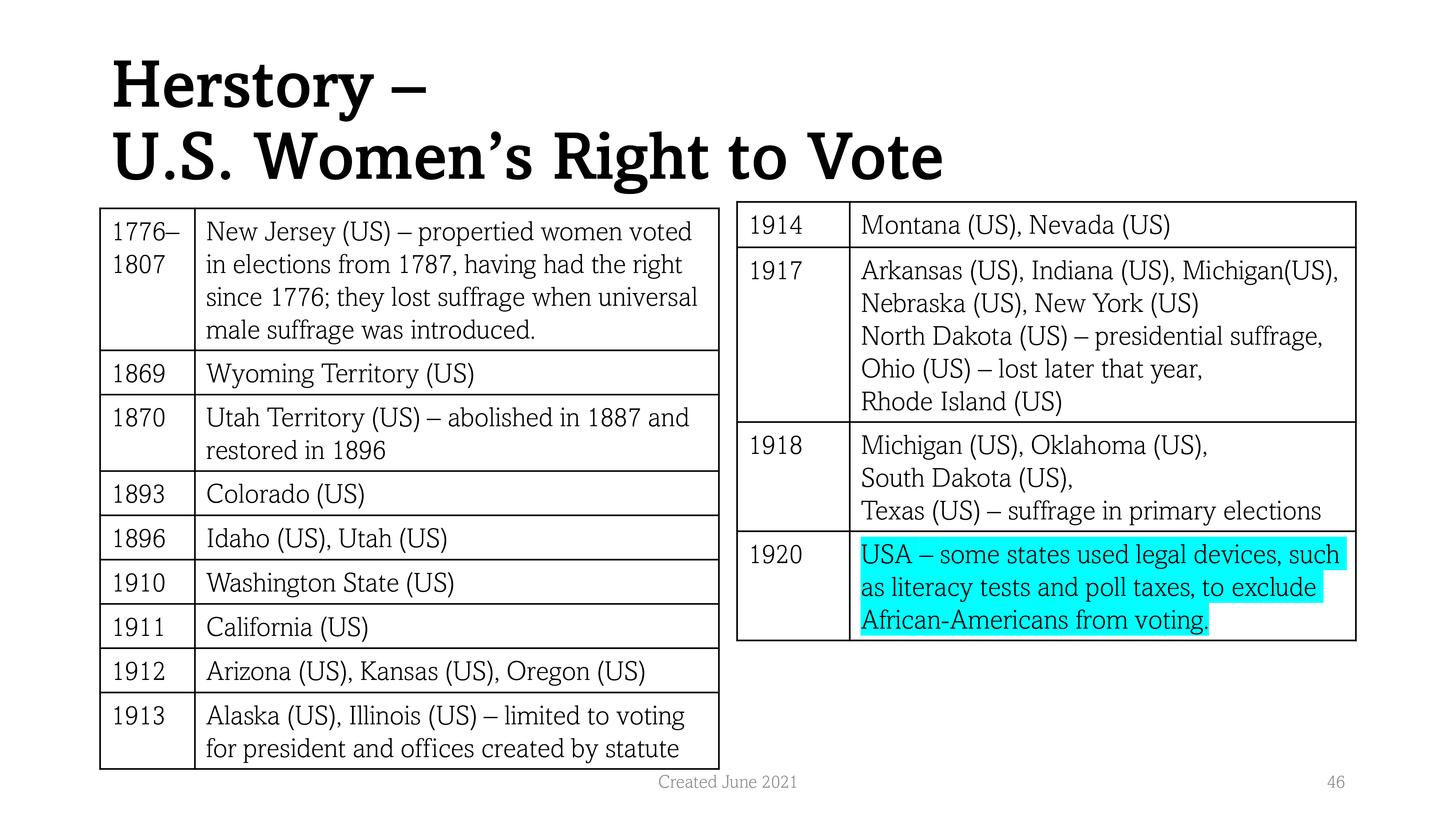
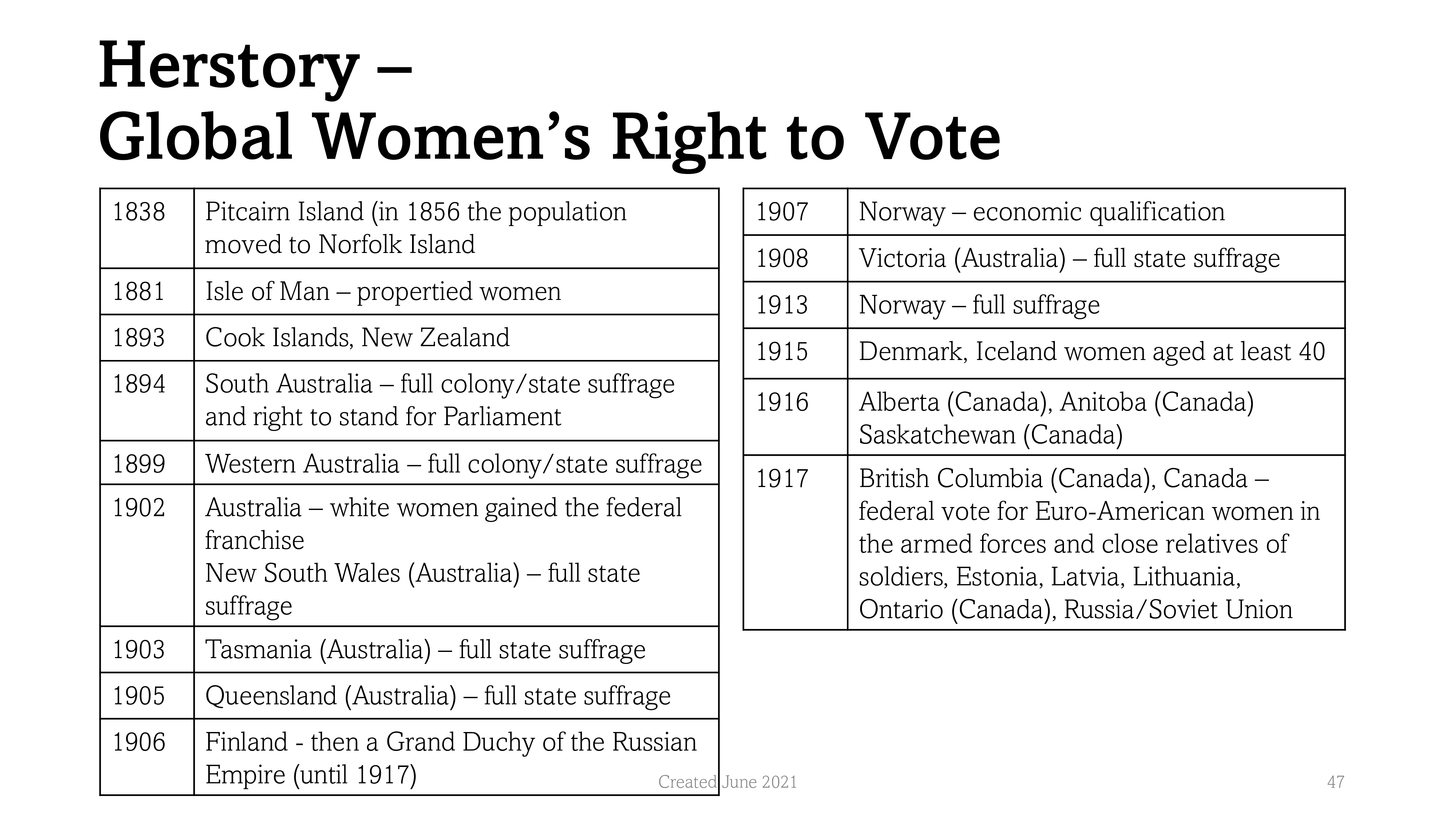
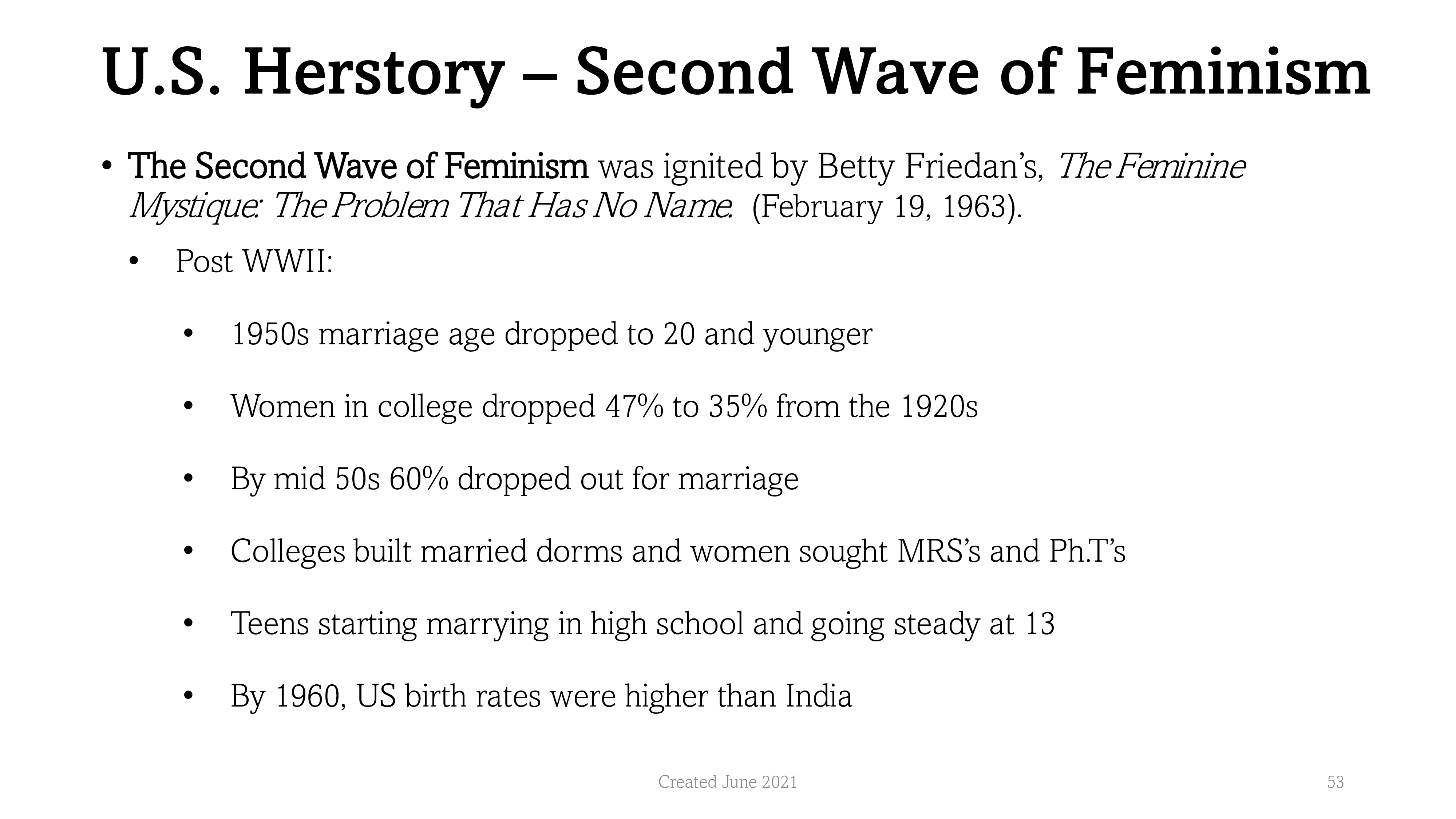
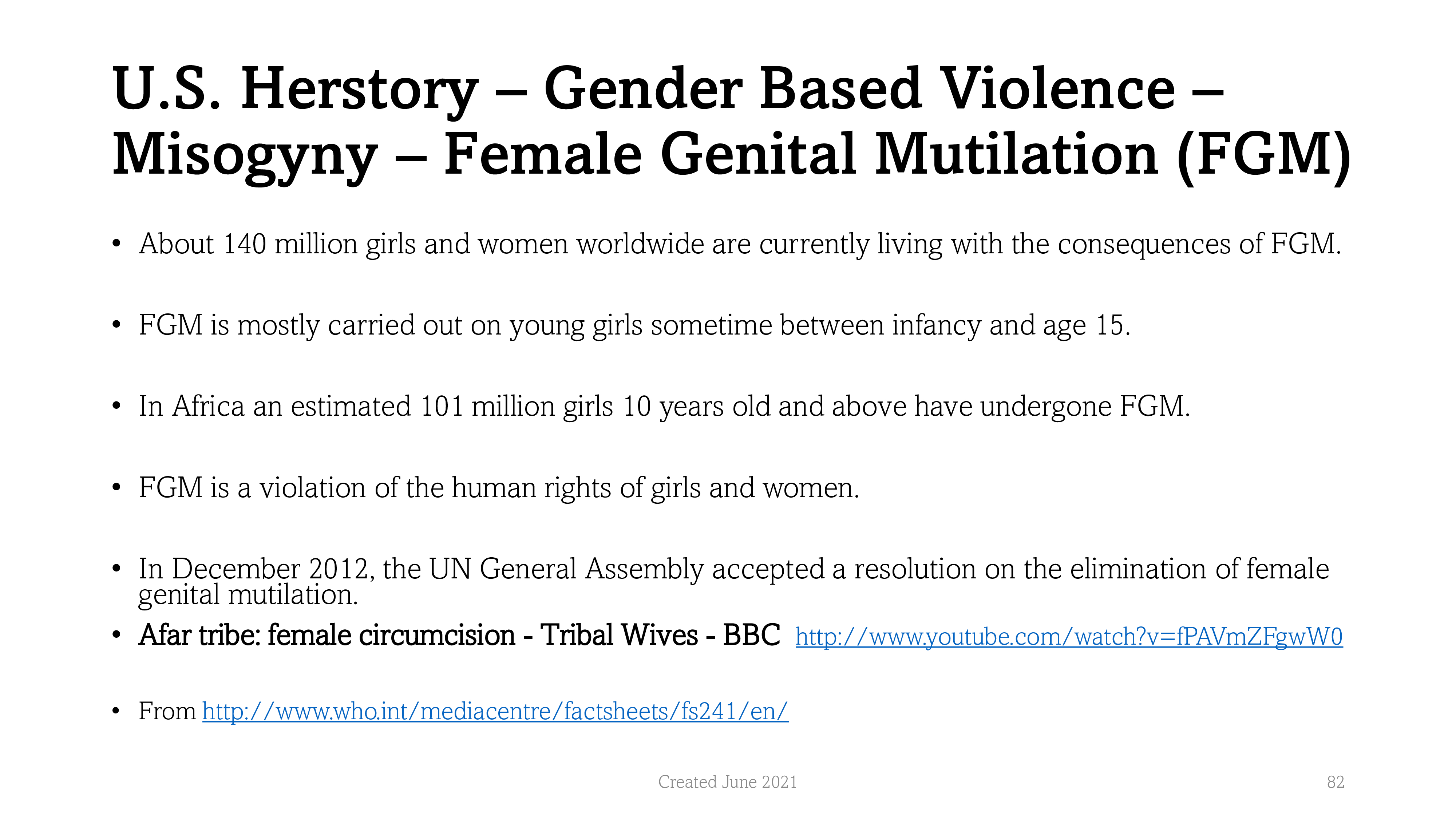
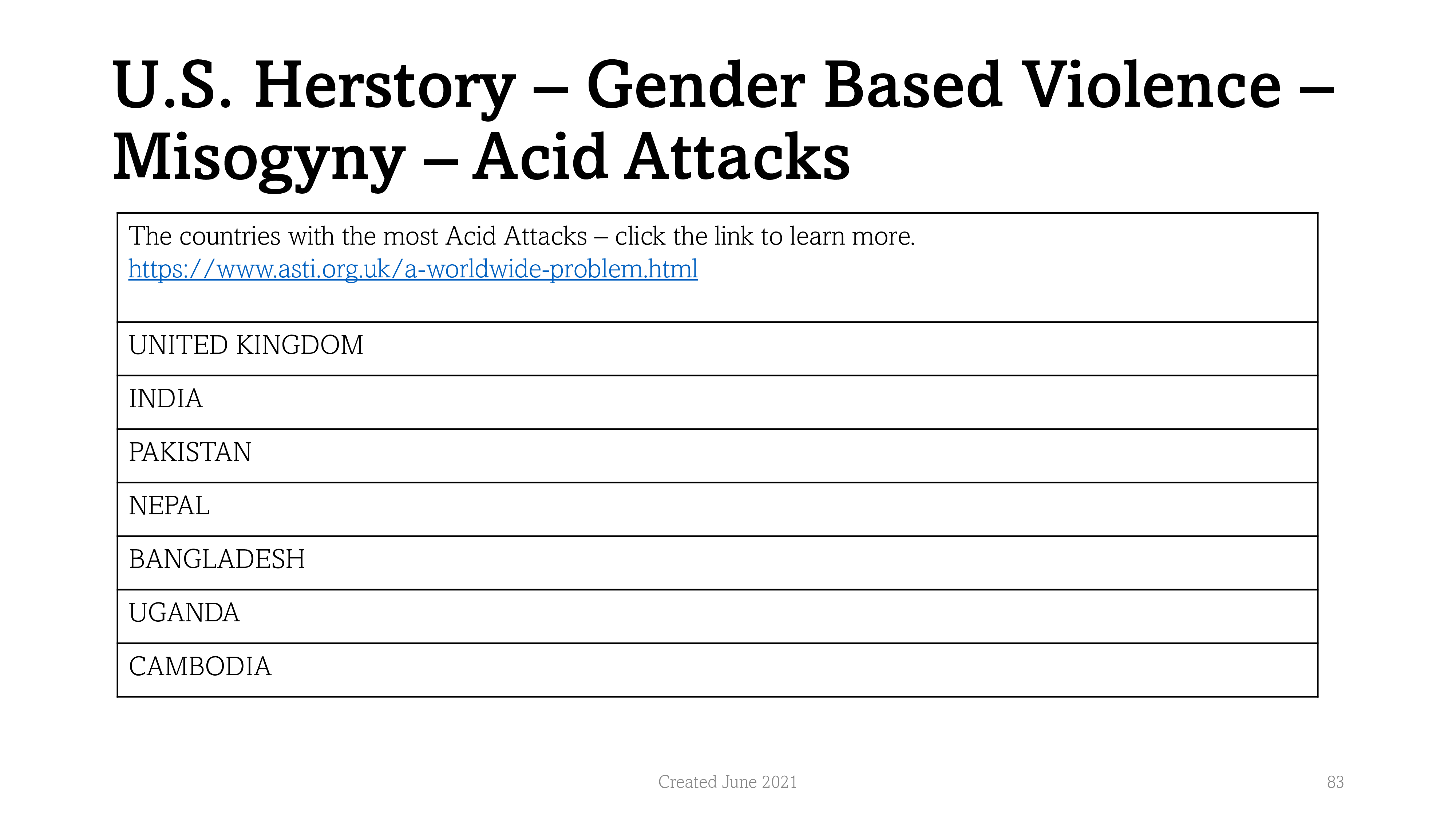
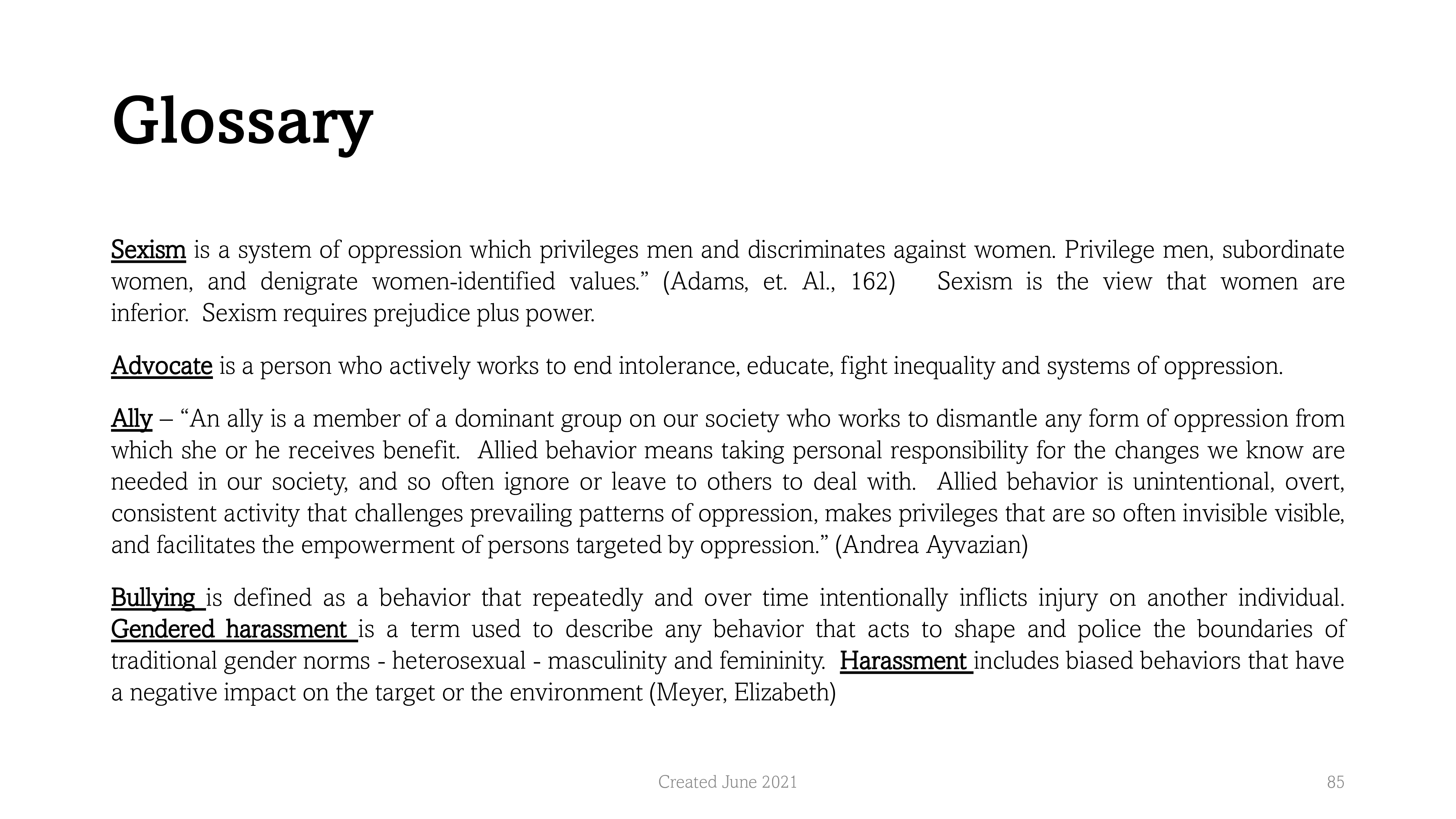
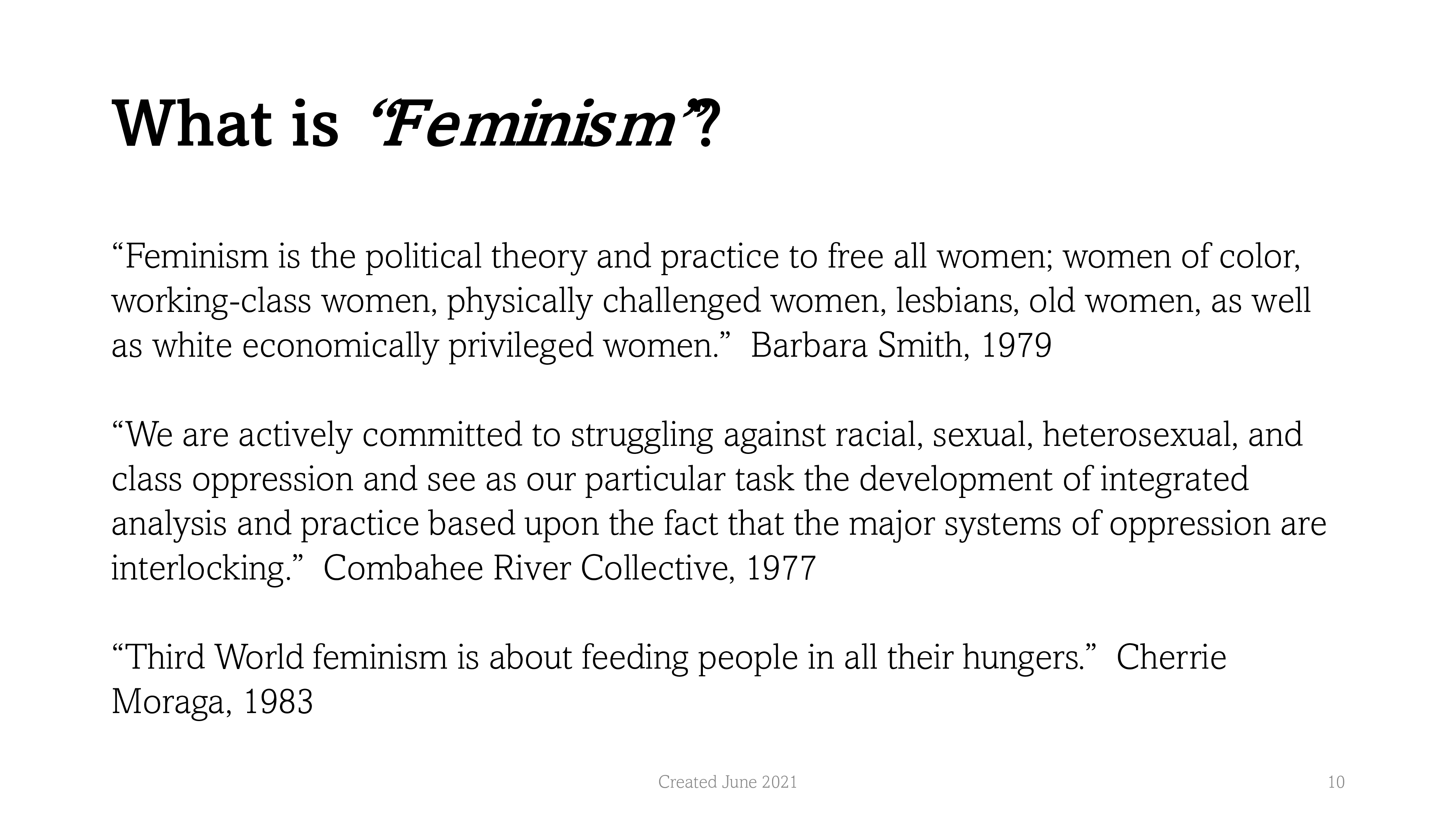
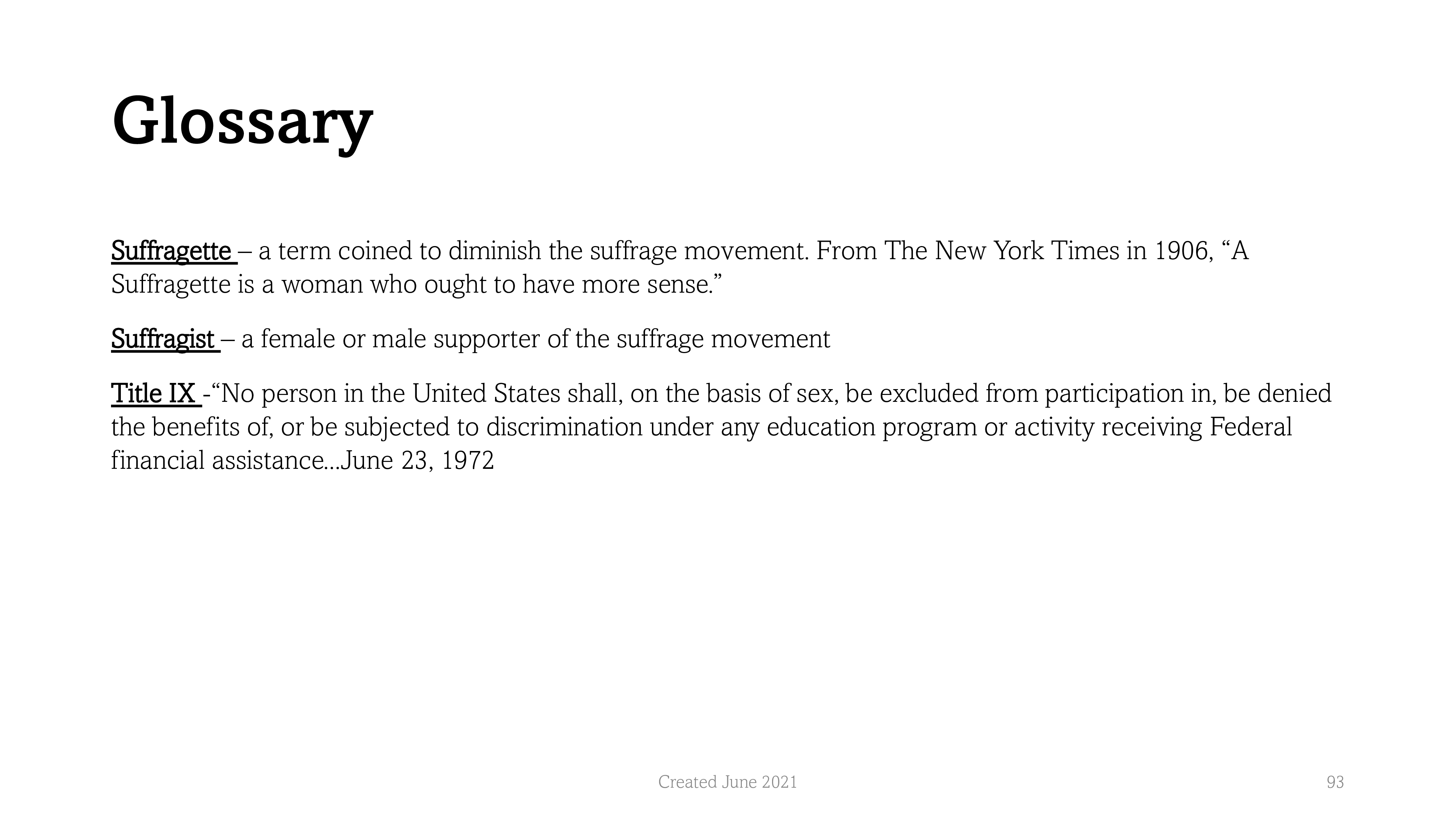
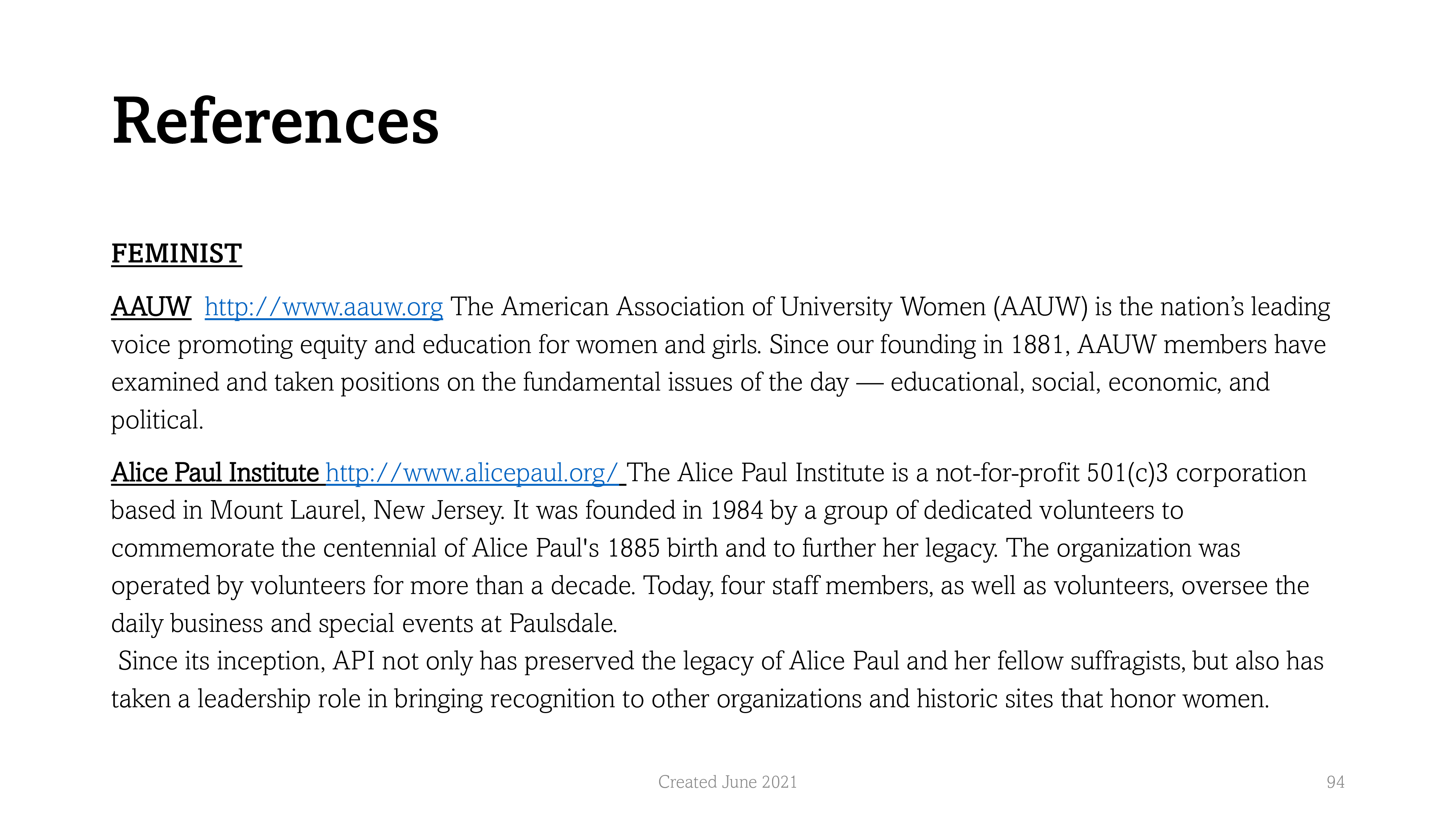
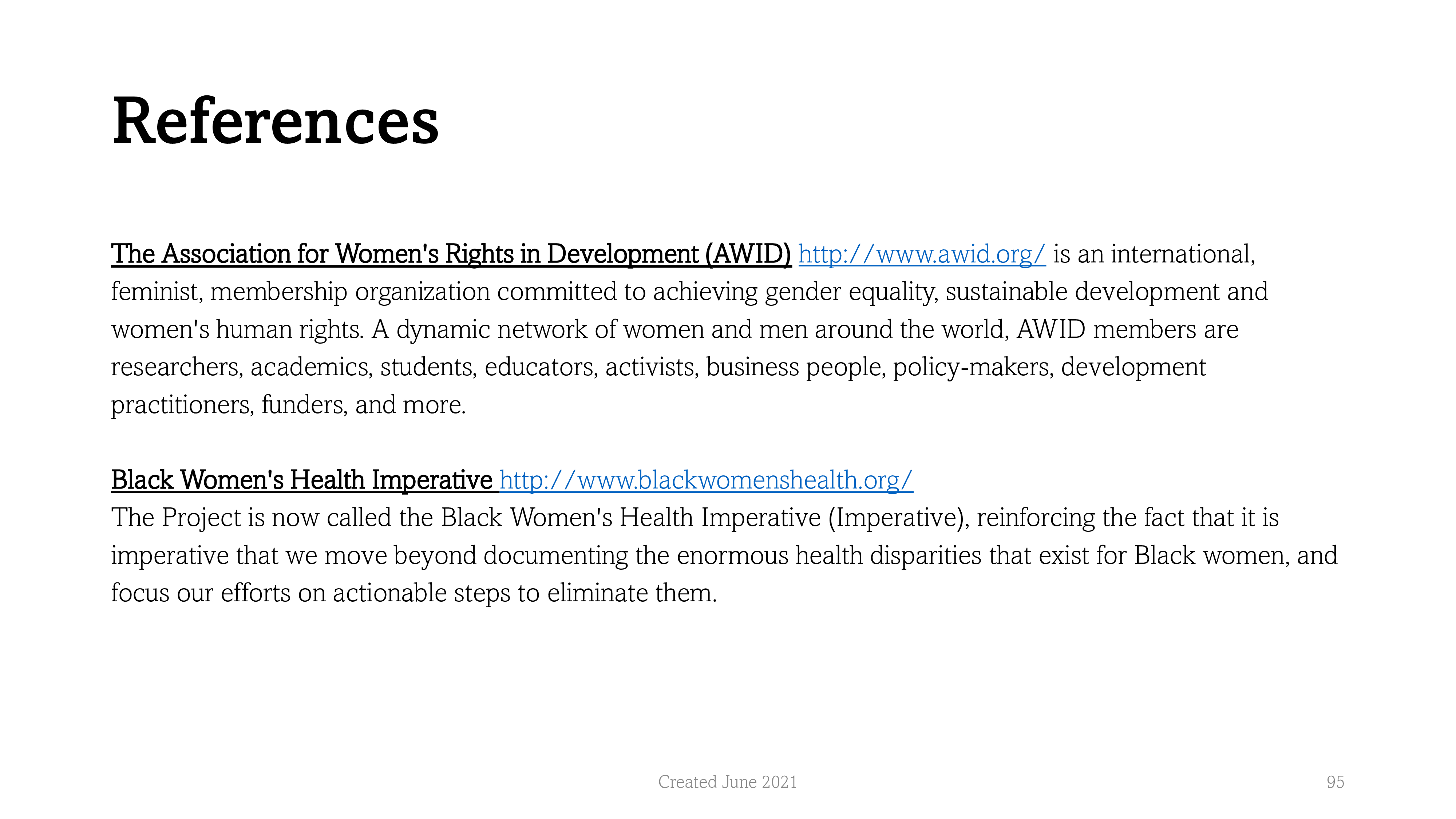
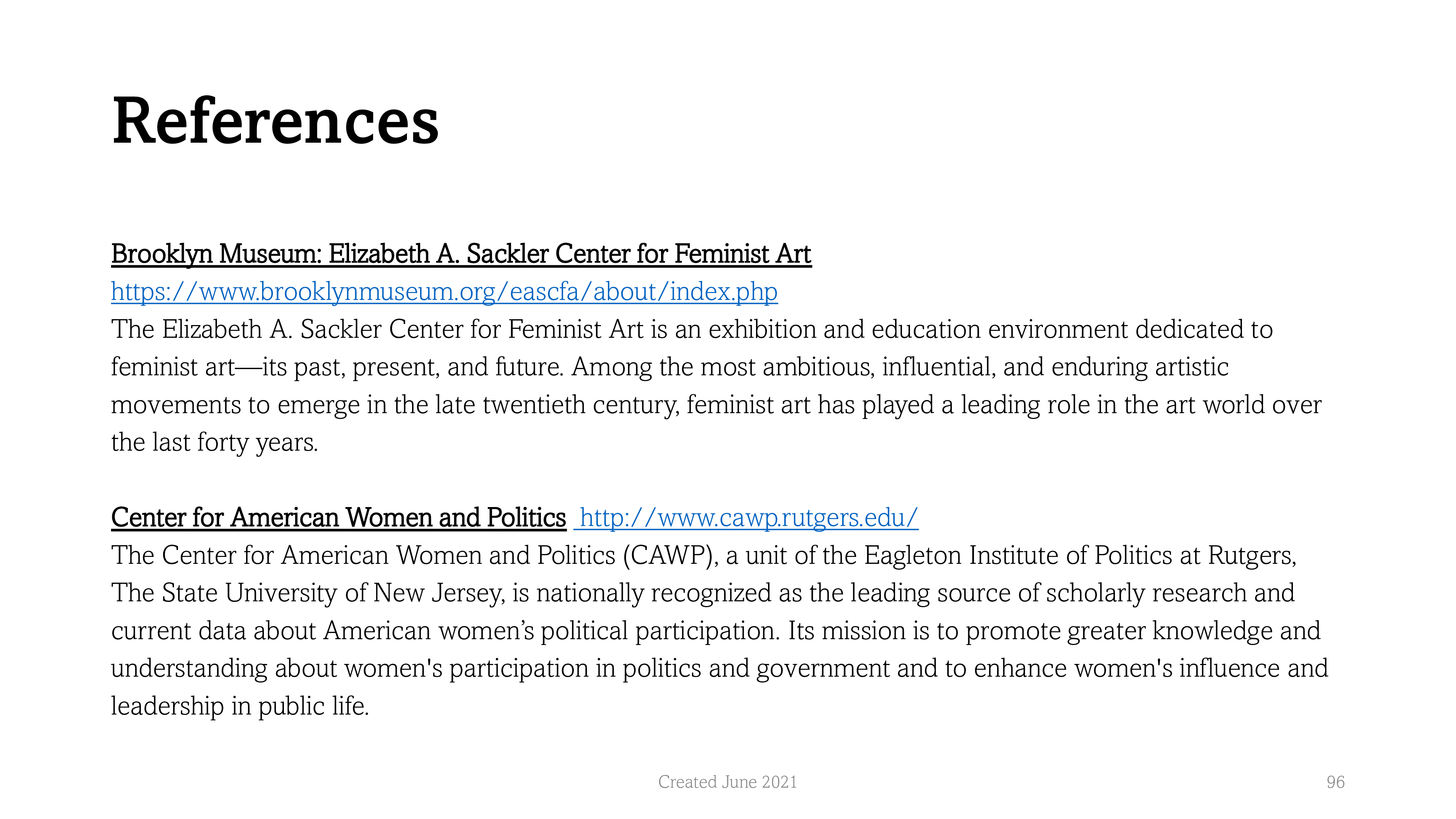
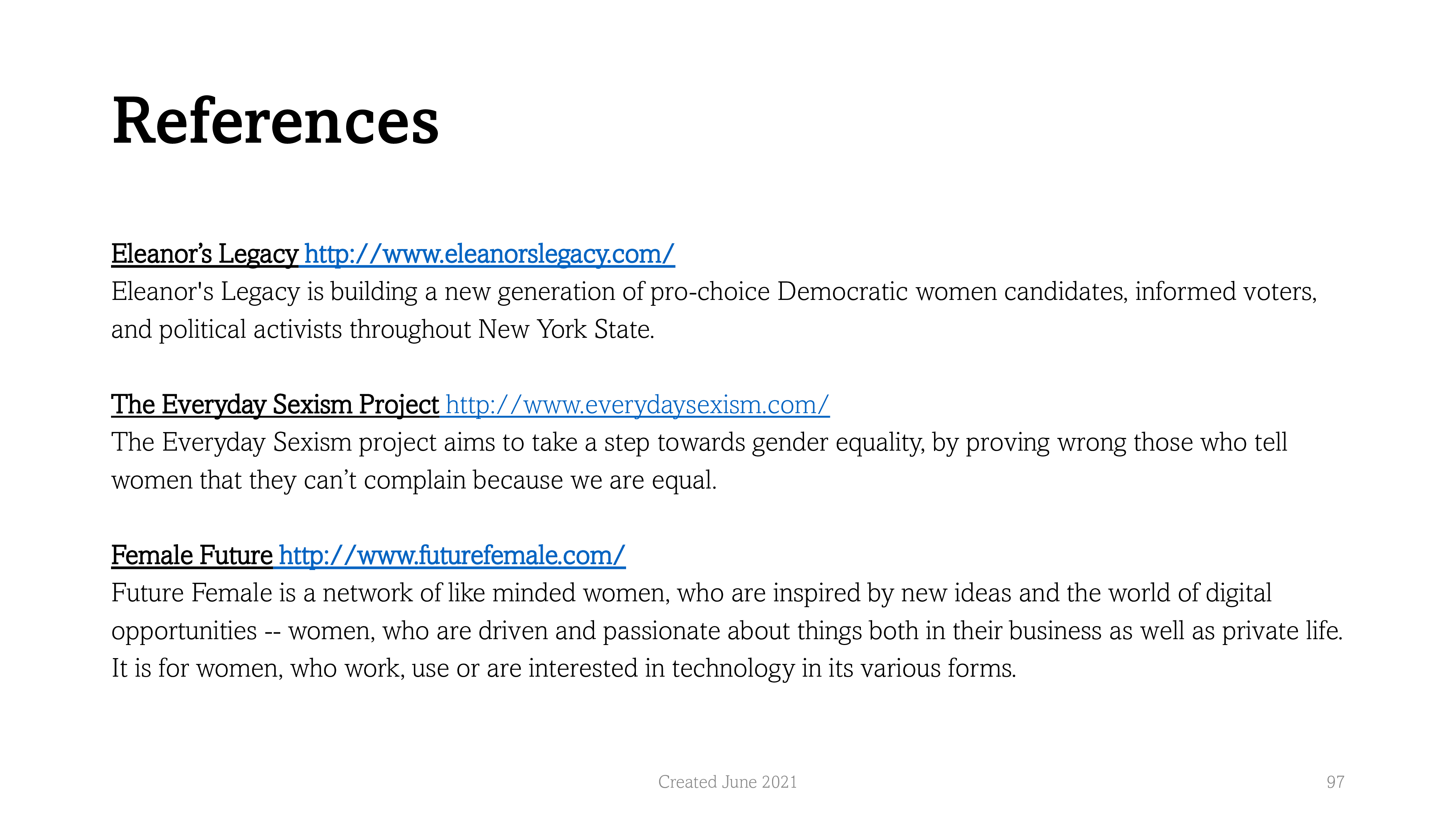
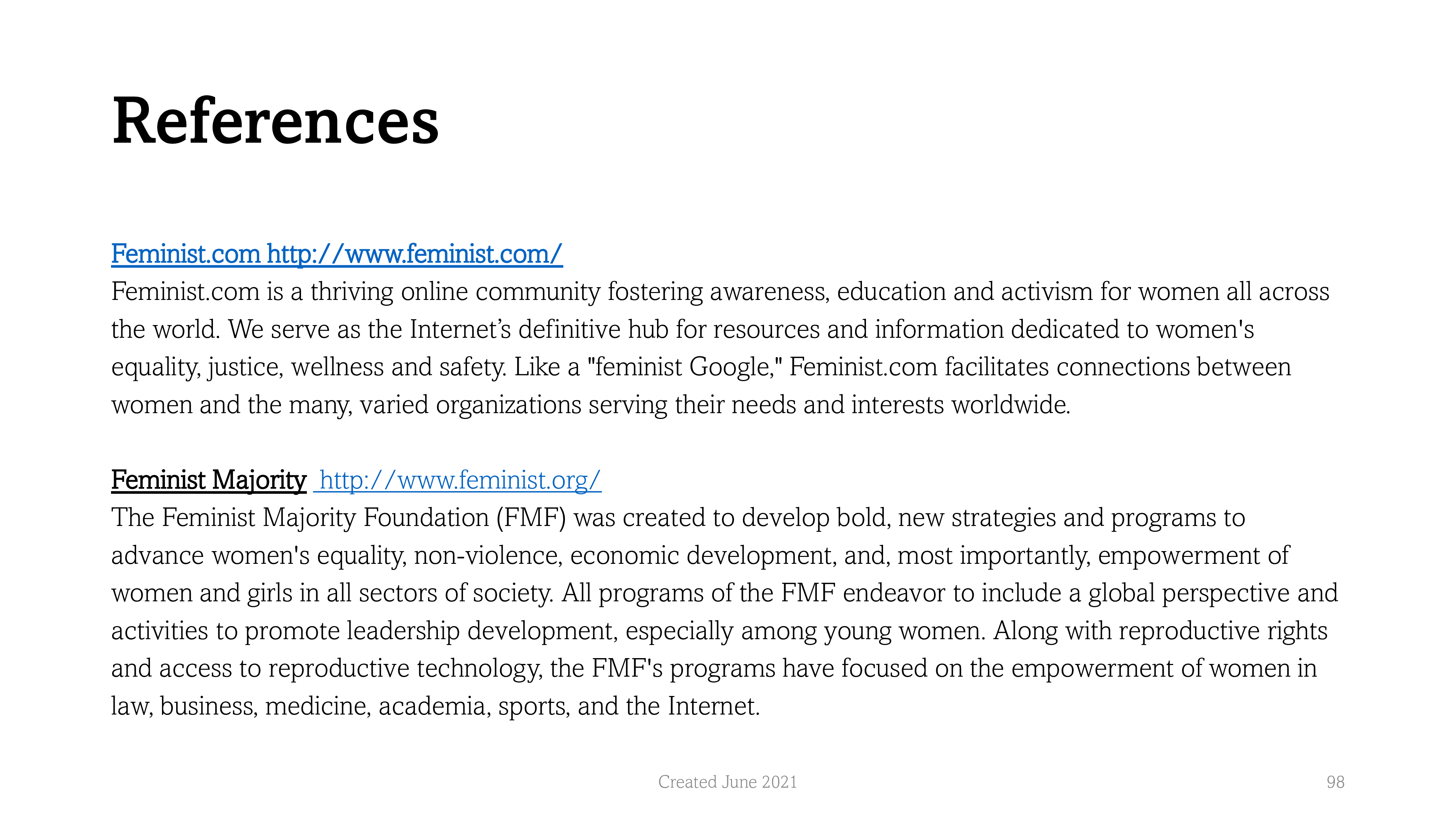
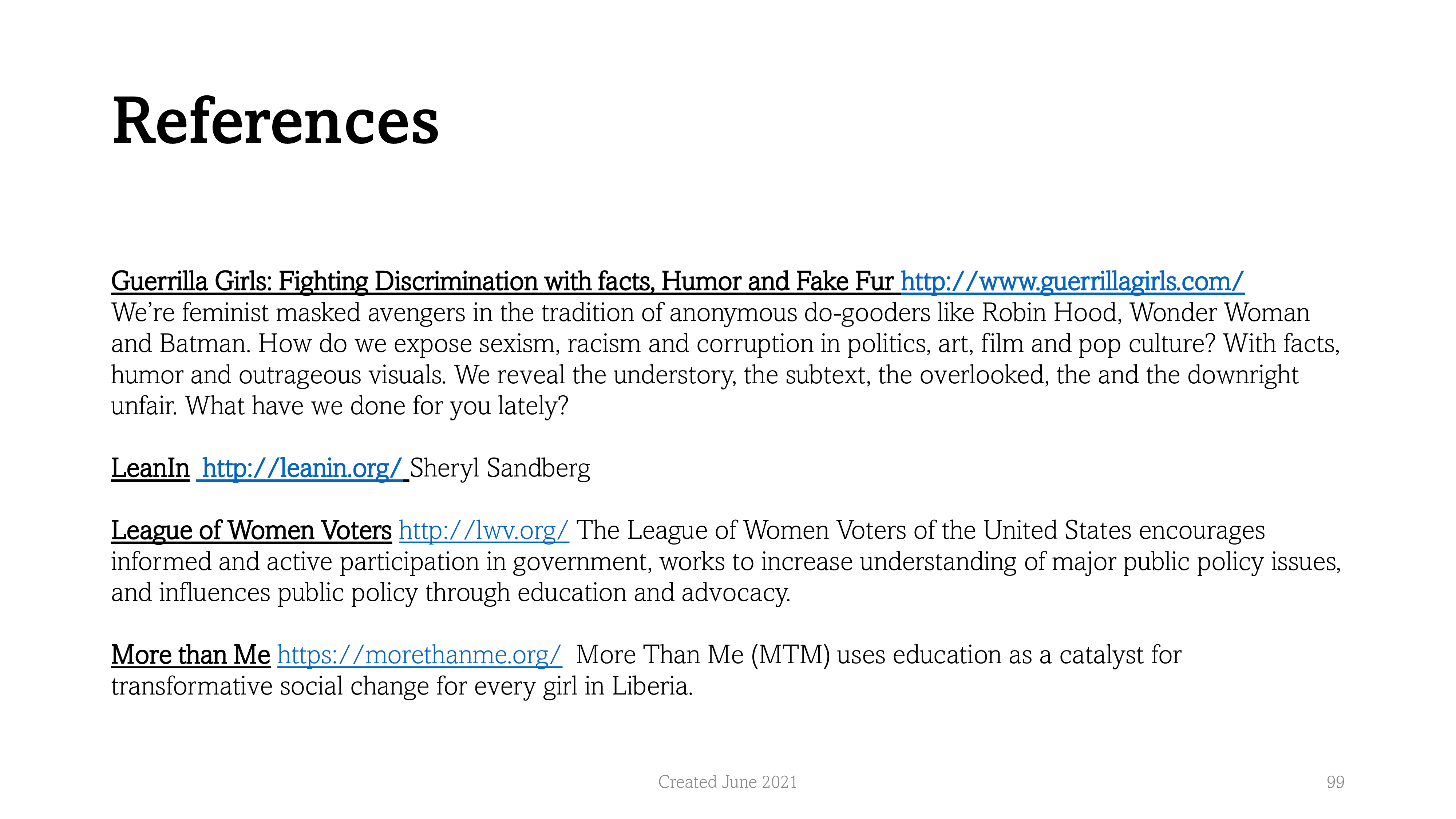
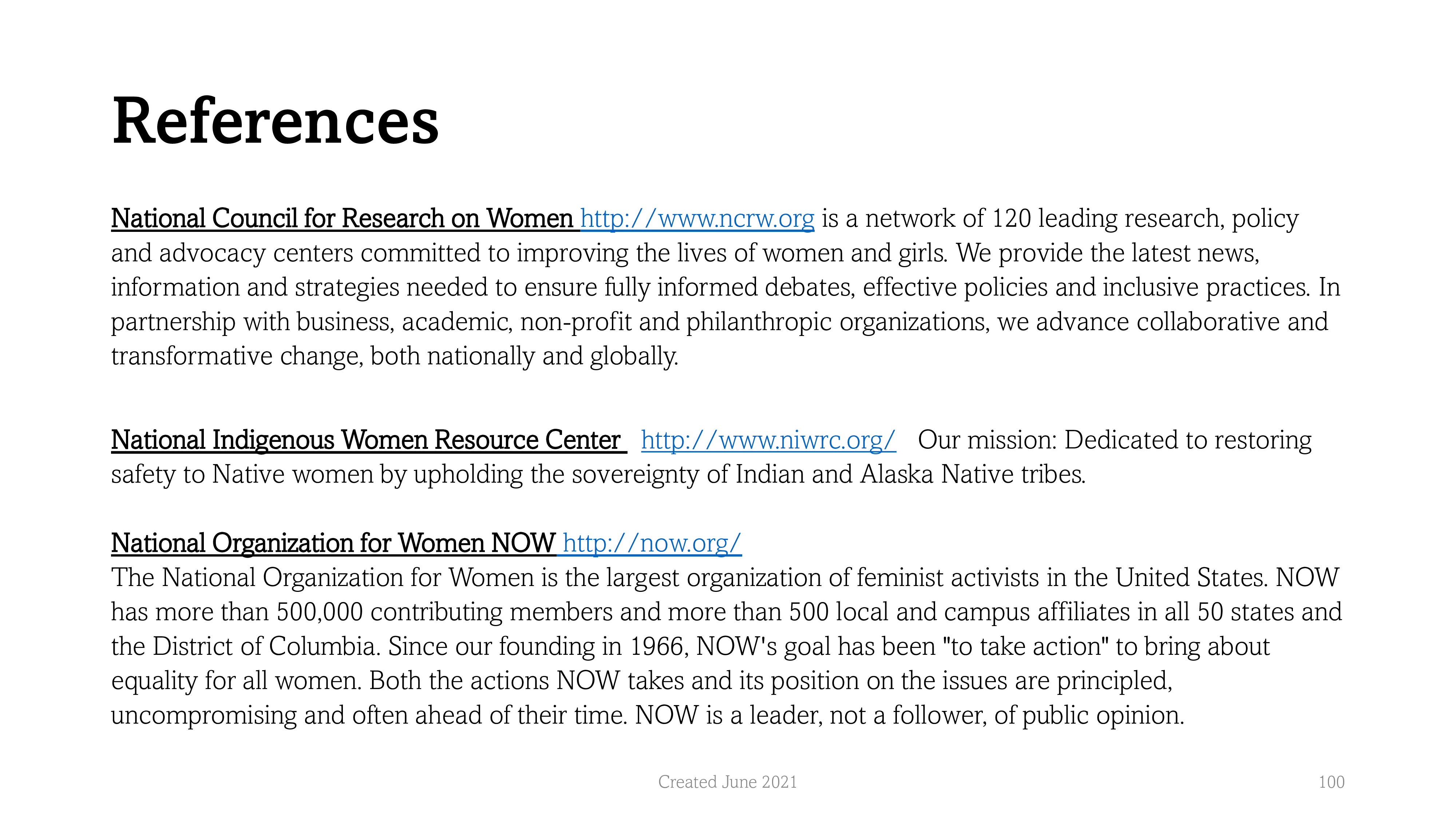
\fCOPYRIGHT @ 1963 BY BETTY FRIEDAN Library of Congress Catalog Card No. 62-10097 ALL RIGHTS RESERVED Published simultaneously in the Dominion of Canada by George J. Mcleod Limited, Toronto Selections from this book have appeared in Mademoiselle @ 1962 by the Conde Nast Publications, Inc. and Ladies Home Journal @ 1963 by Betty Friedan. PRINTED IN THE UNITED STATES OF AMERICA FOR THE PUBLISHERS BY THE VAIL-BALLOU PRESS, INC. 123456789THE PROBLEM THAT HAS. NO NAME 23 There was much sympathy for the educated housewife. (\"Like a two-headed schizophrenic . . . once she wrote a paper, on the Graveyard poets; now she writes notes to the milkman. Once she determined the boiling point of sulphuric acid; now she deter- mines her boiling point with the overdue repairman. . . . The housewife often is reduced to screams and tears. .. . No one, it seems, is appreciative, least of all herself, of the kind of person she becomes in the process of turning from poctess into shrew.\") Home economists suggested more realistic preparation for housewives, such as high-school workshops in home appliances. College educators suggested more discussion groups on home management and the family, to prepare women for the adjust- ment to domestic life. A spate of articles appeared in the mass magazines offering \"Fifty-eight Ways to Make Your Marriage More Exciting.\" No month went by without a new book by a psychiatrist or sexologist offering technical advice on finding greater fulfillment through sex. _A male humorist joked in Harper's Bazaar. (July, 1960) that the problem could be solved by taking away woman's right to vote. (\"In the pre-19th Amendment era, the American woman was placid, sheltered and sure of her role in American society. She left all the political decisions to her husband and he, in turn, left all the family decisions to her. Today a woman has to make both the family and the political ceeaeony and it's too much for her.\") A number of educators suggested seriously that women no longer be admitted to the four-year colleges and universities: in the growing college crisis, the education which girls could not use as housewives was more urgently needed than ever by boys to do the work of the atomic age. The problem was also dismissed with drastic solutions no one could take seriously. (A woman writer proposed in Harper's that women be drafted for compulsory service as nurses' aides and baby-sitters.) And it was smoothed over with the age-old pan- aceas: \"love is their answer,\" \"the only answer is inner help,\" \"the secret of completenesschildren,\" \"a private means of in- tellectual fulfillment,\" \"to cure this toothache of the spiritthe 24. THE FEMININE MYSTIQUE simple formula of handing one's self and one's will over to God.\" } The problem was dismissed by telling the housewife she doesn't realize how lucky she isher own boss, no time clock, no junior executive gunning for her job. What if she isn't happydoes she think men are happy in this world? Does she really, secretly, still want to be a man? Doesn't she know yet how lucky she is to be a woman? The problem was also, and finally, dismissed by shrugging that , there are no solutions: this is what being a woman means, and what is wrong with American women that they can't accept their role gracefully? As Newsweek put it (March 7, 1960): She is dissatisfied with a lot that women of other lands can only dream of, Her discontent is deep, pervasive, and impervious to the superficial remedies which are offered at every hand. ... An army of professional explorers have already charted the major sources of trouble. . . . From the beginning of time, the female cycle has defined and confined woman's role, As Freud was credited with saying: \"An- atomy is destiny.\" Though no group of women has ever pushed these natural restrictions as far as the American wife, it seems that she still cannot accept them with good grace. . . . A young mother with a beautiful family, charm, talent and brains is apt to dismiss her role apologetically. \"What do I do?\" you hear her say. \"Why nothing. 'm just a housewife.\" A good education, it seems, has given this paragon among women an understanding of the value of everything except her own worth .., And so she must accept the fact that \"American women's un- happiness is merely the most recently won of women's rights,\" and adjust and say with the happy housewife found by News- week: \"We ought to salute the wonderful freedom we all have and be proud of our lives today. I have had college and I've worked, but being a housewife is the most rewarding and satis- fying role. . . . My mother was never included in my father's business affairs . . . she couldn't get out of the house and away from us children. But I-am an equal to my husband; I can go along with him on business trips and to social business affairs.\" The alternative offered was a choice that few women would contemplate. In the sympathetic words of the New York Times: THE PROBLEM THAT HAS NO NAME 25 \"All admit to being deeply frustrated at times by the lack of privacy, the physical burden, the routine of family life, the con- finement of it. However, none would give up her home and family if she had the choice to make again.\" Redbook com- mented: \"Few women would want to thumb their noses at hus- bands, children and community and go off on their own. Those who do may be talented individuals, but they rarely are success- ful women.\" The year American women's discontent boiled over, it was also reported (Look) that the more than 21,000,000 American women who are single, widowed, or divorced do not cease even after fifty their frenzied, desperate search for a ran. And the search begins earlyfor seventy per cent of all American women now marry before they are twenty-four. A pretty twenty-five- year-old secretary took thirty-five different jobs in six months in the futile hope of finding a husband. Women were moving 'from one political club to another, taking evening courses in ac- counting or sailing, learning to play golf or ski, joining 2 num- ber of churches in succession, going to bars alone, in their cease- less search for a man. . Of the growing thousands of women currently getting pri- vate psychiatric help in the United States, the married ones were reported dissatisfied with their marriages, the unmarried ones suffering from anxiety and, finally, depression. Strangely, a number of psychiatrists stated that, in their experience, un- married women patients were happier than married ones. So the door of all those pretty suburban houses opened a crack to per- mit a glimpse of uncounted thousands of American housewives who suffered alone from a problem that suddenly everyone was talking about, and beginning to take for granted, as one of those unreal problems in American life that can never be solvedlike the hydrogen bomb. By 1962 the plight of the trapped American housewife had. become a national parlor game. Whole issues of magazines, newspaper columns, books learned and frivolous, edu- cational conferences and television panels were devoted to the problem. Even so, most men, aitd some women, still did not know that 26 THE FEMININE MYSTIQUE this problem: was real: But those who had faced it honestly knew. that all the superficial 'remedies, the sympathetic advice, the scold- ing words and the cheering words were somehow drowning the problem in unreality. A bitter laugh was beginning to be heard from American women. They were admired, envied, pitied, the- orized over until they were sick of it, offered drastic solutions or silly choices that no one could take seriously. They got all kinds of advice from the growing armies of marriage and child- guidance counselors, psychotherapists, and armchair psychologists, on how to adjust to their role as housewives. No other road to fulfillment was offered to American women in the middle of the twentieth century. Most adjusted to their role and suffered or ignored the problem that has no name. It can be less painful, for a woman, not to hear the strange, dissatisfied voice stirring within her. It is no longer possible to ignore that voice, to dismiss the des- peration of so many American women. This is not what being a woman means, no matter what the experts say.|For 'human suf-~ fering there is a reason; perhaps the reason has not been found because the right questions have not been asked, or pressed far enough. I do not accept the answer that there is no problem be- cause American women haye luxuries that women in other times, and lands never dreamed of; part_of the strange newness of the | problem is that it cannot be understood in terms of the age-old material problems of man: poverty, sickness, hunger, cold. The women who suffer this problem have a hunger that food cannot * fill. It persists in women whose husbands are struggling internes and law clerks, or prosperous doctors and lawyers; in wives of workers and executives who make $5,000 a year or $50,000. It is not caused by lack of material advantages; it may not even be felt by women preoccupied with desperate problems of hunger, poverty or illness. And women who think it will be solved by more money, a bigger house, a second car, moving to a better suburb, often discover it gets worse. It is no longer possible today to blame the problem on loss of femininity: to say that education and independence and equality THE PROBLEM THAT HAS NO NAME 27 with men have made American women unfeminine- I have heard sO many women try to deny this dissatisfied voice! within them- selves because it does not fit the pretty picture of femininity the experts have given them. J think, in fact, that this is the first clue to the mystery: the problem cannot be understood in the gen- erally accepted terms by which scientists have studied women, doctors have treated them, counselors have advised them, and writers have written about them. Women who suffer this prob- lem, in whom this voice is stirring, have lived their whole lives in the pursuit of feminine fulfillment. They are not career women (although career women may have other problems); they are women whose greatest ambition has been marriage and children. For the oldest of these women, these daughters of the American middle class, no other dream was possible. The ones in their forties and fifties who once had other dreams gave them up and threw themselves joyously into life as housewives. For the youngest, the new wives and mothers, this was the only dream. They are the ones who quit high school and college to marry, or marked time in some job in which they had no real interest until they married. These women are very \"feminine\" in the usual sense, and yet they _ still suffer the problem. Are the women who finished college, the women who once had dreams beyond housewifery, the ones who suffer the most? According to the experts they are, but listen to these four women: My days are all busy, and dull, too. All I ever do is mess around. { get up at eightI make breakfast, so I do the dishes, have lunch, do some.more dishes and some laundry*and cleaning in the afternoon, Then it's supper dishes and I get to sit down a few minutes before the children have to be sent to bed. . . . That's all there is to my day. It's just like any other wife's day. Humdram. The biggest time, I am chasing kids, Ye Gods, what do I do with my time? Well, I get up at six. I get-my son dressed and then give him breakfast. After that I wash dishes and bathe and feed the'baby. Then I get lunch and while the children nap, I sew or mend or iron and do all the other things I can't get done before noon. Then I cook supper for the family and my husband 28 THE FEMININE MYSTIQUE watches TV while I do the dishes. After I get the children to bed, I * set my hair and then I go to bed, The problem is always being the children's mommy, or the min- ister's wife and never being myself. , A film made of any typical morning in my house would look like an old Marx Brothers' comedy. I wash the dishes, rush the older children off to school, dash out in the yard to cultivate the chrysanthemums, run back in to make a phone call about a committee meeting, help the youngest child build a blockhouse, spend fifteen minutes skimming the newspapers so I can be well-informed, then scamper down to the washing machines where my thrice-weekly laundry includes enough clothes to keep a primitive village\"going for an entire year. By noon I'm ready for a padded cell. Very little of what I've done has been really necessary or important. Outside. pressures lash me through the ' day. Yet I look upon myself as one of the more relaxed housewives in the neighborhood. Many of my friends are even more frantic. In the past sixty years we have come full circle and the American housewife is once again trapped in a squirrel cage. If the cage is now a modern plate-glass-and-broadloom ranch house or a convenient modern apart- ment, the situation is no less painful than when her grandmother sat over an embroidery hoop in her gilt-and-plush parlor and muttered angrily about women's rights. The first two women never went to college. They live 'nities velopments in Levittown, New Jersey, and Tacoma, Washing- ton, and were interviewed by a team of sociologists studying workingmen's wives.? The third, a minister's wife, wrote on the fifteenthereunion questionnaire,of her college that she never had any career ambitions, but wishes now she had.* The fourth, who has a Ph.D. in anthropology, is today a Nebraska housewife with three children.* Their words seem to indicate that housewives of all educational levels suffer the same feeling of desperation. The fact is that no one today is muttering angrily about \"women's rights,\" even though more and more women have gone to college. In a recent study of all the classes that have graduated from Barnard College, a significant minority of earlier graduates . blamed their education for making them want \"rights,\" later THE PROBLEM THAT HAS NO NAME 29 classes blamed their education for giving them career dreams, but recent graduates blamed the college for making them feel it was not enough simply to be a housewife and mother; they did not want to feel guilty if they did not read books or take part in community activities. But if education is not the. cause of the problem, the fact that education somehow festers in these women may be a clue. If the secret of feminine fulfillment is having children, never have so many women, with the freedom to choose, had so many children, in so few years, so willingly. If the answer is love, never have women searched for love with such determination. And yet there is a growing suspicion that the problem may not be sexual, though it must somehow be related to sex. I have heard from many doctors evidence of new sexual problems between man and wifesexual hunger in wives so great their husbands cannot satisfy it. \"We have made woman a sex creature,\" said: a psy- chiatrist at the Margaret Sanger marriage counseling clinic. \"She has no identity except as a wife and mother. She does not know who she is herself. She waits all day for her husband to come home at night to make her feel alive. And now it is the husband who is not interested, It is terrible for the women, to lie there, night after night, waiting for her husband to make her feel alive.\" Why is there such a market for books and articles offering sex- ual advice? The kind of sexual orgasm which Kinsey found in statistical plenitude in the recent generations of American women does not seem to make this problem go away. On the contrary, new neuross are being seen among women and problems as yet unnamed as neuroseswhich Freud and his followers did not predict, with physical symptoms, anxieties, and defense mechanisms equal to those caused by sexual repression. And strange new. problems are being reported in th growing generations of children whose mothers were always there, driv- ing them around, helping them with their homeworkan inabil- ity to endure pain or discipline or pursue any, self-sustained goal of any sort, 2 devastating boredom with life. Educators are in- creasingly uneasy about the dependence, the lack of self-reliance, of the boys and girls who are entering college today. \"We fight 30 THE FEMININE MYSTIQUE a continual battle to make our students assume manhood," saids Columbia dean. A White House conference was held on the physical and mus cular deterioration of American children: were they being over nurtured? Sociologists noted the astounding organization of sub urban children's lives: the lessons, parties, entertainments, pla and study groups organized for them. A suburban housewife Portland, Oregon, wondered why the children "need" Brownie and Boy Scouts out here. "This is not the slums. The kids ou here have the great outdoors. I think people are so bored, the organize the children, and then try to hook everyone else on And the poor kids have no time left just to lie on their beds and daydream." Can the problem that has no name be somehow related to the domestic routine of the housewife? When a woman tries to put the problem into words, she often merely describes the daily life she leads. What is there in this recital of comfortable domestic detail that could possibly cause such a feeling of desperation? I she trapped simply by the enormous demands of her role as mod ern housewife: wife, mistress, mother, nurse, consumer, cook chauffeur; expert on interior decoration, child care, appliance repair, furniture refinishing, nutrition, and education? Her day is fragmented as she rushes from dishwasher to washing machine to telephone to dryer to station wagon to supermarket, and de- livers Johnny to the Little League field, takes Janey to dancing class, gets the lawnmower fixed and meets the 6:45. She can never spend more than 15 minutes on any one thing; she has no time to read books, only magazines; even if she had time, she has lost the power to concentrate. At the end of the day, she is so terribly tired that sometimes her husband has to take over and put the children to bed. This terrible tiredness took so many women to doctors in the 1950's that one decided to investigate it. He found, surprisingly, that his patients suffering from "housewife's fatigue" slept more than an adult needed to sleep-as much as ten hours a day-and that the actual energy they expended on housework did not tax their capacity. The real problem must be something else, he de-JHE PROBLEM THAT HAS NO NAME 31 cidedperhaps boredom. Some doctors told their women patients they must get out of the house for a day, treat themselves to a movie in town. Others prescribed tranquilizers. Many suburban housewives were taking tranquilizers like cough drops. \"You wake up in the morning, and you feel as if there's no point in going on another day like this. So you take a tranquilizer because it makes you not care so much that it's pointless.\" It is easy to see the concrete details that trap the suburban -housewife, the continual demands on her time, Ps t_the-chains that bind her in her trap are chains in her own mind and spirit. They are chains made up of mistaken ideas and misinterpreted facts, of incomplete truths and unreal choices. They.are not easily seen and not easily shaken off. ' How can any woman see the whole truth within the bounds of her own life? How can she believe that voice inside herself, when it denies the conventional, accepted truths by which she has been living? And yet the women I have talked to, who are finally listening to that inner voice, seem in some incredible way to be groping through to a truth that has defied the experts. I think the experts in a great many fields have been holding pieces of that truth under their microscopes for a long time with- out realizing it. I found pieces of it in certain new research and theoretical developments in psychological, social and biological science whose implications for women seem never to have been examined. I found many clues by talking to suburban doctors, gynecologists, obstetricians, child-guidance clinicians, pediatri- cians, high-school guidance counselors, college professors, mar- tiage counselors, psychiatrists and ministersquestioning them not on their theories, but on their actual experience in treating American women. I became aware of a growing body of evi- dence, much of which has not been reported publicly because it does not fit current modes of thought about womenevidence which throws into question the standards of feminine normality, feminine adjustment, feminine fulfillment, and feminine maturity by which most women are still trying to live. 'T began to see in a strange new light the American return to early marriage and the large families that are causing the popula- 32 THE FEMININE MYSTIQUE tion explosion; the recent movement to natural childbirth and breastfeeding; suburban conformity, and the new neuroses, char- acter pathologies and. sexual problems being reported by the doc- tors. I began to see new dimensions to old problems that have long been taken for granted among women: menstrual difficulties, -sexual frigidity, promiscuity, pregnancy fears, childbirth depres- sion, the high incidence of emotional breakdown and suicide among women in their twenties and thirties, the menopause crises, the so-called passivity and immaturity of American men, the dis- crepancy between women's tested intellectual abilities in child- hood and their adult achievement, the changing incidence of adult sexual orgasm in American women, and persistent problems in psychotherapy and in women's education. If J am right, the problem that has no name stirring in the minds of so many American women today is not a matter of loss of femininity or too much education, or the demands of domesticity. It is far more important than anyone recognizes. It is the key to. these other new and old problems which have been torturing women and their husbands and children, and puzzling their doc- tors and educators for years. It may well be the key to our future as a nation and a culture.. We can no longer ignore that voice within women that says: \"I want something more than my hus- band and my children and my home.\" THE PROBLEM THAT HAS NO NAME The problem lay buried, unspoken, for many years in the minds of American women. It was a strange stirring, a sense of dissatisfaction, a yearning that women suffered in the middle of the twentieth century in the United States. Each suburban wife struggled with it alone, As she made the beds, shopped for groceries, matched slipcover material, ate peanut butter sandwiches with her chil- dren, chauffeured Cub Scouts and Brownies, lay beside her hus~ band at nightshe was afraid to ask even of herself the silent question'Ts this all?\" For over fifteen years there was no word of this yearning in the millions of words written about women, for women, in all the columns, books and articles by experts telling women their role was to seek fulfillment as wives and mothers. Over and over women heard in voices of tradition and of Freudian sophistica- ' tion that they could desire no greater destiny than to glory in their own femininity. Experts' told them how to catch a man and keep him, how to breastfeed children and handle their toilet training, how to cope with sibling rivalry and adolescent re- bellion; how to buy a dishwasher, bake bread, cook gourmet snails, and build a swimming pool with their own hands; how to dress, look, and act more feminine and make marriage more ex- citing; how to keep their husbands from dying young and their sons from growing into delinquents. They were taught to pity 15 16 THE FEMININE MYSTIQUE the neurotic, unfeminine, unhappy women who wanted to be poets or physicists or presidents, They learned that truly feminine women do not want careers, higher education, political rights the independence and the opportunities that the old-fashioned feminists fought for. Some women, in their forties and fifties, still remembered painfully giving up those dreams, but most of the younger women no longer even thought about them. A thou- sand expert voices applauded their femininity, their adjustment, their new maturity. All they had to do was devote their lives from earliest girlhood to finding a husband and bearing children. \"By the end of the nineteen-fifties, the average marriage age of women in America dropped to 20, and was still dropping, into the teens. Fourteen million girls were engaged by 17. The pro- portion of women attending college in comparison with men dropped from 47 per cent in 1920 to 35 per cent in 1958. A cen- tury earlier, women had fought for higher education; now girls went to college to get a husband. By the mid-fifties, 60 per cent dropped out of college to marry, or because they were afraid too much education would be a marriage bar. Colleges built dormitories for \"married students,\" but the students were almost always the husbands. A new degree was instituted for the wives Ph.T.\" (Putting Husband Through). Then American girls began getting married in high school. And the women's magazines, deploring the unhappy statistics about these young marriages, urged that courses on marriage, and marriage counselors, be installed in the high schools. Girls started going steady at twelve and thirteen, in junior high: Manu- facturers put out brassieres with false bosoms of foam rubber for little girls of ten, And an advertisement for a_child's dress, sizes 3-6x, in the New York Times in the fall of 960/ said: \"She Too Can Join the Man-Trap Set.\" By the end of the fifties, the United States birthrate was over- taking India's. The birth-control movement, renamed Planned Parenthood, was asked to find a method whereby women who had been advised that a third or fourth baby would be born dead or defective might have it anyhow. Statisticians were especially astounded at the fantastic increase in the number of babies among {THE PROBLEM THAT HAS NO NAME 17 college women. Where once they had two children, now they' had four, five, six. Women-who had once wanted careers were now making careers out of having babies. So rejoiced Life mag- azine in a 1956 paean to the movement of American women back to the home. In a New York hospital, a woman had a nervous breakdown when she found she could not breastfeed her baby. In other hos- pitals, women dying of cancer refused a drug which research had proved might save their lives: its side effects were said to be unfeminine. \"If I have only one life, let me live it as a blonde,\" a larger-than-life-sized picture of a pretty, vacuous woman pro- claimed from newspaper, magazine, and drugstore ads. And across America, three out of every ten women dyed their hair blonde. They ate a chalk called Metrecal, instead of food, to shrink to the size of the thin young models. Department-store buyers re- orted that American women, sint_ 1939, had become three and \"four\" r sizes_smaller. .\"Women-are-out.to fit the clothes, instead of vice-versa,\" one buyer said. Interior decorators were designing kitchens with mosaic murals and original paintings, for kitchens were once again the center of women's lives. Home sewing became a million-dollar industry. Many women no longer left their homes, except to shop, chauf- feur their children, or attend a social engagement with their hus- bands. Girls were growing up in America without ever having jobs outside the home. In the late fifties, a sociological phenome- non was suddenly remarked; a third of American women now worked, but most were no longer young and very few were pur- suing careers. They were married women who held part-time jobs, _ selling or secretarial, to put their.husbands through school, their sons through college, or.to help pay the mortgage. Or they were widows supporting families. Fewer and fewer women were enter- ing professional work..The shortages i in the nursing, social work, and teaching professions caused crises in almost every American city. Concerned over the Soviet Union's lead in the space race, scientists noted that America's greatest source of unused brain- power was women. But girls would not study physics: it was \"un- feminine.\" A girl refused a science fellowship at Johns Hopkins 18 THE FEMININE MYSTIQUE to take a job in a real-estate office. All she wanted, she said, was what every other American girl wantedto get married, have four children and live in a nice house i in a niee-suburb. The, \"suburban housewifeshe was the' dream image of the x Aimetican women nen and the. _envy, it was said, of women all \"over the world. The American housewifefreed by science and labor-saving appliances from the drudgery, the dangers of child- birth and the illnesses of her grandmother. She was healthy, beau- tiful, educated, concerned only about her husband, her children, her home. She had found true feminine fulfillment. As a house- wife and mdther, she was respected as a full and equal partner to man in his world, She was free to choose automobiles, clothes, appliances, supermarkets; she had everything that women ever dreamed of. In the fifteen years after World War II, this mystique of fen inine fulfillment became the, cherished and self-perpetuating core of contemporary American culture. Millions of women lived their lives in the image of those pretty pictures of the American sub- urban housewife, kissing their husbands goodbye in'front of the picture window, depositing their stationwagonsful of children at school, and smiling as they ran the new electric waxer over the spotless kitchen floor. They baked their own bread, sewed their own and their children's clothes, kept their new washing machines and dryers running all day. They changed the sheets on the beds twice a week instead of once, took the rug-hooking class in adult education, and pitied their eo frustrated mothers, who had dreamed of having a career.Wheir only dream was to be perfect wives and mothers; their highest ambition to have five children and a beautiful house, their only fight to get and keep their hus- bands. They had no thought for the unfeminine problems of the world outside the home; they wanted the men to make the major decisions. They gloried in their role as women, and wrote proudly on the census blank: \"Occupation: housewife.\" For over fifteen years, the words written for women, and the words women used when they talked to each other, while their husbands sat on the other side of the room and talked shop or politics or septic tanks, were about problems with their children, {HE PROBLEM THAT HAS NO NAME ~ 19 or how to keep their husbands happy, or improve their children's school,\"or"cook chicken or make slipcovers. Nobody argued whether. women were inferior or superior to men; they were simply different. Words like \"emancipation\" and \"career\" sounded strange and embarrassing; no one had used them for years. When a Frenchwoman named Simone de Beauvoir wrote a book called The Second Sex, an American critic commented that she ob- viously \"didn't know what life was all about,\" and besides, she was talking about French women. The \"woman problem\" in America no longer existed. If a woman had a problem in the 1950's and 1960's, she knew that something must be wrong with her marriage, or with her- self. Other women were satisfied with their lives, she thought. What kind of a woman was she if she-did not feel this mysterious fulfillment waxing the kitchen floor? She was so ashamed to ad- mit her dissatisfaction that she never knew how many other women shared it. If she tried to tell her husband, he didn't under- stand what she was talking about. She did not really understand it herself. For over fifteen years women in America found it harder to talk about: this problem than about sex. Even the psy- choanalysts had no name for it. When 2 woman went to a psy- . chiatrist for help, as many women did, she would say, \"I'm so ashamed,\" or \"I must be hopelessly neurotic.\" \"I don't know what's wrong with women today,\" a suburban psychiatrist said uneasily. \"I only know something is wrong because most of my patients happen to be women. And their problem isn't sexual.\" Most women with this problem did not go to see a psychoanalyst, however. \"There's nothing wrong really,\" they kept telling them- selves. \"There isn't any problem.\" But on an April morning in 1959, I heard a mother of four, having coffee with four other mothers in a suburban develop- ment fifteen miles from New York, say in a tone of quiet despera- tion, \"the problem.\" And the others knew, without words, that she was not talking about a problem with her husband, or her children, or her home, Suddenly they realized they all shared the same problem, the problem that has no name. They began, hesi- tantly, to talk about it. Later, after they had picked up their chil- 20 THE FEMININE MYSTIQUE dren at nursery school and taken them home to nap, two of the women cried, in sheer relief, just to know they were not alone. Gradually I came to realize that the problem that has no name was shared by countless women in America. As a magazine writer I often interviewed women about problems with their children, or their marriages, or their houses, or their communities. But after. a while I began to recognize the telltale signs of this other prob- lem. I saw the same signs in suburban ranch houses and split-levels on Long Island and in New Jersey and Westchester County; in colonial houses in a small Massachusetts town; on patios in Memphis; in suburban and city apartments; in living rooms in the Midwest. Sometimes J sensed the problem, not as a reporter, but as a suburban housewife, for during this time I was also bring- ing up my own three children in Rockland County, New York. I heard echoes of the problem in college dormitories and semi- private maternity wards, at PTA meetings and luncheons of the League of Women Voters, at suburban cocktail parties, in station wagons waiting for trains, and in snatches of conversation over- heard at Schrafft's. The groping words I heard from other women, on quiet afternoons when children were at school or on quiet evenings when husbands worked late, I think I understood first as a woman long before I understood their larger social and psychological implications. Just what was this problem that has no name? What were the words women used when they tried to express it? Sometimes a woman would say \"I feel empty somehow . . . incomplete.\" Or she would say, \"I feel as if I don't exist.\" Sometimes she blotted out the feeling with a tranquilizer. Sometimes she thought the problem was with her husband, or her children; or that what she really needed was to redecorate her house, or move to a better \"neighborhood, or have an affair, or another baby. Sometimes, she went to a doctor with symptoms she could hardly describe: \"A tired feeling . . . I get so angry with the children it scares me...I feel like crying without any reason.\" (A Cleveland doctor called it \"the housewife's syndrome.\") A number of women told me about great bleeding blisters that break out on THE PROBLEM THAT HAS NO NAME 21 their hands and arms. \"I call it the housewife's blight,\" said a family doctor in Pennsylvania. \"I see it so often lately in these young women with four, five and six children who bury theni: selves in their dishpans, But it isn't caused by detergent and it isn't cured by cortisone.\" Sometimes a woman would tell me that the feeling gets so strong she runs out of the house and walks through the streets. Or she stays inside her house and cries. Or her children tell her a joke, and she doesn't laugh because she doesn't hear it. I talked to women who had spent' years on the analyst's couch, working out their \"adjustment to the feminine role,\" their blocks to \"ful- fillment as a wife and mother.\" But the desperate tone in these women's voices, and the look in their eyes, was the same as the tone and the look of other women, who were sure they had no problem, even though they did have a strange feeling of despera- tion. A mother of four who left college at nineteen to get married told me: I've tried everything women are supposed to dohobbies, garden- ing, pickling, canning, being very social with my neighbors, joining committees, running PTA teas. I can do it all, and I like it, but Jit doesn't leave you anything to think aboutany feeling of who you are. I never had any career ambitions. All I wanted was to get married and have four children. I love the kids and Bob and my home. There's no problem you can even put a name to. But I'm desperate. I begin to feel I have no personality. I'm a server-of food and a putter-on of pants and a bedmaker, somebody who can be called on when you want something. But who am I? A twenty-three-year-old mother in blue jeans said: I ask myself why I'm so dissatisfied. I've got my health, fine children, a lovely new home, enough money. My husband has a real future as an electronics engineer. He doesn't have any of these feelings. He says maybe I need a vacation, let's go to New York for a weekend. But that isn't it. I always had this idea we should do everything to- gether. I can't sit down and read a book alone. If the children are napping and I have one hour to myself I just walk through the house waiting for them to wake up. I don't make a move until I know where 22 THE FEMININE MYSTIQUE the rest of the crowd is going. It's as if ever since you were a little girl, there's always been somebody or something that. will take care of your life: your parents, or college, or falling in love, or having a child, or moving to a new house. Then you wake up one morning and there's nothing to look forward to. A young wife in a Long Island development said: I seem to sleep so much. I don't know why I should be so tired. This house isn't nearly so hard to clean as the cold-water flat we had when I was working. The children are at school all day. It's not the work. I just don't feel alive. In 1960, the problem that has no name burst like a boil through the image of the happy American housewife. In the television commercials the pretty housewives still beamed over their foam- ing dishpans and Time's cover story.on \"The Suburban Wife, an American Phenomenon\" protested: \"Having too good a time . to believe that they should be unhappy.\" But the actual unhappi- ness of the American housewife was suddenly being reported from the New York Times and Newsweek to Good Housekeep- ing and CBS Television (\"The Trapped Housewife\"), although almost everybody who talked about it found some superficial reason to dismiss it. It was attributed to incompetent appliance repairmen (New York Times), or the distances children must be chauffeured in the suburbs (Time), or too much PTA (Red- book). Some said it was the old problemeducation: more and more women had education, which naturally made them unhappy in their role as housewives. \"The road from Freud to Frigidaire, from Sophocles to Spock, has turned out to be a bumpy one,\" reported the New York Times (June 28, 1960). \"Many young womencertainly not allwhose education plunged them into a world of ideas feel stifled in their homes. They find their routine lives out of joint with their training. Like shut-ins, they feel left out. In the last year, the problem of the educated housewife has provided the meat of dozens of speeches made. by troubled presi- dents of women's colleges who maintain, in the face of complaints, that sixteen years of academic training is realistic preparation for wifehood and motherhood.\" What is \"Feminism'? Dr. Arlene Holpp-Scala (William Paterson University of New Jersey): * \"Feminism is an ideology of social transformation and a way of life which acknowledges that women have been oppressed under the patriarchy for about 5000 years and that we (feminists and pro feminists) need to struggle against sexual, gender, racial, heterosexual, and class oppression in order to gain freedom for ourselves and others. Feminism recognizes that the characteristics which have been termed \"feminine\" such as caring, compassion, nurturing, connectedness, emotionalism, etc. are life sustaining and need to be the socialized characteristics for all people. Feminism acknowledges the power of sex role socialization and struggles to ultimately free all people all women, all intersexual people, as well as all men.\" Created June 2021 References National Women's Law Center http://www.nwlc.org/ NWLC''s work to advance and protect women's equality and opportunity depends on activists like you! Just one example: when you send a message to Congress members and other decision-makers via an NWLC action alert, you're working to change policy for the benefit of women across the country. National Women's Studies Association http://www.nwsa.org/ Established in 1977, the National Women's Studies Association has as one of its primary objectives promoting and supporting the production and dissemination of knowledge about women and gender through teaching, learning, research and service in academic and other settings. Suffragists Memorial http://www.suffragistmemorial.org/History.html The Turning Point Suffragist Memorial Committee is an all volunteer group dedicated to honoring the lives of the suffragists who fought for the ratification of the 19th Amendment. The White House History of Women hittps://www.whitehousehistory.org/collections/women-and-the-white- house While there has yet to be a female president, women have played an integral role in shaping the White House and its history. From First Ladies and hostesses, to picketers and enslaved people, women have been intricately involved with the White House since its conception. In this collection, find a sampling of stories about women and their work in the White House. Created June 2021 101 References Women of China http://www.womenofchina.cn/ Women of China monthly magazine. The Women of Color Network http:/ /womenofcolornetwork.org/ The Women of Color Network is a national grassroots initiative responding to violence against women and families in communities of color. We are a place where Women of Color in grassroots and mainstream programs can connect across geographic, social, political and professional boundaries. The Office of the United Nations High Commissioner for Human Rights (OHCHR) http://www.ohchr.org/EN/Pages/Home.aspx represents the world's commitment to universal ideals of human dignity. We have a unique mandate from the international community to promote and protect all human rights. The United Nations Women www.unwomen.org In July 2010, the United Nations General Assembly created UN Women, the United Nations Entity for Gender Equality and the Empowerment of Women. In doing so, UN Member States took an historic step in accelerating the Organization's goals on gender equality and the empowerment of women. The creation of UN Women came about as part of the UN reform agenda, bringing together resources and mandates for greater impact. - See more at: http://www.unwomen.org/en/about- us/ about-un-women#sthash.CAcixCJG.dpuf Created June 2021 102References Veteran Feminists of America http://www.vfa.us/ VFA is a nonprofit organization for veterans of the Second Wave of the feminist movement. The goals are to enjoy the camaraderie forged during those years of intense commitment, to honor ourselves and our heroes, to document our history, to rekindle the spark and spirit of the feminist revolution and act as keeper of the flame so that the ideals of feminism continue to reverberate and influence others. Women's Guide to Rights and Resources in New Jersey http://www.lwvnj.org/womensguide/ The purpose of this guide is to empower women to implement the rights and entitlements available to them in New Jersey today. Information is presented in summary form and this booklet contains a broad overview of New Jersey laws that most directly affect women's rights and apply to women's circumstances. Relevant federal laws are also included. Information is provided to direct women to the appropriate offices and agencies that can answer specific questions and provide avenues for redress of grievances. Women's Health http://www.womenshealth.gov/ The Office on Women's Health's (OWH) mission is to provide leadership to promote health equity for women and girls through sex/gender-specific approaches. OWH achieves its mission and vision by developing innovative programs, educating health professionals, and motivating behavior change in consumers through the dissemination of health information. Created June 2021 103 References Women's eNews http://womensenews.org/ Mission: Women's eNews is the definitive source of substantive news--unavailable anywhere else--covering issues of particular concern to women and providing women's perspectives on public policy. It enhances women's ability to define their own lives and to participate fully in every sector of human endeavor. Women's Media Center http://www.womensmediacenter.com/ The Women's Media Center makes women visible and powerful in the media. Led by our President, Julie Burton, the WMC works with the media to ensure that women's stories are told and women's voices are heard. We do this in the following ways: media advocacy campaigns, media monitoring for sexism, creating original content, training women and girls to participate in media, and promoting media experienced women experts. Women's Refugee Commission: http://womensrefugeecommission.org/ Our mission is to improve the lives and protect the rights of women, children and youth displaced by conflict and crisis. We research their needs, identify solutions and advocate for programs and policies to strengthen their resilience and drive change in humanitarian practice. Created June 2021 104 References Women's Voices for Change _http://womensvoicesforchange.org/ Mission: Women's Voices for Change de-stigmatizes and redefines menopause and celebrates the power and wisdom of women in the second half of life. GENDER BASE VIOLENCE A Call to Men_http://www.acalltomen.com/ A CALL TO MEN is a leading national men's organization addressing domestic and sexual violence prevention and the promotion of healthy manhood. We are committed to maintaining strong partnerships with women's organizations already doing this important work. We help to organize communities in order to raise awareness and get men involved in this effort. Created June 2021 105 References Acid Survivors Foundation https:/ /acidsurvivors.org/ To prevent acid
Step by Step Solution
There are 3 Steps involved in it
1 Expert Approved Answer
Step: 1 Unlock
Question Has Been Solved by an Expert!
Get step-by-step solutions from verified subject matter experts
Step: 2 Unlock
Step: 3 Unlock
Students Have Also Explored These Related Sociology Questions!

























 Study Help