







Question: Part 2 1. As you know, experimental data is always subject to random errors. We use a best-fit line to show the trend of

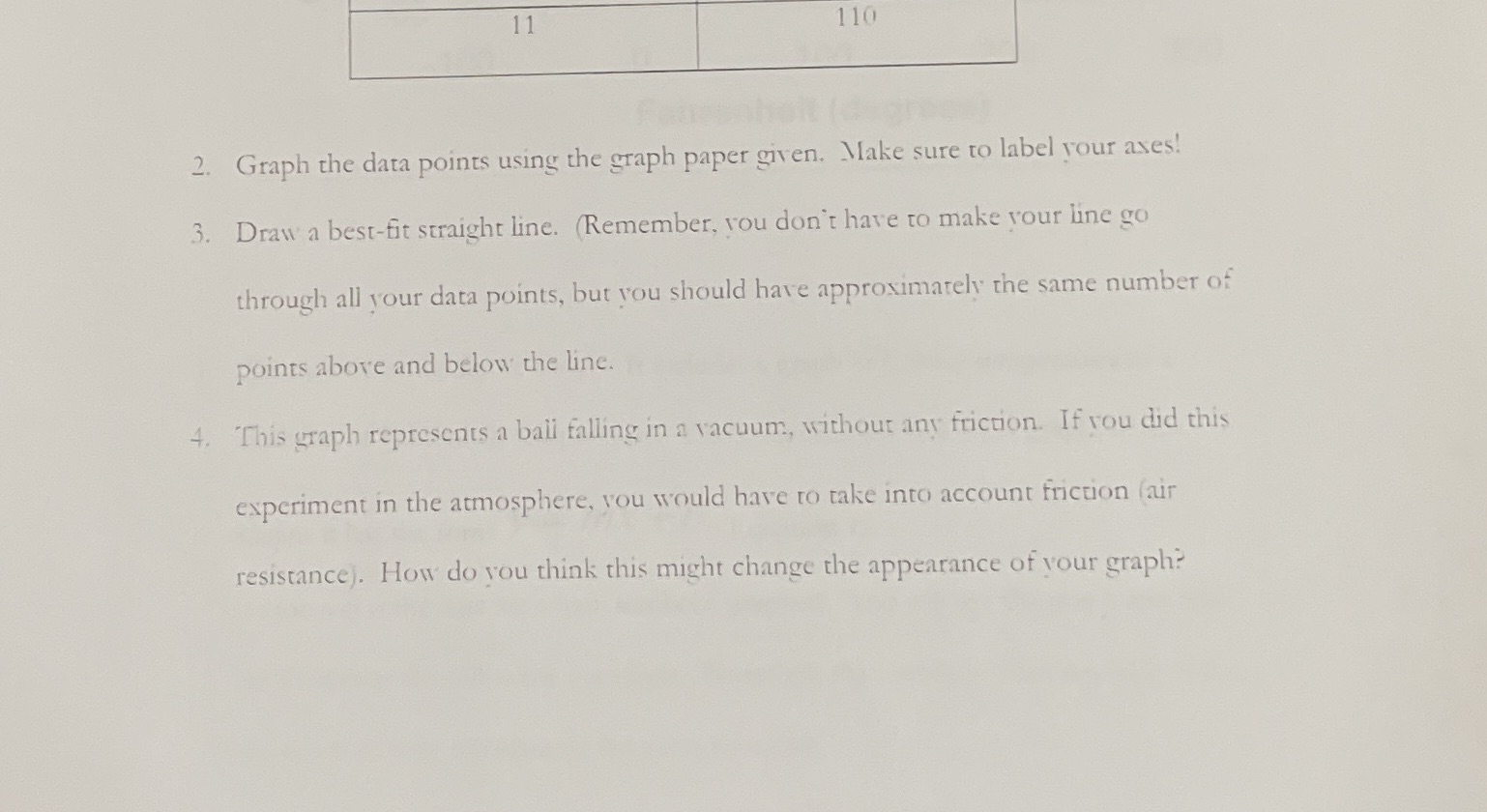
Part 2 1. As you know, experimental data is always subject to random errors. We use a best-fit line to show the trend of our data. For this exercise, imagine an experiment where you measured the speed of a falling ball. We will use the following data: Time of fall (seconds) Speed of ball (m/s) 0 0 1 10 2 19 4 30 38 50 6 61 70 8 79 9 88 10 98 11 110 2. Graph the data points using the graph paper given. Make sure to label your axes! 3. Draw a best-fit straight line. (Remember, you don't have to make your line go through all your data points, but you should have approximately the same number of points above and below the line. 4. This graph represents a ball falling in a vacuum, without any friction. If you did this experiment in the atmosphere, you would have to take into account friction (air resistance). How do you think this might change the appearance of your graph? 110 2. Graph the data points using the graph paper given. Make sure to label your axes! 3. Draw a best-fit straight line. (Remember, you don't have to make your line go through all your data points, but you should have approximately the same number of points above and below the line. 4. This graph represents a ball falling in a vacuum, without any friction. If you did this experiment in the atmosphere, you would have to take into account friction (air resistance). How do you think this might change the appearance of your graph?
Step by Step Solution
There are 3 Steps involved in it

Get step-by-step solutions from verified subject matter experts
 Study Help