







Question: Part 2: Maritime Navigation 31 years ago . . . March 24, 1989 was a day that became headline news across the world, as the
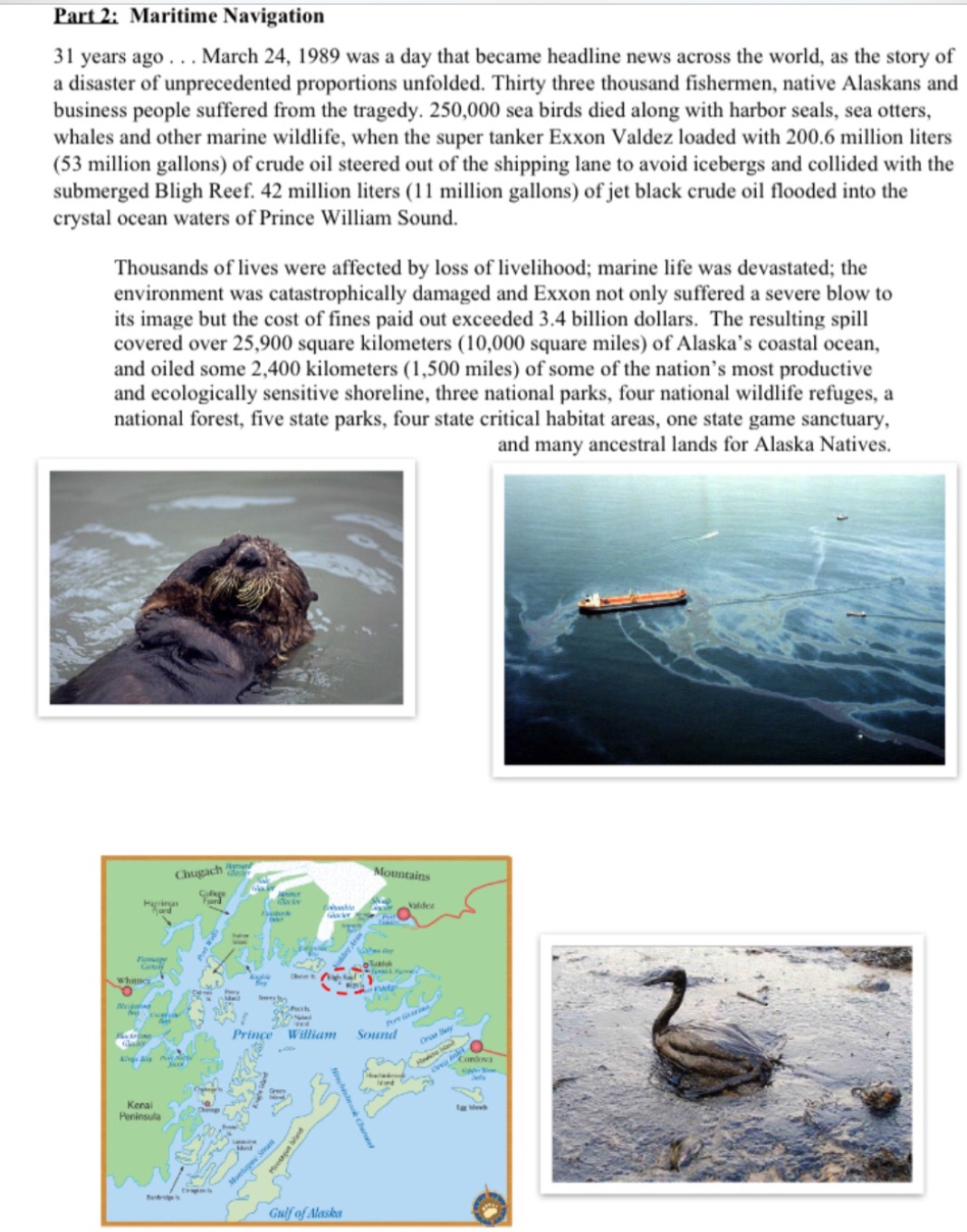 Part 2: Maritime Navigation 31 years ago . . . March 24, 1989 was a day that became headline news across the world, as the story of a disaster of unprecedented proportions unfolded. Thirty three thousand fishermen, native Alaskans and business people suffered from the tragedy. 250,000 sea birds died along with harbor seals, sea otters, whales and other marine wildlife, when the super tanker Exxon Valdez loaded with 200.6 million liters (53 million gallons) of crude oil steered out of the shipping lane to avoid icebergs and collided with the submerged Bligh Reef. 42 million liters (1 1 million gallons) of jet black crude oil flooded into the crystal ocean waters of Prince William Sound. Thousands of lives were affected by loss of livelihood; marine life was devastated; the environment was catastrophically damaged and Exxon not only suffered a severe blow to its image but the cost of fines paid out exceeded 3.4 billion dollars. The resulting spill covered over 25,900 square kilometers (10,000 square miles) of Alaska's coastal ocean, and oiled some 2,400 kilometers (1,500 miles) of some of the nation's most productive and ecologically sensitive shoreline, three national parks, four national wildlife refuges, a national forest, five state parks, four state critical habitat areas, one state game sanctuary, and many ancestral lands for Alaska Natives. Chugach Mountains Valdez Prince William Sound Kenai Peninsula Gulf of Alaska
Step by Step Solution
There are 3 Steps involved in it
1 Expert Approved Answer
Step: 1 Unlock

Question Has Been Solved by an Expert!
Get step-by-step solutions from verified subject matter experts
Step: 2 Unlock
Step: 3 Unlock
 Study Help