







Question: Part 3 . ( 1 0 points ) Next fill in the Winner - Loser table for the adult system. The winners have been changed
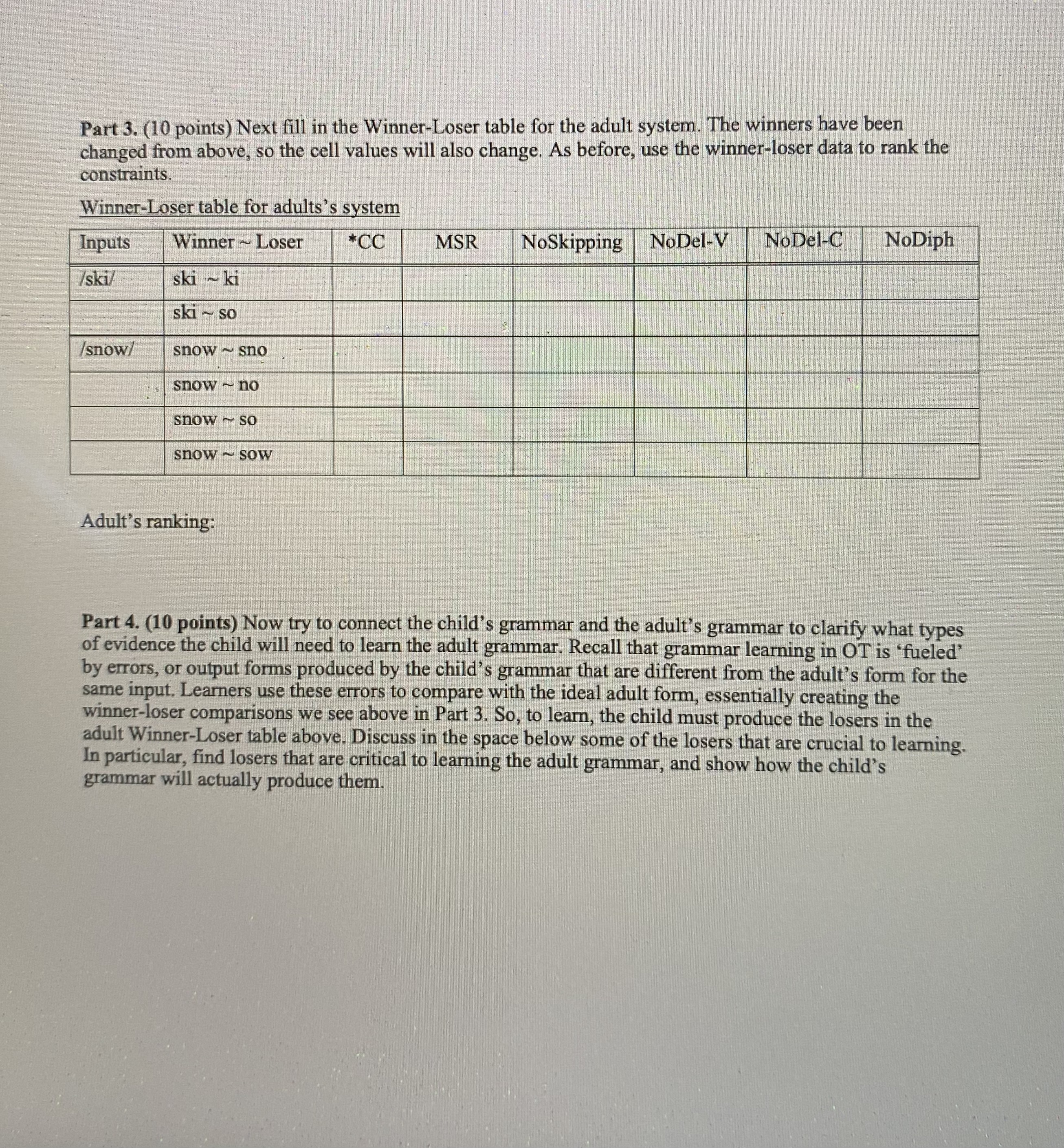
Part points Next fill in the WinnerLoser table for the adult system. The winners have been changed from above, so the cell values will also change. As before, use the winnerloser data to rank the constraints.
WinnerLoser table for adults's system
tableInputsWinner Loser, CCMSRNoSkipping,NoDelVNoDelCNoDiphskiski kiski sosnowsnow sno,,,,,,snow nosnow sosnow sow,,,,,,
Adult's ranking:
Part points Now try to connect the child's grammar and the adult's grammar to clarify what types of evidence the child will need to learn the adult grammar. Recall that grammar learning in OT is 'fueled' by errors, or output forms produced by the child's grammar that are different from the adult's form for the same input. Learners use these errors to compare with the ideal adult form, essentially creating the winnerloser comparisons we see above in Part So to learn, the child must produce the losers in the adult WinnerLoser table above. Discuss in the space below some of the losers that are crucial to learning. In particular, find losers that are critical to learning the adult grammar, and show how the child's grammar will actually produce them.
Step by Step Solution
There are 3 Steps involved in it
1 Expert Approved Answer
Step: 1 Unlock

Question Has Been Solved by an Expert!
Get step-by-step solutions from verified subject matter experts
Step: 2 Unlock
Step: 3 Unlock
 Study Help