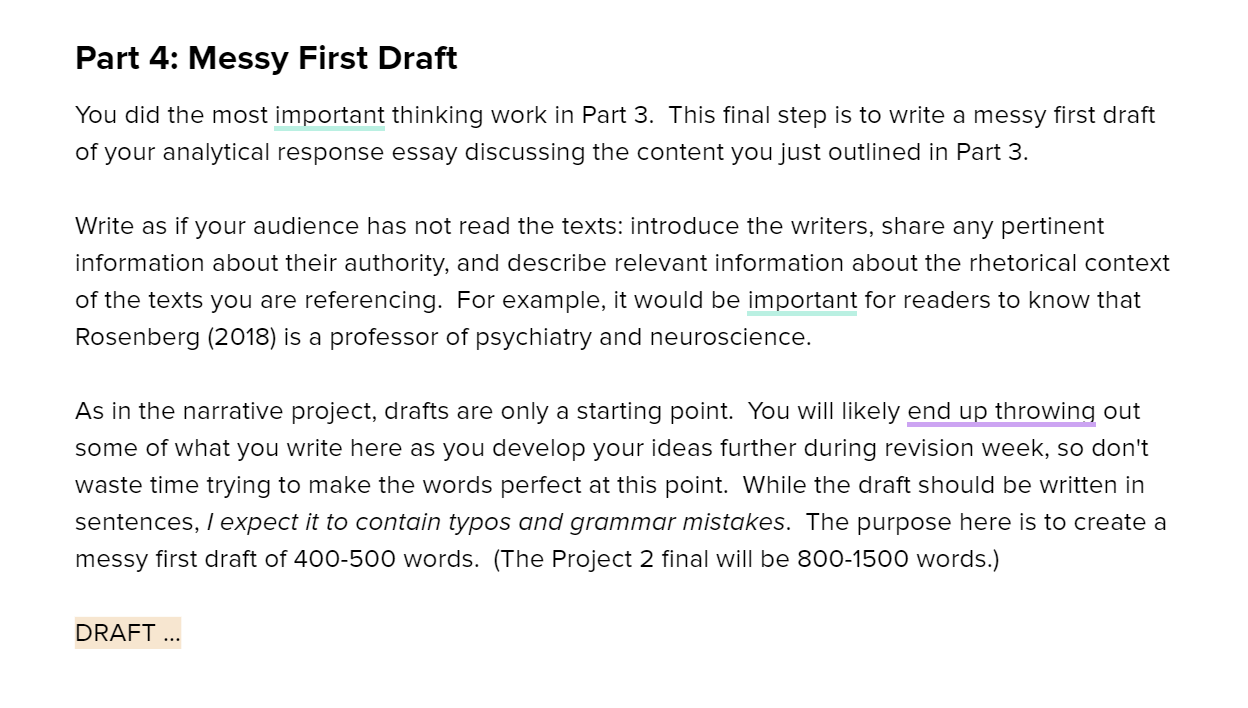
Question: Part 4: Messy First Draft You did the most important thinking work in Part 3. This final step is to write a messy first draft
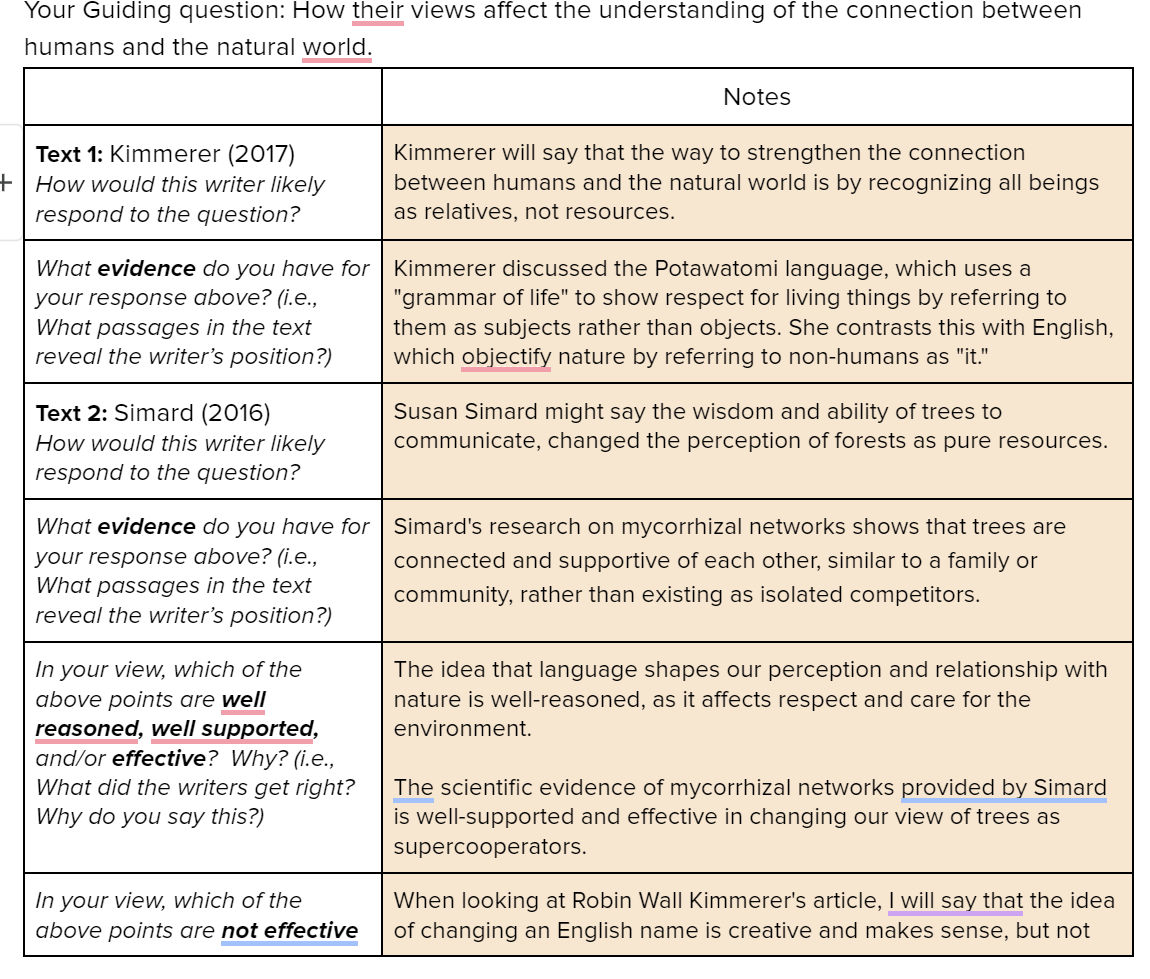
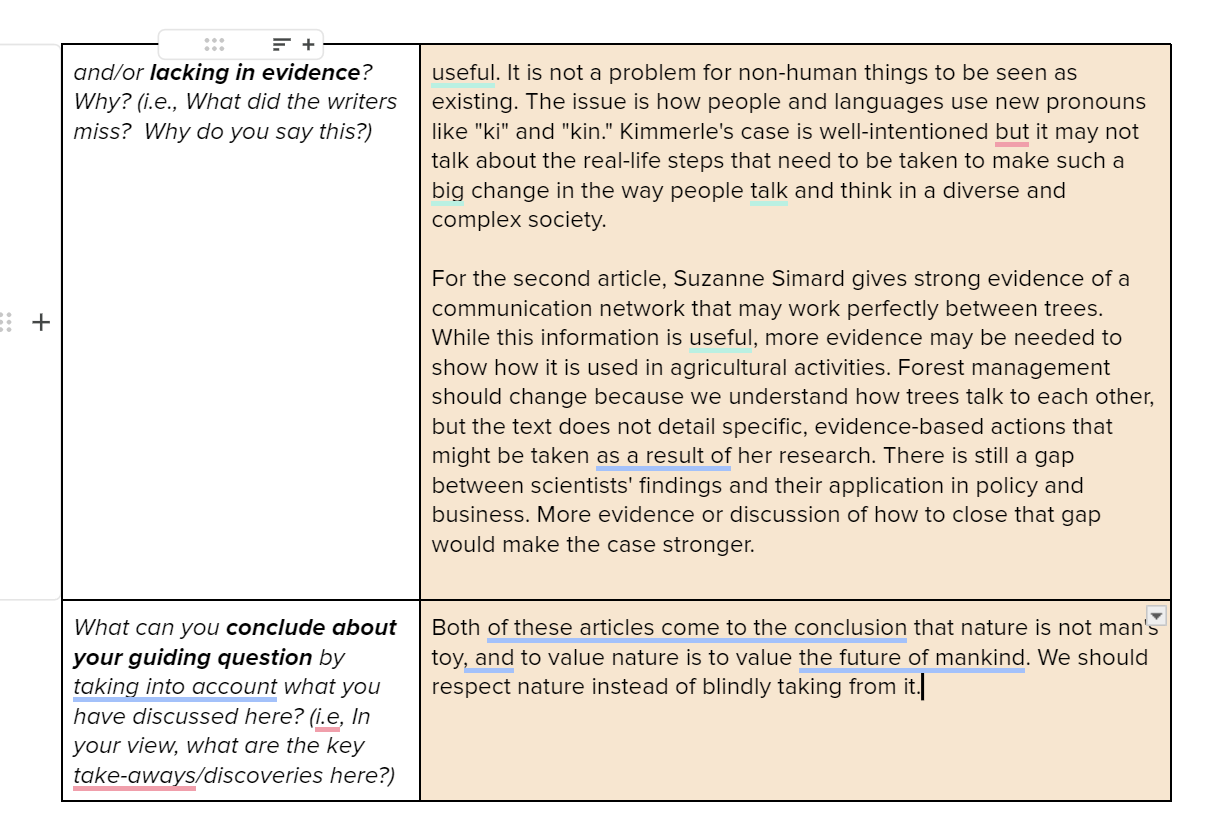
Part 4: Messy First Draft You did the most important thinking work in Part 3. This final step is to write a messy first draft of your analytical response essay discussing the content you just outlined in Part 3. Write as if your audience has not read the texts: introduce the writers, share any pertinent information about their authority, and describe relevant information about the rhetorical context of the texts you are referencing. For example, it would be important for readers to know that Rosenberg (2018) is a professor of psychiatry and neuroscience. As in the narrative project, drafts are only a starting point. You will likely end up throwing out some of what you write here as you develop your ideas further during revision week, so don't waste time trying to make the words perfect at this point. While the draft should be written in sentences, [ expect it to contain typos and grammar mistakes. The purpose here is to create a messy first draft of 400-500 words. (The Project 2 final will be 800-1500 words.) DRAFT ... Your Guiding question: How their views affect the understanding of the connection between humans and the natural world. Text 1: Kimmerer (2017) Kimmerer will say that the way to strengthen the connection How would this writer likely between humans and the natural world is by recognizing all beings respond to the question? as relatives, not resources. What evidence do you have for | Kimmerer discussed the Potawatomi language, which uses a your response above? (i.e., "grammar of life" to show respect for living things by referring to What passages in the text them as subjects rather than objects. She contrasts this with English, reveal the writer's position?) which objectify nature by referring to non-humans as "it." Text 2: Simard (2016) Susan Simard might say the wisdom and ability of trees to How would this writer likely communicate, changed the perception of forests as pure resources. respond to the question? What evidence do you have for | Simard's research on mycorrhizal networks shows that trees are your response above? (i.e., connected and supportive of each other, similar to a family or What passages in the text reveal the writer's position?) community, rather than existing as isolated competitors. In your view, which of the The idea that language shapes our perception and relationship with above points are well nature is well-reasoned, as it affects respect and care for the reasoned, well supported, environment. and/or effective? Why? (i.e., What did the writers get right? | The scientific evidence of mycorrhizal networks provided by Simard Why do you say this?) is well-supported and effective in changing our view of trees as supercooperators. In your view, which of the When looking at Robin Wall Kimmerer's article, | will say that the idea above points are not effective | of changing an English name is creative and makes sense, but not = + and/or lacking in evidence? Why? (i.e., What did the writers miss? Why do you say this?) What can you conclude about your guiding question by taking into account what you have discussed here? (i.e, In your view, what are the key take-aways/discoveries here?) useful. It is not a problem for non-human things to be seen as existing. The issue is how people and languages use new pronouns like "ki" and "kin." Kimmerle's case is well-intentioned but it may not talk about the real-life steps that need to be taken to make such a big change in the way people talk and think in a diverse and complex society. For the second article, Suzanne Simard gives strong evidence of a communication network that may work perfectly between trees. While this information is useful, more evidence may be needed to show how it is used in agricultural activities. Forest management should change because we understand how trees talk to each other, but the text does not detail specific, evidence-based actions that might be taken as a result of her research. There is still a gap between scientists' findings and their application in policy and business. More evidence or discussion of how to close that gap would make the case stronger. Both of these articles come to the conclusion that nature is not man's toy, and to value nature is to value the future of mankind. We should respect nature instead of blindly taking from it.|
Step by Step Solution
There are 3 Steps involved in it
1 Expert Approved Answer
Step: 1 Unlock
Question Has Been Solved by an Expert!
Get step-by-step solutions from verified subject matter experts
Step: 2 Unlock
Step: 3 Unlock
Students Have Also Explored These Related Business Writing Questions!









 Study Help