



Question: Part A: Assuming that Beech Soda uses the FIFO cost flow assumption, the cost of goods sold to be recorded at January 14 is: Part
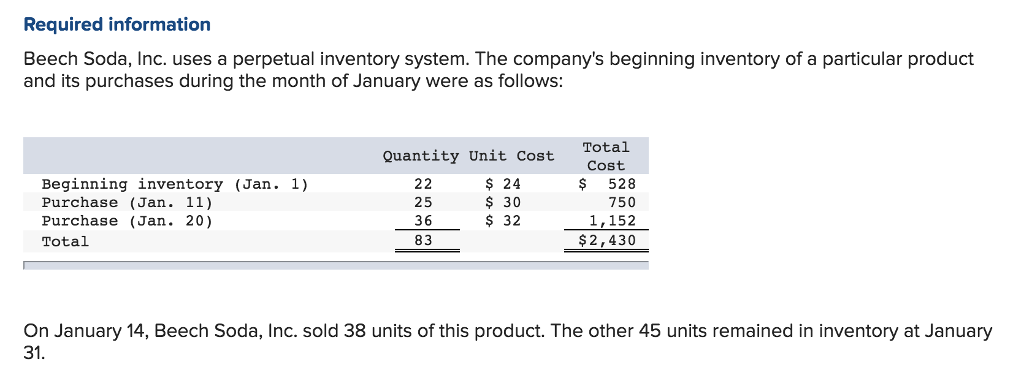
Part A: Assuming that Beech Soda uses the FIFO cost flow assumption, the cost of goods sold to be recorded at January 14 is:
Part B: Assuming that Beech Soda uses the LIFO cost flow assumption, the cost of goods sold to be recorded at January 14 is:
Part C: Assuming that Beech Soda uses the average cost flow assumption, the cost of goods sold to be recorded at January 14 is: (Round your intermediate calculation to one decimal place and final answer to the nearest cent).
Part D: Assuming that Beech Soda uses the FIFO cost flow assumption, the 45 units of this product in inventory at January 31 have a total cost of:
Part E: Assuming that Beech Soda uses the LIFO cost flow assumption, the 45 units of this product in inventory at January 31 have a total cost of: Please show steps, no handwritten or photos as I can not see them. Thank you!
Required information Beech Soda, Inc. uses a perpetual inventory system. The company's beginning inventory of a particular product and its purchases during the month of January were as follows: Total Cost $ 528 Quantity Unit Cost eginning inventory (Jan. 1) Purchase (Jan. 11) Purchase (Jan. 20) Total 25 36 83 $ 24 $ 30 $ 32 750 1,152 $2,430 On January 14, Beech Soda, Inc. sold 38 units of this product. The other 45 units remained in inventory at January 31
Step by Step Solution
There are 3 Steps involved in it

Get step-by-step solutions from verified subject matter experts