Question: part d is a yes or no answer A process that is couldered to be in control measures an Ingredient in ounce. Below are the

part d is a yes or no answer A process that is
part d is a yes or no answer A process that is part d is a yes or no answer
part d is a yes or no answer A process that is
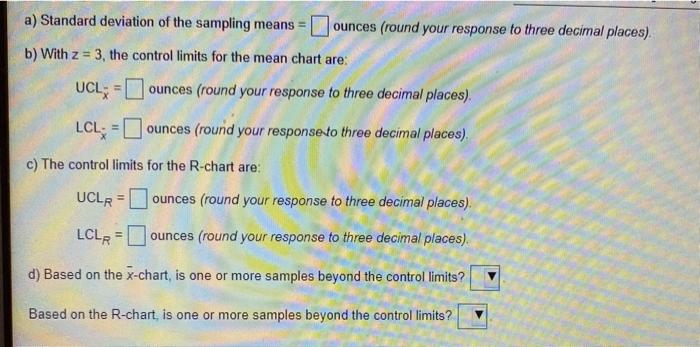
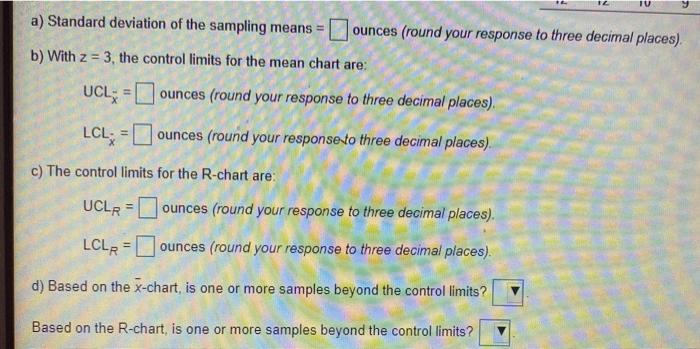
A process that is couldered to be in control measures an Ingredient in ounce. Below are the last 10 cumplen (each of size 5) taken the population proceso standard deviation la 164 Samples 6 8 9 1 9 2 14 12 12 14 12 8 9 3 14 10 10 9 10 4 11 11 10 9 9 5 12 9 9 10 9 7 10 11 10 10 9 9 11 8 14 15 7 11 7 8 12 11 9 10 11 11 8 9 13 12 B 1 TU a) Standard deviation of the sampling means = ounces (round your response to three decimal places). b) With z = 3, the control limits for the mean chart are: UCL; -ounces (round your response to three decimal places). LCL-ounces (round your response to three decimal places). c) The control limits for the R-chart are: UCLRounces (round your response to three decimal places). LCLR ounces (round your response to three decimal places). d) Based on the x-chart, is one or more samples beyond the control limits? Based on the R-chart, is one or more samples beyond the control limits? a) Based on the x-chart, is one or more samples beyond the control limits? Based on the R-chart, is one or more samples beyond the control limits? Enter your answer in each of the answer boxes. RU 5 9 4 11 10 Aprocess that is considered to be in control measures an ingredient in ounces Below are the last 10 samples (each of siren = 5) takon The population process standard deviation is 164 Samples 1 2 3 14 14 12 8 11 12 10 11 9 8 12 10 9 9 12 9 9 11 11 9 12 9 9 7 a) Standard deviation of the sampling means = Ounces (round your response to three decimal place 9 8 9 9 10 9 7 10 11 10 14 15 7 11 8 10 9 10 14 12 10 11 8 9 13 a) Standard deviation of the sampling means = ounces (round your response to three decimal places). b) With z = 3, the control limits for the mean chart are: UCL; -ounces (round your response to three decimal places). LCL: -ounces (round your response to three decimal places) c) The control limits for the R-chart are: UCLR-O ounces (round your response to three decimal places). LCLR = ounces (round your response to three decimal places) d) Based on the x-chart, is one or more samples beyond the control limits ? Based on the R-chart, is one or more samples beyond the control limits

Step by Step Solution

There are 3 Steps involved in it

1 Expert Approved Answer
Step: 1 Unlock blur-text-image

Question Has Been Solved by an Expert!

Get step-by-step solutions from verified subject matter experts

Step: 2 Unlock
Step: 3 Unlock

Students Have Also Explored These Related General Management Questions!