Question: PART E Buffers To illustrate how buffers affect the operational performance of a process with variability, we return to the scenario from Part D: a

PART E

Buffers

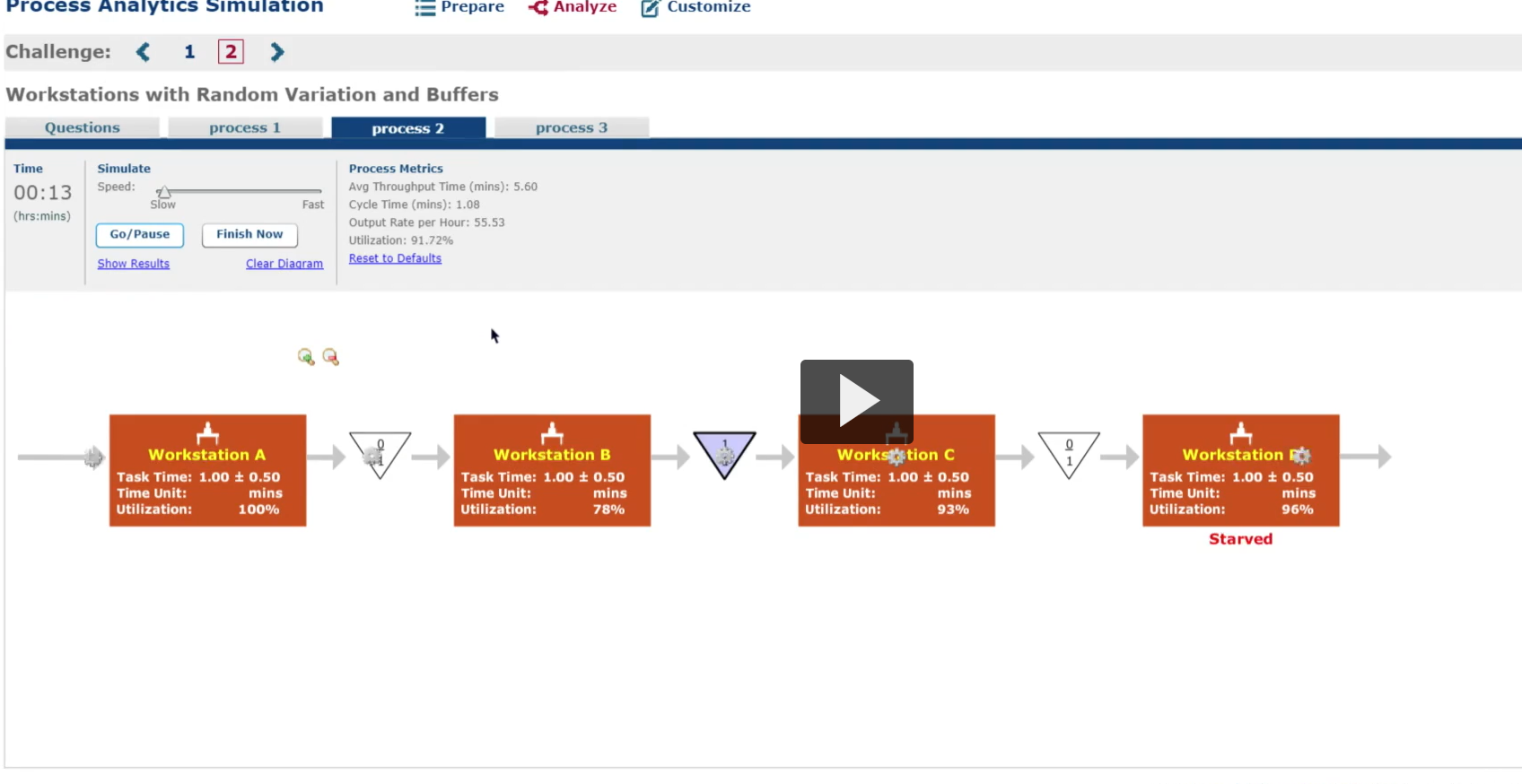
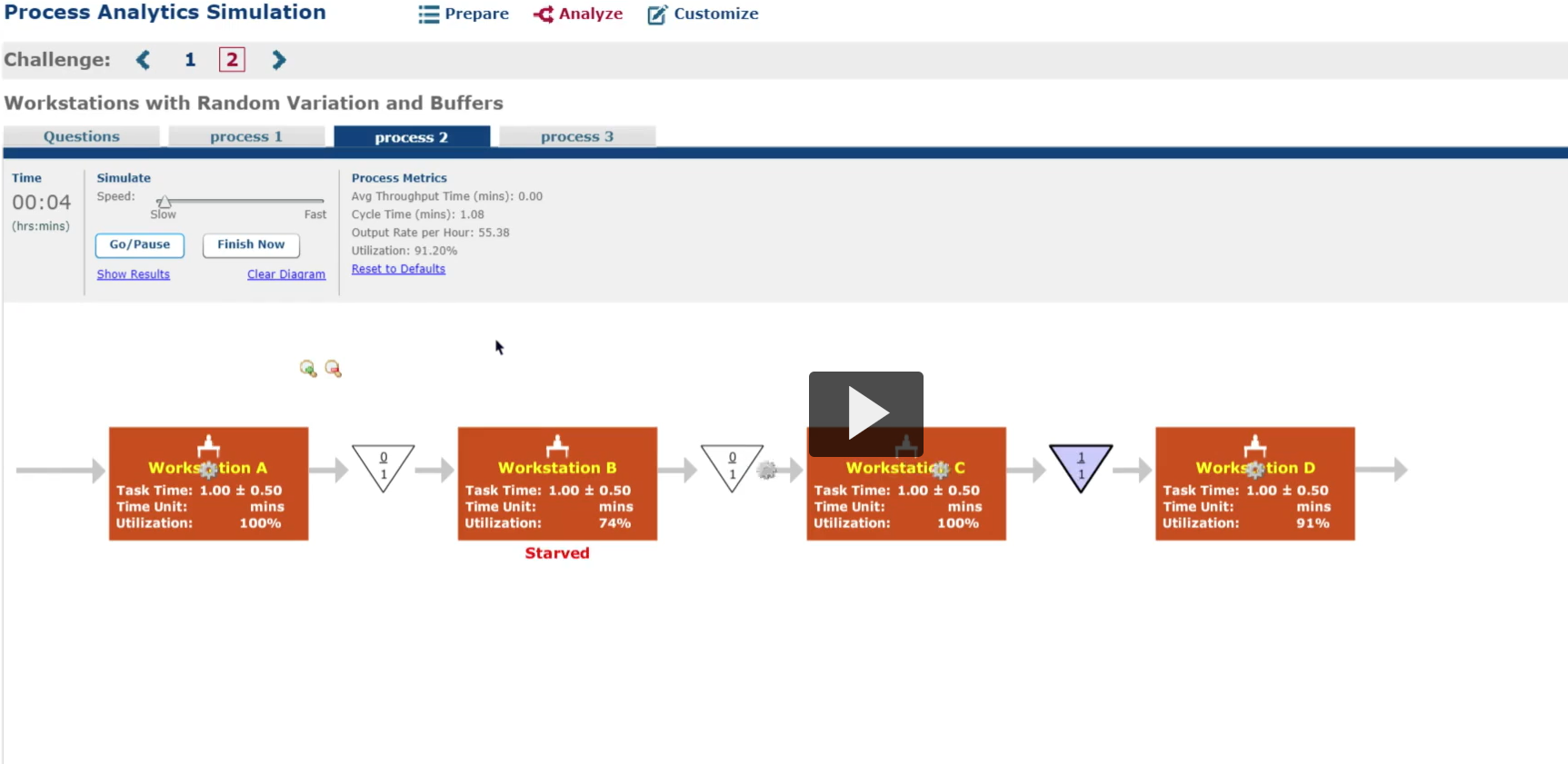
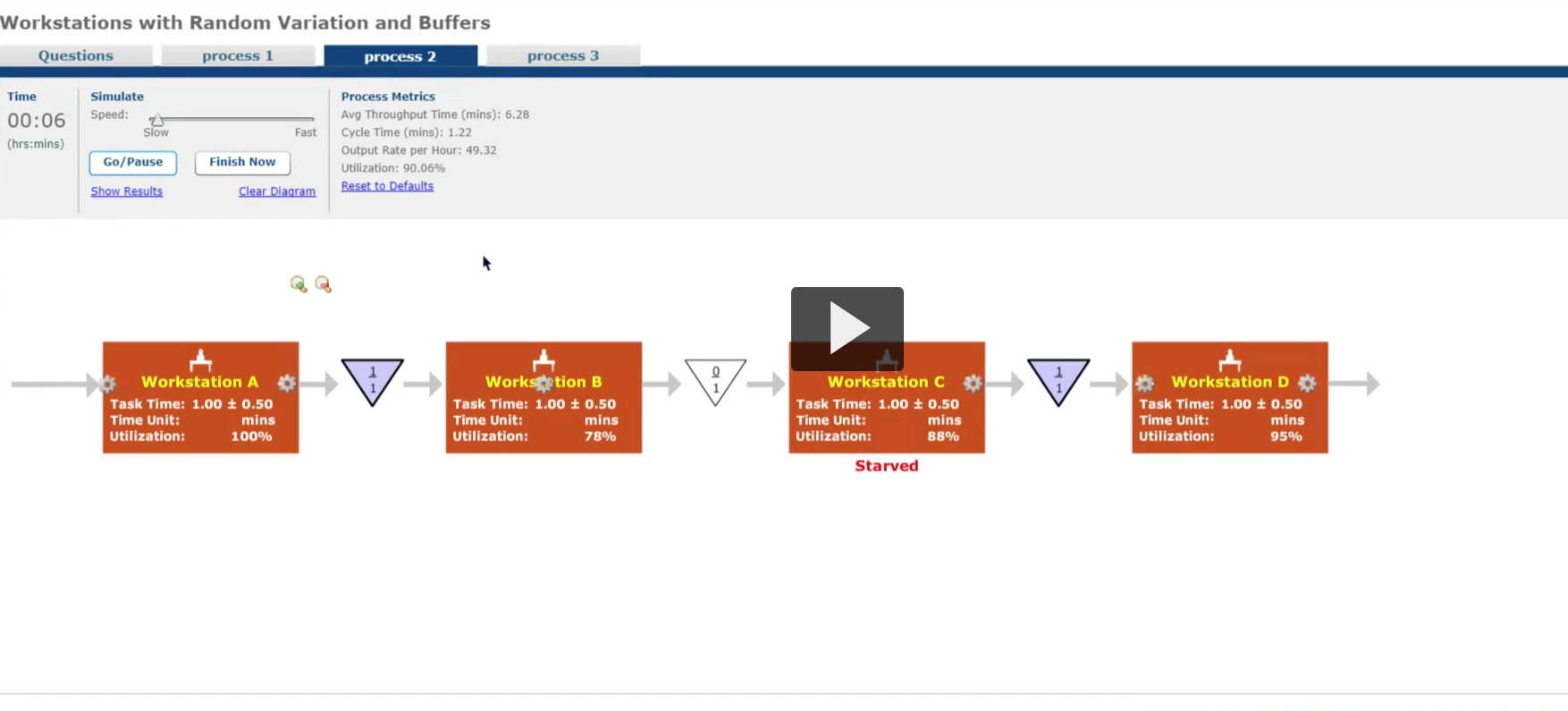
To illustrate how buffers affect the operational performance of a process with variability, we return to the scenario from Part D: a four-workstation process where the processing time of each workstation varies along a uniform distribution from 0.5 to 1.5 minutes. In this instance, however, a buffer that can hold one unit of work-in-process inventory is placed between the four workstations. From your work in Part B, review the workstation utilization and line output for the 480-minute period. How do you anticipate the buffer will affect the utilization of each workstation and the line output? After thinking about these questions, click start to play the video and observe the line output and workstations' utilization.

8. Based on these results, how do line output, throughput time, and workstations' utilization differ from those for the process in Part B (which is otherwise the same) when we add a one-unit buffer? Why?
PART E Buffers To illustrate how buffers affectPART E Buffers To illustrate how buffers affectPART E Buffers To illustrate how buffers affect
Process Analytics Simulation Prepare - Analyze [ Customize Challenge: Workstations with Random Variation and Buffers Questions process 1 process 2 process 3 Time Simulate Process Metrics 00:04 Speed: Avg Throughput Time (mins): 0.00 Slow Fast Cycle Time (mins): 1.08 (hrs:mins) Output Rate per Hour: 55.38 Go/Pause Finish Now Utilization: 91.20% Show Results Clear Diagram Reset to Defaults QQ Workstation A Workstation B - 10 Workstations C Workstation D Task Time: 1.00 # 0.50 Task Time: 1.00 + 0.50 Task Time: 1.00 + 0.50 Task Time: 1.00 + 0.50 Time Unit: mins Time Unit: mins Time Unit: mins Time Unit: mins Utilization: 100% Utilization: 74% Utilization: 100% Utilization: 91% StarvedWorkstations with Random Variation and Buffers Questions process 1 process 2 process 3 Time Simulate Process Metrics 00:06 Speed: Avg Throughput Time (mins): 6.28 Slow Fast Cycle Time (mins): 1.22 (hrs:mins) Output Rate per Hour: 49.32 Go/Pause Finish Now Utilization: 90.06% Show Results Clear Diagram Reset to Defaults Workstation A 1 Workstation B Workstation C Workstation D Task Time: 1.00 + 0.50 Task Time: 1.00 + 0.50 Task Time: 1.00 + 0.50 Task Time: 1.00 + 0.50 Time Unit: mins Time Unit: mins Time Unit: mins Time Unit: mins 100% Utilization: 78% Utilization: 88% Utilization: 95% Utilization: StarvedProcess Analytics Simulation : Prepare Analyze Customize Challenge: 1 2 > Workstations with Random Variation and Buffers Questions process 1 process 2 process 3 Time Simulate Process Metrics 00:13 Speed: Avg Throughput Time (mins): 5.60 Slow Fast Cycle Time (mins): 1.08 (hrs:mins) Output Rate per Hour: 55.53 Go/Pause Finish Now Utilization: 91.72% Show Results Clear Diagram Reset to Defaults QQ Workstation A Workstation B Workstation C Workstation Task Time: 1.00 # 0.50 Task Time: 1.00 + 0.50 Task Time: 1.00 + 0.50 Task Time: 1.00 + 0.50 Time Unit: mins Time Unit: mins Time Unit: mins Time Unit: mins Utilization: 100% Utilization: 78% Utilization: 93% Utilization: 96% Starved

Step by Step Solution

There are 3 Steps involved in it

1 Expert Approved Answer
Step: 1 Unlock blur-text-image
Question Has Been Solved by an Expert!

Get step-by-step solutions from verified subject matter experts

Step: 2 Unlock
Step: 3 Unlock

Students Have Also Explored These Related General Management Questions!