







Question: Part I Pointers to variables or places RAM (Random Access Memory) are memory addresses-the address of the byte of memory to which the pointer is
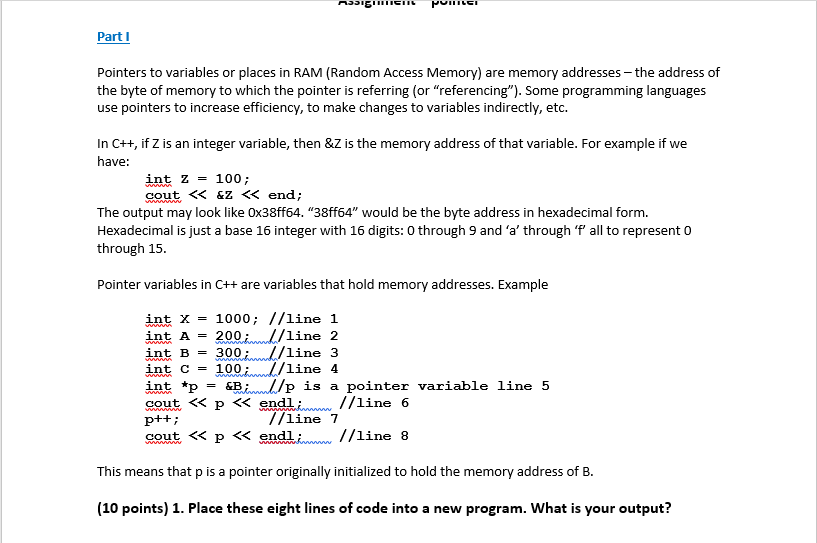
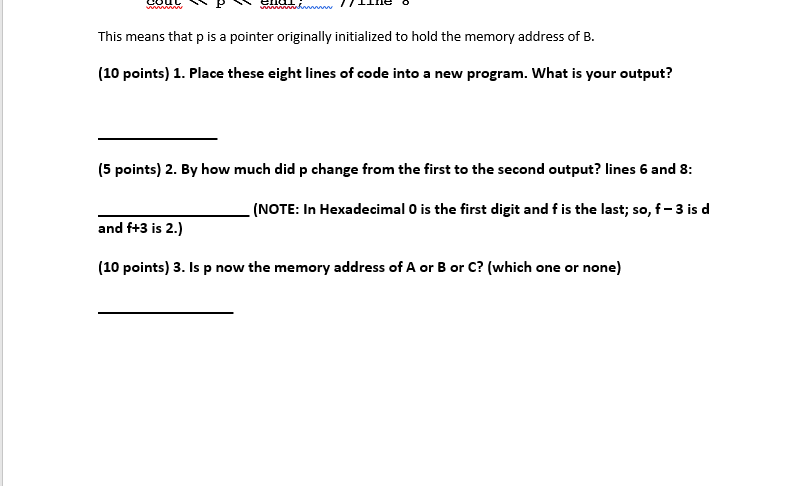
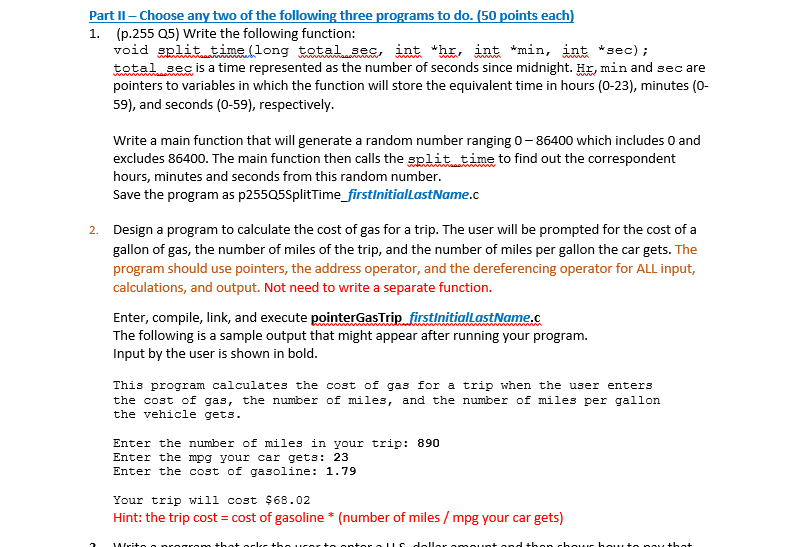
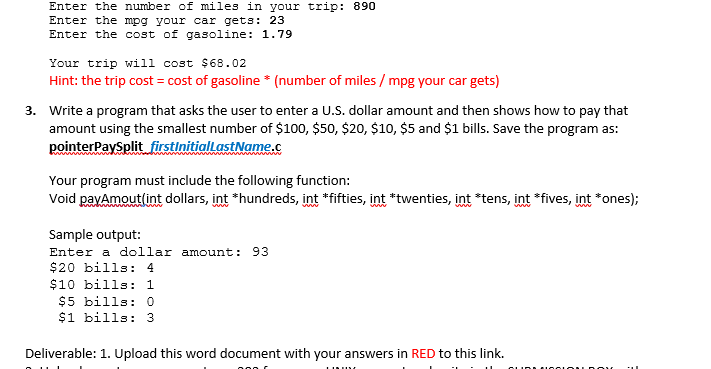
Part I Pointers to variables or places RAM (Random Access Memory) are memory addresses-the address of the byte of memory to which the pointer is referring (or "referencing"). Some programming languages use pointers to increase efficiency, to make changes to variables indirectly, etc. n C++, if Z is an integer variable, then &Z is the memory address of that variable. or example if we F have: int 100 cout KK &z end; The output may look like Ox38ff64. "38ff64" would be the byte address in hexadecimal form. Hexadecimal is just a base 16 integer with 16 digits: 0 through 9 and 'a' through 'f all to represent 0 through 15. Pointer variables in C++ are variables that hold memory addresses. Example int X 1000 line 1 int A 200 line 2 int B 300 im//line 3 int C 100 in line 4 p is a pointer variable line 5 int end //line 6 cout p p++ cout p endl //line 8 This means that p is a pointer originally initialized to hold the memory address of B (10 points) 1. Place these eight lines of code into a new program. What is your output
Step by Step Solution
There are 3 Steps involved in it

Get step-by-step solutions from verified subject matter experts
 Study Help