



Question: Part | Lab 10: Reflection and Refraction of Light Experiment |: Snell's Law Acrylic rhombus with ray undergoing refraction. Angle of incidence @ Angle of
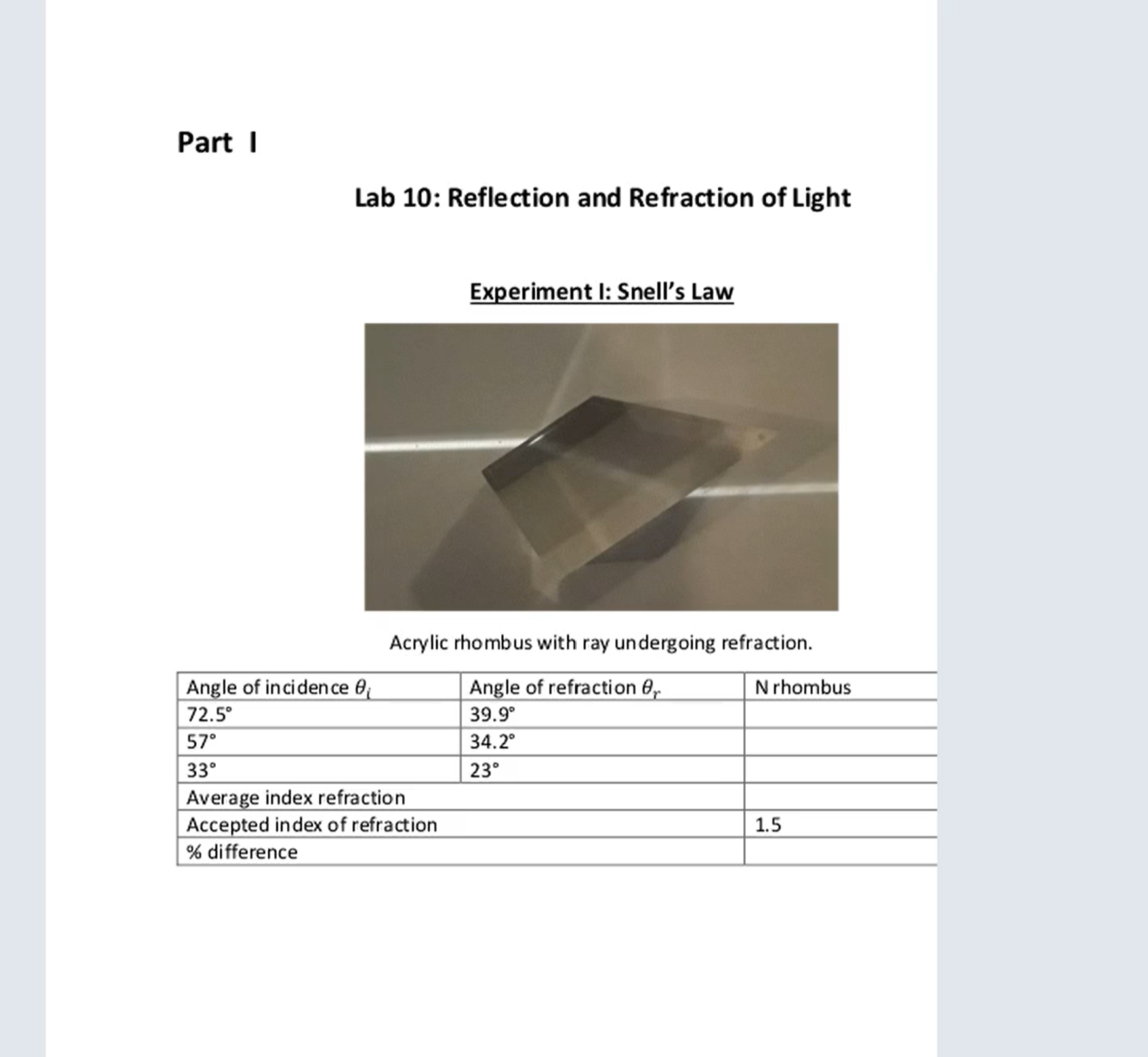
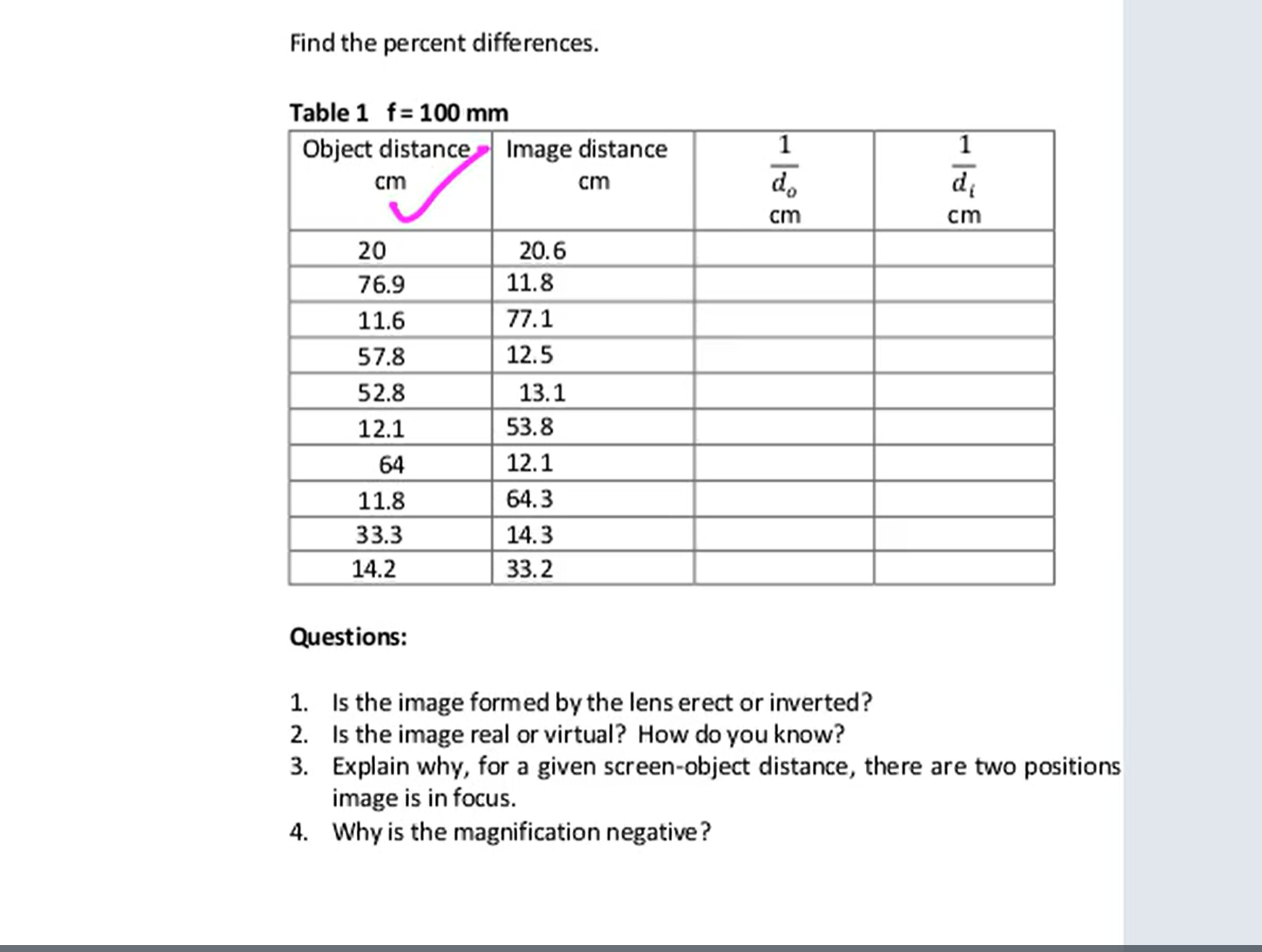
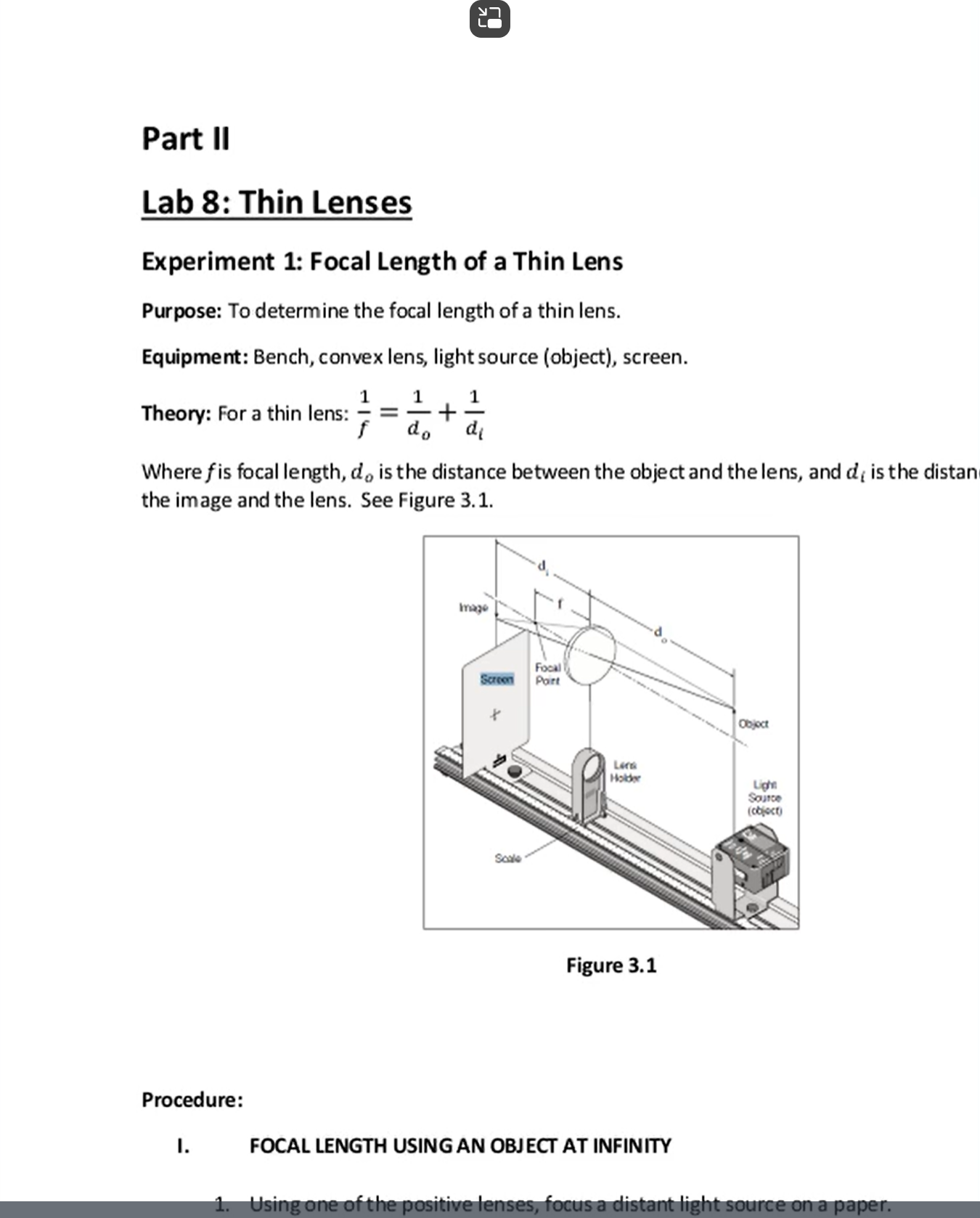
Part | Lab 10: Reflection and Refraction of Light Experiment |: Snell's Law Acrylic rhombus with ray undergoing refraction. Angle of incidence @ Angle of refraction @ N rhombus 72.5 57 Average index refraction Accepted index of refraction 1.5 % difference Find the percent differences. Tablel f=100 mm Questions: 1. Is the image formed by the lens erect or inverted? 2. Is the image real or virtual? How do you know? 3. Explain why, for a given screen-object distance, there are two positions image is in focus. 4. Why is the magnification negative? | L Part I Lab 8: Thin Lenses Experiment 1: Focal Length of a Thin Lens Purpose: To determine the focal length of a thin lens. Equipment: Bench, convex lens, light source (object), screen. 1 1 Theory: For a thin lens: = = + T~ f d, dq Where fis focal length, d,, is the distance between the object and thelens, and d; is the distan the image and the lens. See Figure 3.1. Figure 3.1 Procedure: I. FOCAL LENGTH USING AN OBJECT AT INFINITY
Step by Step Solution
There are 3 Steps involved in it

Get step-by-step solutions from verified subject matter experts