







Question: part one part two part three Introduction to database please, answer the all questions. Module 3: Norm alis atio n Module Q uestio ns Question
part one
part two
part three Introduction to database
please, answer the all questions.
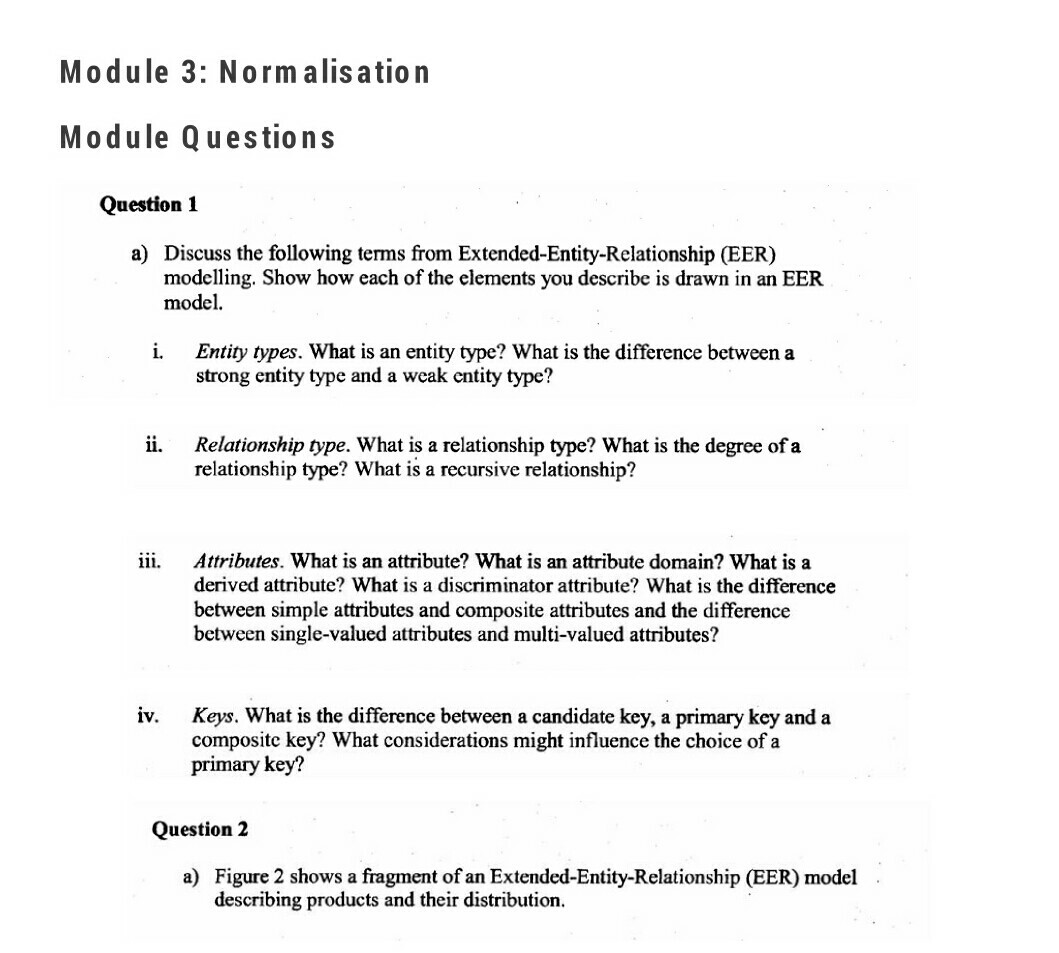
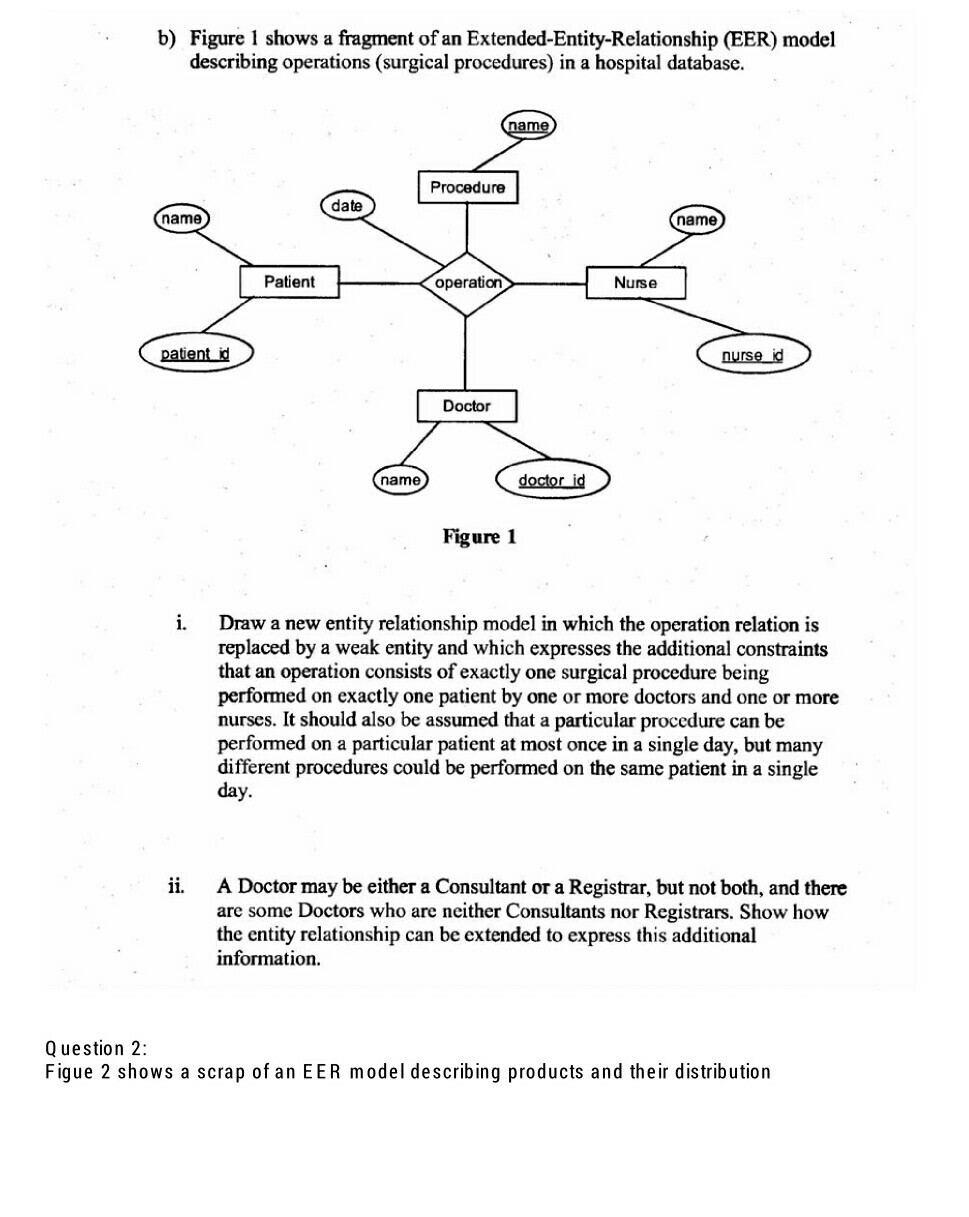
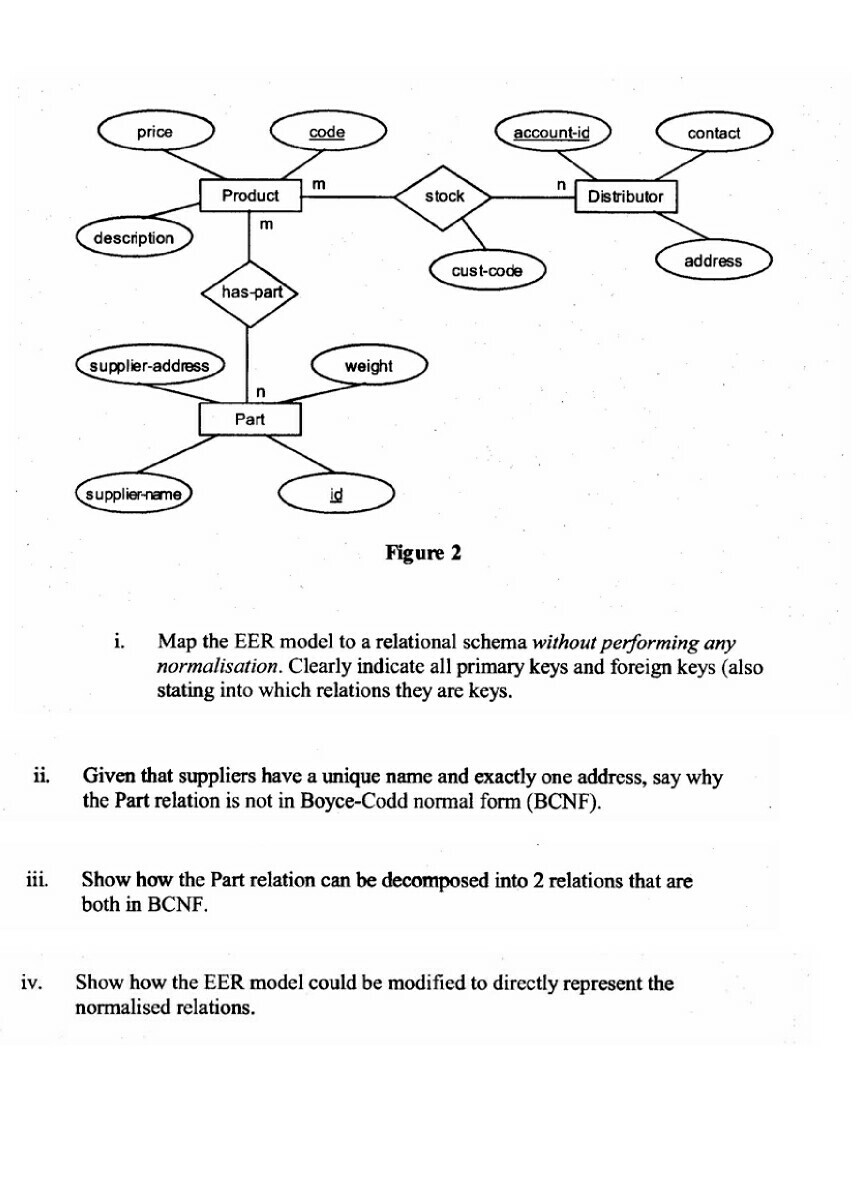
Module 3: Norm alis atio n Module Q uestio ns Question 1 Discuss the following terms from Extended-Entity-Relationship (EER) modelling. Show how each of the elements you describe is drawn in an EER model a) Entity types. What is an entity type? What is the difference betweena strong entity type and a weak cntity type? i. ii. Relationship type. What is a relationship type? What is the degree of a relationship type? What is a recursive relationship? iii. Attributes. What is an attribute? What is an attribute domain? What is a derived attribute? What is a discriminator attribute? What is the difference between simple attributes and composite attributes and the difference between single-valued attributes and multi-valued attributes? iv. Keys. What is the difference between a candidate key, a primary key and a composite key? What considerations might influence the choice of a primary key? Question 2 a) Figure 2 shows a fragment of an Extended-Entity-Relationship (EER) model describing products and their distribution
Step by Step Solution
There are 3 Steps involved in it

Get step-by-step solutions from verified subject matter experts
 Study Help