







Question: Part-1 Q1: Discuss in detail: Q2 Language Processing System. Phases of Compilation. How Regular Expressions (R.E) along with NFA/DFA implements lexical analyzer (i.e. Token generation/
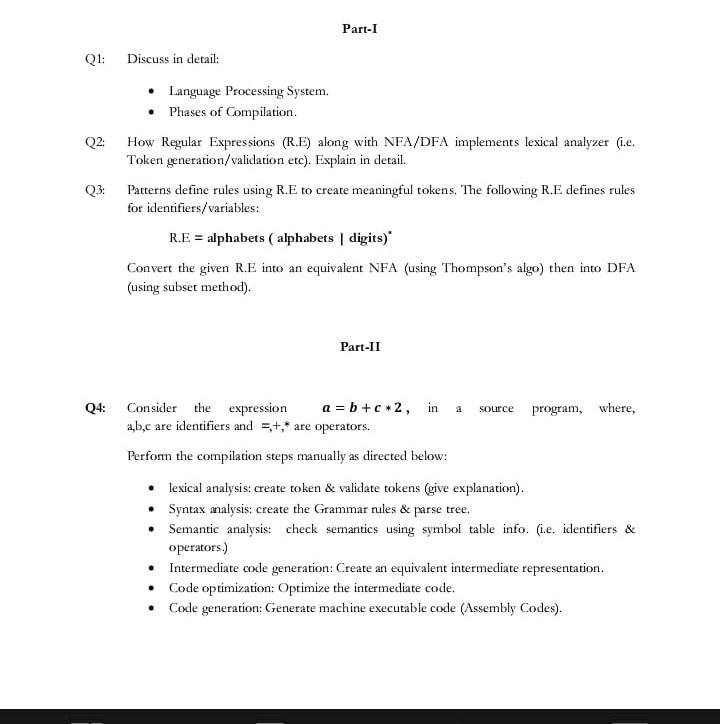
Part-1 Q1: Discuss in detail: Q2 Language Processing System. Phases of Compilation. How Regular Expressions (R.E) along with NFA/DFA implements lexical analyzer (i.e. Token generation/ validation etc). Explain in detail. Patterns define rules using R.E to create meaningful tokens. The following R.E defines rules for identifiers/variables: RE = alphabets ( alphabets digits) Convert the given R.E into an equivalent NFA (using Thompson's algo) then into DFA (using subset method). Part-II Source Q4: Consider the expression a=b+c+2, in 1 program, where, a,b,c are identifiers and 3+,* are operators. Perfom the compilation steps manually as directed below: lexical analysis: create token & validate tokens (give explanation). Syntax analysis: create the Grammar rules & parse tree, Semantic analysis: check semantics using symbol table info. (i.e. identifiers & operators.) Intermediate code generation: Create an equivalent intermediate representation. Code optimization: Optimize the intermediate code. Code generation: Generate machine executable code (Assembly Codes)
Step by Step Solution
There are 3 Steps involved in it

Get step-by-step solutions from verified subject matter experts
 Study Help