



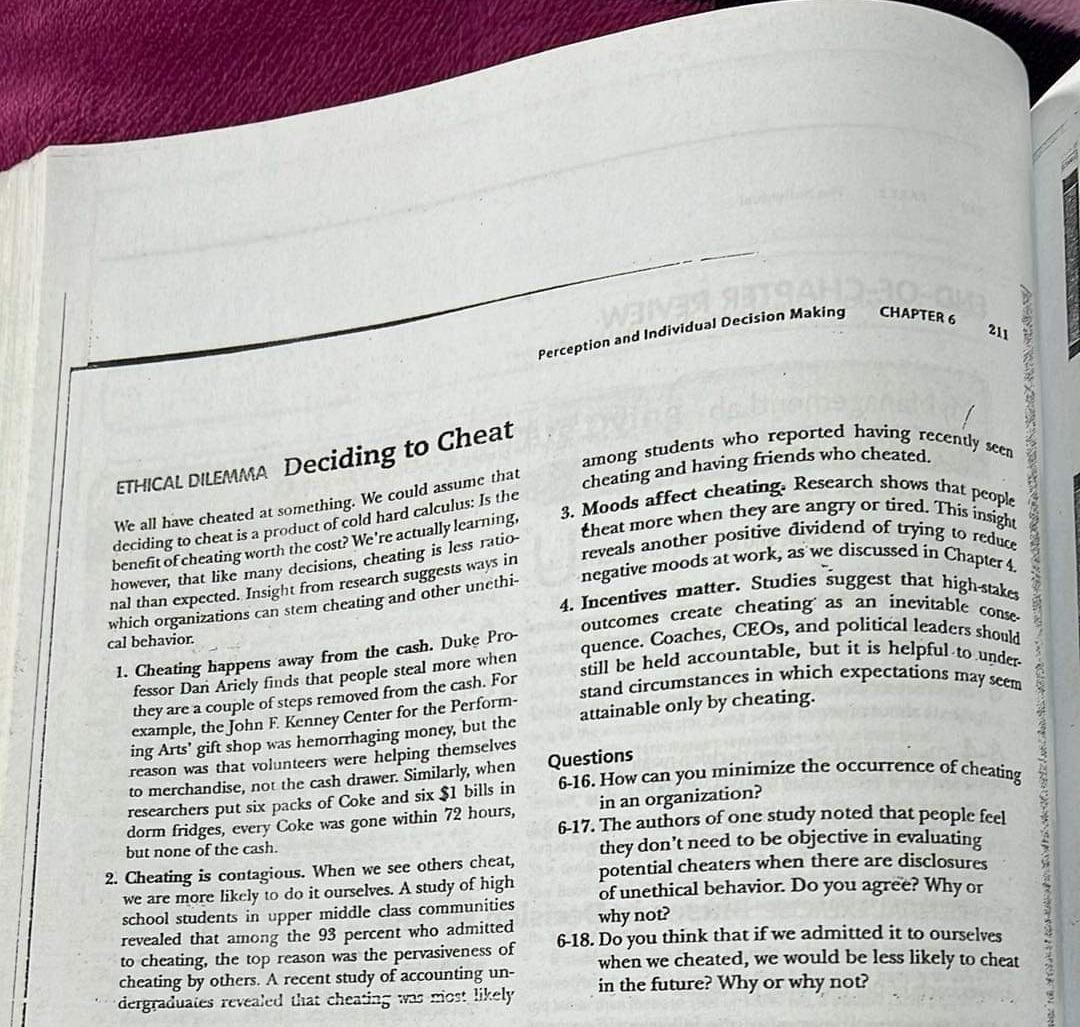
Question: perception and Individual Decision Making CHAPTER 6 ETHICAL DILEMMA Deciding to Cheat We all have cheated at something. We could assume that deciding to cheat
perception and Individual Decision Making
CHAPTER
ETHICAL DILEMMA Deciding to Cheat
We all have cheated at something. We could assume that deciding to cheat is a product of cold hard calculus: Is the benefit of cheating worth the cost? We're actually learning, however, that like many decisions, cheating is less rational than expected. Insight from research suggests ways in which organizations can stem cheating and other unethical behavior.
Cheating happens away from the cash. Duke Professor Dan Aricly finds that people steal more when they are a couple of steps removed from the cash. For example, the John F Kenney Center for the Performing Arts' gift shop was hemorrhaging money, but the reason was that volunteers were helping themselves to merchandise, not the cash drawer. Similarly, when researchers put six packs of Coke and six $ bills in dorm fridges, every Coke was gone within hours, but none of the cash.
Cheating is contagious. When we see others cheat, we are more likely to do it ourselves. A study of high school students in upper middle class communities revealed that among the percent who admitted to cheating, the top reason was the pervasiveness of cheating by others. A recent study of accounting undergraduaies reveaied that cheating wa most likely
among students who reported having recently seen cheating and having friends who cheated.
Moods affect cheating Research shows that people theat more when they are angry or tired. This insight reveals another positive dividend of trying to reduce negative moods at work; as we discussed in Chapter
Incentives matter. Studies suggest that highstakes outcomes create cheating as an incvitable conse. quence. Coaches, CEOs, and political leaders should still be held accountable, but it is helpful to understand circumstances in which expectations may seem attainable only by cheating.
Questions
How can you minimize the occurrence of cheating in an organization?
The authors of one study noted that people feel they don't need to be objective in evaluating potential cheaters when there are disclosures of unethical behavior. Do you agree? Why or why not?
Do you think that if we admitted it to ourselves when we cheated, we would be less likely to cheat in the future? Why or why not?
Step by Step Solution
There are 3 Steps involved in it
1 Expert Approved Answer
Step: 1 Unlock

Question Has Been Solved by an Expert!
Get step-by-step solutions from verified subject matter experts
Step: 2 Unlock
Step: 3 Unlock