







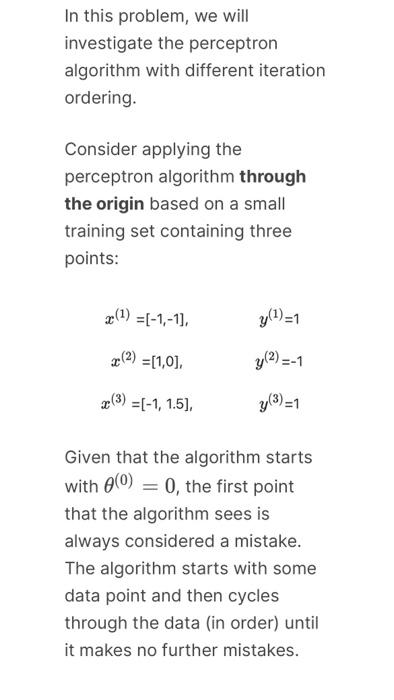
Question: perceptron mistakes Consider applying the perceptron algorithm through the origin based on a small training set containing three points: x(1)x(2)x(3)=[1,1.5],=[1,1],=[1,0],y(3)=1y(1)=1y(2)=1 Given that the algorithm starts
![on a small training set containing three points: x(1)x(2)x(3)=[1,1.5],=[1,1],=[1,0],y(3)=1y(1)=1y(2)=1 Given that the](https://s3.amazonaws.com/si.experts.images/answers/2024/09/66e097bfc3a0d_94366e097bf44245.jpg)
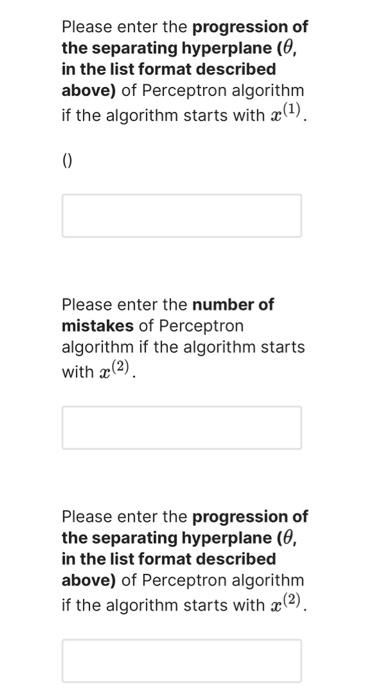
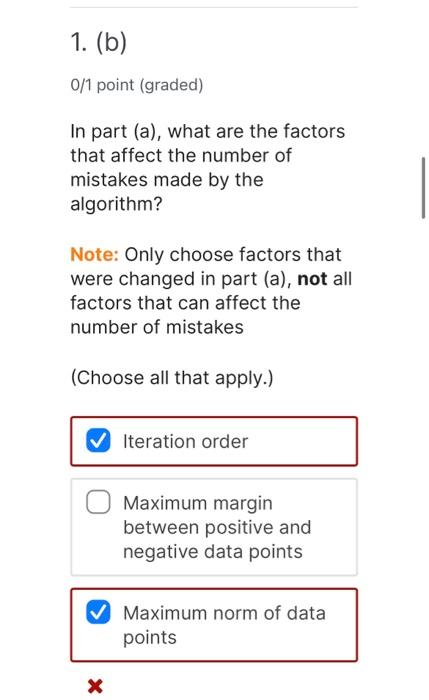
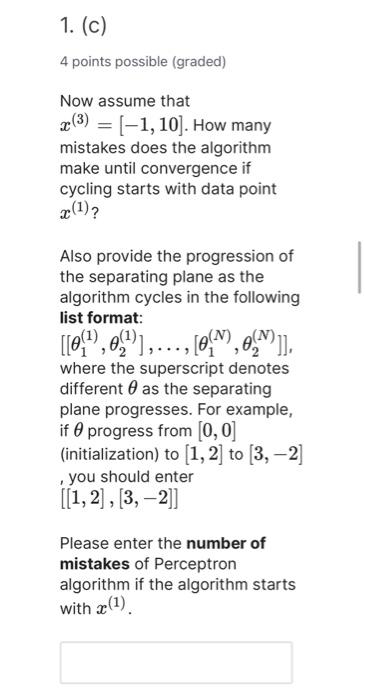
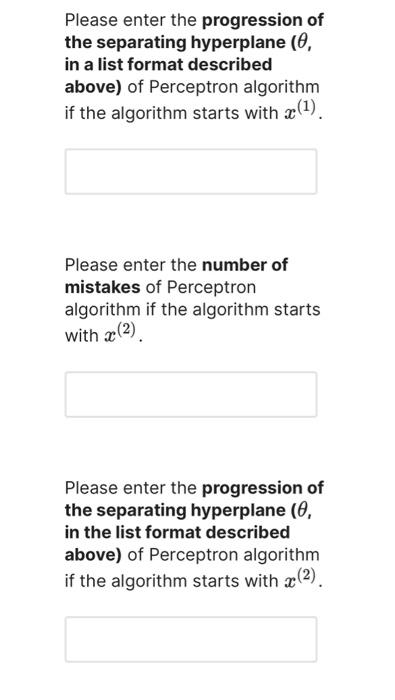
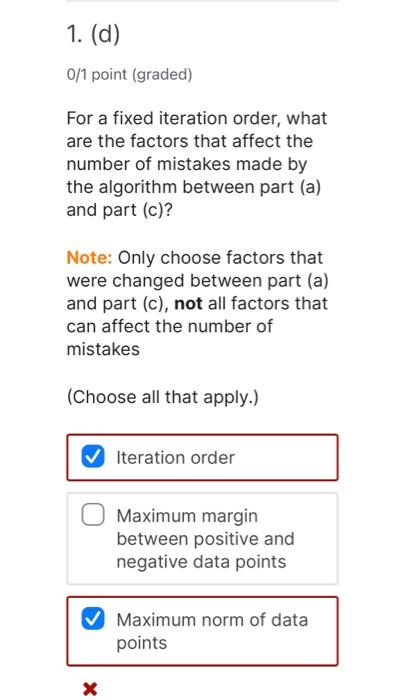
Consider applying the perceptron algorithm through the origin based on a small training set containing three points: x(1)x(2)x(3)=[1,1.5],=[1,1],=[1,0],y(3)=1y(1)=1y(2)=1 Given that the algorithm starts with (0)=0, the first point that the algorithm sees is always considered a mistake. The algorithm starts with some data point and then cycles through the data (in order) until it makes no further mistakes. 4 points possible (graded) How many mistakes does the algorithm make until convergence if the algorithm starts with data point x(1) ? How many mistakes does the algorithm make if it starts with data point x(2) ? Also provide the progression of the separating plane as the algorithm cycles in the following list format: [[1(1),2(1)],,[1(N),2(N)]], where the superscript denotes different as the separating plane progresses. For example, if progress from [0,0] (initialization) to [1,2] to [3,2] , you should enter [[1,2],[3,2]] Please enter the number of mistakes of Perceptron algorithm if the algorithm starts with x(1). Please enter the progression of the separating hyperplane (, in the list format described above) of Perceptron algorithm if the algorithm starts with x(1). () Please enter the number of mistakes of Perceptron algorithm if the algorithm starts with x(2). Please enter the progression of the separating hyperplane (, in the list format described above) of Perceptron algorithm if the algorithm starts with x(2). 1. (b) 0/1 point (graded) In part (a), what are the factors that affect the number of mistakes made by the algorithm? Note: Only choose factors that were changed in part (a), not all factors that can affect the number of mistakes (Choose all that apply.) Maximum margin between positive and negative data points Maximum norm of data points 4 points possible (graded) Now assume that x(3)=[1,10]. How many mistakes does the algorithm make until convergence if cycling starts with data point x(1) ? Also provide the progression of the separating plane as the algorithm cycles in the following list format: [[1(1),2(1)],,[1(N),2(N)]], where the superscript denotes different as the separating plane progresses. For example, if progress from [0,0] (initialization) to [1,2] to [3,2] , you should enter [[1,2],[3,2]] Please enter the number of mistakes of Perceptron algorithm if the algorithm starts with x(1). Please enter the progression of the separating hyperplane (, in a list format described above) of Perceptron algorithm if the algorithm starts with x(1). Please enter the number of mistakes of Perceptron algorithm if the algorithm starts with x(2). Please enter the progression of the separating hyperplane (, in the list format described above) of Perceptron algorithm if the algorithm starts with x(2). 1. (d) 0/1 point (graded) For a fixed iteration order, what are the factors that affect the number of mistakes made by the algorithm between part (a) and part (c)? Note: Only choose factors that were changed between part (a) and part (c), not all factors that can affect the number of mistakes (Choose all that apply.) [
Step by Step Solution
There are 3 Steps involved in it

Get step-by-step solutions from verified subject matter experts
 Study Help