



Question: Perform a cost/benefit analysis using fault-tree analysis on a stairway. Assume that over the last year, 500 accidents were caused by slippery surfaces, 170 were
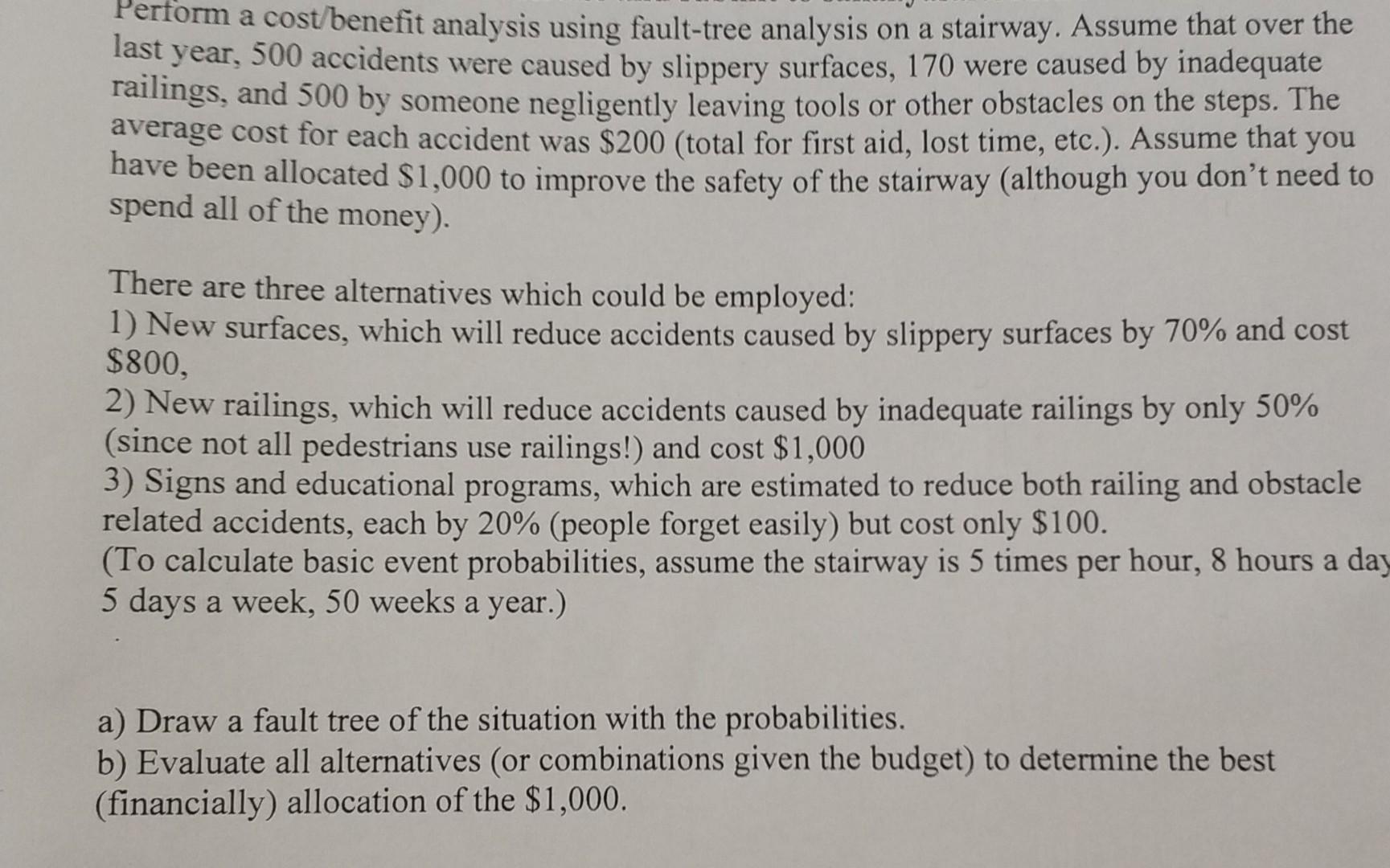
Perform a cost/benefit analysis using fault-tree analysis on a stairway. Assume that over the last year, 500 accidents were caused by slippery surfaces, 170 were caused by inadequate railings, and 500 by someone negligently leaving tools or other obstacles on the steps. The average cost for each accident was $200 (total for first aid, lost time, etc.). Assume that you have been allocated $1,000 to improve the safety of the stairway (although you don't need to spend all of the money). There are three alternatives which could be employed: 1) New surfaces, which will reduce accidents caused by slippery surfaces by 70% and cost $800, 2) New railings, which will reduce accidents caused by inadequate railings by only 50% (since not all pedestrians use railings!) and cost $1,000 3) Signs and educational programs, which are estimated to reduce both railing and obstacle related accidents, each by 20% (people forget easily) but cost only $100. (To calculate basic event probabilities, assume the stairway is 5 times per hour, 8 hours a day 5 days a week, 50 weeks a year.) a a) Draw a fault tree of the situation with the probabilities. b) Evaluate all alternatives (or combinations given the budget) to determine the best (financially) allocation of the $1,000
Step by Step Solution
There are 3 Steps involved in it
1 Expert Approved Answer
Step: 1 Unlock

Question Has Been Solved by an Expert!
Get step-by-step solutions from verified subject matter experts
Step: 2 Unlock
Step: 3 Unlock