







Question: Perpetual Inventory Using FIFO Beginning inventory, purchases, and sales data for DVD players are as follows: November 1 Inventory 53 units at $92 10 Sale
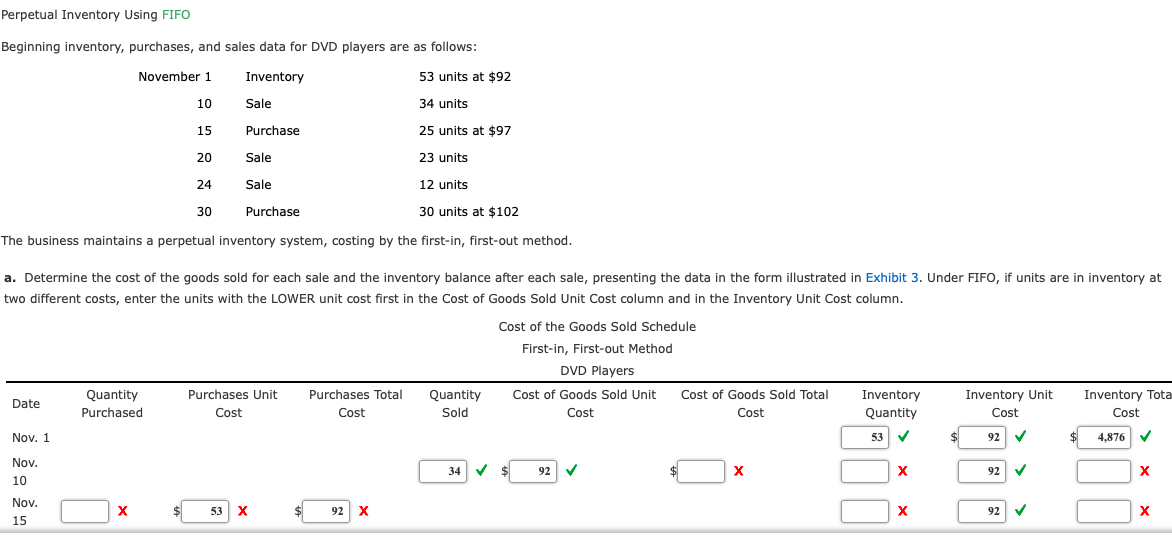
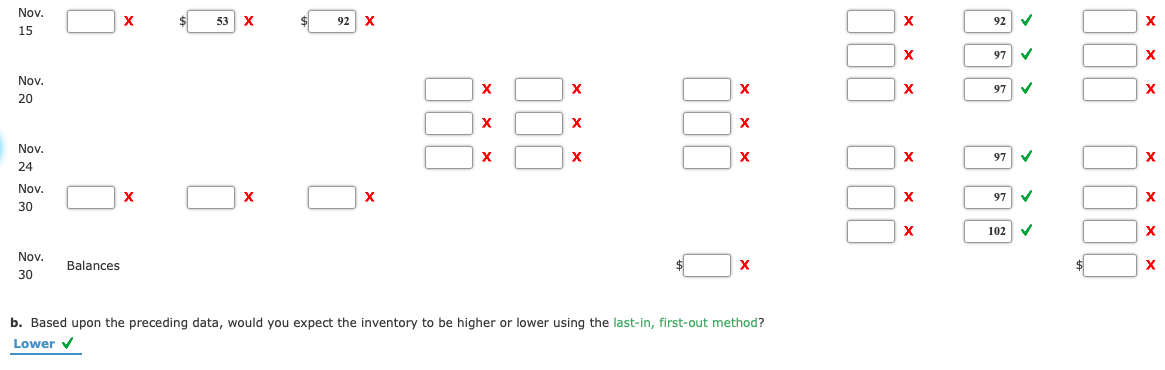
Perpetual Inventory Using FIFO Beginning inventory, purchases, and sales data for DVD players are as follows: November 1 Inventory 53 units at $92 10 Sale 34 units 15 Purchase 25 units at $97 20 Sale 23 units 24 Sale 12 units 30 Purchase 30 units at $102 The business maintains a perpetual inventory system, costing by the first-in, first-out method. a. Determine the cost of the goods sold for each sale and the inventory balance after each sale, presenting the data in the form illustrated in Exhibit 3. Under FIFO, if units are in inventory at two different costs, enter the units with the LOWER unit cost first in the Cost of Goods Sold Unit Cost column and in the Inventory Unit Cost column. Cost of the Goods Sold Schedule First-in, First-out Method DVD Players Cost of Goods Sold Unit Cost of Goods Sold Total Cost Cost Date Quantity Purchased Purchases Unit Cost Purchases Total Cost Quantity Sold Inventory Quantity 53 Inventory Unit Cost Inventory Tota Cost Nov. 1 92 4,876 Nov. 10 34 92 92 Nov. 15 53 92 92 X Nov. 15 Ox 53 X 92 x 92 97 Nov. 20 X 97 X X III DIO blul Qul Nov. 24 X X 97 Nov. 30 97 102 Nov. 30 Balances X $ X b. Based upon the preceding data, would you expect the inventory to be higher or lower using the last-in, first-out method? Lower
Step by Step Solution
There are 3 Steps involved in it

Get step-by-step solutions from verified subject matter experts
 Study Help