Question: Pick 3 questions and answer them EXERCISE 2.3 TEACHING OR SELLING? Drug makers Worried about Conflicts of Interest Back Away from Their Sponsorship of Continuing
Pick 3 questions and answer them
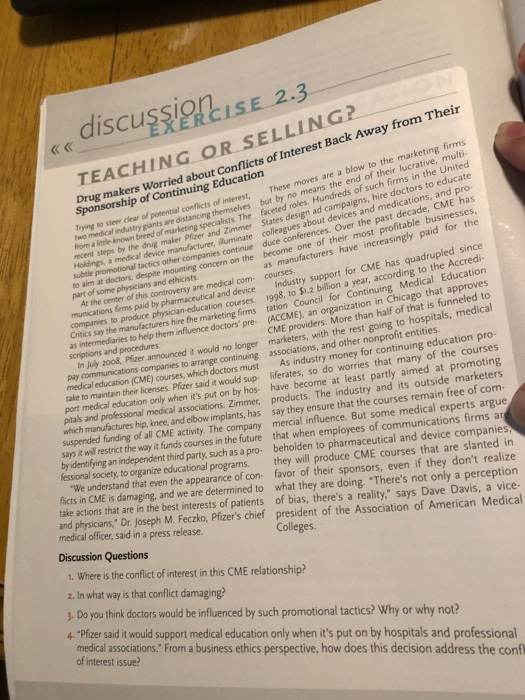
EXERCISE 2.3 TEACHING OR SELLING? Drug makers Worried about Conflicts of Interest Back Away from Their Sponsorship of Continuing Education Trying to steer clear of potential conflicts of interest, These moves are a blow to the marketing firms we medical industry giants are distancing themselves but by no means the end of their lucrative, multi from a little known breed of marketing specialists. The faceted roles. Hundreds of such firms in the United Holdings, a medical device manufacturer, duminate colleagues about devices and medications, and pro subtle promotional tactics other companies continue duce conferences. Over the past decade, CME has om at doctors, despite mounting concem on the become one of their most profitable businesses, as manufacturers have increasingly paid for the companies to produce physician education courses. 1998, to $1.2 billion a year, according to the Accredi- Industry support for CME has quadrupled since Critics say the manufacturers hire the marketing firms tation Council for Continuing Medical Education CME providers. More than half of that is funneled to courses part of some physicians and ethicists At the center of this controversy are medical com munications firms paid by pharmaceutical and device as intermediaries to help them influence doctors' pre (ACCME), an organization in Chicago that approves In July 2008 Pfizer announced it would no longer marketers, with the rest going to hospitals, medical pay communications companies to arrange continuing associations, and other nonprofit entities medical education (CME) courses, which doctors must As industry money for continuing education pro tale to maintain their licenses. Pfizer said it would sup liferates, so do worries that many of the courses port medical education only when it's put on by hos have become at least partly aimed at promoting pitals and professional medical associations Zimmer, products. The industry and its outside marketers which manufactures hip, knee, and elbow implants, has say they ensure that the courses remain free of com- suspended funding of all CME activity. The company mercial influence. But some medical experts argue says it will restrict the way it funds courses in the future that when employees of communications firms ar by identifying an independent third party, such as a pro beholden to pharmaceutical and device companies, fessional society, to organize educational programs. they will produce CME courses that are slanted in "We understand that even the appearance of con favor of their sponsors, even if they don't realize flicts in CME is damaging, and we are determined to what they are doing. "There's not only a perception take actions that are in the best interests of patients of bias, there's a reality," says Dave Davis, a vice- and physicians," Dr. Joseph M. Feczko, Pfizer's chief president of the Association of American Medical medical officer, said in a press release. Colleges Discussion Questions 1. Where is the conflict of interest in this CME relationship? 2. In what way is that conflict damaging? 3. Do you think doctors would be influenced by such promotional tactics? Why or why not? 4. "Pfizer said it would support medical education only when it's put on by hospitals and professional medical associations." From a business ethics perspective, how does this decision address the conf of interest issue









 Study Help