Question: Planning how learning will be assessed before, during, and after instruction is essential. Assessments must be carefully created to ensure that teachers can identify which
Planning how learning will be assessed before, during, and after instruction is essential. Assessments must be carefully created to ensure that teachers can identify which NY standards are mastered and which ones to reteach.
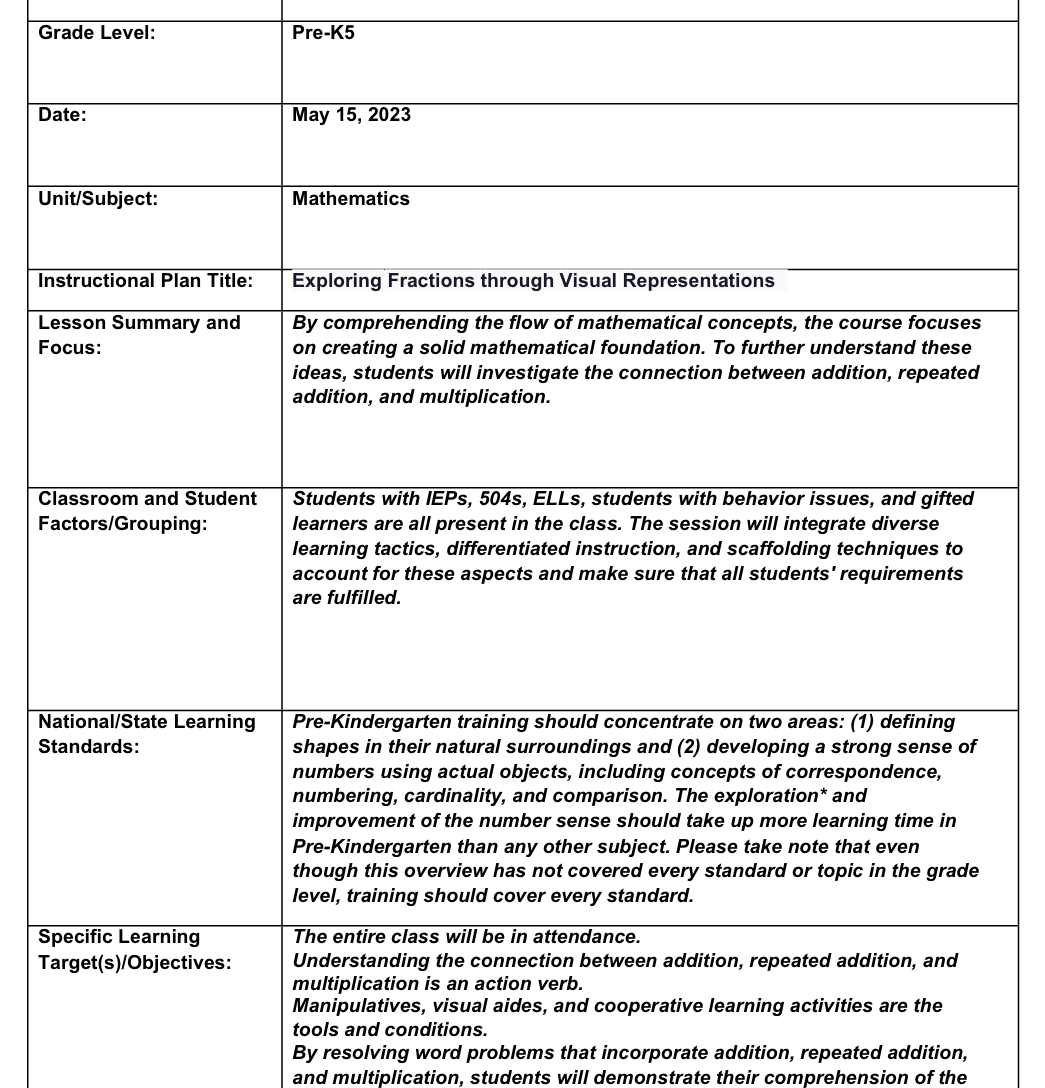
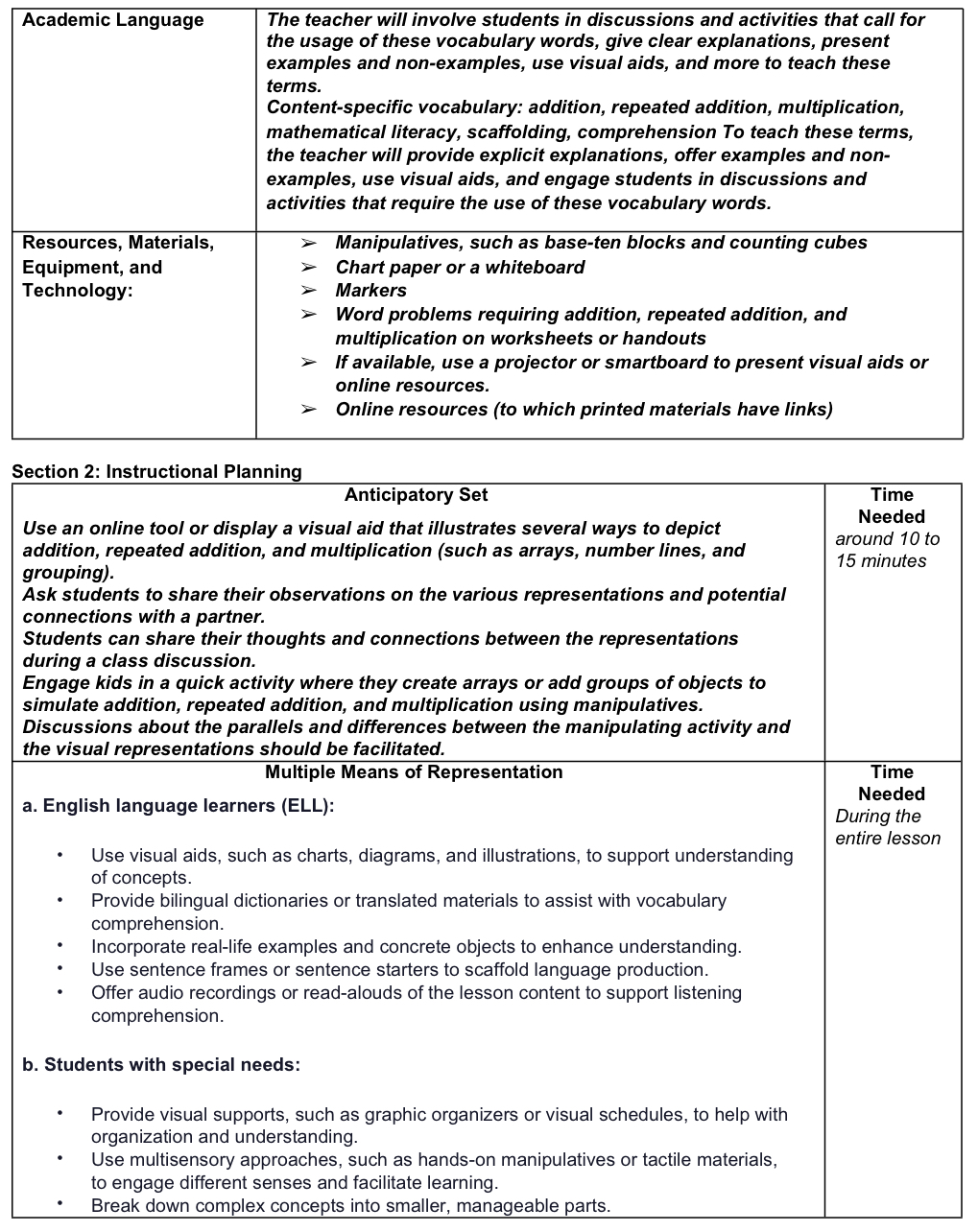
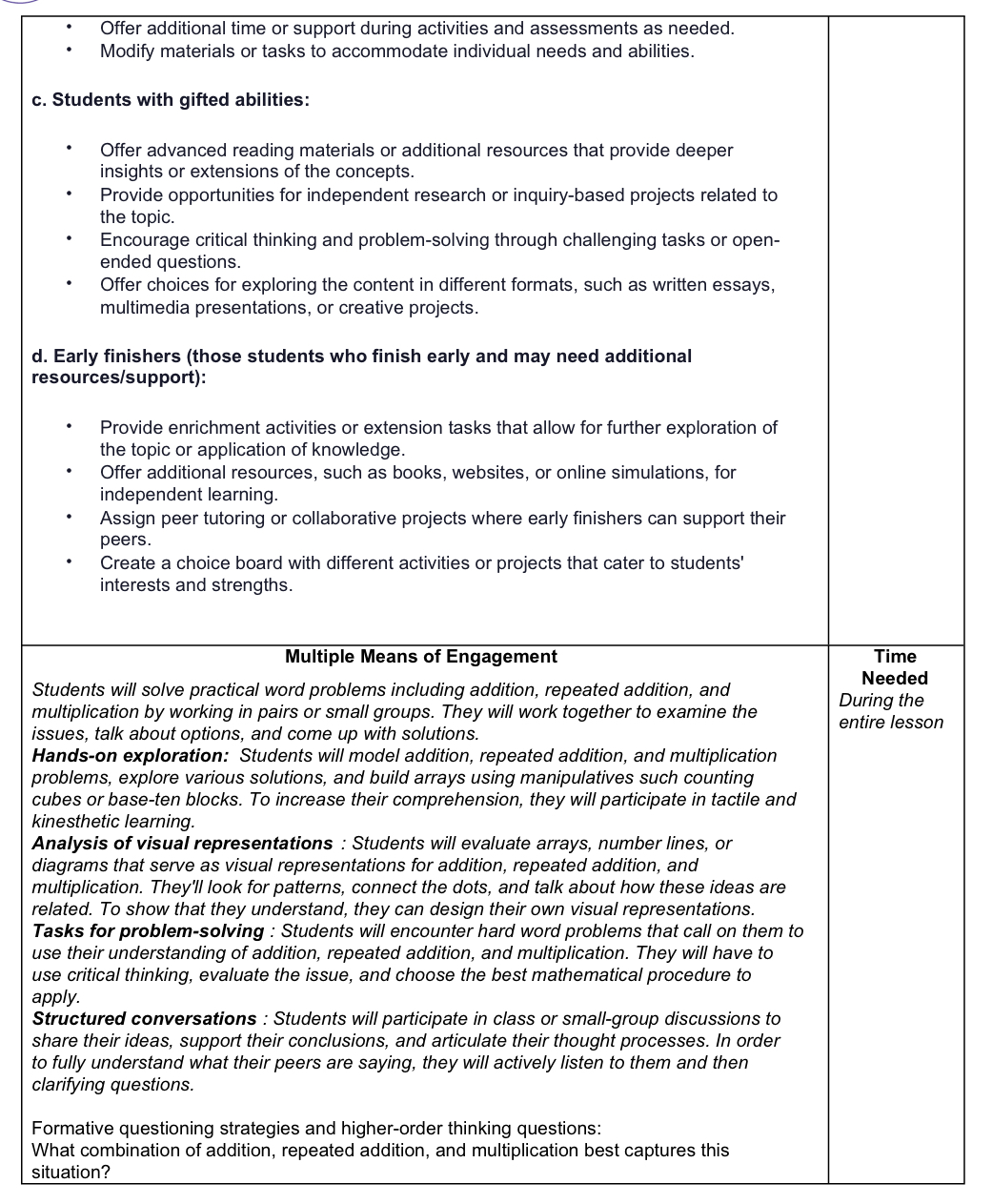
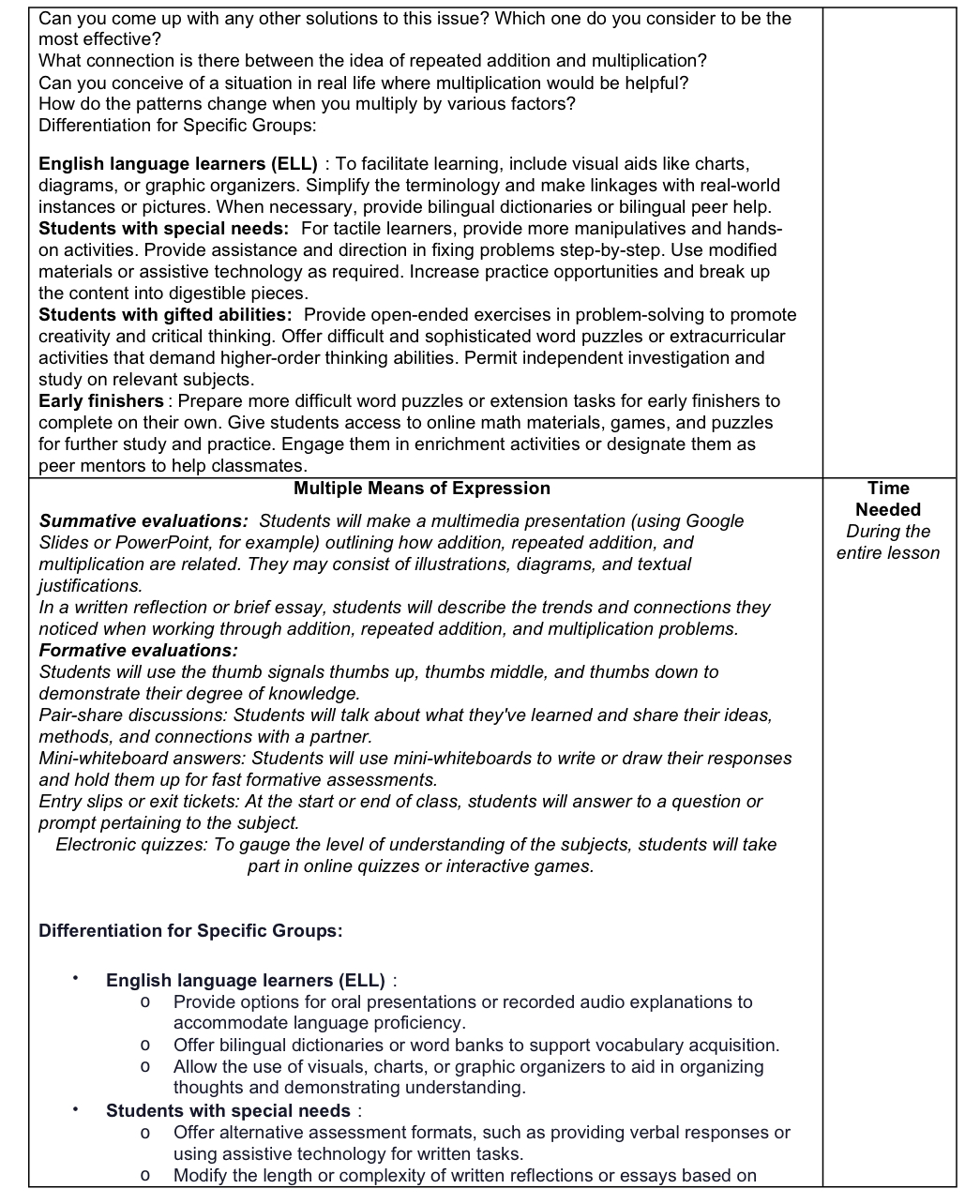
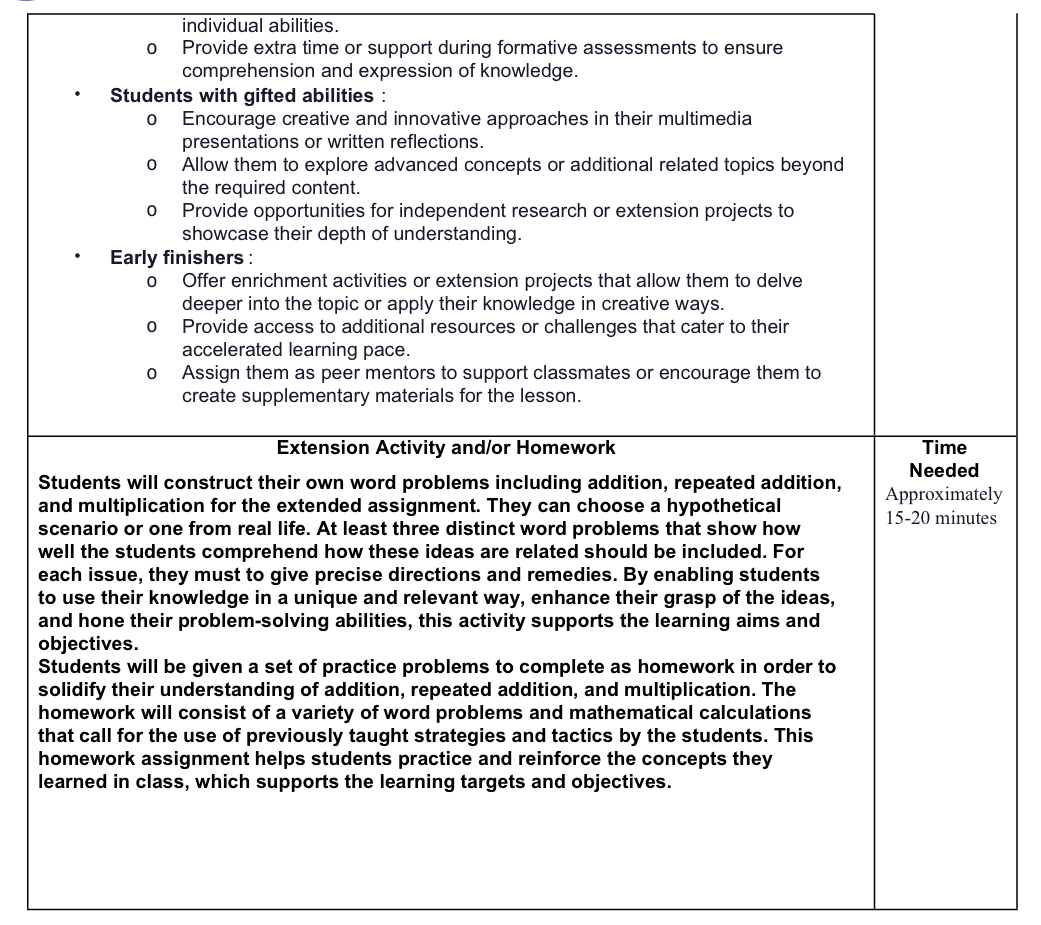
Grade Level: UnitlSubject: Pre -K5 May 15, 2023 Mathematics Instructional Plan Title: Lesson Summary and Focus: Classroom and Student FactorslGrou ping: NationallState Learning Standards: Specific Learning Target(s)l0bjectives: Exploring-Fractions through Visual Representations By comprehending the ow of mathematical concepts, the course focuses on creating a solid mathematical foundation. To further understand these ideas, students will investigate the connection between addition, repeated addition, and multiplication. Students with lEPs, 504s, ELLs, students with behavior issues, and gifted learners are all present in the class. The session will integrate diverse learning tactics, differentiated instruction, and scaffolding techniques to account for these aspects and make sure that all students' requirements are fulfilled. Pre-Kindergarten training should concentrate on two areas: (1) defining shapes in their natural surroundings and {2} developing a strong sense of numbers using actual objects, including concepts of correspondence, numbering, cardinality, and comparison. The explora tion" and improvement of the number sense should take up more learning time in Pre-Kindergarten than any other subject. Please take note that even though this overview has not covered every standard or topic in the grade level, training should cover every standard. The entire class will be in attendance. Understanding the connection between addition, repeated addition, and multiplication is an action verb. Manipulatives, visual aides, and cooperative learning activities are the tools and conditions. By resolving word problems that incorporate addition, repeated addition, and multiplication, students will demonstrate their comprehension of the Academic Language The teacher will involve students in discussions and activities that call for the usage of these vocabulary words, give clear explanations, present examples and non-examples, use visual aids, and more to teach these terms. Content-specific vocabulary: addition, repeated addition, multiplication, mathematical literacy, scaffolding, comprehension To teach these terms, the teacher will provide explicit explanations, offer examples and non- examples, use visual aids, and engage students in discussions and activities that require the use of these vocabulary words. Resources, Materials, 5a- Manipulatives, such as base-ten blocks and counting cubes Equipment, and Sa- Chart paper or a whiteboard Technology: 3;- Markers 59- Word problems requiring addition, repeated addition, and multiplication on worksheets or handouts % ll' available, use a projector or smartboard to present visual aids or online resources. $- Online resources { to which printed materials have links) Section 2: Instructional Planning Anticipatory Set Time Needed around 10 to 15 minutes Use an online tool or display a visual aid that illustrates several ways to depict addition, repeated addition, and multiplication {such as arrays, number lines, and grouping). Ask students to share their observations on the various representations and potential connections with a partner. Students can share their thoughts and connections between the representations during a class discussion. Engage kids in a quick activity where they create arrays or add groups of objects to simulate addition, repeated addition, and multiplication using manipula tives. Discussions about the parallels and differences between the manipulating activity and the visual representations should be facilitated. Multiple Means of Representation Time Needed During the entire lesson a. English language learners (ELL): Use visual aids, such as charts, diagrams, and illustrations, to support understanding of concepts. Provide bilingual dictionaries or translated materials to assist with vocabulary comprehension. Incorporate real-life examples and concrete objects to enhance understanding. Use sentence frames or sentence starters to scaffold language production. Offer audio recordings or read-alouds ofthe lesson content to support listening comprehension. b. Students with special needs: Provide visual supports, such as graphic organizers or visual schedules, to help with organization and understanding. Use multisensory approaches, such as hands-on manipulatives or tactile materials, to engage different senses and facilitate learning. Break down complex concepts into smaller. manageable parts. \fCan you come up with any other solutions to this issue? Which one do you consider to be the most effective? What connection is there between the idea of repeated addition and multiplication? Can you conceive of a situation in real life where multiplication would be helpful? How do the patterns change when you multiply by various factors? Differentiation for Specic Groups: English language learners (ELL) : To facilitate learning, include visual aids like charts, diagrams, or graphic organizers. Simplify the terminology and make linkages with real-world instances or pictures. When necessary, provide bilingual dictionaries or bilingual peer help. Students with special needs: For tactile learners, provide more manipulatives and hands- on activities. Provide assistance and direction in xing problems step-by-step. Use modied materials or assistive technology as required. Increase practice opportunities and break up the content into digestible pieces. Students with gifted abilities: Provide open-ended exercises in problem-solving to promote creativity and critical thinking. Offer difcult and sophisticated word puzzles or extracurricular activities that demand higher-order thinking abilities. Permit independent investigation and study on relevant subjects. Early finishers : Prepare more difficult word puzzles or extension tasks for early finishers to complete on their own. Give students access to online math materials, games, and puzzles for further study and practice. Engage them in enrichment activities or designate them as peer mentors to help classmates. Multiple Means of Expression Summative evaluations: Students will make a multimedia presentation {using Google Slides or PowerPoint, for example) outlining how addition, repeated addition, and multiplication are related. They may consist of illustrations, diagrams, and textual justifications. in a written reflection or brief essay, students will describe the trends and connections they noticed when working through addition, repeated addition, and multiplication problems. Formative evaluations: Students will use the thumb signals thumbs up, thumbs middle, and thumbs down to demonstrate their degree of knowledge. Pair-share discussions: Students will talk about what they've learned and share their ideas, methods, and connections with a partner. Mini-whiteboard answers: Students will use mini-Whiteboards to write or draw their responses and hold them up for fast formative assessments. Entry slips or exit tickets: At the start or end of class, students will answer to a question or promptpertainihg to the subject. Electronic quizzes: To gauge the level of understanding of the subjects, students will take part in online quizzes or interactive games. Differentiation for Specific Groups: ' English language learners {ELL} : 0 Provide options for oral presentations or recorded audio explanations to accommodate language prociency. 0 Offer bilingual dictionaries or word banks to support vocabulary acquisition. 0 Allow the use of visuals, charts, or graphic organizers to aid in organizing thoughts and demonstrating understanding. ' Students with special needs : 0 Offer alternative assessment formats, such as providing verbal responses or using assistive technology for written tasks. 0 Modify the length or complexity of written reflections or essays based on Ti me Needed During the entire lesson individual abilities. 0 Provide extra time or support during formative assessments to ensure comprehension and expression of knowEedge. Students with gifted abilities : 0 Encourage creative and innovative approaches in their multimedia presentations or written reflections. 0 Allow them to explore advanced concepts or additional related topics beyond the required content. 0 Provide opportunities for independent research or extension projects to showcase their depth of understanding. Early finishers : 0 Offer enrichment activities or extension projects that allow them to delve deeper into the topic or apply their knowledge in creative ways. 0 Provide access to additional resources or challenges that cater to their accelerated learning pace. 0 Assign them as peer mentors to support classmates or encourage them to create supplementary materials for the lesson. Extension Activity andfor Homework Students will construct their own word problems including addition, repeated addition, and multiplication for the extended assignment. They can choose a hypothetical scenario or one from real life. At least three distinct word problems that show how well the students comprehend how these ideas are related should be included. For each issue, they must to give precise directions and remedies. By enabling students to use their knowledge in a unique and relevant way, enhance their grasp of the ideas, and hone their problem-solving abilities, this activity supports the learning aims and objectives. Students will be given a set of practice problems to complete as homework in order to solidify their understanding of addition, repeated addition, and multiplication. The homework will consist of a variety of word problems and mathematical calculations that call for the use of previously taught strategies and tactics by the students. This homework assignment helps students practice and reinforce the concepts they learned in class, which supports the learning targets and objectives. Time Needed Approximately 1520 minutes
Step by Step Solution
There are 3 Steps involved in it
1 Expert Approved Answer
Step: 1 Unlock
Question Has Been Solved by an Expert!
Get step-by-step solutions from verified subject matter experts
Step: 2 Unlock
Step: 3 Unlock
Students Have Also Explored These Related Mathematics Questions!









 Study Help