



Question: PLEASE Add as much detail as possible making sure to checkthe grade number so if a question is worth 3 grades, it means it needs
PLEASE Add as much detail as possible making sure to checkthe grade number so if a question is worth 3 grades, it means it needs 3 points to answer fully.
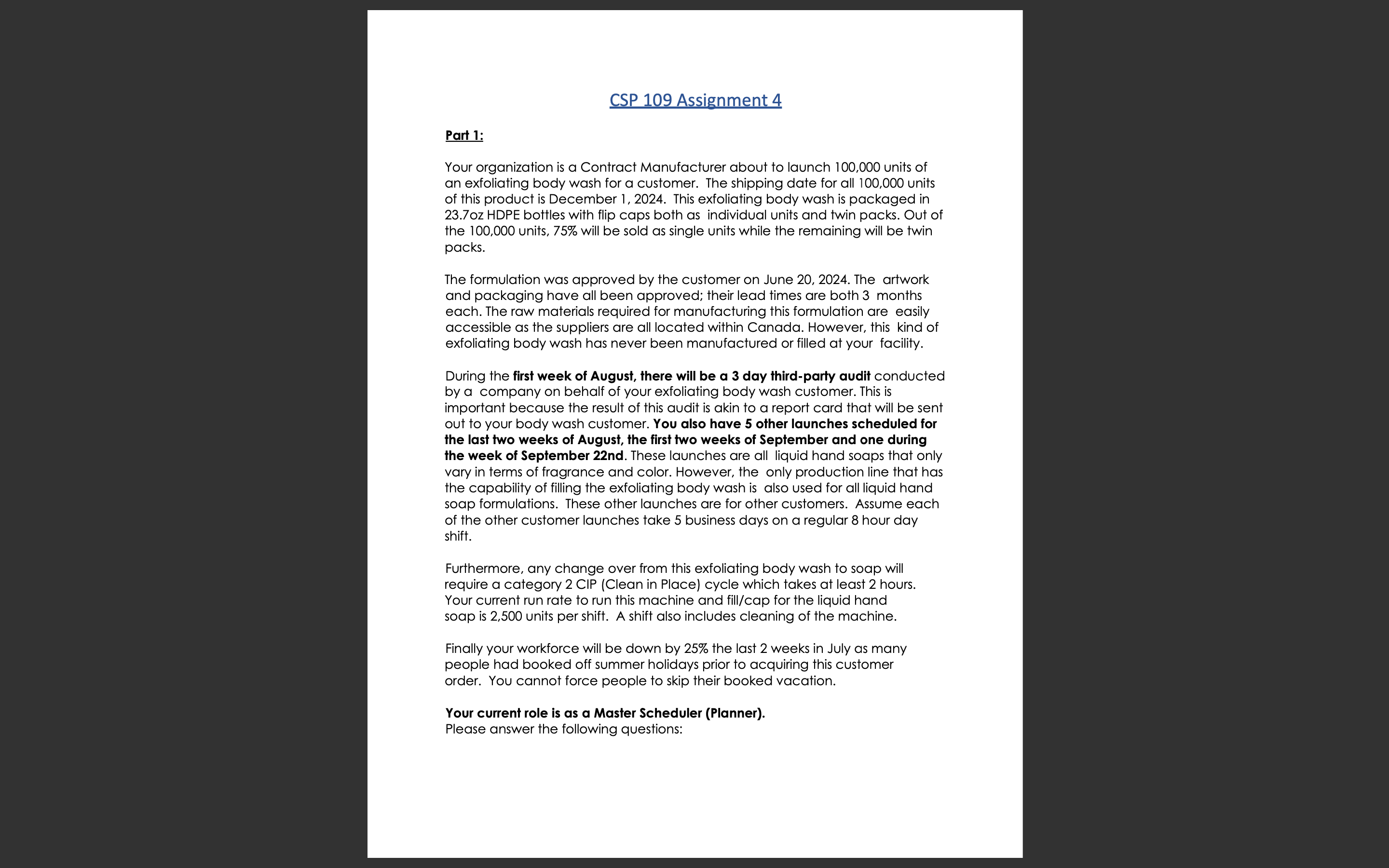
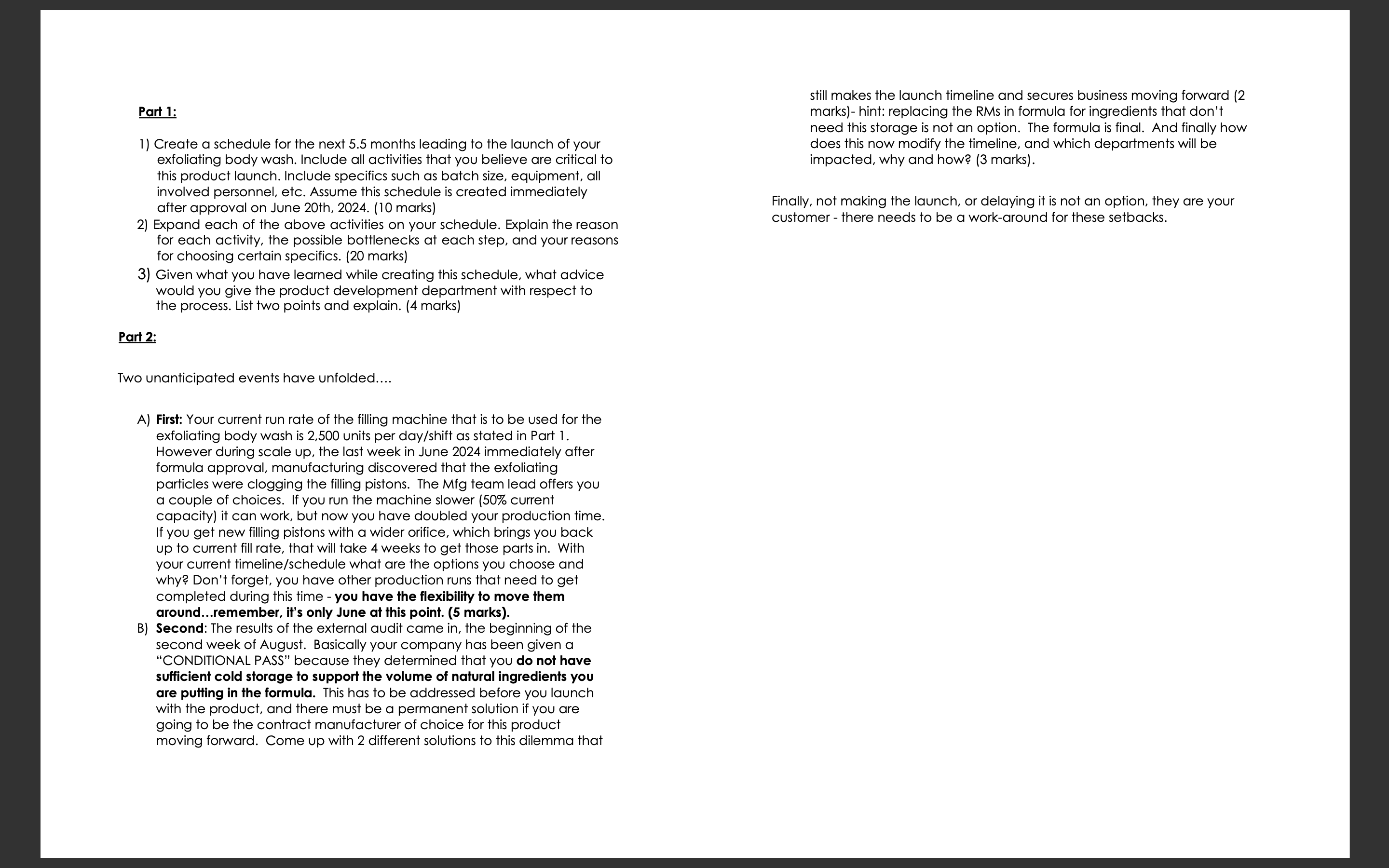
Make sure to answer all parts of the assignment in the two photos with sufficient planning and details. Keep in mind that you can't change any deadlines or the date of release and you should schedule everything before the deadline using the provided lecture tips or any of your ideas. include any APA referencesfor any outer sources if used. Please do not generatewith AI.
Summary of Important Lecture Notes for CSP 109 Assignment 4
1. Production Scheduling and Optimization
- Stages of Production Scheduling: Planning, routing, scheduling, dispatching, and execution. These stages ensure a seamless production process (CSP109 LEC4b Scheduling, 2024).
- Scheduling KPIs: Include daily performance, cost reduction, production service rate, inventory turn, production time, cycle time, and order management. These KPIs help measure and optimize the scheduling process (CSP109 LEC4b Scheduling, 2024).
- ERP Systems: Implementing ERP systems can help in production scheduling, inventory management, capacity planning, and what-if analysis. These systems improve efficiency and accuracy in scheduling (CSP109 LEC4b Scheduling, 2024).
2. Resource Allocation and Team Dynamics
- Effective Teamwork: Importance of clear roles, physical proximity, and interpersonal dynamics. Empowering teams and providing them with self-direction enhances productivity and innovation (CSP109 LEC4 PD Team, 2024).
- Resource Allocation: Proper allocation of resources and managing the development effort through a project manager ensures that each team member's contributions are optimized (CSP109 LEC4 PD Team, 2024).
3. Marketing and Sales Strategies
- Marketing Strategies: Develop marketing plans from ideation to commercialization, target audience identification, marketing mix (product, price, distribution, communication), and measuring success through sales, likes, and conversion rates (CSP109 LEC3 Marketing, 2024).
- Sales Techniques: NEAT selling (Need, Economic impact, Access to authority, Timeline), solution selling, and conceptual selling. These techniques emphasize understanding customer needs, providing tailored solutions, and building long-term relationships (CSP109 LEC5 Sales and Account Management, 2024).
4. Account Management and Customer Relations
- Account Management vs. Sales: Account management focuses on long-term relationships and customer loyalty, whereas sales are more transactional. Regular communication and understanding customer needs are crucial (CSP109 LEC5 Sales and Account Management, 2024).
- Sales Process: Steps include prospecting, contact & qualifying, assessment, product demo, proposal, closing, and following up. Effective sales habits involve listening to customers, preparing ahead, and being transparent (CSP109 LEC5 Sales and Account Management, 2024).
How These Notes Apply to CSP 109 Assignment 4
Creating a Realistic Schedule:
- Stages of Production Scheduling: Utilize the five stages of production scheduling to make a detailed timeline from planning to execution. Include all critical activities such as initial batch testing, scale-up testing, ordering raw materials, and production runs (CSP109 LEC4b Scheduling, 2024).
- Resource Allocation: Ensure the team is well-coordinated and resources are optimally allocated. Address potential bottlenecks by planning for equipment maintenance and employee vacations in advance (CSP109 LEC4 PD Team, 2024).
Managing Unanticipated Events:
- ERP Systems: Implement an ERP system to handle changes efficiently, such as slowing down production or ordering new parts. This system will help manage inventory, capacity planning, and schedule adjustments (CSP109 LEC4b Scheduling, 2024).
- Effective Teamwork: Encourage team collaboration and clear communication to address issues like cold storage shortages. Empower team members to suggest innovative solutions (CSP109 LEC4 PD Team, 2024).
Marketing and Sales Strategies:
- Marketing Mix and Target Audience: Develop a marketing plan that includes the product's features, pricing strategy, distribution channels, and promotional activities. Ensure the plan targets the appropriate audience, emphasizing the product's unique selling points (CSP109 LEC3 Marketing, 2024).
- Sales Techniques: Use NEAT selling to understand customer needs and provide solutions that meet those needs. Focus on building long-term relationships with customers through account management strategies (CSP109 LEC5 Sales and Account Management, 2024).
Addressing Audit Results:
- Effective Teamwork: Engage all relevant departments to address the audit's findings. Ensure clear communication and collaboration to implement the necessary changes (CSP109 LEC4 PD Team, 2024).
- Resource Allocation: Allocate additional resources to increase cold storage capacity or implement Just-In-Time inventory management to address the storage issue without delaying the launch (CSP109 LEC4 PD Team, 2024).
here are some summarized tips for solving the assignment with APA in-text citations: Dynamic Scheduling: Emphasize the importance of building a dynamic schedule that can adapt to changes, especially given the various unforeseen events that may occur (e.g., machine clogging, workforce reductions). "Dynamic scheduling involves anticipating changes and bottlenecks, and planning accordingly" (CSP109 LEC4b Scheduling, 2024). Crew Management: Consider crew management and the reduction in workforce during peak vacation times. "Effective crew management and planning for reduced workforce availability are critical for maintaining production schedules" (CSP109 LEC4b Scheduling, 2024). Holiday Planning: Account for holidays and planned vacations in your schedule. "Scheduling must account for holidays and planned absences to avoid disruptions in the production timeline" (CSP109 LEC4b Scheduling, 2024). Resource Allocation: Proper allocation of resources and personnel is key. "Resource allocation involves assigning the right personnel and resources to tasks to ensure efficiency and effectiveness in production" (CSP109 LEC4 PD Team, 2024). Production Planning: Detailed production planning and understanding the lead times for materials and approvals are crucial. "Production planning includes determining the necessary raw materials, timelines, and personnel needed to meet production goals" (CSP109 LEC4b Scheduling, 2024). Risk Management: Implement risk management strategies to anticipate and mitigate potential bottlenecks or issues. "Identifying potential risks and creating contingency plans are essential steps in production scheduling" (CSP109 LEC4b Scheduling, 2024). Communication and Coordination: Effective communication and coordination between departments are vital. "Regular communication and coordination between departments help in aligning goals and resolving issues promptly" (CSP109 LEC4 PD Team, 2024). SMART Goals: Set SMART (Specific, Measurable, Attainable, Relevant, Time-bound) goals for the project. "Setting SMART goals ensures clear, achievable objectives and timelines" (CSP109 LEC4 PD Team, 2024). Use of ERP Systems: Utilizing ERP (Enterprise Resource Planning) systems can help streamline the scheduling process. "ERP systems provide tools for effective production scheduling, inventory management, and capacity planning" (CSP109 LEC4b Scheduling, 2024). Monitoring and Adjusting: Continuously monitor progress and make adjustments as necessary to stay on track. "Monitoring the schedule and making necessary adjustments ensure that production stays on course despite challenges" (CSP109 LEC4b Scheduling, 2024).
Here are some important tips to keep in mind for the assignment based on lecture notes:
Scheduling and Planning
Timeline and Deadlines:
- Ensure all activities are scheduled with specific deadlines (applicable to real life), considering both the internal milestones and external deadlines set by the customer (CSP109 LEC4 Scheduling).
Resource Allocation:
- Allocate resources effectively, taking into account the reduced workforce in July and the multiple product launches in August and September (CSP109 LEC3 Marketing).
Contingency Planning:
- Develop contingency plans for potential delays or issues, such as equipment failures or unexpected absences. This includes having backup suppliers and alternative production lines ready if needed (CSP109 LEC4 PD Team). For example, if we made a formula line and then stopped and continued with another formula line, this will increase time because we would need to clean all the machines.
Manufacturing Tips
Equipment State Management:
- Ensure all equipment is in "Ready for Use" state before starting the production. This includes completing CIP (Clean in Place) cycles and any necessary sanitization (CSP109 LEC7 Manufacturing).
Batch Processing:
- Use campaign batching where possible to minimize downtime and streamline production processes. Ensure agitators and mixers are used correctly for different product viscosities and compositions (CSP109 LEC7 Manufacturing).
Quality Assurance:
- Implement thorough quality assurance processes, including regular audits and inspections to ensure the product meets all required standards (CSP109 LEC8 Quality Assurance).
Quality Assurance and Risk Management
Benchmarking:
- Use benchmarking to compare the company's practices and performance with industry standards. This can help identify areas for improvement and ensure the company remains competitive (CSP109 LEC8 Quality Assurance).
Total Quality Management (TQM):
- Adopt a TQM approach to ensure continuous improvement in all aspects of production and management. This includes training, teamwork, and a commitment to quality from all levels of the organization (CSP109 LEC8 Quality Assurance).
Risk Assessment:
- Perform a risk assessment for potential issues such as equipment failures, supplier delays, or quality control problems. Categorize risks as minor, major, or critical and develop appropriate mitigation strategies (CSP109 LEC8 Quality Assurance).
Packaging Development
Design and Manufacturing:
- Ensure the packaging design is finalized and approved well before the production start date. Consider the impact of packaging on consumer behavior and make necessary adjustments (New Product Dev - Packaging_HT-student notes).
Haptics and Texture:
- Use haptic feedback and texture in packaging to enhance the consumer experience. This can increase the likelihood of purchase and brand loyalty (New Product Dev - Packaging_HT-student notes).
Supply Chain Coordination:
- Coordinate with suppliers to ensure timely delivery of all packaging materials. This includes scheduling regular check-ins and having contingency plans for delays (New Product Dev - Packaging_HT-student notes).
Step by Step Solution
There are 3 Steps involved in it

Get step-by-step solutions from verified subject matter experts