







Question: please answer 1,2&3 CHAPTER 24 CASE STUDY THEJUST-IN-TIME CONSUMER ust about everyone involved with supply chain management of manufacturing has copied the Toyota operations model
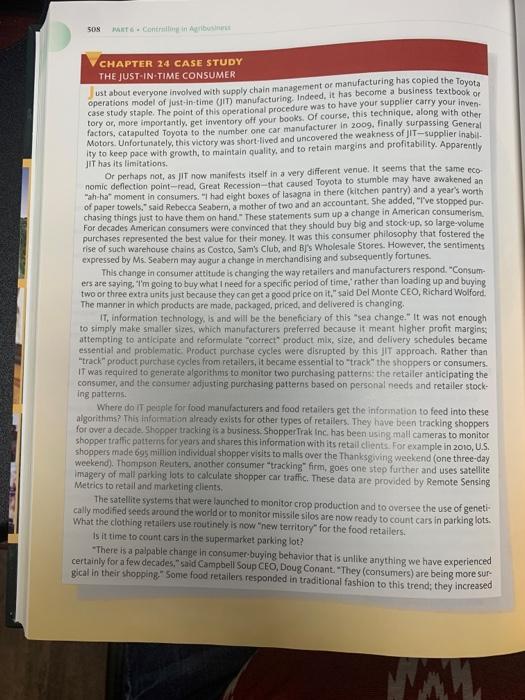
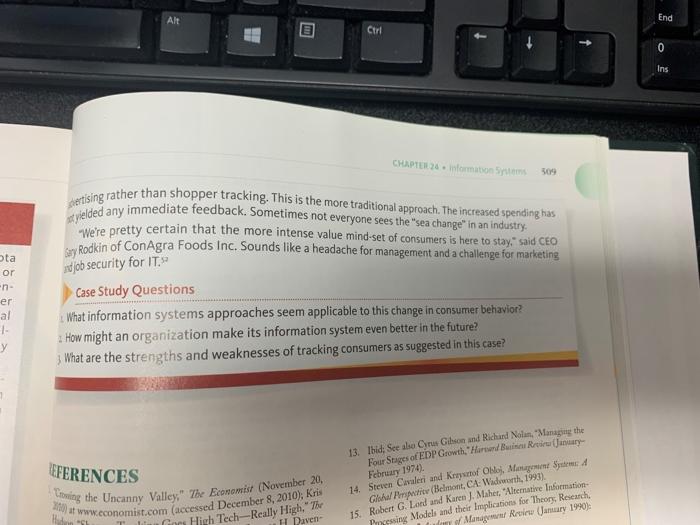
CHAPTER 24 CASE STUDY THEJUST-IN-TIME CONSUMER ust about everyone involved with supply chain management of manufacturing has copied the Toyota operations model of just in-time (GiT) manufacturing Indeed, it has become a business textbook or case study staple. The point of this operational procedure was to have your supplier carry your imventory or, more importantly. Bet inventory off your books. Of course, this technique, along with other factors, catapulted Toyota to the number one car manufacturer in zoog. finally surpassing General. Motors. Unfortunately, this victory was short-lived and uncovered the weakness of JIT-supplier inability to keep pace with growth, to maintain quality, and to retain margins and profitability. Apparently. Jit has its limitations. Or perhaps not, as Jit now manifests itself in a very different venue. It seems that the same economic deflection point-read, Great Recession - that caused Toyota to stumble may have awakened an "ah-ha+ moment in consumers: "I had eight boxes of lasagna in there (kitehen pantry) and a year's worth of papet towels," said Rebecea Seabern, a mother of two and an accountant. She added, "Ive stopped purchasing things just to have them on hand." These statements sum up a change in American consumerism. For decades American consumers were convinced that they should buy big and stock-up, so large-volume purchases represented the best value for their money. It was this consumer philosophy that fostered the rise of such warehouse chains as Costco, Sam's Club, and BI's Wholesale Stores. However, the sentiments expressed by Ms. Seabern may augur a change in merchandising and subsequently fortunes. This change in consumer attitude is changing the way retallers and manufacturers respond. "Consumers are saying. "Im going to buy what I need for a specific period of time," rather than loading up and buying two or three extra units just because they can get a good price on it," said Del Monte CEO, Richard Wolford. The manner in which products are made, packaged, priced, and delivered is changing: IT, information technology, is and will be the beneficiary of this "sea change." It was not enough to simply make smaller sizes, which manufacturers preferred because it meant higher profit margins: attempting to anticipate and reformulate "cortect" product mik, size, and delivery schedules became essential and problematic. Product purchase cycles were disrupted by this JIT approach. Rather than "track" prodoct purchase cycles from retallers, it became essential to "track" the shoppers or consumers. IT was required to generate algorithms to monitor two purchasing patterns the retaller anticipating the consumer, and the consumer adjusting purchasing patterns based on personal needs and retaller stockIng patterns. Where do it peuple for food manufacturers and food retailers gez the information to feed into these algorithms? This fifformation already exists for other types of retailers. They have been tracking shoppers for over a decade. Shopper tracking is a business. Shopper Trak inc. has been using mall cameras to monitor shopper traffic patterns for years and shares this information with its retail clients. For example in 2010, U.S. shoppers made 695 miilion individuat shopper visits to malis over the Thanksgiving weekend (one three-day. weekend). Thompson Reuters, another consumer "tracking" firm, goes one step furtherand uses satellite Imagery of mali parking lots to calculate shopper car traffic. These data are provided by Remote Sensing Metrics to retall and marketing clients. The satellite systerns that were launiched to monitor crop production and to oversee the use of genetically modified seedf around the world or to monitor missile silos are now ready to count cars in parking lots. What the clothing retailers use routinely is now "new territory" for the food retailers. Is it time to count cars in the supermarket parking lot? -There is a palpable change in consumerobuying behavior that is untike anything we have experienced certainly for a few decades," saif Campbell Soup CEO, Doug Conant. "They (consumers) are being more surgical in their shopping." Some food retailers responded in traditional fashion to this trend; they increased wetising rather than shopper tracking. This is the more traditional approach. The increased spending has xy yelded any immediate feedback. Sometimes not everyone sees the "sea change" in an industry. Were pretty certain that the more intense value mind-set of consumers is here to stay," said CEO cy Rodkin of ConAgra Foods Inc. Sounds like a headache for management and a challenge for marketing ifjobsecurity for IT. Case Study Questions What information systems approaches seem applicable to this change in consumer behavior? How might an organization make its information system even better in the future? 3 What are the strengths and weaknesses of tracking consumers as suggested in this case? LFERENCES 15. Robert G. Loed and Karen J, Mhher, Aliernative InformationDoncessing Models and their topliatoons Ror theot, Reeerch
Step by Step Solution
There are 3 Steps involved in it

Get step-by-step solutions from verified subject matter experts
 Study Help