



Question: Please answer 1-27 1. Explain the purpose of dynamic routing protocols 2. Explain the use of dynamic routing and static routing. 3. Explain how to
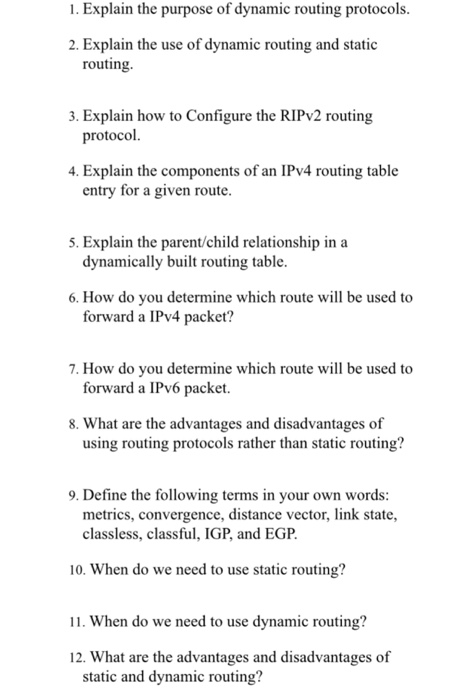
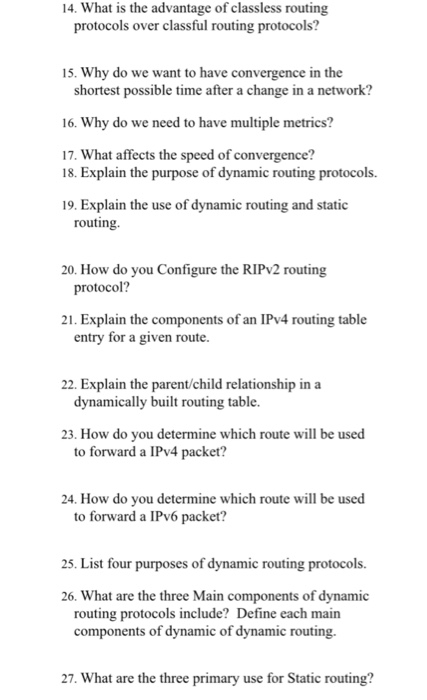
1. Explain the purpose of dynamic routing protocols 2. Explain the use of dynamic routing and static routing. 3. Explain how to Configure the RIPv2 routing protocol. 4. Explain the components of an IPv4 routing table entry for a given route. 5. Explain the parent/child relationship in a dynamically built routing table. 6. How do you determine which route will be used to forward a IPv4 packet? 7. How do you determine which route will be used to forward a IPv6 packet. 8. What are the advantages and disadvantages of using routing protocols rather than static routing? 9. Define the following terms in your own words: metrics, convergence, distance vector, link state, classless, classful, IGP, and EGP. 10. When do we need to use static routing? 11. When do we need to use dynamic routing? 12. What are the advantages and disadvantages of static and dynamic routing
Step by Step Solution
There are 3 Steps involved in it

Get step-by-step solutions from verified subject matter experts