







Question: ***PLEASE ANSWER A, B, C ,D. *** ***THANK YOU*** Two electric motors are being considered to drive a centrifugal pump. Each motor is capable of
***PLEASE ANSWER A, B, C ,D. ***
***THANK YOU***
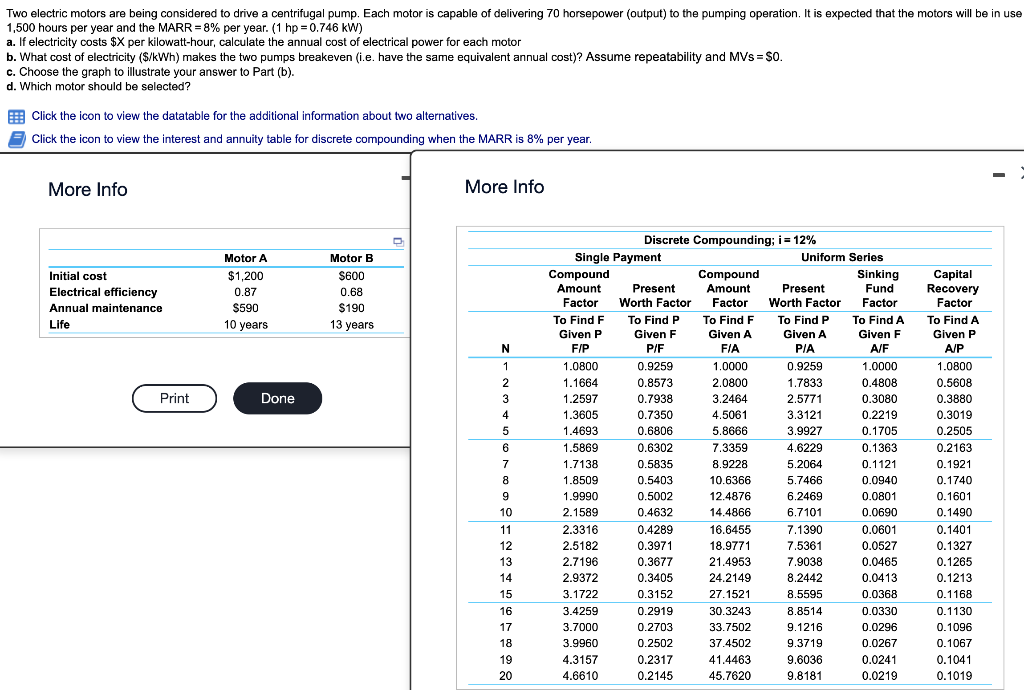
Two electric motors are being considered to drive a centrifugal pump. Each motor is capable of delivering 70 horsepower (output) to the pumping operation. It is expected that the motors will be in use 1,500 hours per year and the MARR =8% per year. (1hp=0.746kW) a. If electricity costs $X per kilowatt-hour, calculate the annual cost of electrical power for each motor b. What cost of electricity (\$/kWh) makes the two pumps breakeven (i.e. have the same equivalent annual cost)? Assume repeatability and MVs = \$0. c. Choose the graph to illustrate your answer to Part (b). d. Which motor should be selected? Click the icon to view the datatable for the additional information about two alternatives. Click the icon to view the interest and annuity table for discrete compounding when the MARR is 8% per year. More Info More Info Two electric motors are being considered to drive a centrifugal pump. Each motor is capable of delivering 70 horsepower (output) to the pumping operation. It is expected that the motors will be in use 1,500 hours per year and the MARR =8% per year. (1hp=0.746kW) a. If electricity costs $X per kilowatt-hour, calculate the annual cost of electrical power for each motor b. What cost of electricity (\$/kWh) makes the two pumps breakeven (i.e. have the same equivalent annual cost)? Assume repeatability and MVs = \$0. c. Choose the graph to illustrate your answer to Part (b). d. Which motor should be selected? Click the icon to view the datatable for the additional information about two alternatives. Click the icon to view the interest and annuity table for discrete compounding when the MARR is 8% per year. More Info More Info
Step by Step Solution
There are 3 Steps involved in it

Get step-by-step solutions from verified subject matter experts
 Study Help