







Question: Please answer all 5 blanks and boxes. Also, show your work, thanks! The DCF approach for estimated the cost of retained earnings, is given as
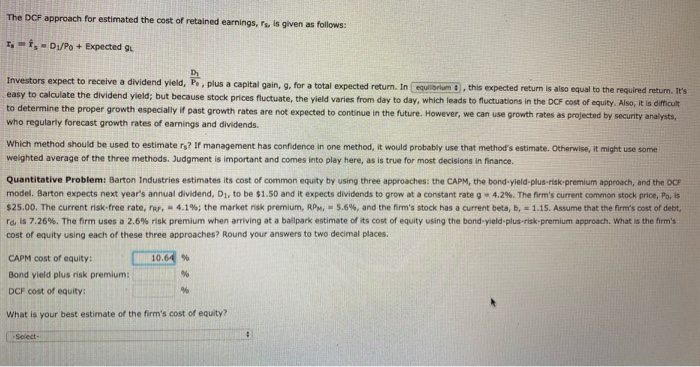

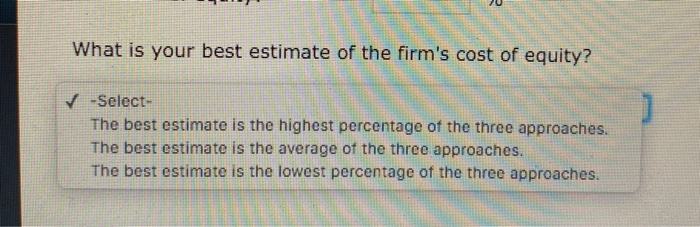
The DCF approach for estimated the cost of retained earnings, is given as follows: T , D/P + Expected OL Investors expect to receive a dividend yield, P., plus a capital gain, g, for a total expected return. In this expected return is also equal to the required return. It's easy to calculate the dividend yield; but because stock prices fluctuate, the yield varies from day to day, which leads to fluctuations in the DCF cost of equity. Also, it is difficult to determine the proper growth especially if past growth rates are not expected to continue in the future. However, we can use growth rates as projected by security analysts, who regularly forecast growth rates of earnings and dividends. Which method should be used to estimaters? If management has confidence in one method, it would probably use that method's estimate. Otherwise, it might use some weighted average of the three methods. Judgment is important and comes into play here, as is true for most decisions in finance Quantitative Problemi Barton Industries estimates its cost of common equity by using three approaches: the CAPM, the bond-yield-plus-risk premium approach, and the DCF model. Barton expects next year's annual dividend, Di, to be $1.50 and it expects dividends to grow at a constant rate 4.2%. The firm's current common stock price, Po, is $25.00. The current risk free rate, nur, 4.1%; the market risk premium, RP 5.6%, and the firm's stock has a current beta, b, 1.15. Assume that the firm's cost of debt. rais 7.26%. The firm uses a 2.6% risk premium when arriving at a ballpark estimate of its cost of equity using the bond yield-plus-risk premium approach. What is the firm's cost of equity using each of these three approaches? Round your answers to two decimal places. 10.64 CAPM cost of equity: Bond yield plus risk premium: DCF cost of equity: What is your best estimate of the firm's cost of equity? -Select- recessions return. I equilibrium this exc s to fluct in the future. However, we can u upturn 7 day to 3, it would probably use that meth What is your best estimate of the firm's cost of equity? -Select- The best estimate is the highest percentage of the three approaches. The best estimate is the average of the three approaches The best estimate is the lowest percentage of the three approaches
Step by Step Solution
There are 3 Steps involved in it

Get step-by-step solutions from verified subject matter experts
 Study Help