







Question: Please answer all! and I'll rate. Question 21 (1 point) Stephanie is the CEO of a small digital therapy company. In the past 6 months,
Please answer all! and I'll rate. 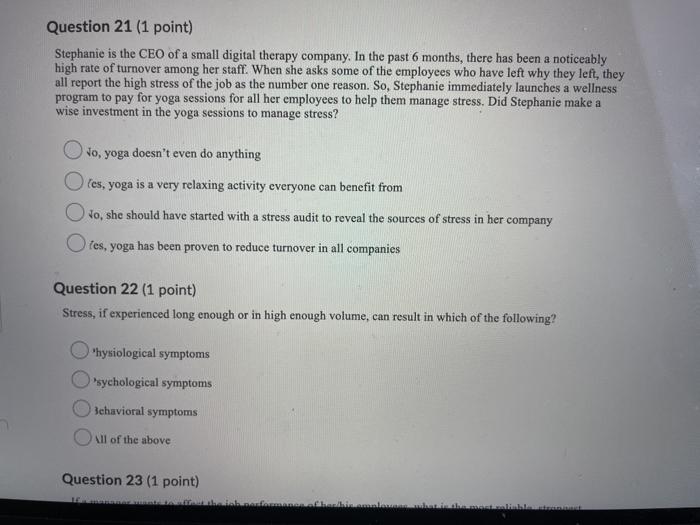
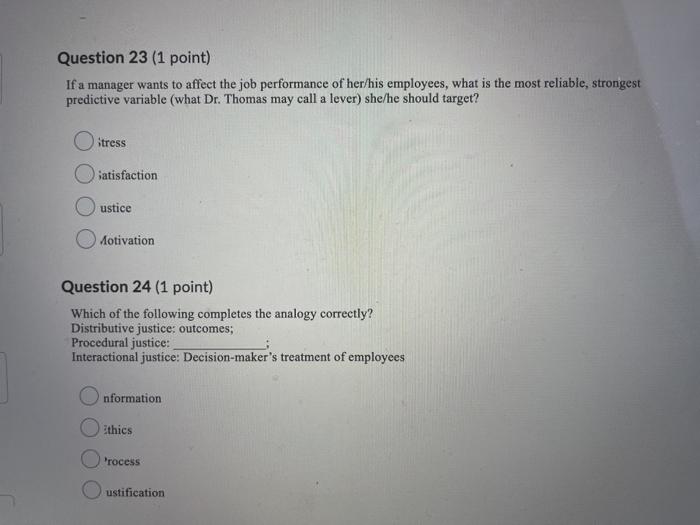
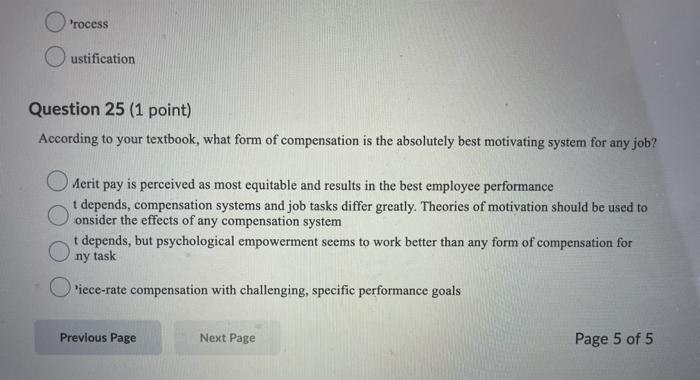
Question 21 (1 point) Stephanie is the CEO of a small digital therapy company. In the past 6 months, there has been a noticeably high rate of turnover among her staff. When she asks some of the employees who have left why they left, they all report the high stress of the job as the number one reason. So, Stephanie immediately launches a wellness program to pay for yoga sessions for all her employees to help them manage stress. Did Stephanie make a wise investment in the yoga sessions to manage stress? No, yoga doesn't even do anything Otes, yoga is a very relaxing activity everyone can benefit from No, she should have started with a stress audit to reveal the sources of stress in her company Ores, yoga has been proven to reduce turnover in all companies Question 22 (1 point) Stress, if experienced long enough or in high enough volume, can result in which of the following? "hysiological symptoms "sychological symptoms Behavioral symptoms Out of the above Question 23 (1 point) hami Question 23 (1 point) If a manager wants to affect the job performance of her/his employees, what is the most reliable, strongest predictive variable (what Dr. Thomas may call a lever) she/he should target? Oitress Osatisfaction Oustice Motivation Question 24 (1 point) Which of the following completes the analogy correctly? Distributive justice: outcomes; Procedural justice: Interactional justice: Decision-maker's treatment of employees Onformation Ethics Process ustification Process ustification Question 25 (1 point) According to your textbook, what form of compensation is the absolutely best motivating system for any job? Merit pay is perceived as most equitable and results in the best employee performance t depends, compensation systems and job tasks differ greatly. Theories of motivation should be used to onsider the effects of any compensation system t depends, but psychological empowerment seems to work better than any form of compensation for ny task 'iece-rate compensation with challenging, specific performance goals Previous Page Next Page Page 5 of 5
Step by Step Solution
There are 3 Steps involved in it
1 Expert Approved Answer
Step: 1 Unlock

Question Has Been Solved by an Expert!
Get step-by-step solutions from verified subject matter experts
Step: 2 Unlock
Step: 3 Unlock
 Study Help