Question: Please answer all questions including the last 3 on the bottom of the second page You are now going to look at several subduction zones

Please answer all questions including the last 3 on the bottom of the second page
Please answer all questions including the last 3Please answer all questions including the last 3Please answer all questions including the last 3
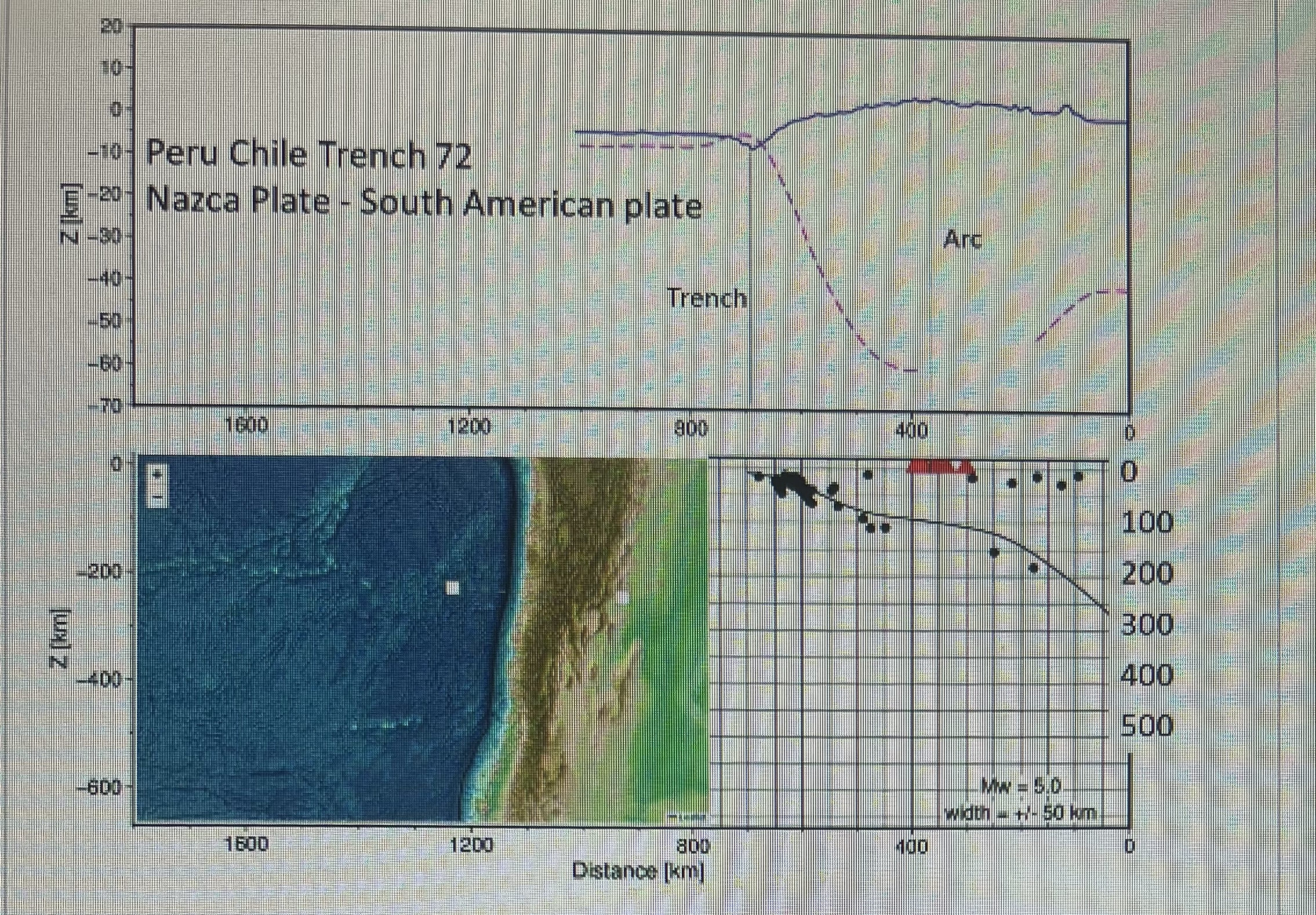
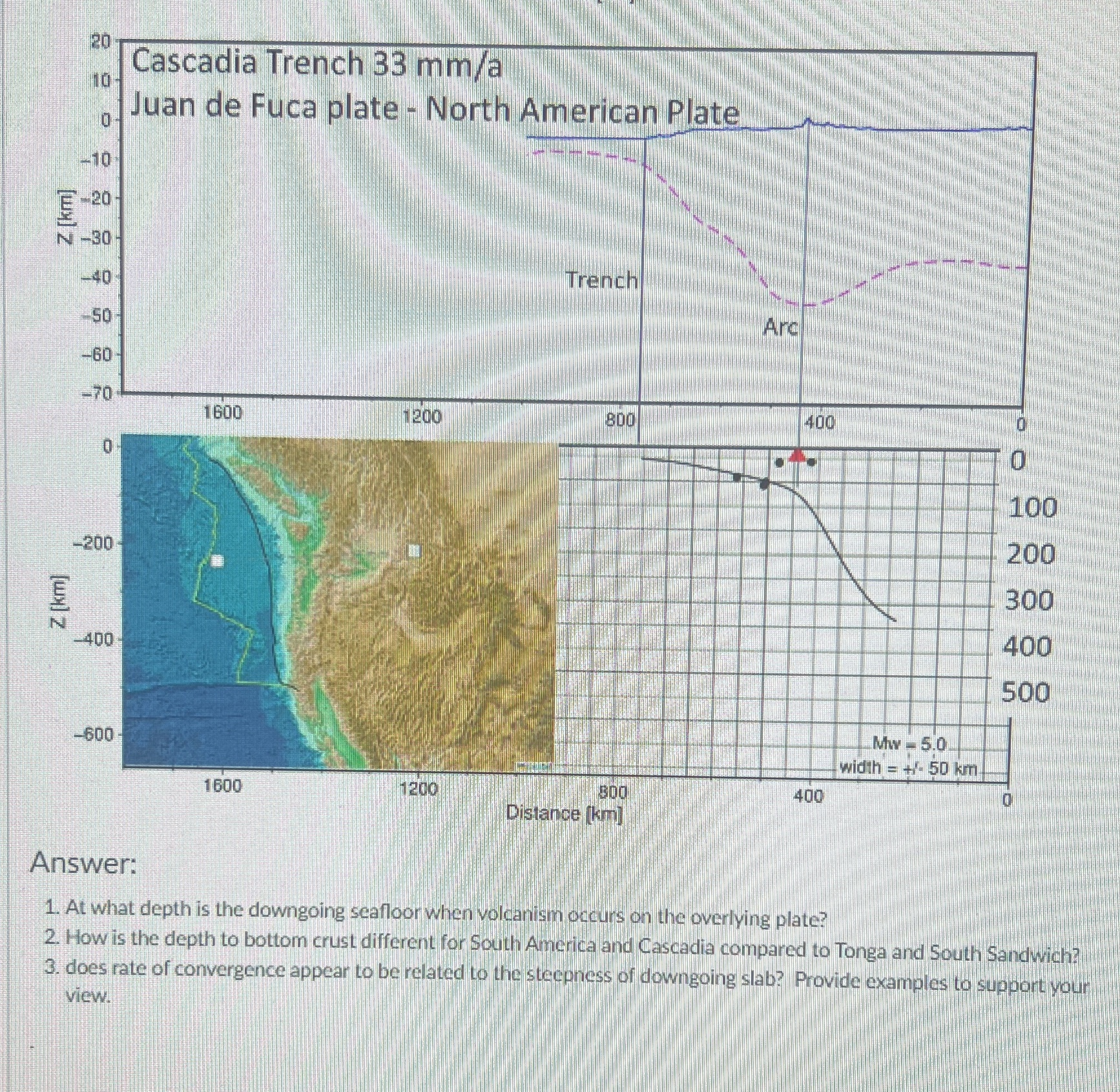
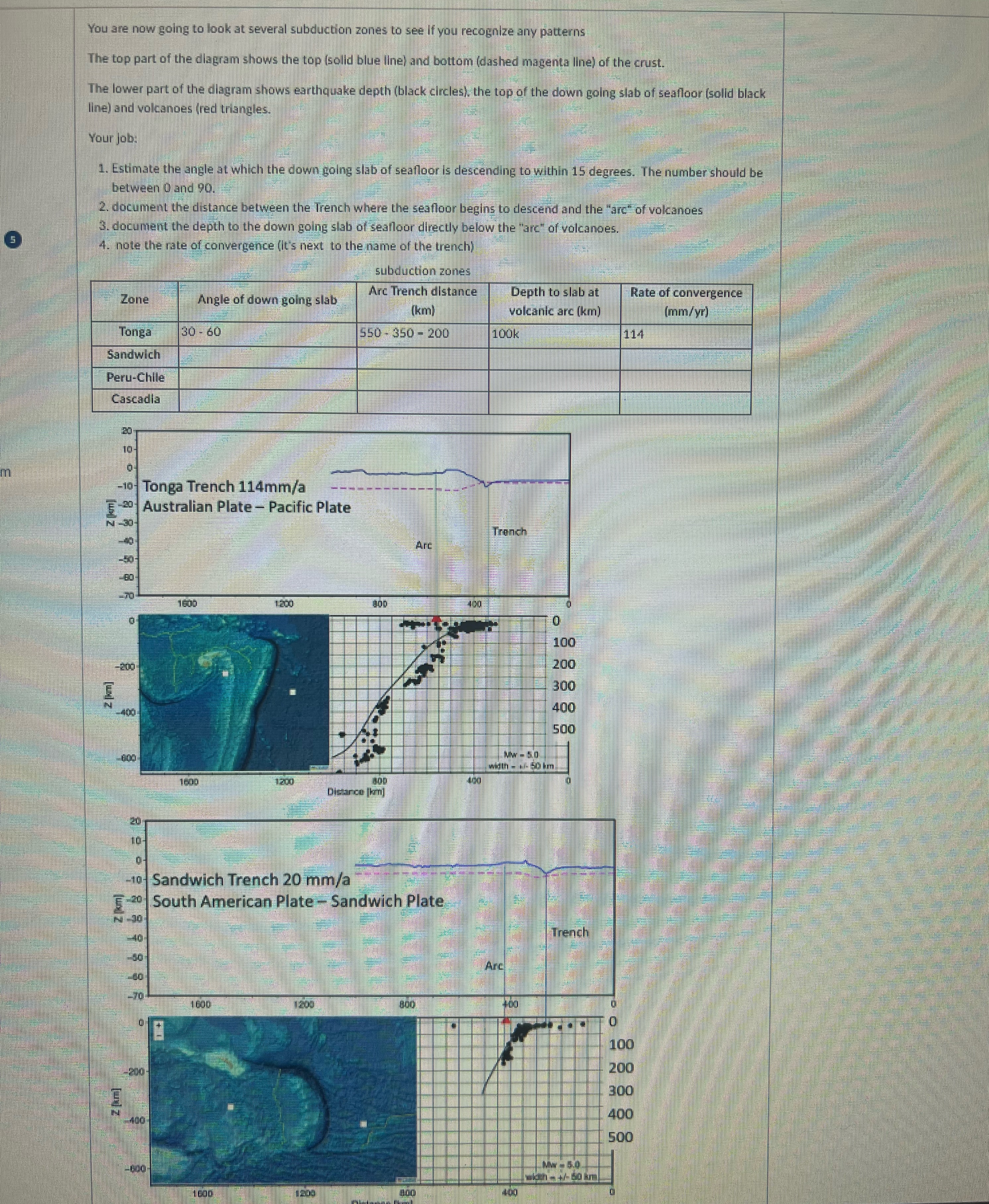
You are now going to look at several subduction zones to see If you recognize any patterns The top part of the diagram shows the top (solid blue line) and bottom (das (dashed magenta line) of the crust. The lower part of the diagram shows earthquake depth (black circles), the top of the down going slab of seafloor (solid black line) and volcanoes (red thangles. Your job: Estimate the angle at which the down going slab of seafloor is descending to within 16 degrees. The number should be between O and 90. 2. document the distance between the Trench where the seafloor begins to descend and the "arc of volcanoes 3. document the depth to the down going slab of seafloor directly below the "are" of volcanoes. 4. note the rate of convergence (It's next to the name of the trench) subduction zones Angle of down going slab Are Trench distance Depth to slab at Rate of convergence Zone (km) volcanic are (km)] (mm/yr) Tonga 30 - 60 950 - 350 - 200 100k 114 Sandwich Peru-Chile Cascadia 10- -10 Tonga Trench 114mm/a -20 Australian Plate - Pacific Plate -30 1600 1200 200 BOO 400 500 1600 Distance [Pm) to Sandwich Trench 20 mm/a |South American Plate - Sandwich Plate -40 Trench 1630 100 200 300 400 500-10 Peru Chile Trench 72 -20 Nazca Plate - South American plate Are Trench 50 1200 900 400 100 #200 200 300 Z [km] 400 500 600 widen #- 50 km 1600 1200 800 Distance [km]Cascadia Trench 33 mm/a Juan de Fuca plate - North American Plate -10 -20 Z [km] -30 -40 Trench -50 Are -60 -70 1600 800 100 O 100 -200- 200 Z [km] 300 -400 400 500 -600 My - 5.0 width = +/- 50 km 1600 1200 300 400 Distance (km] Answer: 1. At what depth is the downgoing seafloor when volcanism occurs on the overlying plate? 2. How is the depth to bottom crust different for South America and Cascadia compared to Tonga and South Sandwich? 3. does rate of convergence appear to be related to the steepness of downgoing slab? Provide examples to support your view

Step by Step Solution

There are 3 Steps involved in it

1 Expert Approved Answer
Step: 1 Unlock blur-text-image

Question Has Been Solved by an Expert!

Get step-by-step solutions from verified subject matter experts

Step: 2 Unlock
Step: 3 Unlock

Students Have Also Explored These Related Law Questions!