







Question: please answer as soon as possible. will give thumbs up and good comment if done asap. thank you! CALCULATING THE WACC. The following is the
please answer as soon as possible. will give thumbs up and good comment if done asap. thank you!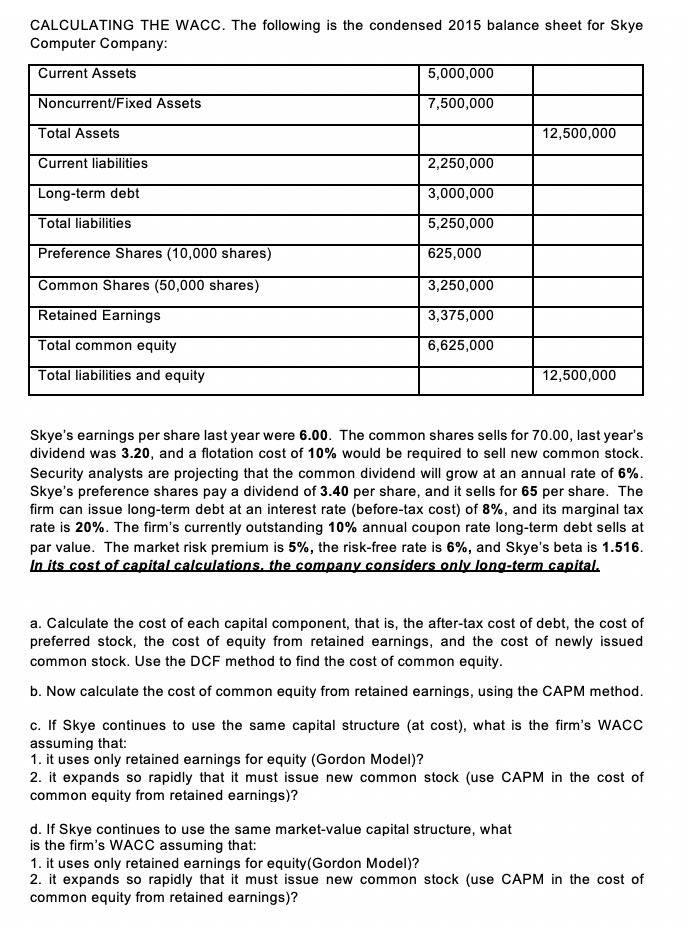
CALCULATING THE WACC. The following is the condensed 2015 balance sheet for Skye Computer Company: Skye's earnings per share last year were 6.00. The common shares sells for 70.00, last year's dividend was 3.20, and a flotation cost of 10% would be required to sell new common stock. Security analysts are projecting that the common dividend will grow at an annual rate of 6%. Skye's preference shares pay a dividend of 3.40 per share, and it sells for 65 per share. The firm can issue long-term debt at an interest rate (before-tax cost) of 8%, and its marginal tax rate is 20%. The firm's currently outstanding 10% annual coupon rate long-term debt sells at par value. The market risk premium is 5%, the risk-free rate is 6\%, and Skye's beta is 1.516. In its cost of capital calculations, the company considers only long-term capital. a. Calculate the cost of each capital component, that is, the after-tax cost of debt, the cost of preferred stock, the cost of equity from retained earnings, and the cost of newly issued common stock. Use the DCF method to find the cost of common equity. b. Now calculate the cost of common equity from retained earnings, using the CAPM method. c. If Skye continues to use the same capital structure (at cost), what is the firm's WACC assuming that: 1. it uses only retained earnings for equity (Gordon Model)? 2. it expands so rapidly that it must issue new common stock (use CAPM in the cost of common equity from retained earnings)? d. If Skye continues to use the same market-value capital structure, what is the firm's WACC assuming that: 1. it uses only retained earnings for equity (Gordon Model)? 2. it expands so rapidly that it must issue new common stock (use CAPM in the cost of common equity from retained earnings)
Step by Step Solution
There are 3 Steps involved in it

Get step-by-step solutions from verified subject matter experts
 Study Help